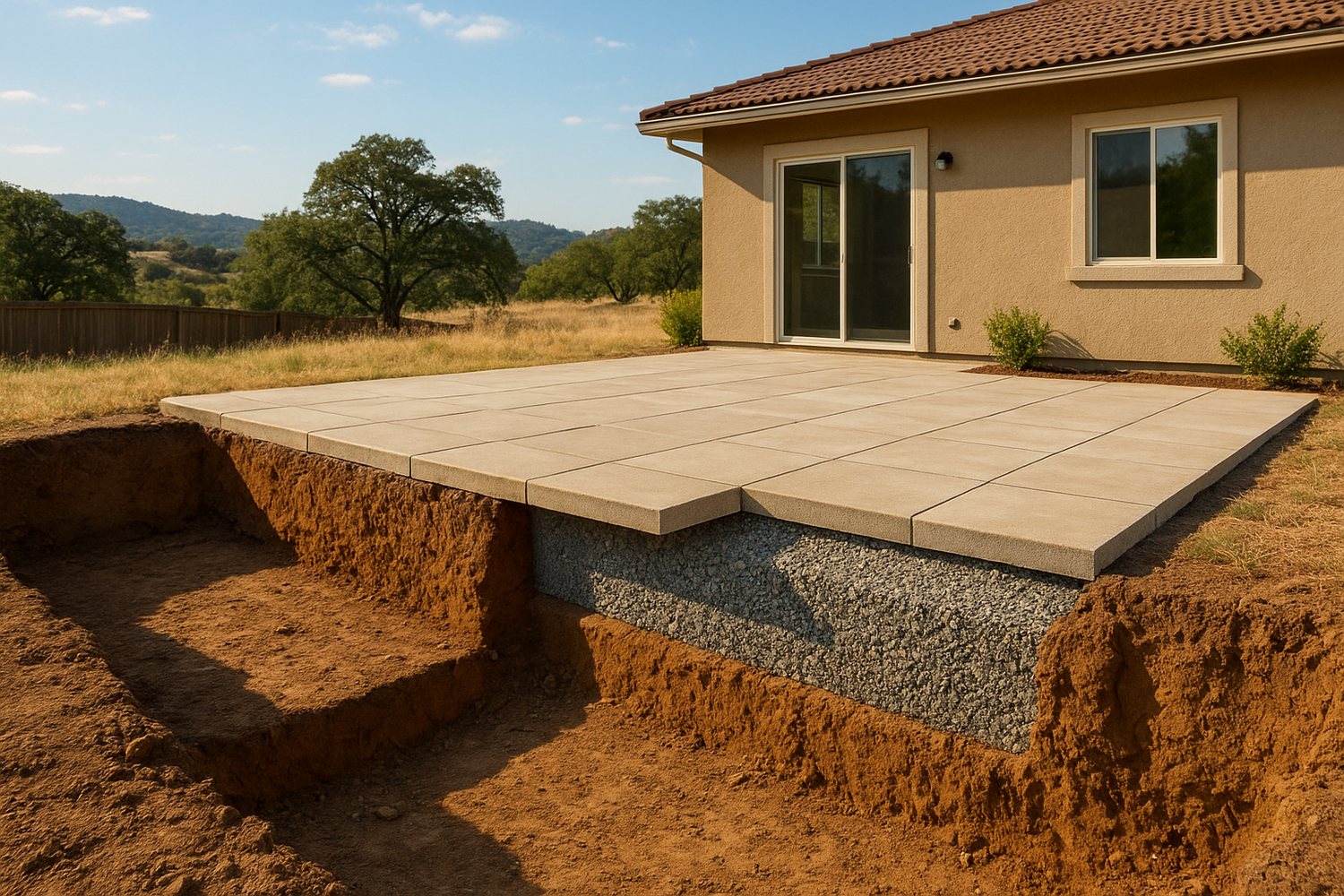
What Goes Under Your Patio: The Hardscape Details You Never See
A lasting patio is built on what you don’t see: base layers, compaction, solid edging, and smart drainage. Learn what matters for Placer County homes.
Ever wondered what makes a patio or hardscape truly last in our region? It’s all about the unseen layers beneath and around your outdoor living space.
Why the Hidden Layers Matter in Hardscape Construction
Most homeowners see only the surface: pavers, concrete or stones—but the real longevity of your patio depends on what’s below. In areas like Rocklin, Folsom, and Granite Bay, weather swings and clay soils can wreak havoc without a proper foundation.
The soil in Placer and Sacramento counties moves seasonally, making base construction vital. Poor prep leads to shifting, cracking, and settling—issues that can surface months or even years after installation. That’s why quality base work isn’t optional.
Investing in unseen elements like solid base and drainage protects your hardscape investment. Understanding these ‘invisible’ components helps you ask good questions and ensure your project stands the test of time.
- Poor base = future repairs
- Drainage prevents pooling and cracking
- Edging holds everything in place
For more detail on installation, visit ourHardscapes and Patiospage.
Understanding the Hardscape Base: The Foundation Beneath
The ‘base’ is a compacted layer of rock or gravel installed between the soil and your patio surface. For our area, crushed rock (sometimes called Class II or road base) is preferred for its stability and drainage properties.
Base thickness typically ranges from 4 to 8 inches depending on soil and use. In heavy clay or poorly draining soils, more base and geotextile fabric may be installed for added stability. Skimping on this step increases the risk of shifting and cracking later.
Base materials are spread, leveled, and compacted in layers. Proper compaction is key: it means driving out air pockets so the base won’t settle after your hardscape is done. With patio projects, shortcuts here almost always show up as problems down the road.
- Crushed rock is best for local soils
- 4-8 inch base is typical
- Compaction ensures stability
Compaction: Why It’s Non-Negotiable
Compaction is about firmly packing the base so it doesn’t move. In the Sacramento and Sierra foothill regions, clay soils expand and contract with moisture. A well-compacted base minimizes this movement under your patio.
Contractors use vibrating plate compactors to press each layer of base. For homeowners, it’s impossible to fully compact soil with just foot traffic or hand tampers. Proper compaction leads to a hard, stable platform for pavers, stone, or concrete.
Skipping or doing a poor job with compaction is the top reason patios and hardscapes settle unevenly—resulting in cracked slabs, wobbly pavers, or standing water. Insist on this step for outdoor living areas that last.
- Plate compactors are essential tools
- Multiple passes per layer
- Protects against poor drainage and settlement
| Layer | Purpose | Best Local Material | What Happens If Skipped |
|---|---|---|---|
| Subgrade Prep | Level ground, remove roots/soft spots | Native soil, weed barrier fabric | Bumpy, unstable patio; quick failure |
| Base | Support and drainage for surface | Crushed Class II Road Base | Shifting, sinking, surface cracks |
| Compaction | Minimize settling, lock layers | Mechanical plate compactor | Uneven, wobbly surface; drainage issues |
| Edging | Stops lateral movement of patio | Concrete curb, metal, or heavy plastic | Spreading, lost shape, high maintenance |
| Drainage System | Prevents pooling, protects home/yard | Surface slope, French drains, gravel trench | Standing water, damage, trip hazards |
The Role of Edging: Holding Everything in Place
Edging may be out of sight, but it’s what keeps your hardscape’s clean lines and prevents movement. Especially in our region’s soils, proper edging is the barrier between a crisp patio edge and creeping, spreading pavers or loose gravel.
Types of edging include concrete curbs, rigid plastic, or metal restraints. These are installed around the hardscape perimeter, set below the surface to hold materials in place, even when soils shift or get saturated with rain.
Without proper edging, hardscapes slowly lose their shape and function. Over time, edges crumble, pavers migrate, and maintenance headaches begin. Good edging makes a difference you’ll notice—years later.
- Edging types: concrete, metal, plastic
- Stops shifting and spreading
- Essential for neat, durable patios
Drainage: Protecting Your Patio from Water Damage
With winter storms and heavy irrigation in Placer and El Dorado counties, drainage is non-negotiable. A hardscape must move water away from structures to prevent pooling, flooding, and undermining the patio base.
Sloping the patio surface gently away from buildings is the first step. But in our heavy soils, underground drains, French drains, or gravel trenches may also be needed. The aim is always to move water off and away from your outdoor living areas.
Ignoring drainage risks costly damage and safety hazards. Experienced contractors look for low spots, check slopes, and design drainage before a single paver or slab is set—because by the time standing water appears, it’s often too late.
- Avoid standing water and slippery surfaces
- French drains as needed for heavy soils
- Grade surfaces at least 1/8 inch per foot away from structures
Explore ourHardscapes & Patios optionsto see what fits your home best.
Comparing Hardscape Layer Details: What You Can’t See—but Need
It can be hard to know what’s under a finished patio just by looking. This table compares common unseen layers and their purpose, so you know what to ask about when planning your build.
Proper base, edging, and drainage all work together to handle soil challenges in the region’s unique climate. Ask your contractor which they’ll use—and how each is installed.
Even when two patios look similar on the surface, their durability, maintenance and appearance depend on the invisible choices made below ground. Understanding these details is a must for confident homeowners.
What to Ask Your Hardscape Contractor
Don’t be shy about getting into the gritty details. Ask what base material and thickness will be used, how it’s compacted, and what equipment is expected on site.
Request specifics on how edges will be finished and what drainage plan is in place. A quality contractor will be happy to explain their approach and why each part protects your investment.
If you’re in Rocklin, Roseville, Auburn, or the wider area, the right questions keep your project truly local—built for our soil, slopes, and storms, not just looks.
- How deep will you dig and prep the base?
- What material do you recommend for our soils?
- How is drainage managed in my yard?
Choosing Smart Now Means Fewer Headaches Later
The parts of a hardscape you never see—base, compaction, edging, and drainage—make all the difference in performance over time. Choosing the right details now sets you up for years of beauty and trouble-free use outdoors.
California Hardscapes has deep experience in our region’s soils and climate, offering practical solutions for lasting patios and hardscapes. We know what corners cannot be cut for a truly reliable space.
Every successful project starts with education. When you know what’s under your patio, you can make decisions that fit your home, your landscape, and the unique character of our foothill region.
- Local soils need local expertise
- Smart investment protects your home
- Don’t settle for shortcuts underground
Ready to get the fundamentals done right?Request a patio consultationtoday.
Planning a hardscapes & patios project?
Call or text 916-741-0633, or email sales@californiahardscapes.com with your address, a short description and a few photos, and we will arrange a consultation.