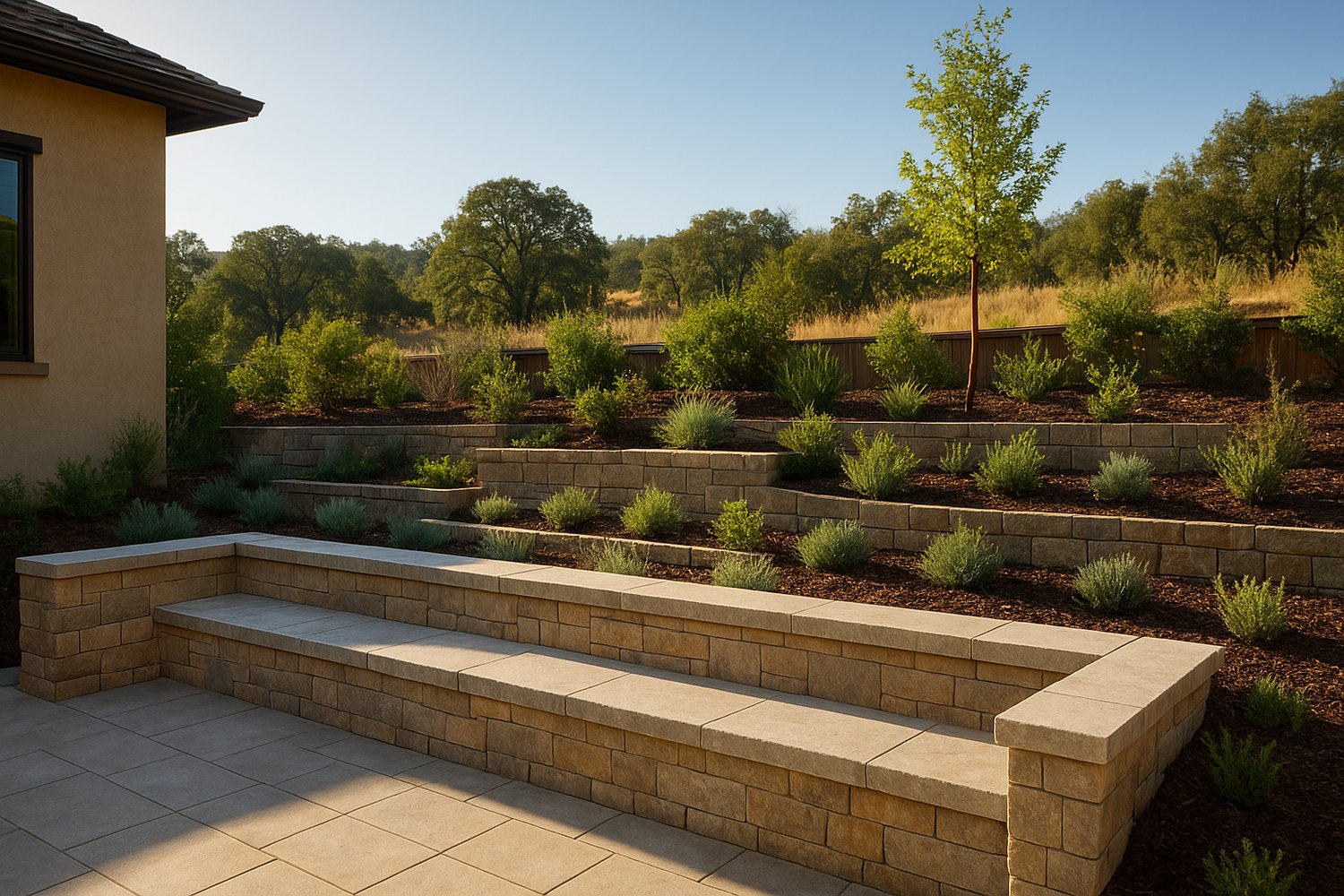
How to Protect Your Outdoor Seat Walls and Built-In Seating
Seat walls and built-in seating offer comfort and style to outdoor spaces. Here’s how to maintain and protect them from sun and rain in Northern California.
Outdoor seat walls and built-in benches face weather year-round. Effective care makes a difference in durability, beauty, and comfort.
Why Seat Wall and Cap Protection Matters
In our region, seat walls are a popular feature for patios and gatherings. They not only define spaces but also provide built-in seating without extra furniture. Over time, constant sun and occasional rain can wear down bottoms, caps, and veneer, affecting both appearance and functionality.
Water penetration is a hidden enemy. Whether from coastal storms or spring showers, moisture can seep into mortar joints or behind veneer, causing cracks and even loosening the face of your seat wall. Capstones, the wide stones on top where you sit, are particularly vulnerable if not sealed or maintained.
Direct sunlight can fade colors and weaken some sealers and adhesives. Intense summer heat in the Rocklin, Roseville, and Granite Bay areas accelerates these issues. Protecting your outdoor seat walls is about more than looks—it’s about making them last season after season.
- Enhances lifespan of seat wall surfaces
- Maintains visual appeal year-round
- Reduces repair costs in the long run
For more details on design and construction, visit ourSeat walls and built-in seatingpage.
Understanding Water and Sun Damage
Water can seep into small cracks, freeze on cold nights, and expand—creating bigger gaps. This cycle damages mortar joints and sometimes pops veneer off entirely. Even in our relatively moderate climate, rainfall accumulates enough to cause long-term issues if ignored.
Sunlight brings its own set of challenges for outdoor stone and concrete caps. UV rays bleach out color, dry out mortar, and can even lead to efflorescence—a whitish powder that appears when water carries minerals to the surface. In Folsom and Auburn, extended sunny spells are common and harsh.
The combined effect of water and sun over years will weaken even high-quality hardscape materials if left unchecked. Awareness is the first step; having a good care plan is the next.
- Efflorescence: White, chalky residue from moisture
- Surface fading from intense sunlight
- Cracked or loose veneer from water freeze-thaw
Sealers: Choosing the Right One
Selecting the right sealer depends on the exact materials in your seat wall caps and veneer. There are water-based and solvent-based sealers, each with different protection levels and effects on sheen or color. Most important is to choose a product formulated for outdoor hardscapes and compatible with your stone or concrete finish.
In Placer and Sacramento counties, look for sealers with strong UV resistance and water repellency. Some enhance color, while others provide a matte, natural look. Reapplication schedules can range from every year to every three years, depending on exposure and product.
Before applying any sealer, clean all surfaces thoroughly. Power-washing is effective, but avoid high pressure near joints to prevent dislodging any material. Let all areas dry fully—this ensures a good bond and maximum protection once sealed.
- Check for compatibility with your cap or veneer material
- Choose UV-resistant products for best results
- Reapply as recommended by the manufacturer
| Sealer Type | Best For | Reapplication | Appearance | Notes |
|---|---|---|---|---|
| Water-based | Most concrete, natural stone | Every 1-2 years | Matte to low sheen | Low odor, eco-friendlier |
| Solvent-based | Dense stone, brick | Every 2-3 years | Glossy to semi-gloss | Strong odor, high durability |
| Penetrating | Porous stone, pavers | Every 2-4 years | Natural look | Deep protection, invisible finish |
| Color-enhancing | Decorative stone/veneer | Every 1-2 years | Rich, deeper tones | Test in small area first |
Routine Cleaning and Inspection
A basic cleaning schedule is your first defense against buildup and the subtle effects of water and sun. Sweep away leaves and debris regularly—they trap moisture and stain surfaces. After heavy rain, check for pooling water or saturated soils around your seat wall base.
Inspect your seat wall for cracking, crumbling mortar, or areas where the capstone looks loose. Promptly addressing these small issues prevents bigger repairs later. If efflorescence shows up, remove it gently with a brush and water—avoid strong acids or cleaners that may harm stone or grout.
Seasonal inspections—ideally in spring and fall—help catch problems early. Keeping up with routine care is especially important in the variable weather of the Granite Bay and Folsom areas.
- Sweep and rinse surfaces monthly
- Spot clean after rainstorms
- Inspect joints and veneer for damage
Addressing Drainage Around Seat Walls
Poor drainage is an often-overlooked contributor to water damage in seat walls and built-in benches. Water should never sit or pool directly around the base. Good grading and proper patio design makes all the difference, channeling water away from your investment.
If your seat wall backs up to planting beds or lawn, monitor irrigation. Avoid overspray, and keep sprinklers pointed away from the wall cap and veneer. Mulch and landscape fabric can help slow down splash and runoff.
On sloped properties or high-water areas, consider professional guidance to improve drainage. With expert help, French drains, channel drains, or grading changes can be installed to protect your hardscape features over the long term.
- Address irrigation overspray promptly
- Check for puddling after rain
- Keep mulch or soil from covering the seat wall base
Thinking bigger? Explore all our options on theOutdoor Livingoverview.
Handling Common Repairs
Small cracks or missing grout in the cap or veneer can usually be addressed with products available at local landscaping supply stores. Clean the area, follow product instructions, and protect repairs from water until they’ve cured.
If a capstone becomes loose, remove it carefully before re-bedding with fresh mortar or adhesive. For sections of loose veneer, gently pry away the damaged pieces, clean old mortar off, and reset them. Seal all repairs after curing to improve resistance.
For larger problems, such as major shifting or whole sections of missing stone, consider bringing in a knowledgeable hardscape contractor. Timely repair will prevent worse damage and extend the life of your seating feature.
- Use appropriate mortar or adhesive for your material
- Seal repaired sections after cure
- Call a pro for complex or structural issues
When to Reseal or Refinish
Most seat wall sealers gradually wear away, especially in high-traffic or exposed areas. Common signs it’s time to reseal are visible surface dullness, water no longer beading, or color fading. In our climate, expect to reseal every one to three years.
If you notice stubborn stains, algae, or deep discoloration, a thorough cleaning and possibly a refinishing product may be needed before resealing. Always check manufacturer recommendations for your specific veneer or capstone.
Refinishing a seat wall can also restore appearance if there’s weathering or a chalky residue. Take the opportunity to inspect for structural issues before applying new surface treatments.
- Water should bead on a well-sealed cap
- Reseal more often in sunny, unshaded yards
- Refinish if deep stains or wear appear
Smart Habits for Lasting Outdoor Enjoyment
Beyond maintenance, adopting a few smart habits keeps your seat walls looking great. Use furniture pads or seat cushions to shield capstones from scratches. Consider portable umbrellas for added sun protection when entertaining outdoors.
Discourage climbing or standing on seat wall caps, as extra weight and impact can eventually loosen stones or veneer. Regularly remind family and guests about treating built-in features with care.
Ultimately, consistent care and usage habits will help your outdoor seating remain a durable and comfortable destination for years, matching your investment with lasting results.
- Use cushions or covers for added protection
- Add shade features as needed
- Educate guests on proper use
Ready for expert advice?Request a consultationby email and tell us about your project.
Planning an outdoor living project?
Call or text 916-741-0633, or email sales@californiahardscapes.com with your address, a short description and a few photos, and we will arrange a consultation.