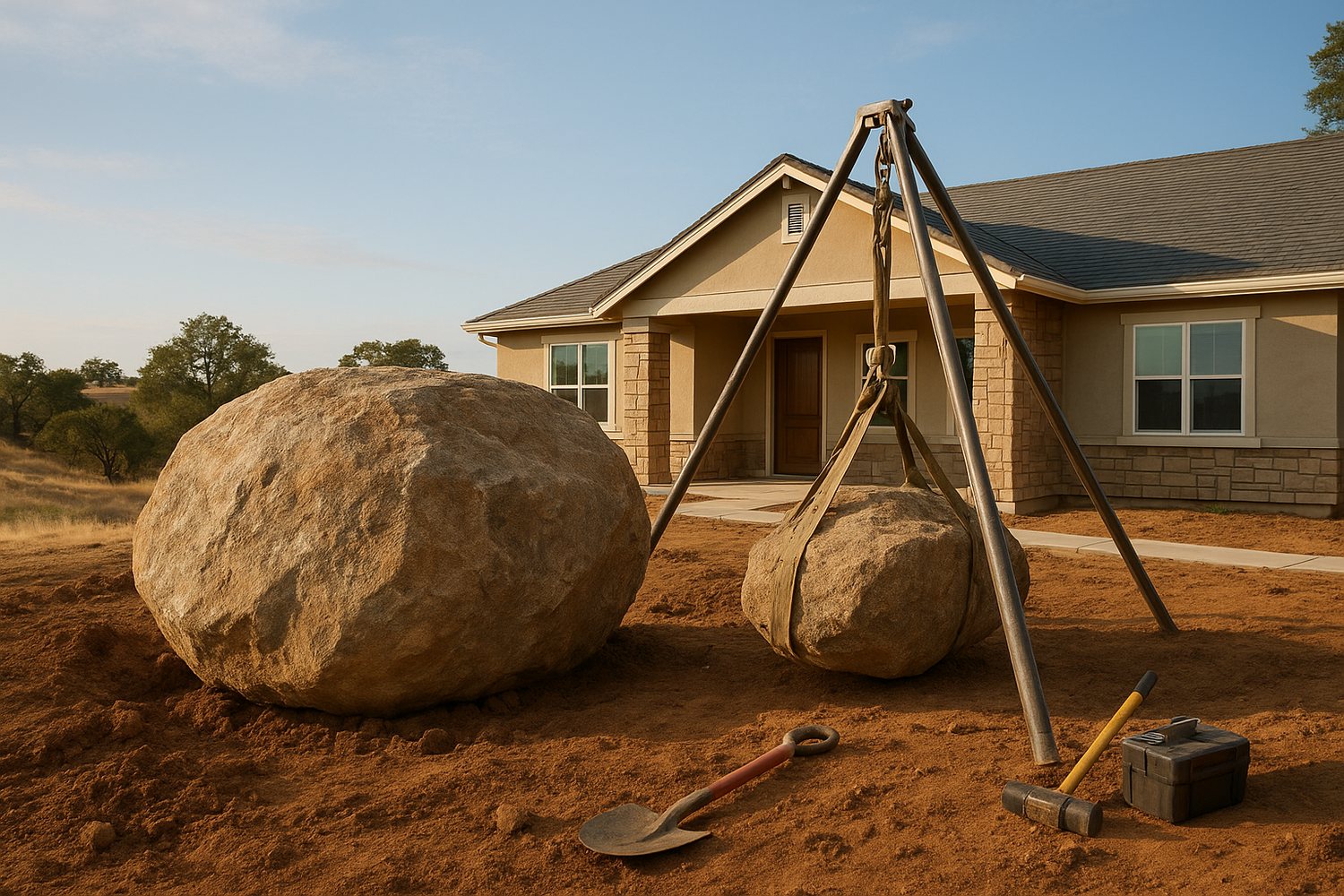
Landscape Boulders: Sizing Up Your Options and Planning for Placement
Discover the essentials of landscape boulder sizes and moving techniques, with practical region-specific advice for Rocklin, Roseville, and nearby homeowners.
Landscape boulders upgrade outdoor spaces with unmatched texture, color, and character. Knowing the right boulder size and what it takes to handle them ensures lasting results.
Why Boulder Size Really Matters in Landscaping
Boulders are dramatic by nature, but scale matters. The impact of a boulder depends on its proportion to your yard and surrounding features. A stone that’s too small will disappear into plantings, while one that’s oversized can visually overwhelm the space. Homeowners in areas such as Rocklin, Roseville, and Granite Bay face unique terrain and sun exposure, making boulder choice more than a simple aesthetic decision.
Material supply yards often grade boulders by weight or longest dimension, typically ranging from about 12 inches up to five feet or more. This seemingly small detail makes a world of difference: a 24-inch boulder might weigh as much as 300 pounds, while very large selections easily go beyond 1,000 pounds and require specialized handling.
Shape matters as much as size. Some boulders are flat and wide, ideal for seating or step stones, while rounded and upright types serve as accents or focal points. Considering what purpose your boulder will serve—natural sculpture, functional seat, or erosion control—can guide you to the right size category.
- Proportion is key: match boulder size to the space
- Larger boulders = higher impact but harder to move
- Boulder function (step, seat, accent) guides sizing
Explore material types, colors, and inspiration on theLandscape bouldersmain page.
Common Boulder Size Categories You’ll Encounter
Local landscape supply yards generally divide boulders into three size ranges: small, medium, and large. Small boulders (12–18 inches) fit well in planter beds and can be set in place by most able-bodied adults with the right tools. Medium boulders (18–30 inches) offer enough presence for grouping or use as low garden seats. Large boulders (over 30 inches) are substantial enough to act as the main focal point of a front yard or anchor a water feature.
Weight climbs steeply with each size jump. Small boulders might start around 100–200 pounds, while the largest landscape stones many yards carry can top a ton. For most homeowners, this distinction is not just about aesthetics—it’s about knowing what’s practical to move safely at home.
In the Placer, Sacramento, and El Dorado County areas, the types of boulders available—such as Sierra granite, basalt, and Gold Rush river rock—can vary in appearance but follow similar sizing classifications. Always confirm size and weight details before planning your project; “large” really means large after delivery.
- Small: 12–18 inches, 100–200 pounds
- Medium: 18–30 inches, 200–700 pounds
- Large: Over 30 inches, 700–2,500+ pounds
- Weight can vary by stone type
What It Takes to Move a Landscape Boulder
Transport and placement logistics are nearly as important as selection. For boulders up to around 200 pounds, a sturdy dolly, pry bar, and some plywood for rolling or sledding may be enough for a strong homeowner and helper team. Once you exceed the small category, you’re looking at machinery: a skid-steer loader or mini-excavator is the safest, most practical choice.
Staging is critical. You’ll want your boulder dropped as close to its final location as possible. Trying to roll or drag a boulder of several hundred pounds across finished landscaping can damage lawns, irrigation, and more. Local companies familiar with the Rocklin and Folsom terrain will plan access routes and protect your existing landscaping during placement.
If you’re working with a contractor, clarify who will be responsible for boulder placement and ensure they have appropriate equipment. Marty at California Hardscapes, for example, manages projects with professionals licensed, bonded, and insured for safe execution in residential settings.
- Use machinery for anything over 200 pounds
- Plan for protected access over finished yards
- Enlist licensed contractors for large boulder moves
| Boulder Size | Typical Weight | Placement Method | Ideal Use |
|---|---|---|---|
| Small (12–18 in) | 100–200 lbs | Hand tools, dolly | Beds, small accents |
| Medium (18–30 in) | 200–700 lbs | Skid-steer loader | Seating, grouped displays |
| Large (30+ in) | 700–2,500+ lbs | Mini-excavator | Focal points, large spaces |
Comparing Boulder Sizes: What’s Right for Your Space?
Choosing the best boulder size depends on how you want the stone to function in your landscape. For intimate backyard beds or smaller yards, stay on the compact side—these are easier to position and less likely to overwhelm your garden. Medium boulders strike a balance between visual impact and manageable scale, great for creating groupings or defining pathways.
Larger size boulders are excellent for front yards or properties with open sightlines, where a solid focal point is needed. However, these pieces demand professional equipment for transport and placement, adding considerations of cost and logistics. Look at your home’s style, layout, and the role the boulder will play before locking in a choice.
Remember that weight rises exponentially with size—moving a stone that’s just a few inches bigger may require a completely different approach. Use the comparison table below to get a sense of what’s practical for your property and project goals.
Factors Unique to Our Local California Region
Our local soils and climate in Rocklin, Granite Bay, and the greater foothills region affect both boulder selection and installation. Soil stability, slope, and drainage need to be assessed before placement, especially with larger stones. In clay-heavy soils, boulders can settle unevenly unless properly set on compacted base materials.
Sun exposure matters, too. Boulders in open spots can become surprisingly hot under strong California sun, making flat-top stones less comfortable for seating during midsummer. Planning around tree cover or positioning for shade can extend the usefulness of selected boulders.
Source your boulders with longevity in mind: local materials like native granite or river-washed stones tend to weather best here, harmonizing with natural surroundings and withstanding Northern California’s distinct wet and dry cycles.
- Account for local clay and rocky soils
- Consider sun for comfort and plant compatibility
- Native materials age well and blend best
See concrete, stone, and specialty options by visiting ourMaterials overview.
Techniques for Natural-Looking Boulder Placement
Professional results depend on more than just setting a boulder down—placement technique makes all the difference. Tilt boulders slightly into soil or grade to mimic how they sit in nature, rather than perching them on the surface. Burying a third of the stone gives a pleasing, settled appearance.
Use a mix of sizes when possible. Groupings of three or five stones, paired with smaller cobbles or gravel, create a natural effect and soften transitions to planting areas. Avoid lining up multiple boulders in a row; cluster them in loose, irregular formations for the most convincing look.
If your project includes water features or dry riverbeds, integrate boulders of different textures and heights to echo creek banks found in our local Sierra foothills. The final placement should match both functional needs and your landscape’s flow for a premium, cohesive finish.
- Partially bury boulders for a natural effect
- Combine multiple sizes for realism
- Echo regional creek or bluff scenes
Safety First: Boulder Installation Precautions
Moving boulders is a physically demanding—and potentially hazardous—job. For anything larger than the smallest stones, don’t risk it alone. Always lift with proper tools, keep a solid grip, and maintain clear communication if working with others. Roll, don’t lift, whenever possible to reduce strain.
Landscaping equipment like loaders or excavators should only be operated by those experienced with such machinery. Protecting utility lines and your property’s infrastructure is also vital. Accidental damage to sprinklers or underground cables is costly and avoidable with planning and communication.
Whether DIY or professional, prioritize personal and property safety. Licensed, bonded, and insured professionals, like those managed by California Hardscapes, deliver peace of mind along with impressive results.
- Never lift heavy boulders solo
- Check for buried lines before digging
- Use correct equipment for the boulder size
Getting Started with Boulder Selection in Your Yard
Begin by pinpointing your goals: do you want a single standout feature, or to blend a collection of stones into garden beds? Walk your yard, noting space constraints, terrain, and visual lines. Bring inspiration—photos or sketches—to any consultation for better material matching.
Talk through boulder size, type, and installation requirements with your contractor or materials specialist. Local expertise makes all the difference; they’ll steer you toward the most appropriate options for our soil, climate, and region-specific needs, whether in Auburn, Folsom, or nearby communities.
Above all, aim for a timeless effect: the right boulder, properly installed, frames plantings and patios for decades to come. A short conversation with a knowledgeable team can set your project on the right path.
- Clarify your project’s function and focal point
- Consult local experts for size and placement insight
- Balance impact, safety, and long-term value
Ready to discuss ideas for your yard? Request a site visit orconsultation.
Planning a materials project?
Call or text 916-741-0633, or email sales@californiahardscapes.com with your address, a short description and a few photos, and we will arrange a consultation.