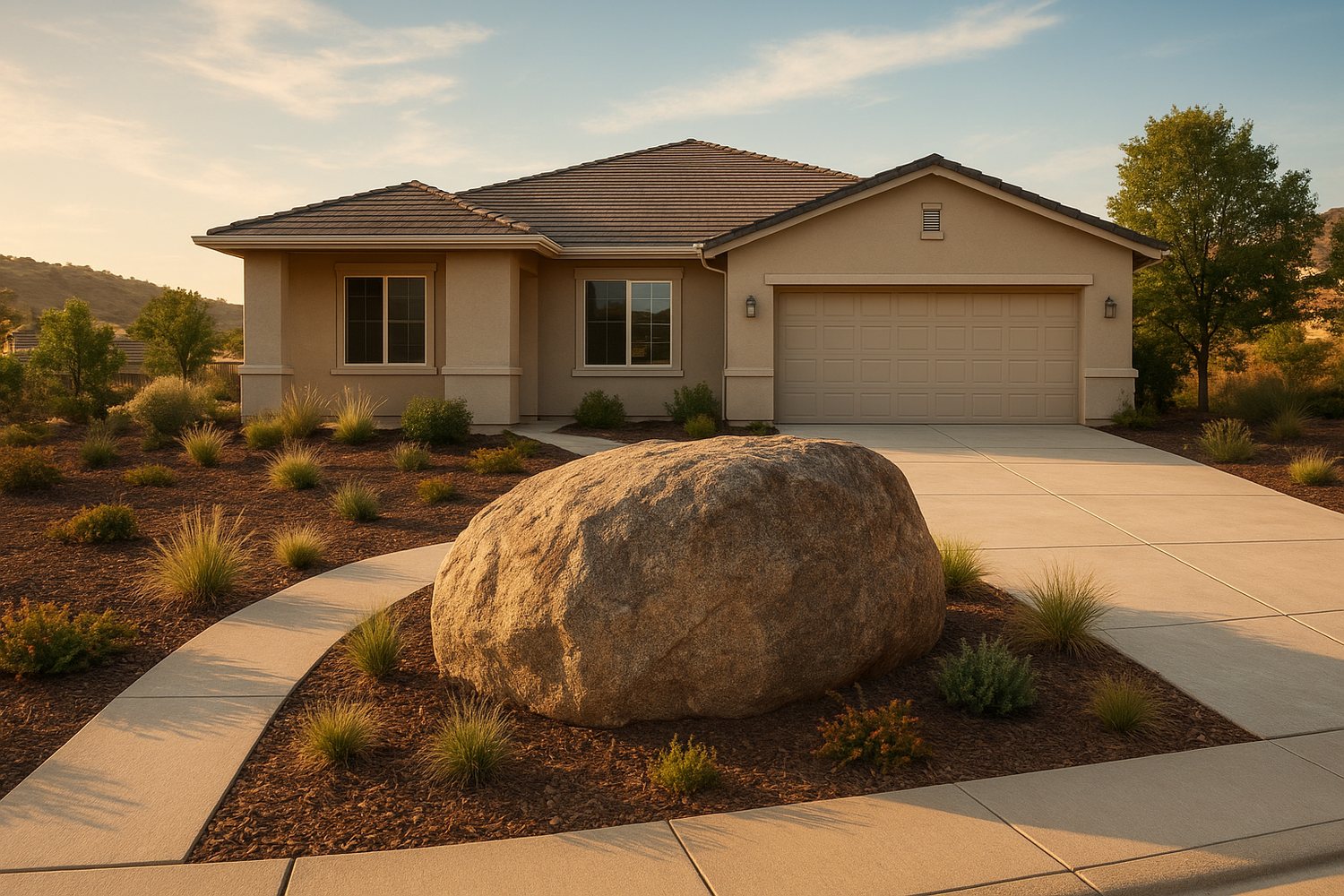
Granite vs Fieldstone: Choosing the Right Landscape Boulders
If you’re deciding between granite and fieldstone boulders for your landscape, here’s a regional perspective on the material, style, and performance differences.
Boulders can reshape any California yard, but the choice between granite and fieldstone goes beyond appearance. In our region, each material brings unique benefits and considerations to outdoor spaces.
Understanding the Basics: Granite and Fieldstone
Landscape boulders immediately elevate a yard’s appeal. In the Rocklin and greater Sacramento area, granite and fieldstone are by far the most common options. Both add structure and authenticity in landscapes, but they’re distinct materials. Granite, a hard and dense igneous rock, features crystalline textures and enduring strength. Fieldstone, meanwhile, refers to naturally weathered rocks gathered from the earth’s surface. Their organic forms and surface patinas bring a softer look.
Understanding local geology matters: granite boulders are abundant thanks to Sierra Nevada deposits, while fieldstone often includes softer sedimentary rocks or river-rounded stone. Knowing origins helps anticipate color, weathering traits, and fit with California’s climate. Homeowners in Granite Bay, Auburn, and neighboring foothill communities will likely spot existing granite outcrops close to home.
Fieldstone has an earthy, timeworn beauty. Granite reads as crisp, monumental, and classic. Selecting between them means weighing not just look but how each holds up outdoors. Let’s examine practical differences, maintenance, design style, and how both materials interact with the area’s ecology.
Key distinctions:
See more about options like these on our mainLandscape boulderspage.
Aesthetic Impact: Colors and Textures
Granite boulders supply a bold statement. Their color palette leans from silver and charcoal to light gray and even pink, with distinct mineral flecks. Crisp edges and blocky forms are typical. Fieldstone, on the other hand, varies in color—tans, browns, soft grays, and sometimes mossy greens, depending on the landscape where they formed.
Texture makes a real difference in completed landscapes. Granite surfaces may show a subtle sparkle and stoic presence. Fieldstone texture is typically weathered or smoothed by erosion, presenting a natural, warmed look. In the shaded gardens of Auburn or sun-exposed patios of Folsom, these attributes affect both light reflection and tactile feel.
Consider the intended experience: formal, geometric layouts often showcase granite. Fieldstone supports informal, cottage, or native California garden styles. Lighting, plant palette, and home architecture can influence which stone integrates best.
Durability Matters: Weather and Usage
Durability is always central in outdoor construction. Granite boulders are nearly unmatched in hardness and weather resistance. They stand up to decades of sun, rain, and freeze-thaw cycles—key for Placer, Sacramento, and El Dorado County properties facing occasional storms and summer droughts.
Fieldstone performance varies with its geological makeup. Denser varieties are reliable even in high-traffic zones, though softer stones may show more surface wear over time. Moss or lichen growth is typical, offering character but needing an occasional clean for crisp aesthetics. Fieldstone’s charm grows with age, but it should be thoughtfully sited if you expect occasional impacts or child play.
Both types suit retaining walls, water features, and borders. For critical structural uses—like high retaining walls—granite’s strength can give greater peace of mind. For stepping areas or garden accents, either works if matched to the right space.
Weather resistance highlights:
| Attribute | Granite Boulders | Fieldstone Boulders |
|---|---|---|
| Appearance | Angular, speckled, bold color | Rounded, weathered, earthy tones |
| Texture | Smooth to slightly rough, crystalline | Heavily weathered, often softer |
| Weight | Very heavy per size | Varies, generally lighter |
| Durability | Maximum weather resistance | Variable (dense = durable, some softer) |
| Best Use | Walls, focal points, modern designs | Borders, informal, rustic, naturalistic projects |
Installation Insights: Weight, Placement, and Planning
Installing landscape boulders requires more than muscle; it’s a matter of thoughtful positioning and site planning. Granite boulders, owing to their density, are extremely heavy for their size—a factor when access is limited or when several stones are required. Fieldstones, depending on the type, may be a little lighter or more irregular, which can help with creative arrangements or tight spaces.
Placement is best planned in advance. Granite’s blockier shapes allow for stable seating or stepping, while fieldstone’s forms work well nestled into planting beds or following landscape contours. In challenging slopes common to Granite Bay or Auburn, granite boulders’ sheer mass helps with erosion control and stability.
Professional handling is wise for either material, especially for larger stones or projects involving walls and water features. Choosing the right equipment prevents property disturbance, and experienced crews anticipate local conditions—clay soils in Folsom, decomposed granite in Rocklin—to ensure a permanent result.
- Granite boulders: stable, require heavier machines
- Fieldstone: shaped for creative fills and borders
- Both need solid, well-compacted bases
Cost Factors and Sourcing in the Sacramento Region
Material cost isn’t the only factor—consider delivery, site access, and preparation. Locally sourced granite often means excellent availability for Rocklin and surrounding communities. Because of its density, granite may cost more to transport and position, especially as size increases.
Fieldstone can be regionally available, especially near streambeds or older rural lands. However, its value can increase if larger, rarer shapes are desired. In some cases, select fieldstone comes from farther afield to achieve certain color tones or larger sizes.
Every property is different. Homeowners in Folsom or Roseville with flat, open access may see less labor cost difference between materials, while tight city lots or established gardens could benefit from lighter fieldstone boulders. Local suppliers understand the soil, access, and logistics—another reason to discuss options with knowledgeable contractors.
Explore all our top material selections with the fullMaterialsoverview.
Design Considerations: Which Stone Fits Your Vision?
Consider how boulders will interact with your home, plants, and lighting. Granite boulders naturally echo local Sierra formations and look crisp against modern homes or xeriscapes. They work well with grasses, olive trees, or contemporary designs common in new construction.
Fieldstone boulders encourage a softer edge; think informal paths, cottage or woodland gardens, or spaces aiming to appear aged and established. Plants like manzanita, redbud, or native groundcovers pair especially well with fieldstone’s hues and shapes.
Blending both materials is possible but often takes a careful hand. Mixing can provide a nuanced look when handled with restraint. Consider proportions, color, and the story you want your landscape to tell—California Hardscapes can help you weigh these options in the context of your property.
- Granite: bold, architectural, works for clean lines
- Fieldstone: flowing, rustic, best for informal gardens
- Think about sunlight, shade, and seasonal change
Long-Term Maintenance: What to Expect
On the maintenance front, both granite and fieldstone are practical. Granite needs little attention beyond an occasional rinse—its smooth, crystalline face resists algae and stains. Fieldstone, especially if sourced river-worn, may allow seeds or mosses to settle and requires light seasonal cleaning.
Leaf litter, pine needles, and other debris collecting around boulders is normal; both materials benefit from simple sweeping or a mild pressure wash annually. Avoid harsh chemicals and always check for plant roots working below the surface before deep cleaning.
If you appreciate a wilder look, fieldstone’s natural weathering can be a feature, encouraging lichen and microhabitats for beneficial insects. Granite’s clarity rewards a more deliberate, curated aesthetic. Repair is rarely required for either barring substantial impact or relocation needs.
Making the Best Choice for Your California Property
Choosing between granite and fieldstone boulders is about matching material qualities with your vision for outdoor living. Granite’s bold, steadfastness fits structured, modern, or Mediterranean-inspired designs. Fieldstone’s timeless, softened look complements country, woodland, or rustic landscapes.
Speak frankly with contractors about site conditions: soil type, drainage, and access can all inform the right call. Consider longevity too—both materials hold up, but differences in color, edge definition, and texture will show as the years pass. Always preview locally sourced stone before making a final selection.
A trusted materials provider with construction know-how brings vital, practical advice to the table—saving time, money, and headaches as your project comes to life. If you’re weighing options, a straightforward conversation about your priorities helps set the direction and ensures you land on the right stone for your home.
Ready for help choosing? Book a time for expert advice using our quickconsultation request.
Planning a materials project?
Call or text 916-741-0633, or email sales@californiahardscapes.com with your address, a short description and a few photos, and we will arrange a consultation.