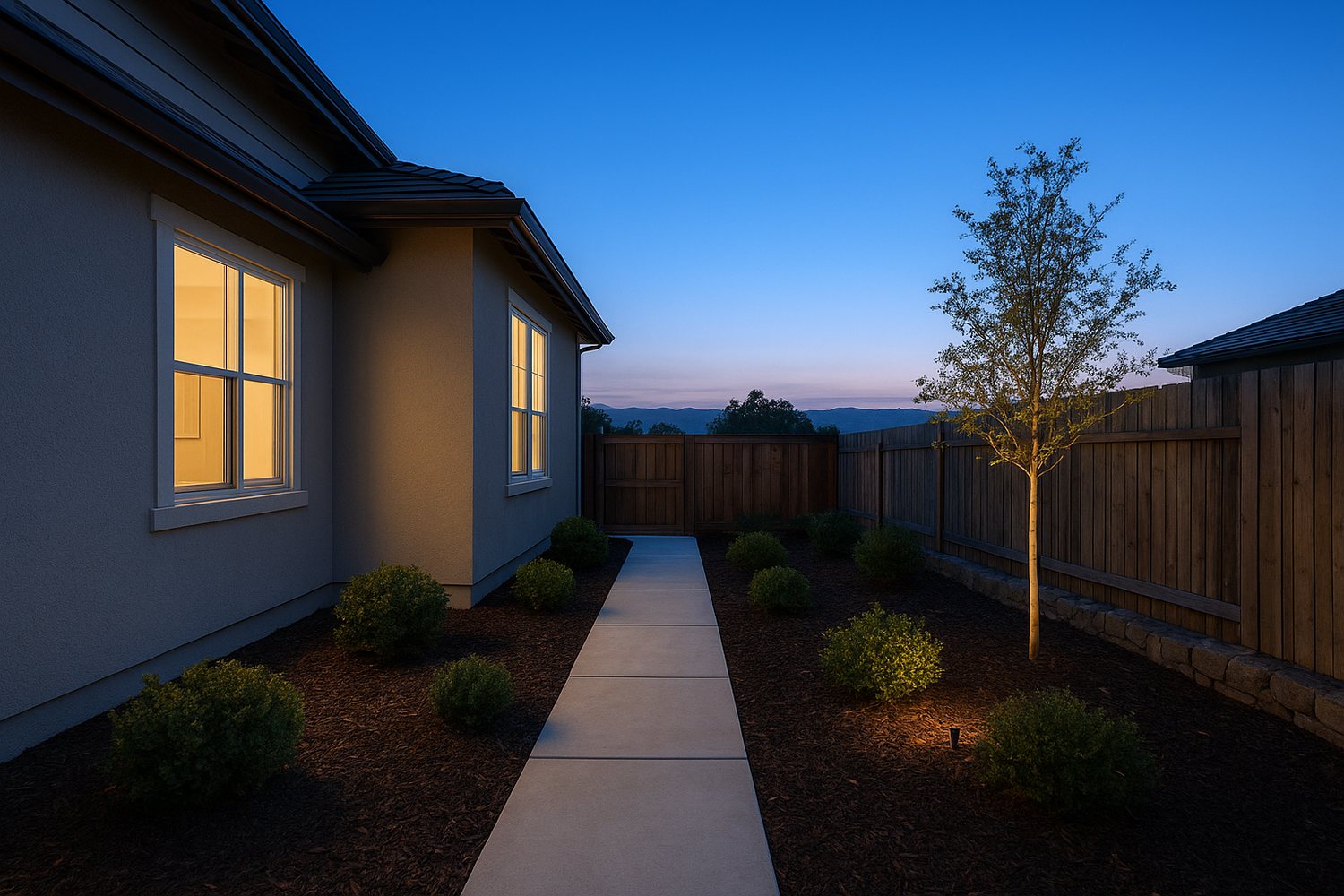
Layered Lighting vs Floodlights for Outdoor Security
Discover why layered lighting is becoming the smart alternative to floodlights for outdoor security and safety. Learn how to choose the right approach for your California home.
The right outdoor lighting can both deter intruders and create a welcoming environment. Choosing between floodlights and layered lighting starts with understanding your options.
Why Security Outdoor Lighting Matters
Homeowners in Rocklin, Roseville, Granite Bay, Folsom, and Auburn know that security isn’t just about locks or alarms. Outdoor lighting is a practical way to add safety, deter trespassers, and make your property feel more comfortable after dusk. Bright light can give peace of mind, but the strategy you use matters.
A well-lit exterior discourages crime by eliminating hiding spots and drawing attention to activity around your property. It also minimizes slip, trip, and fall hazards when walking after dark. Reliable outdoor lighting has additional benefits, such as easier navigation for guests and a more attractive curb appearance at night.
While many homeowners immediately think of big, bright floodlights for security, there’s more to the story. Layered lighting techniques are increasingly favored in California neighborhoods for good reason. Understanding the strengths and weaknesses of each option will help you make the best decision for your home.
See more guidance and options for security lighting on ourSecurity and motion lightingpage.
The Problem with Relying Only on Floodlights
Floodlights are high-intensity lights that cast a wide beam across yards or driveways. While they can be effective at startling someone entering an area, these lights often create glare and harsh shadows. This can actually make it difficult to see beyond the illuminated zone and sometimes leave dark corners where trouble can hide.
Constant, intense light may also draw unwanted attention from the street and can be considered a nuisance by neighbors, especially in residential communities like those across Placer and El Dorado counties. Overuse can diminish the effect—people become accustomed to the light turning on, or it can even act as a beacon for curious passersby.
For busy households and homes with pets or wildlife, floodlights can also become a source of frustration. Motion sensors may trip too frequently and fail to distinguish between genuine threats and everyday movements, leading to a less than ideal security solution.
- Harsh glare and deep shadows
- Nuisance to neighbors and wildlife
- Frequent false triggers on motion sensors
What is Layered Lighting?
Layered lighting combines multiple types of outdoor lights at different levels and locations around your property. The goal is to create an even, subtle wash of light that eliminates dark zones without the harshness of a single flood source. This approach works especially well in landscapes and hardscapes designed for outdoor living.
Key layers include low-voltage path lighting along walkways, accent lighting for architectural or landscape features, and well-placed wall or step lights for entry points. When combined, these layers create overall illumination that feels natural and inviting, while supporting security needs.
Unlike a single floodlight, layered lighting can be customized for zones—bright enough to deter unwanted visitors but soft enough to minimize glare or intrusion. The result: a safer, more functional, and more attractive property for your family and guests.
- Permanently installed and subtle
- Low-voltage options available
- Customizable for zones and entrances
| Lighting Style | Coverage | Glare/Shadows | Aesthetics | Neighborhood Impact |
|---|---|---|---|---|
| Floodlights | Wide but uneven | High glare, deep shadows | Harsh, intrusive | May disturb neighbors |
| Layered Lighting | Even, customizable | Low glare, minimal shadows | Subtle, attractive | Fits neighborhood expectations |
| Motion Lighting | Targeted spots | Moderate glare | Functional look | Minimizes constant light |
Layered Lighting vs Floodlights: Key Differences
When comparing layered lighting to traditional floodlights, the differences go beyond brightness. Each style has strengths that might work for specific needs, but layered lighting offers significant security and lifestyle benefits for many local homes.
Floodlights are single-point, high-output fixtures meant to flood an area with intense light, often triggered by motion. Layered lighting, on the other hand, relies on a series of lower-intensity fixtures and thoughtful placement, offering depth, coverage, and flexibility.
It’s worth considering your property’s layout, neighborhood expectations, and safety priorities. Homeowners with larger yards or side-access entries may benefit most from a layered approach. Here’s a practical comparison of both strategies:
- Floodlights = one big source; Layered = multiple smaller lights
- Layered lighting adapts to design and security needs
- Floodlights may not cover every vulnerable area
How Layered Lighting Improves Security
Layered lighting covers vulnerable areas without oversaturating your yard in harsh light. Lights can be angled to emphasize shadowy pathways, illuminate doorways, and gently brighten driveway approaches—eliminating places to hide.
Separating light sources at different heights and zones prevents deep shadows, a common issue with floodlights. This makes it easier for anyone (and any cameras) to spot activity and for residents to move around safely, even on uneven ground and steps.
Discreet integration with landscaping, patios, and hardscapes discourages tampering and keeps the system effective regardless of the season. A layered system also works well with motion sensors, giving light only when and where it’s needed most.
- Better for camera visibility
- Easier for guests and residents after dark
- Blends with landscape for reduced tampering
Curious about other options? Visit our overview ofOutdoor Lightingdesigns and techniques.
Common Motion Lighting Mistakes to Avoid
Motion lighting is popular across Sacramento and Placer counties, but it requires proper calibration. Avoid setting sensors too broadly; this causes false triggers from wind, pets, or even insects. Choose targeted sensor positions for key points like doors, gates, and vulnerable paths.
Mount lights at a suitable height to maximize coverage while avoiding blinding residents or drivers entering or exiting. Test sensor range and timing—too quick a shutoff leaves guests stumbling, too long wastes energy and can be bothersome to neighbors.
Review property lines: even the best lighting becomes a liability if it shines into neighbors’ windows or disrupts the street view. Careful placement and shielded fixtures protect privacy and maintain neighborhood harmony.
- Keep sensors focused on access points
- Adjust shutoff timing for safety
- Shield lights to avoid glare or spillover
Techniques for Outdoor Security Lighting in Our Region
Our part of California brings unique considerations: local zoning, weather swings, wildlife, and close-knit neighborhoods. Choose fixtures rated for all-weather durability and consider low-voltage systems for better energy efficiency and code compliance.
Place pathway and step lights along changes in elevation—a common feature in Auburn and Granite Bay yards. Use accent lighting to highlight landscape beds, retaining walls, and water features while discouraging unauthorized movement in darker corners.
Integrate lighting controls and smart timers for overnight scheduling or vacation mode. This helps create the look of occupancy when you’re away, without constant floodlight glare. Consult a professional who understands local conditions for placement and installation tips that last through summer heat, winter rains, and everything in between.
- Weatherproof, low-voltage systems
- Path and step lights for slopes
- Smart controls for dynamic scheduling
Making the Right Call for Your California Home
There’s no one-size-fits-all answer to outdoor security lighting, but for most properties in Rocklin, Roseville, Folsom and nearby neighborhoods, layered lighting achieves both safety and curb appeal. Evaluate your home’s unique vulnerabilities and outdoor living features before deciding.
Consulting with knowledgeable hardscape professionals can help you design a lighting system that addresses your specific security concerns, while still respecting neighborhood boundaries and style. It’s also an opportunity to future-proof your home for changing needs, expanding coverage as your property or lifestyle evolves.
Whether you prefer the simplicity of a single floodlight or the practicality and comfort of layered lighting, the right installation keeps your outdoor spaces safer year-round. Start by walking your property at dusk to see potential blind spots and get inspired by the possibilities.
- Layered lighting adapts as your property changes
- Professional input makes installation seamless
- Address both safety and property value
Ready to get expert advice?Request a consultationwith our team anytime.
Planning an outdoor lighting project?
Call or text 916-741-0633, or email sales@californiahardscapes.com with your address, a short description and a few photos, and we will arrange a consultation.