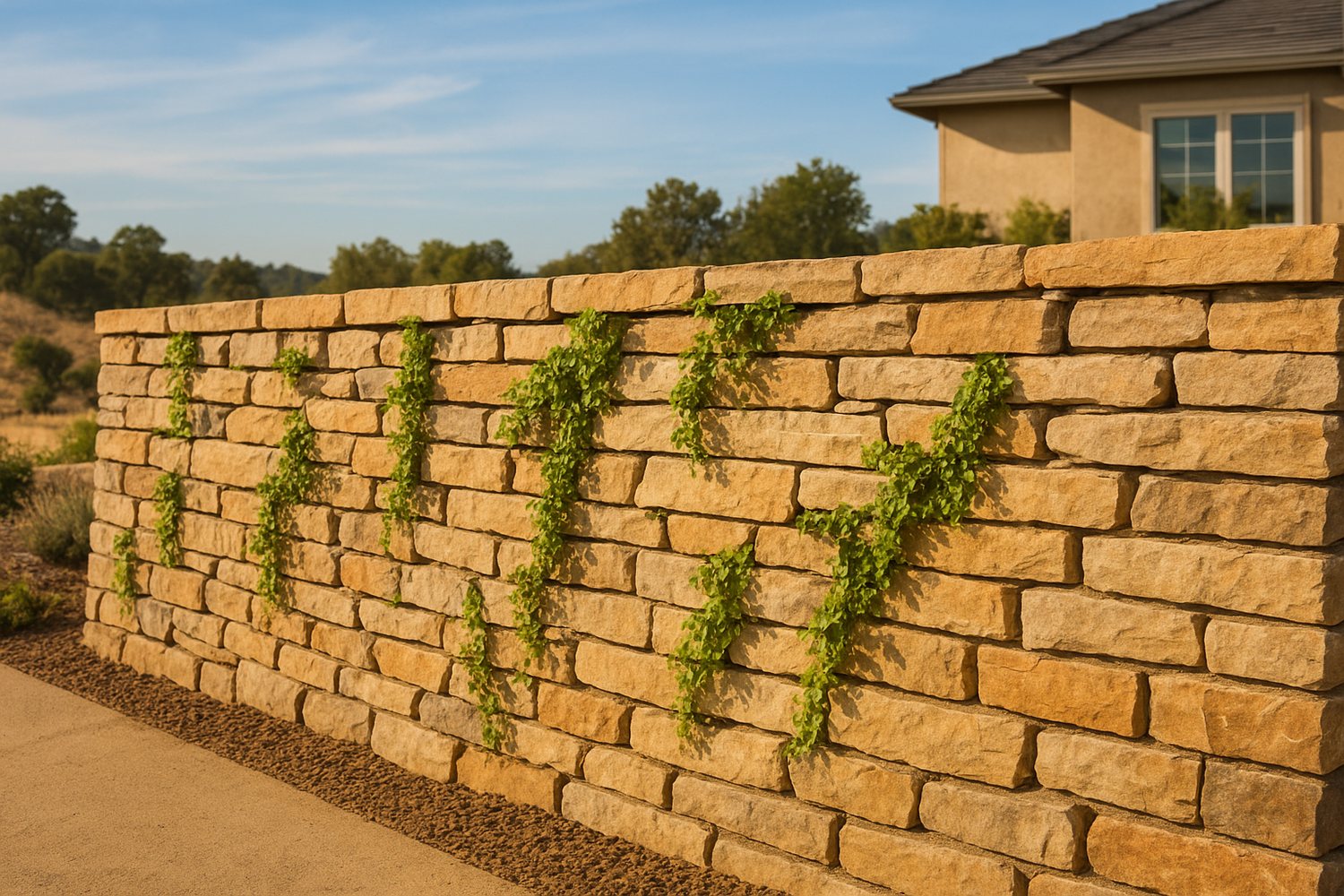
Choosing Natural Stacked Stone Walls for Foothill Homes
Learn how to select stacked stone retaining wall materials that harmonize with foothill landscapes and home designs in Rocklin, Roseville, and nearby areas.
Natural stacked stone walls can anchor your landscape and echo the character of Sierra foothill homes. The right design choices ensure the wall feels like it’s always belonged.
Understanding Natural Stacked Stone Aesthetics
Natural stacked stone walls set a tone of permanence and beauty. In the Rocklin, Roseville, and Folsom area, the gold, russet, and tan tones in our native landscape often inform the best choices. A stone wall should never feel imported; it should look collected from the very hills your home sits on.
Homeowners in Placer, Sacramento, and El Dorado County value retaining walls that blend into their local scenery. This means considering stones with irregular shapes, split faces, and a mix of complementary earth tones. It’s a softer, more organic look than highly geometric, poured concrete walls.
The right stone choice is both an aesthetic and a longevity decision. Stones that suit local soils and weather patterns hold up longer, with less maintenance. The appearance ages gracefully, fitting with your home’s shifting landscape over the years.
For more details on design and build options, visit ourNatural stacked stone wallspage.
Selecting Stone That Matches Your Home’s Architecture
Stacked stone walls perform best when their materials tie into your home’s structure—roof, trim, or even window casings. Many foothill homes feature warm neutrals and textured sidings; opt for stones with similar undertones, like gold quartzite, brown schist, or granite with rust and olive highlights.
For craftsman-style homes, split-stone faces and a blend of browns and greys carry the natural theme. Mediterranean homes can contrast with creamy limestones or blush stones. Contemporary builds work well with linear lines, flatter faces, and cool-toned stone like slate or blue granite.
Think about transitions: a stacked stone wall should feel like a “step down” from your house. Keep stone finishes slightly less refined than facade details so your landscape feels thoughtfully layered, not overmatched.
- Echo roof or trim colors in stone selection
- Pair irregular stone shapes with rustic architecture
- Choose crisp, flat stones for modern houses
Harmonizing with Foothill Landscapes
The Sierra foothills are defined by rolling gold grasses, granite outcrops, and oaks. The best natural stacked stone walls pick up these cues. Choose materials with specks of color pulled from the surrounding terrain—flecks of orange, gray, or even hints of moss green.
Natural weathering is a friend to local hardscapes. Stones that patina over time will settle into their environment, looking better season after season. Avoid ultra-bright or highly uniform imported stones, which can look artificial beside our native landscape.
Positioning also matters: following the land’s slope with your wall instead of making it forcefully straight enhances a natural appearance. When in doubt, seek out locally sourced stone whenever possible to ensure a seamless match.
- Favor stones with subtle variation in color
- Look for local quarry options
- Embrace natural, time-worn finishes
| Stone Type | Color Range | Durability | Best For | Notes |
|---|---|---|---|---|
| Quartzite | Gold, tan, silver | High | Warm landscapes | Subtle shine, local availability |
| Granite | Black, orange, gray | Very high | Classic homes | Blends well with native rock |
| Schist | Brown, gray | High | Rustic gardens | Distinct layered texture |
| Basalt | Dark gray, black | High | Modern or naturalistic | Sleek, understated look |
| Slate | Gray, blue-gray | Medium | Contemporary | Requires careful installation |
Retaining Walls: Practical Considerations for Our Region
Proper drainage is crucial in our region’s clay-heavy soils. Stones need solid foundations and should be dry-stacked or mortared with ways for water to escape. This helps prevent unsightly bulging or soil runoff, especially after winter rains.
Height and engineering depend on your property and what the wall must hold back. Talk through options for stepped walls or natural terraces if you have significant grade changes—this can be both practical and aesthetically pleasing.
Routine inspections are wise, especially if your wall uses natural stone: check for shifting or settling periodically. Selecting the right stone in the right thickness helps the wall last for decades with only minor touch-ups needed.
- Plan for weep holes or gravel backfill
- Use larger stone at the base for support
- Terrace higher slopes with multiple low walls
Local Stone Types to Consider
Quartzite is readily accessible in the area and comes in soft gold, tan, and silver shades. It’s strong and offers an attractive sparkle in the sun. Schist and basalt, popular for their deep earth tones and durability, can also fit well into foothill settings.
Granite—especially varieties quarried nearby—blends beautifully. Many local granites feature specks of black and orange that mirror the region’s natural palette. For a subtler, cooler look, slate is an option, though it requires more care to avoid flaking.
When selecting stone, bring home a few samples to see how they react to the changing sunlight and weather. Natural stone’s appearance shifts with the light, ensuring there’s no substitute for viewing materials onsite before making a final decision.
- Quartzite: warm golds and tans, highly durable
- Granite: regionally quarried, speckled colors, strong
- Schist and basalt: darker, perfect for blending with oaks
Explore other styles and materials on ourRetaining Walls overviewto compare choices.
Design Details that Make a Difference
Mortar joint choice impacts the look as much as the stone itself. Recessed or hidden joints give walls a dry-stacked look, helping them feel more natural and less formal. For truly rustic results, dry-stacking without visible mortar is a timeless approach.
Capstones—flat stones on top—can turn a wall’s edge into additional seating or give it a tidy, finished profile. For sloped sites, step the wall top with the grade for a seamless transition, rather than forcing perfectly level lines.
Consider finishing off walls with native or drought-tolerant plantings tucked into pockets or at the base. This softens the structure and ties it visually to the broader landscape.
- Recessed joints mimic old-world stonework
- Add capstones for a polished finish
- Soften with California natives or low-water plants
Fitting New Walls Into Existing Hardscaping
Integrating a new stacked stone wall is easier when the materials respect what’s already on site. Reference patio or walkway tones, and echo stone shapes or finishes used elsewhere. Consistency builds a harmonious feel throughout your property.
Match scale carefully: on larger lots or with substantial homes, use thicker, taller stones. On smaller properties, keep stone size and wall height in balance with space. If you’re blending with concrete, consider stamped or colored concrete that complements your wall’s stone.
Lighting matters—low, warm outdoor lighting can highlight stone texture in the evening and boost safety along walkways or stairs. Plan wiring early to avoid disruption to finished landscaping.
- Coordinate wall stone with other paving materials
- Scale stone size to lot and house proportions
- Install path lighting for evening ambiance
Next Steps: Planning Your Wall With a Local Pro
A thoughtfully built natural stacked stone wall should serve both form and function for years. Choosing stone that fits the Rocklin and Sierra foothill region is just the start; how it’s designed and installed matters even more.
Discuss your goals, style, and site challenges with a professional who understands the local geology, soil, and climate. They can help you see options you may not have considered and guide you toward the best materials for your property.
Bring any inspiration images, paint or siding samples, and a sense of how you use your outdoor space. The clearer the vision, the more likely your wall will make the statement—and deliver the performance—you’re after.
- Preview stone samples on site if possible
- Talk drainage and engineering with your contractor
- Plan installation to minimize disruption
Ready to talk through your project?Request a consultationfor personal advice from our team.
Planning a retaining walls project?
Call or text 916-741-0633, or email sales@californiahardscapes.com with your address, a short description and a few photos, and we will arrange a consultation.