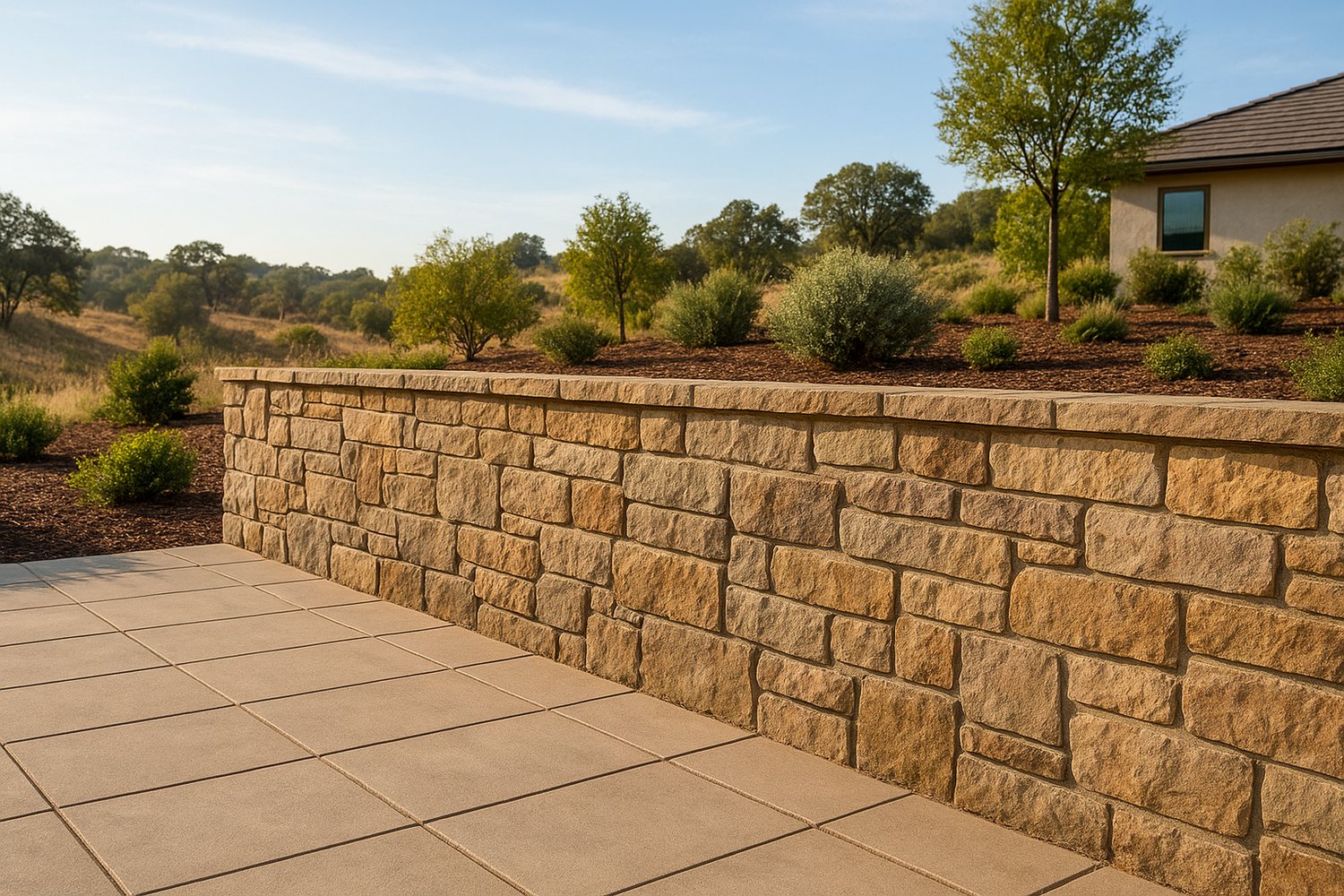
Dry-Stack vs Mortared Stone Retaining Walls: What’s Best for Northern California?
Explore the pros and cons of dry-stack and mortared stone retaining walls for homes in the Rocklin region, with real insights from California Hardscapes.
Stacked stone walls bring beauty and function to outdoor spaces, but the right construction method matters. Learn how dry-stack and mortared options measure up for homeowners around Rocklin and beyond.
A Brief Overview: Stacked Stone Walls
Natural stacked stone walls are a timeless choice for landscapes in Rocklin, Roseville, Granite Bay, Folsom, Auburn, and nearby communities. These walls make a statement, blending rugged charm with practical earth retention and elevation management.
Stacked stone can be built in two primary ways: dry-stack (where stones are laid without mortar) and mortared (where stones are bonded together with mortar). Each technique brings its own style, challenges, and performance over the years.
Understanding which method fits your property, soil, and project goals ensures your wall stands the test of time. Site specifics, local climate, and the role of the wall in your landscape all come into play.
- Natural look suits foothill and valley settings
- Supports landscape change and erosion control
- Options suit different budgets and styles
Explore more about structure and style on ourNatural stacked stone wallspage.
What is a Dry-Stack Stone Wall?
Dry-stack walls are built by carefully stacking stones so they lock together without any mortar. Gravity and smart placement do the work, holding each stone in place to form a solid wall. Local stone varieties are popular and match the region’s aesthetics well.
These walls flex ever so slightly, which can be an advantage in areas with subtle earth movement—a common factor across Placer, Sacramento, and El Dorado counties. Some homeowners appreciate their aged, organic look.
Dry-stack techniques demand patience and skill, as each stone must be fit precisely. Drainage is naturally built in, reducing hydrostatic pressure behind the wall and helping prevent water damage.
- Aged, rustic appearance
- Naturally good drainage
- Best for shorter walls (3–4 feet max)
Mortared Stone Walls: Strength and Longevity
Mortared stone walls use cement-based mortar to bind stones together, resulting in a wall that is less flexible but generally stronger and more rigid. Mortar is especially useful when building taller walls or when the wall must resist a lot of pressure.
This type of wall offers precise lines and a more tailored look, which some property owners prefer for patios, pool surrounds, and formal garden areas. The bond created by mortar also accommodates more uniform shapes and intricate patterns.
Water management is vital with mortared walls, as trapped moisture can weaken them over time. Strategic placement of weep holes and proper backfill help manage Northern California’s seasonal rains.
- Clean, tailored appearance
- Better for taller walls (over 4 feet)
- Requires built-in drainage solutions
| Wall Type | Ideal Height | Appearance | Drainage | Best Use |
|---|---|---|---|---|
| Dry-Stack | Up to 4 ft | Rustic, natural, flexible | Excellent natural drainage | Decorative, small slopes |
| Mortared | 4 ft and above | Structured, clean, formal | Requires weep holes/drains | Structural, higher loads |
Comparing Performance in Northern California Conditions
The soils and climate of Rocklin and surrounding areas can influence wall performance. Dry-stack walls adapt well to mild hillside movement and minor settling, while mortared walls offer added reinforcement for more demanding spots.
If your site has heavy clay soil or you want the wall to hold back substantial earth, mortared construction may be the safer bet—provided water is managed effectively. For decorative features or low retaining needs, dry-stack’s flexible system serves well.
Winter rains and occasional earthquakes are part of life here. Make sure to consider both drainage and construction stability when choosing, as each wall type behaves differently under these stresses.
- Dry-stack: better for variable soils, minor slopes
- Mortared: stronger for structural or tall applications
- Both need solid drainage design
Installation Requirements and Technique Differences
Both wall types require a well-prepared base—typically compacted gravel with a stable footer—before any stone is laid. The difference comes in how the stones are set and finished.
Dry-stack walls demand hands-on skill in selecting, placing, and leveling each stone. Because there’s no mortar, the fit must be close, and smaller stones fill in gaps. Time and experience are key for a tight, stable wall that won’t shift with time.
Mortared walls, on the other hand, require thorough mixing and troweling of mortar. Stones can be set more quickly, but attention to weather (hot sun or freezing temps) during installation matters to avoid mortar failure.
- Good foundation is essential for both styles
- Dry-stack requires precise stone fitting
- Mortared walls depend on quality mixing and curing
Find all your options by visiting our fullRetaining Wallsoverview.
Cost Considerations: Labor, Materials, and Maintenance
The cost of a stacked stone wall is shaped by labor intensity, material selection, wall height, site access, and drainage requirements. Generally, dry-stack walls involve more labor for careful fitting, while mortared walls can move faster but need extra time for mixing and curing mortar.
Material costs vary and local stone is often preferred for both looks and budget in this region. Maintenance is also a consideration: dry-stack walls may need stones reset over time, while mortared walls might need tuck-pointing or mortar repairs if cracks form.
Consulting with an experienced contractor makes it easier to understand costs and options for your particular site’s needs.
- Labor intensive: dry-stack is more detailed, mortared is more material-heavy
- Consider drainage costs for each
- Maintenance: dry-stack resets vs mortar repairs
Longevity and Maintenance Over the Years
In well-drained settings, both styles can last for decades. The key is regular inspection—especially after heavy rain or seismic activity common to the region.
Dry-stack walls allow for easier repairs: individual stones can be reset if they settle or shift. Mortared walls, while often sturdier, can develop cracks that require prompt repair to prevent water intrusion and further damage.
Professional installation makes a difference in how long your wall stays attractive and functional. Choose techniques and materials that suit the exposure and conditions of your specific site.
- Periodic inspection keeps walls safe
- Repair approach differs by technique
- Proper drainage extends life significantly
Choosing the Right Wall For Your Landscape
Your decision will depend on your site’s grades, soil, wall height, intended use, and preferences around aesthetics. Experienced guidance is crucial—local experts like California Hardscapes can help you navigate these technical questions.
Think about whether you prefer the rustic, organic appearance of dry-stack or the refined, classic look of mortared construction. Also factor in how much drainage management and ongoing upkeep you want to invest in over the years.
Take time to consider your priorities, consult with a specialist, and make an informed decision. Northern California’s variable terrain and changing seasons call for retaining wall solutions tailored to every unique yard.
- Match style to home and surroundings
- Balance installation and maintenance needs
- Local expertise matters for best results
Ready to plan your wall?Request a consultationwith our team today.
Planning a retaining walls project?
Call or text 916-741-0633, or email sales@californiahardscapes.com with your address, a short description and a few photos, and we will arrange a consultation.