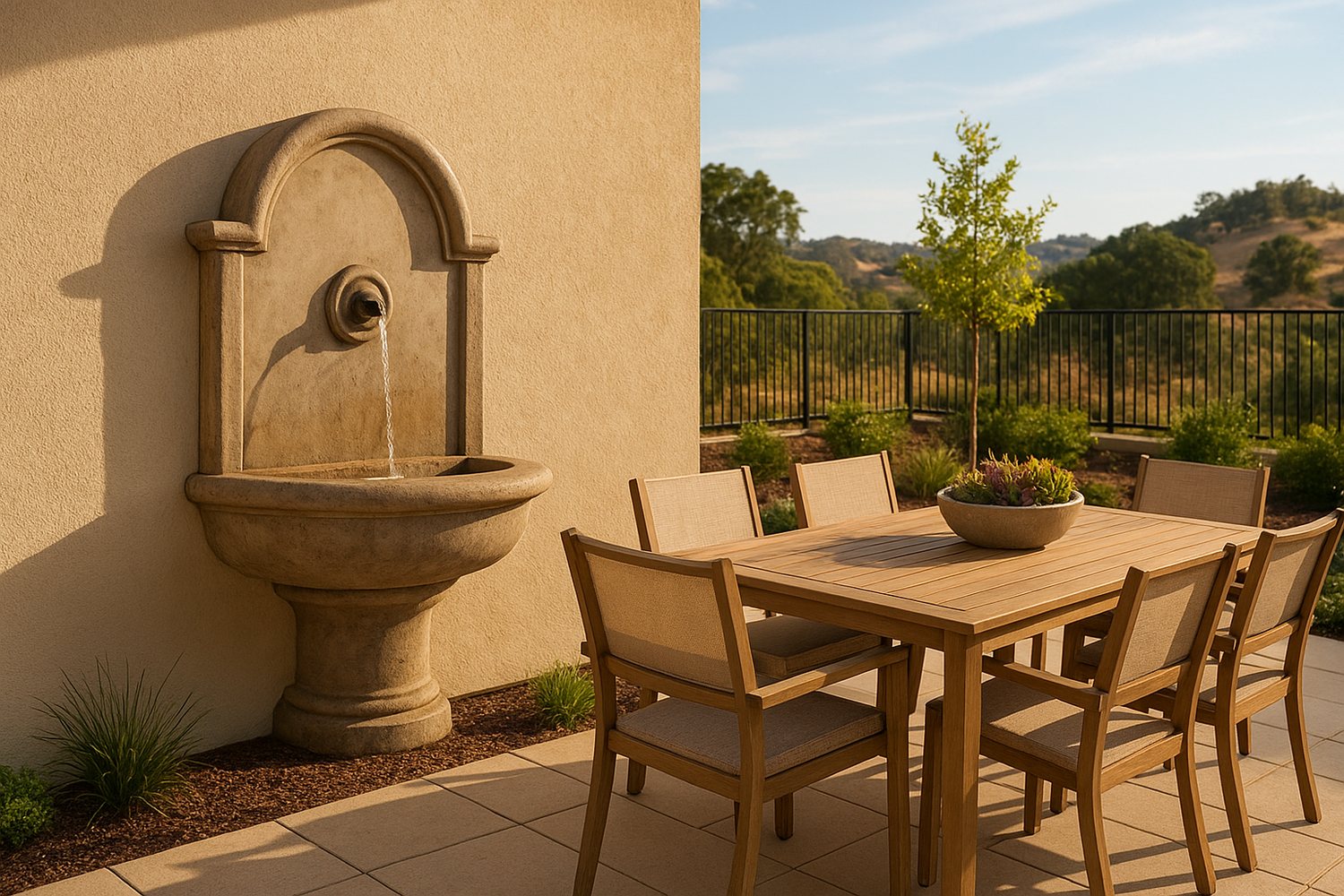
Planning and Plumbing a Wall Fountain in Northern California
Thinking about a wall fountain? Learn how to prepare for plumbing and installation with practical tips for local homeowners from California Hardscapes.
A wall fountain can transform your outdoor space, but plumbing is key to making it work smoothly from the start. Here’s what to know before you build.
Why Plumbing Matters for Wall Fountains
A wall fountain isn’t just about beauty—its success depends on how well the plumbing is designed and installed. Correct planning prevents leaks, avoids water waste, and keeps the fountain running smoothly. In our region, local water pressure, temperature swings, and hard water can complicate matters if not addressed early.
Even the best fountain materials can be undermined by a poorly conceived plumbing setup. Water features interact with concrete, stone, and landscaping in specific ways, requiring tailored solutions for long-term durability. Thoughtful planning means fewer headaches down the road.
In Rocklin, Roseville, Granite Bay, Folsom, Auburn, and the surrounding communities, factors like clay soils and sun exposure can influence your plan. Start with the right approach to save time and get lasting results.
For more project ideas and wall fountain guidance, see ourWall fountainspage.
Assessing Your Site for Fountain Placement
Start by evaluating your available space. Consider access to existing water lines, distance to electrical outlets, sunlight patterns, and how the fountain will be integrated into patios, retaining walls, or landscaping. Sufficient clearance behind and beneath the wall will be necessary for plumbing.
In our foothills communities, soil type and drainage affect both installation and long-term upkeep. Sloped yards may require extra planning to prevent erosion or pooling around the fountain. Survey your yard carefully before choosing a final spot.
It’s best to involve an experienced contractor early to assess grade, set elevations, and check for underground utilities. Taking these preliminary steps helps avoid surprises during construction.
- Check proximity to water and power
- Confirm wall strength and structure
- Evaluate drainage and runoff options
Understanding Water Supply Options
Wall fountains need a steady water source. Typically, supply is either direct (from your home’s water line) or via a dedicated reservoir you fill manually. Each has pros and cons—direct lines allow for automatic refilling; reservoirs give you flexibility if outdoor plumbing is limited.
In the hot, dry Sacramento area climate, evaporation can be significant. Automatic refills help maintain water levels, but must be balanced with backflow prevention to avoid issues with your home’s drinking water.
Work with a contractor who will factor in seasonal usage patterns, hose bib access, and anti-freeze precautions. Water shut-off valves should be easy to reach for maintenance or winterizing.
- Direct lines: convenient, low maintenance
- Reservoirs: flexible, no permanent plumbing required
- Consider local weather for water loss
| Feature | Direct Water Line | Manual Reservoir | Rainwater Collection |
|---|---|---|---|
| Automatic Refill | Yes | No | No |
| Upfront Plumbing | Required | Minimal | None |
| Maintenance | Low | Medium | Medium |
| Water Usage | Higher | User Controlled | Lowest |
| Best For | Permanent Installation | Flexible/Temporary Fountains | Eco-Focused Use |
Drainage and Overflow Planning
Proper drainage is essential for both safety and durability. A wall fountain without the right overflow plan can flood adjacent patios or cause soil erosion. Your drainage needs depend on surface area, fountain output, and surrounding grade.
Some setups use hidden drains or connect to existing yard drainage systems. Others incorporate gravel beds, French drains, or custom catch basins. In Placer and El Dorado counties, the heavy winter rains make it especially important.
Work with a pro to determine whether your fountain requires a dedicated drain line or can safely use surface grading. Attention to detail now helps avoid messes and expensive repairs later.
- Plan for overflow and splashing
- Protect concrete and stone from standing water
- Prevent runoff into flowerbeds or structures
Choosing Plumbing Materials That Withstand Local Conditions
California’s foothills are known for hot summers, chilly winters, and hard water. Select piping and fixtures designed for outdoor use—avoid thin, indoor-grade hoses. PVC, copper, or PEX are common, but each has pros and cons for longevity in our region.
Hard water can cause mineral build-up and shorten the lifespan of pumps and fittings. Consider adding a filter or water-softening attachment if you see white deposits on your fixtures. Stainless steel components can be wise investments.
If your system will be exposed to direct sun or frost, make sure any above-ground runs are insulated or shielded to prevent cracking or bursting. Durable, UV-resistant materials help your wall fountain weather the seasons.
- Choose UV-resistant pipes for exposed runs
- Consider filtration for hard water
- Ask your contractor about suitable outdoor-rated fittings
Curious about other water features? Visit ourWater Featuresoverview for inspiration.
Working with Electrical Requirements
Most wall fountains use pumps that require a dedicated GFCI-protected outlet. Placement should allow for safe connections, away from pooling water or foot traffic. If outlets aren’t accessible, your contractor can advise on safe and compliant options.
Outdoor electrical needs to meet California code—never cut corners or use home extension cords. Lighting features, if desired, add a second layer of planning, sometimes needing additional circuits. Always have licensed professionals handle electrical installations.
Discuss power needs early, especially if your yard’s layout, existing wiring, or outdoor kitchen plans affect access. Every electrical choice should account for local weather, irrigation, and neighborhood safety standards.
- Install GFCI outlets for all pumps
- Never run cords across walkways
- Plan for future lighting or automation needs
Coordinating Plumbing with Other Hardscape Elements
If a wall fountain is just one part of your landscaping vision, coordinate plumbing with other outdoor elements. This might include patios, pools, outdoor kitchens, or lighting. Efficient planning means less disruption and a cleaner look.
Share your full plan with your contractor from the start. It’s easier to run pipes or conduit before concrete is poured or walls are built. Proactive coordination helps avoid costly demolition later.
California Hardscapes sees better project outcomes when concrete, retaining wall, plumbing, and water features are designed together. Streamline your project by bundling decisions up front.
- Plumbing can be concealed within walls
- Coordinate with electrical and drainage layouts
- Involve all trades early for best results
Getting Professional Planning Help
Homeowners across Placer, Sacramento, and El Dorado counties benefit from guidance in planning and plumbing wall fountains. Codes and local soil conditions matter, and quality installation starts with good advice.
Licensed, bonded, and insured professionals know how to blend style with practical buildability. They’ll handle subgrade preparation, coordinate with electricians and landscapers, and make sure your wall fountain functions—season after season.
If you’re considering a wall fountain project, reach out early. Good planning up front leads to a more seamless outdoor living experience once all’s said and done.
- Talk to a reputable contractor before construction
- Check that all work meets local code
- Make maintenance part of your design discussion
Contact us today to request a consultation with our team—start planning your outdoor living upgradehere.
Planning a water features project?
Call or text 916-741-0633, or email sales@californiahardscapes.com with your address, a short description and a few photos, and we will arrange a consultation.