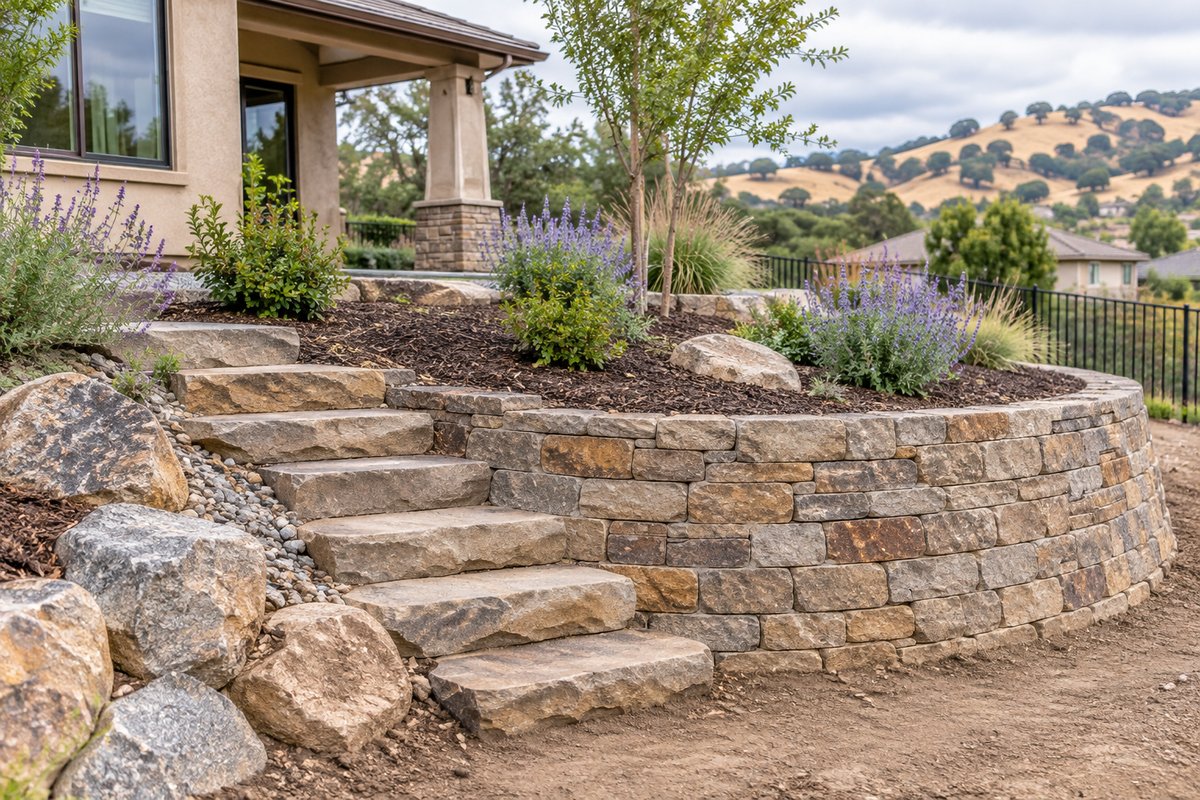
A Homeowner’s Planning Guide to Retaining Walls in Folsom, CA
Thinking about a retaining wall in Folsom, CA? This planning guide covers permits, HOA steps, soil and weather factors, drainage—and what to expect when working with a retaining wall contractor.
Start with the Rules: Permits and HOA Considerations
Before breaking ground on any retaining wall project in Folsom, it’s important to understand what local regulations may apply. Folsom has specific city rules for building or upgrading a structure like a retaining wall, especially for taller or engineered walls. Homeowners should review requirements at the ePermit Center before committing to plans or materials. Some sites require both a building and grading permit, while others may involve special reviews depending on height, location, and proximity to property lines.
It’s common for neighborhoods in Folsom to have active Homeowner Associations with architectural guidelines. Each HOA can have different rules about wall height, material, and appearance—often stricter than city codes. Carefully check your HOA’s submittal process early in planning, since approvals can take weeks and may impact your wall type or design. Submitting accurate plans and sample materials helps keep reviews moving smoothly.
Whether you’re building a retaining wall from scratch or replacing an older structure, clear documentation is crucial. Accurate site plans, material specifications, and compliance details help prevent delays. Always check for the most current application forms and document lists in the ePermit Center linked above—requirements may change year to year or by project scale.
Mark Before You Dig: Utility Location and Site Prep
Planning ahead for underground utilities isn’t just best practice—it’s a necessity. Nearly every property in Folsom contains utility easements or lines: water, gas, electric, maybe fiber or phone. Hitting these during excavation can mean unexpected outages, serious hazards, and costly repairs. Always call 811 to request a utility markout before ground is broken for any block retaining wall, footing, or drainage trench. This step is free, confidential, and required by law.
Power services are managed by Sacramento Municipal Utility District (SMUD), which outlines construction guidelines and requirements for temporary shut-offs, upgrades, and electric meter access. For details specific to your property or for construction support, consult the SMUD Customer Support site. Proper pre-work coordination can mean the difference between a smooth build and major disruptions.
Survey the build area after utility marking but before excavation. Look beyond the project footprint—take note of tree roots, irrigation pipes, fences, and outbuildings. It’s much easier to adjust a layout at this stage than later, and proactively addressing obstacles helps the retaining wall contractor deliver results without unnecessary change orders.
Soil, Slope and Drainage: Folsom’s Critical Considerations
Much of Folsom is shaped by rolling terrain, clay-heavy soils, and granite outcrops. Each has a big impact on what kind of retaining wall works best on your lot. Clay soils are prone to swelling and shrinking through the seasons. Granite patches may require specialized equipment—or even design changes if excavation hits unforgiving rock. Take time to have the site’s soil conditions evaluated, especially for tall, engineered, or tiered structures.
Drainage is equally important. Poorly managed runoff can undermine even well-built walls. French drains, weep holes, gravel backfill, and site grading are common mitigation steps in professional retaining wall installation. For high or complex slopes, engineered solutions may be required—review options like engineered retaining walls or terraced systems for maximum stability and longevity.
The layout and shape of your lot will influence both aesthetic choices and structural needs. Boulder walls, for instance, suit certain natural slopes and add character, while gabion walls provide durable, permeable solutions where water movement is a concern. Evaluate whether your design needs stepped terraces, tall vertical faces, or gentle retaining for beds and planters.
Heat, Rain, and the Folsom Climate: Plan Around the Seasons
Building in Folsom means accounting for both summer heatwaves and seasonal rain. The hot months—often topping 100°F—can influence installation schedules, concrete cure rates, and labor safety. Rainy winters bring their own complications: saturated soils, mud, and project slowdowns. The National Weather Service Forecast for Folsom offers up-to-date insights for picking an optimal construction window. Visit the NOAA local forecast before setting final start dates, and be prepared to adjust for major heat or storm events.
Drainage checks should be built into any seasonal plan. Wet soil can affect stability and increase the risk of delayed settling. For complicated slopes or areas with natural runoff, concrete or stone solutions such as poured concrete retaining walls may offer extra resilience. For lighter residential needs or custom planter beds, raised planters and garden walls may suit water-wise landscaping and seasonal transitions.
Carefully sourced materials and professional workmanship help ensure your retaining wall stands up to Folsom’s climate swings. While every project is unique, choosing a contractor experienced in local soils, slopes, and weather is the right step for lasting results—especially for complex or visible upgrades like driveway and front yard walls.
Selecting Materials and Styles to Fit Your Lot
Folsom homeowners have a range of retaining wall styles to consider, each with pros and cons for specific lot types, HOA requirements, and budgets. Traditional block retaining walls are common for their clean lines, predictability, and broad HOA acceptance. For projects emphasizing a connection to the natural terrain, boulder retaining walls or gabion walls make a statement and provide powerful erosion control on slopes.
Engineered solutions offer a higher level of durability for tall or load-bearing installations. Engineered retaining walls are purpose-built for lots with tricky grades, heavy traffic, or adjacent structures. For sleek aesthetics or complex curves, poured concrete and stone veneer options are available, blending strength with visual appeal.
Another versatile choice is raised planter and garden walls, such as those described at raised planter walls. These suit smaller grade changes, support water-wise gardens, and can often be integrated with patios, walkways, or terraces, creating cohesive outdoor spaces. When choosing materials, balance structural needs, local requirements, and your long-term landscape goals.
Coordinating with Licensed, Bonded and Insured Contractors
No matter your project scope—simple wall repair or multi-tiered transformation—a licensed, bonded and insured contractor is vital. Led by Marty, who brings more than 30 years in concrete and construction, California Hardscapes manages projects from design through the final walkthrough with a focus on quality and integrity. Every stage is handled by professionals, and no corners are cut. This approach fits the company philosophy: ‘Built with pride. Finished with excellence.’
Full-service planning brings together the retaining wall, pathed surfaces, coordinating beds, and planting for seamless results. On-site collaboration ensures plans are feasible, but also beautiful and tailored to Folsom’s hillsides and climate. Smart communication—at every phase—prevents surprises for homeowners and helps keep builds running on schedule.
Expect clear documentation, transparency about which steps require your input, and coordination with outside specialists when needed. Whether planning for a specialized retaining wall repair or a new terraced wall system, reputable contractors help guide decisions for permits, timing, and site work, without promising outcomes outside of their control.
Project Timing: From Design to Walkthrough
Effective project timing is a careful blend of planning, approval, and weather-readiness. Start the process early—begin with HOA and city permit checks as well as initial design meetings well before your preferred build window. City or HOA reviews can require additional documentation or design tweaks, so building time into your plan limits stress later on.
After design and approvals, schedule utility location (811) and site prep. Factor in local Folsom weather using resources like the National Weather Service Forecast. Avoid starting major excavation just before wet season or extreme heat, as these can delay stages from footing pours to final grading. For complicated lots or taller structures, stagger work to accommodate necessary inspections and adjust for potential hold-ups.
Once the build starts, regular site walkthroughs and interim approvals help keep everything on track. A high-quality contractor will coordinate all critical steps: from material delivery to staging equipment and ensuring that all work meets current codes and guidelines. The completion phase should include a detailed walkthrough to check that both structure and appearance align with your vision—and city or HOA rules.
Resources for Folsom Homeowners
- ePermit Center: Find and submit all current permit applications for construction projects in Folsom, including grading and building permits for retaining walls.
- SMUD Customer Support: Details for electric service during construction—including outages, new connections, and service upgrades to meet construction needs.
- National Weather Service Forecast for Folsom CA: The primary source for up-to-date weather forecasts, helping homeowners plan construction around seasonal Folsom conditions.
FAQ: Common Retaining Wall Questions in Folsom
Do all retaining walls require a permit in Folsom?
Permit requirements vary depending on wall height, location, and structural load. Many walls, especially those over a certain height or located near property lines, require city approval. To be sure for your project, refer to guidance at the ePermit Center and confirm current rules with the city building department.
What’s the process for dealing with utilities before excavation?
The law requires every homeowner—or their contractor—to call 811 for utility marking prior to any digging or trenching. This calls out underground electrical, gas, and water lines that may run below the retaining wall site. For detailed requirements related to power, see the SMUD Customer Support page.
Which retaining wall material is best for Folsom soils?
It depends on your site’s soil composition and slope. Block, boulder, engineered walls, and gabion walls are all viable options but suit different needs. For challenging clay or slopes, engineered options often provide the strongest results. Discuss soil specifics with your contractor to determine the best match.
Ready to take the next step on your property? Request a consultation with California Hardscapes—where quality and integrity shape every build.
Planning a project in Folsom, CA?
Call or text 916-741-0633, or email sales@californiahardscapes.com with your address, a short description and a few photos, and we will arrange a consultation.