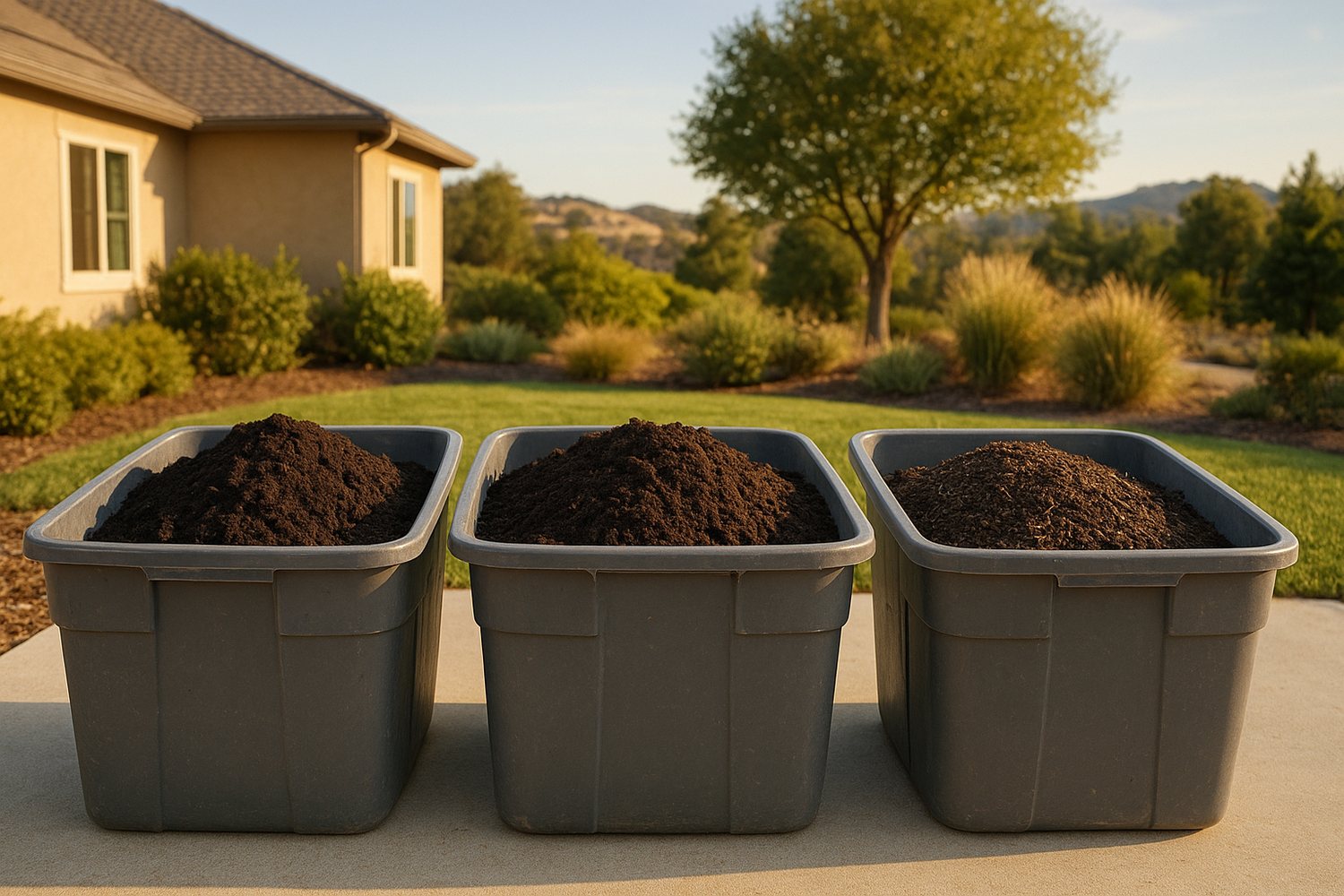
Improving Clay and DG Soils: Topsoil & Amendments for Local Homeowners
Explore practical steps for enhancing clay and DG soils using topsoil and soil amendments, specific to the Placer, Sacramento, and El Dorado County regions.
Fighting tough clay or decomposed granite (DG) soils in your yard? With the right topsoil and amendments, it’s easier to create healthier outdoor spaces.
Understanding Local Soils: Clay and DG
Most homeowners in our region have encountered heavy clay soils or patches of decomposed granite (DG). These two dominate many Rocklin, Roseville, Granite Bay, Folsom, and Auburn yards, bringing their own challenges to landscaping. Clay soil holds water but becomes hard and dense when dry. DG drains fast, often too fast, leaving roots dry and nutrients lacking.
Identifying which soil type you’re working with is the first step. With clay, you’ll notice slow absorption when watering and sticky, clumpy ground. DG, on the other hand, is gritty, sandy, and often dusty in dry months. Both can be frustrating for anyone wanting a lush landscape or productive garden.
Knowing your base soil helps you determine the best amendments to use. Local soil conditions make a big difference in how well amendments like compost, gypsum, or organic matter work, so it’s worth a closer look before starting any project.
Find more details about products and installation on ourTopsoil and soil amendmentspage.
Why Topsoil and Amendments Matter
Adding topsoil and soil amendments isn’t just about making dirt look nicer—it’s about improving plant health and long-term landscape success. Clay and DG soils aren’t naturally friendly to roots, so interventions go a long way for better drainage, water retention, and nutrient availability.
Unamended clay limits oxygen and traps water, while poor DG soils lack the organic matter plants need to thrive. Both soil types often leave homeowners with stunted plants, runoff after watering, and patchy lawns or beds. Topdressing beds or lawns, and tilling in amendments, changes these results noticeably.
Quality amendments mixed into existing soil break up hard clays, build up crumbly structure, and boost water-holding in DG. They also help keep nutrients available for longer, meaning less fertilizer and irrigation wasted down the line.
Bullets: – Better plant growth and root development – Improved drainage and water retention – Enhanced nutrient holding for lawns and shrubs
Choosing the Right Amendment for Your Soil
When improving local soils, the right amendment makes all the difference. Organic amendments like compost, well-aged manure, and high-quality topsoil are staples. For heavy clay, gypsum is often recommended to help break up compaction, while DG benefits from rich compost and loamy topsoil to hold more moisture and nutrients.
Avoid generic one-size-fits-all solutions. For instance, adding sand to clay usually worsens the problem, making a rock-hard mess. Instead, judiciously blend organic material, checking with local suppliers for mixes tailored to our region. California Hardscapes can help you assess your soil and select the right amendments.
Check your lawn or planting bed before spreading amendments. How deeply you till or blend them in depends on root depth, plant choices, and how severe your soil’s original condition is. Sometimes topdressing is enough, while other areas will need more intensive tilling and mixing.
- Compost for rich organic content
- Gypsum for clay (use as directed)
- High-quality screened topsoil
- Avoid construction sand as an amendment
| Material | Best For | Improves | Use Method |
|---|---|---|---|
| Compost | Clay or DG | Nutrient content, texture | Blend in or topdress |
| Gypsum | Clay | Reduces compaction | Till into top 4–6 inches |
| Screened Topsoil | DG | Moisture retention and fertility | Apply or blend as needed |
| Aged Manure | Clay | Organic matter | Mix with soil, avoid direct contact with roots |
| Mulch | Any | Keeps moisture, prevents erosion | Spread on top of soil beds |
How to Apply Topsoil and Amendments
Preparation is key to a successful outcome. For established lawns, aerate the soil first and then topdress with 1/2 to 1 inch of screened topsoil mixed with compost. Water well and let the organic matter settle into the holes, supporting healthier turf over time.
Garden beds benefit from more vigorous mixing. Till or dig in amendments to a depth of at least 4–6 inches for annuals, and up to 10–12 inches for trees and shrubs. Blending well is crucial, especially in dense clay, to ensure roots spread evenly. For DG beds, focus on incorporating enough organic matter to boost water retention and support microbial life.
Spread amendments evenly for uniform results, and water thoroughly to help settle and activate the materials. If you’re unsure about how much product to use, consult with a local expert to avoid over- or under-applying. Proper installation means healthier plants from the start.
Bullets: – Aerate before topdressing lawns – Till amendments 4–12 inches deep for beds – Water well after amending
Long-Term Soil Health: Maintenance Strategies
A one-time application of amendments helps, but ongoing practices build lasting soil health. Mulching with bark, wood chips, or shredded leaves not only keeps moisture in but also breaks down over time, continuing to enrich the soil naturally.
Annual or bi-annual topdressing with compost or screened topsoil can keep your soil improving. In high-traffic areas, monitor compaction and aerate regularly so that oxygen and water can reach roots. For vegetable gardens or planting beds, rotate crops and add organic matter each season to maintain balanced fertility and texture.
Healthy soil supports resilient landscapes that can weather drought, rain, and the ups and downs of Sierra foothill weather. With a little routine care, you’ll notice deeper, healthier roots and plants that require less work and water over time.
Bullets: – Mulch annually to retain moisture – Aerate compacted areas every 1–2 years – Keep adding organic matter seasonally
Browse all available products in ourMaterials options overview.
Common Mistakes to Avoid
Many homeowners skip soil testing and jump straight into amending. This often leads to over-applying products that don’t address the true problem. Avoid guessing—observe your soil’s drainage, texture, and response to irrigation before starting.
Using improper materials is another pitfall. Builders’ sand, construction-grade fill, or high-salt manures can worsen drainage or salt up your beds. Always ask about the source and composition of any material you’re planning to spread in your landscape.
Finally, avoid the temptation to skip mixing. Simply spreading materials on top may not provide the depth of improvement plants need, especially in clay. Blend amendments in as deeply as possible for lasting results.
Bullets: – Don’t add sand to clay soils – Avoid non-organic or unproven amendments – Test, select, then apply—with a plan
Decision Making: DIY or Call a Pro?
Many soil improvements are straightforward, but tough sites or large yards may warrant professional help. For small lawns and beds, homeowners with the right tools and some research can do the job themselves. Still, consultation helps avoid common mistakes and ensures you’re using proven local techniques.
Hiring a contractor can be invaluable for large properties, major grade changes, or where retaining walls, drainage, or hardscape transitions are involved. Licensed professionals have the equipment to deliver and blend amendments efficiently and can recommend the best formulations for your goals.
When in doubt, start with a local consultation to assess your soil and needs. California Hardscapes is always happy to offer clear, practical advice based on decades of experience in our region’s concrete, landscape materials, and outdoor construction fields.
Bullets: – DIY for small, regular beds and lawns – Call a pro for big or complex jobs – Consult before large-scale work
Next Steps: A Healthier Landscape Starts Now
If you’re ready to improve clay or DG soil, start with small, practical changes. Test your soil, select high-quality amendments, and focus on building structure over time for the strongest results. There’s rarely a single magic fix, but incremental improvements create visible, lasting change.
Take note of how your landscape responds after every application. Healthier soil isn’t just about surviving another dry summer or wet winter—it’s about creating outdoor spaces that thrive and bring out the best in your property.
To learn more about material choices or for guidance on local soil challenges, reach out to a trusted local expert. Investing the time upfront pays off with easier maintenance and better results season after season.
Bullets: – Start with testing and observation – Use region-appropriate amendments – Track progress and keep improving
If you’d like region-specific advice,request a consultationwith California Hardscapes.
Planning a materials project?
Call or text 916-741-0633, or email sales@californiahardscapes.com with your address, a short description and a few photos, and we will arrange a consultation.