Driveway and Entry Lighting: Complete Guide for Sacramento Region Homes
Well-planned driveway and entry lighting enhances curb appeal, makes every arrival welcoming, and ensures address visibility and safety after dark.
Why Homeowners Choose Driveway and Entry Lighting
Best for: Best for homeowners who value a welcoming frontage, nighttime safety, and practical address marker visibility.
Your driveway and entry are where your home first meets the outside world. After sunset, effective lighting does more than simply banish darkness; it transforms your property by making arrivals safer, deterring trespassers, and creating a memorable impression for guests. Address markers and illuminated walkways enable visitors, deliveries, and first responders to quickly and easily find you, no matter how late it is.
California Hardscapes brings years of practical experience to every project, understanding that the right lighting layout is as much about function and durability as it is about aesthetics. Our team manages the full scope, from initial design and fixture selection to expert installation across a variety of settings—driveway pillars, wall-mounted lights, ground-level markers, and address displays. We believe outdoor lighting should serve your needs for the long haul, with as little maintenance hassle as possible.
Our approach: every job is completed as if it were for our own family, never cutting corners or trading longevity for shortcuts. We don’t compete to be the cheapest. Instead, we focus on quality materials, skilled craftsmanship, and lighting plans that avoid neighbor glare and stand up to shifting soils, irrigation, and seasonal extremes common in the Sacramento foothills. This careful process delivers integrity, value, and results that exceed expectations.
Design and Fixture Options for Driveways, Entries, and Address Lighting
Pillar Lights
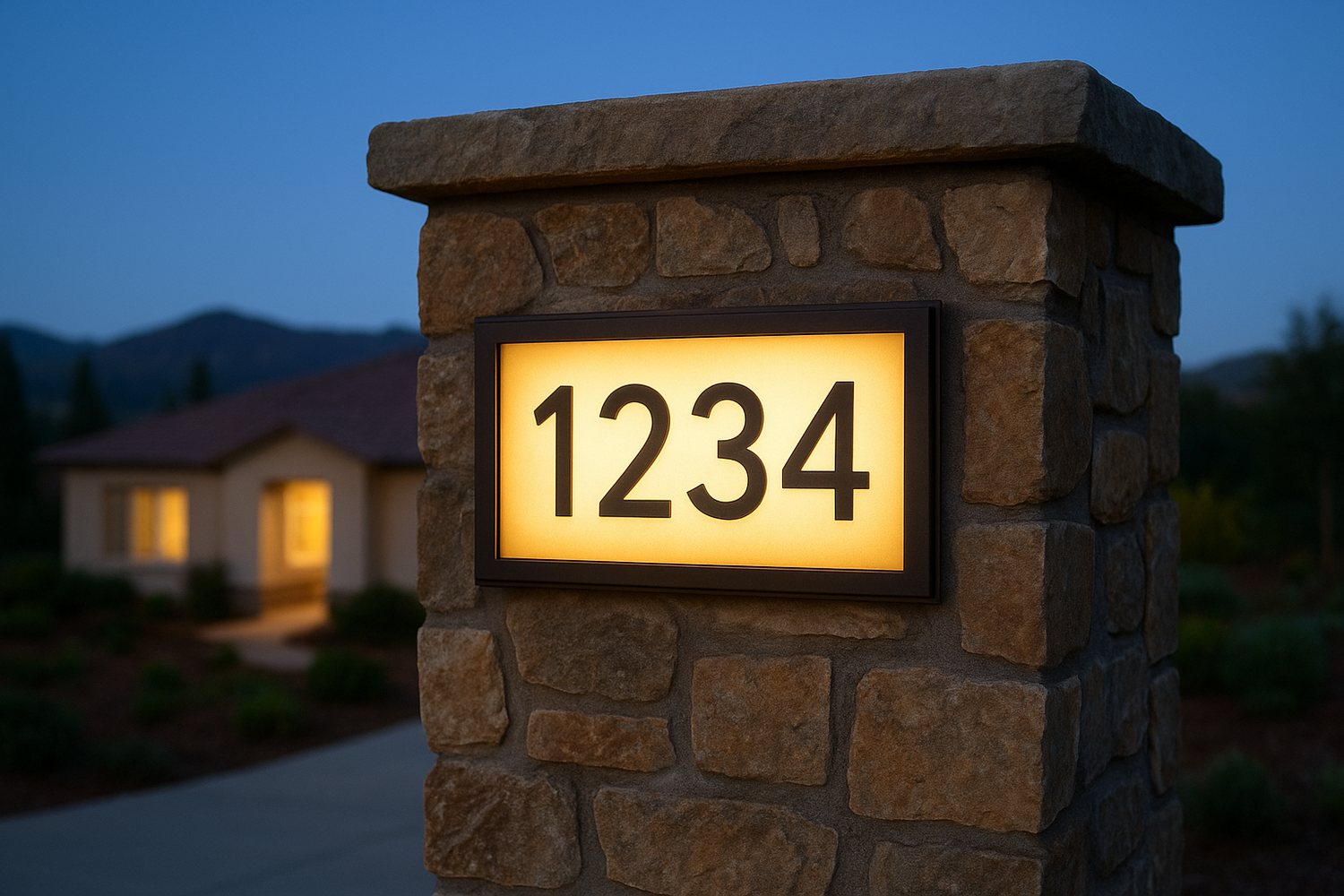
Pillar lights, often mounted on masonry or stone columns at driveway entrances or alongside entry walks, provide a classic look while ensuring visibility and identifiable points for drivers. Quality models use sealed housings to resist weather and insects, and can be chosen in finishes suited to your architecture.
Driveway Marker Lights
Low-profile marker lights line the edges of a driveway or walkway, subtly guiding vehicles and pedestrians without creating glare. Options include in-ground, bollard-style, or surface-mount fixtures. The right placement avoids damage from vehicles or yard equipment, while providing essential wayfinding in all weather.
Wall Sconces
Wall-mounted fixtures are positioned near garage doors or front entries to offer broader illumination and architectural emphasis. Select models with downward or shielded beams to minimize light spill over property lines and reduce glare for neighbors across the street.
Illuminated Address Plaques
An illuminated address marker, whether integrated in a pillar or mounted near the curb, ensures your home’s number can be seen clearly from the street. LED backlit designs are efficient and long-lasting, typically adjustable for brightness and color temperature.
Accent and Pathway Lighting
Supplemental accent lights can highlight unique architectural or landscape features at your entry, while pathway lights clearly mark safe walking routes from the street or driveway to your front door. Coordinates well with pillars and wall sconces for a layered effect.
Smart Controls and Timers
Integrate timers, photocells, or full smart lighting controls for automatic dusk-to-dawn operation and energy efficiency. App-based controls allow you to adjust brightness, schedule, or scenes, and can be expanded to control other outdoor lighting as needed.
How a Premium Driveway and Entry Lighting Project Comes Together
Quality outdoor lighting installation is a process that leaves nothing to half-measures. At California Hardscapes, we follow a proven step-by-step sequence to ensure every fixture is safe, functional, and styled for your unique home, taking soil, drainage, and your lifestyle into account.
- Subgrade: Evaluate existing soil composition, remove organic material and debris, and ensure a smooth, stable foundation near all fixture locations, particularly in clay or decomposed granite areas prone to movement.
- Base Prep: For pillar or marker light foundations, install compacted gravel or class 2 aggregate to facilitate drainage and prevent settling. Electrical conduit routes are planned and laid during this phase.
- Formwork: Set forms for concrete- or masonry-based pillars, ensuring precise heights and alignment. Clearly mark fixture and conduit points for drilling or embeds before pouring or building.
- Reinforcement: Place rebar or mesh for any masonry or concrete features, securing all electrical conduit and junction points within the structure per code and lighting specifications.
- Joints & Wiring: Integrate control joints in new hardscape to prevent cracking from soil expansion; pull and connect wiring in conduits, testing connections and GFCI devices before permanent assembly.
- Finishing: Complete masonry, stone, or concrete finishing for pillars or mounting surfaces, then install lighting fixtures, taking care to properly weather-seal all exterior electrical connections.
- Curing & Sealing: Allow concrete/masonry to cure per specification. Apply sealants on masonry as needed, and commission lighting controls, timers, or smart systems. Final cleanup and site walkthrough ensure a quality finish.

Pros and Cons of Driveway and Entry Lighting
Strengths
- Improved curb appeal and property value, making your home more inviting after dark.
- Enhanced safety for vehicles, walkers, and guests by illuminating trip hazards and driveway edges.
- Clear address visibility for first responders, deliveries, and visitors, even in poor weather.
- Added property security—well-lit entries deter trespassing and opportunistic theft.
- Smart, shielded designs minimize neighbor complaints by reducing glare and unwanted sky glow.
Trade-offs
- Quality fixtures and professional installation come at a higher up-front cost compared to quick DIY kits.
- Exterior lighting increases utility bills, though modern LEDs and timers can minimize ongoing expenses.
- Regular maintenance or bulb replacement (though rare with modern LEDs) may be necessary to combat dust, insects, or hard water residue.
- Improperly planned lighting can cause glare in windows or across property lines if not thoughtfully designed.
Cost Considerations for Driveway and Entry Lighting
Investing in driveway and entry lighting is best approached as a long-term enhancement to your home—a combination of practical safety, increased curb appeal, and trouble-free reliability. Costs can vary widely depending on fixture quality, layout complexity, and integration with existing hardscapes, but the ultimate goal is a solution that looks great, functions flawlessly, and holds up to local conditions for years.
- Fixture quality, material, and finish: higher-grade, weatherproof options last longer and retain appearance.
- Design complexity and custom elements like masonry pillars or integrated address markers.
- Type and length of electrical runs or conduit needed to reach all fixtures safely.
- Site conditions, including soil type, slope, drainage challenges, or root obstacles.
- Whether new hardscape features (pillars, new walks) are added or if fixtures are surface-mounted.
- Integration with existing lighting systems and controls, or addition of smart technologies.
Caring for Your Driveway and Entry Lighting
Routine care ensures your lighting investment keeps performing and looking its best. Outdoor fixtures should be checked seasonally for dust, cobwebs, water spots from irrigation or hard water, and any damage from yard tools or vehicles. Periodic cleaning with a soft cloth and non-abrasive cleaner will maintain appearance and brightness, while keeping lenses and address numbers legible.
Typical resealing of concrete or masonry pillar bases is advised every 2–5 years depending on exposure and finish, though many lighting fixtures themselves are rated to last a decade or more with today’s LEDs. Lifespan is affected by fixture material, weather exposure, and ongoing maintenance—well-built systems can deliver reliable performance for 15 to 20 years with attention to wiring, connections, and landscape changes over time.
Compare other options

Security and motion lighting
Learn how motion lights and floodlights balance home security and curb appeal. Trusted, honest advice from California Hardscapes in Rocklin, CA.
Explore →
Wall and facade lighting
Learn about wall and facade lighting: options, installation, care and pros/cons for Rocklin area homes. Details on wall washing, grazing, sconces, costs.
Explore →
Step, wall and deck lighting
Step, wall and deck lighting Rocklin homeowners can plan for safety and ambiance: options, build steps and honest guidance.
Explore →Frequently Asked Questions
How can I avoid glare for my neighbors or passing drivers?
Thoughtful design placement, using shielded fixtures or directional lenses, is the best strategy. Pillar lights and wall sconces should direct illumination downward or toward your property, not into the street or windows. We always recommend a hands-on walk-through at dusk during planning to preview lighting angles and intensity.
Will lighting my address help emergency services and deliveries find me?
Absolutely—illuminated address markers are among the most effective ways to guide first responders, delivery drivers, and guests, especially in low-visibility conditions. Address numbers should be big enough to read from the street, not obscured by plants or pillars, and illuminated at night. Backlit plaques or dedicated spotlights are preferred for lasting visibility.
What maintenance does driveway lighting require?
Most modern fixtures, especially LED-based, require very little maintenance beyond occasional cleaning to remove dust, spider webs, and hard water spots. Seasonal checks are recommended to ensure all lights are working, and to clear any overgrown landscaping that might block light paths. Damaged fixtures or exposed wiring should be promptly repaired for both function and safety.
How do you protect wiring from rodents, roots, and shifting soils?
All exterior wiring is run through professional-grade conduit, buried below the frost line in stable soil, and routed around major root zones where feasible. Joints and connections are sealed against moisture and pests, while fixtures are secured on solid, compacted bases to prevent movement from shifting clay or decomposed granite soils.
Do I need permits or HOA/city/county approval for outdoor lighting?
Requirements vary depending on your neighborhood and project scope. Many HOAs and cities regulate fixture style, brightness, and placement to maintain neighborhood character and dark-sky compliance. If new masonry, hardscape, or extensive wiring is included, review and possible permitting could be necessary.
Can lighting be integrated with my existing landscape or smart home system?
Yes. Driveway and entry lights can often be tied into your current landscape lighting network and managed with timers, photocells, or smart home controls—assuming wiring and fixture compatibility. Integrating new with old might require upgraded transformers or controllers, which we review during the design phase.
What happens if a pillar light or marker fixture is hit by a vehicle or landscape equipment?
Quality fixtures are designed to withstand some incidental contact, but direct impact from cars or heavy equipment may cause damage. We recommend placing markers far enough from the drive lane to avoid this risk. In the event of damage, individual fixtures can usually be replaced without disturbing the rest of the system.
How long does a typical installation take?
Most straightforward lighting projects can be completed in several days to a week, factoring in any new hardscape or pillar construction and cure times for concrete or masonry. More complex layouts, or those involving HOA/city review, can extend the timeline. We always review your specific schedule up-front and communicate throughout the process.
Plan Your Driveway and Entry Lighting Project
Email sales@californiahardscapes.com with your address, a short description of your goals, and photos of your current driveway and entry for expert insight and a no-stress consultation.