Pool Safety Features and Fencing: A Complete Guide for California Homeowners
A safe pool area protects your family and meets local codes. Get clarity on what’s required, what’s wise, and how California Hardscapes delivers pool safety done right.
Why Pool Safety Is Non-Negotiable in California
Best for: Homeowners prioritizing the highest safety standards for new or existing in-ground pools, especially families with children or pets.
Whether you’ve just started dreaming about a backyard pool, or you already have a pool in your Rocklin, Roseville, Granite Bay, Folsom, or Auburn home, pool safety should never be an afterthought. Drowning is the leading cause of accidental death for young children in California, and the law reflects that reality. As of today, all new and many existing pools must include specific, effective layers of protection—from pool fencing to gate alarms—and older pools often fall short without updates.
But safety is not just about codes or checklists. It’s about peace of mind, every day. There’s no substitute for layers of engineered protection: barriers to prevent children from reaching the water, covers to support actual weight, alarms that alert you instantly, and secure gates that shut and latch themselves. Durable steps, anti-entrapment drains, and proper lighting keep swimmers of all ages safer every hour. We focus on solutions that are practical for real families, not theoretical minimums.
At California Hardscapes, pool safety is non-negotiable. We don’t compete on being the cheapest—we compete on quality, integrity, and results that exceed expectations. Every pool project is planned and built as if it were our own. In this guide, we break down all your options for pool safety features and fencing, explain how they’re properly built, review pros and cons, discuss costs and upkeep, and answer the real-life questions local homeowners ask.
Key Pool Safety Features to Consider
Four-Sided Isolation Fencing
A code-compliant, four-sided fence fully separates the pool from the house and yard, with no climbable objects or gaps. The most effective physical barrier, this usually means 5-foot tall steel, aluminum, vinyl, or powder-coated tubular fencing with vertical pickets spaced too narrowly for a child to squeeze through. For many homes, this is the single biggest step in preventing tragedies.
Self-Closing, Self-Latching Gates
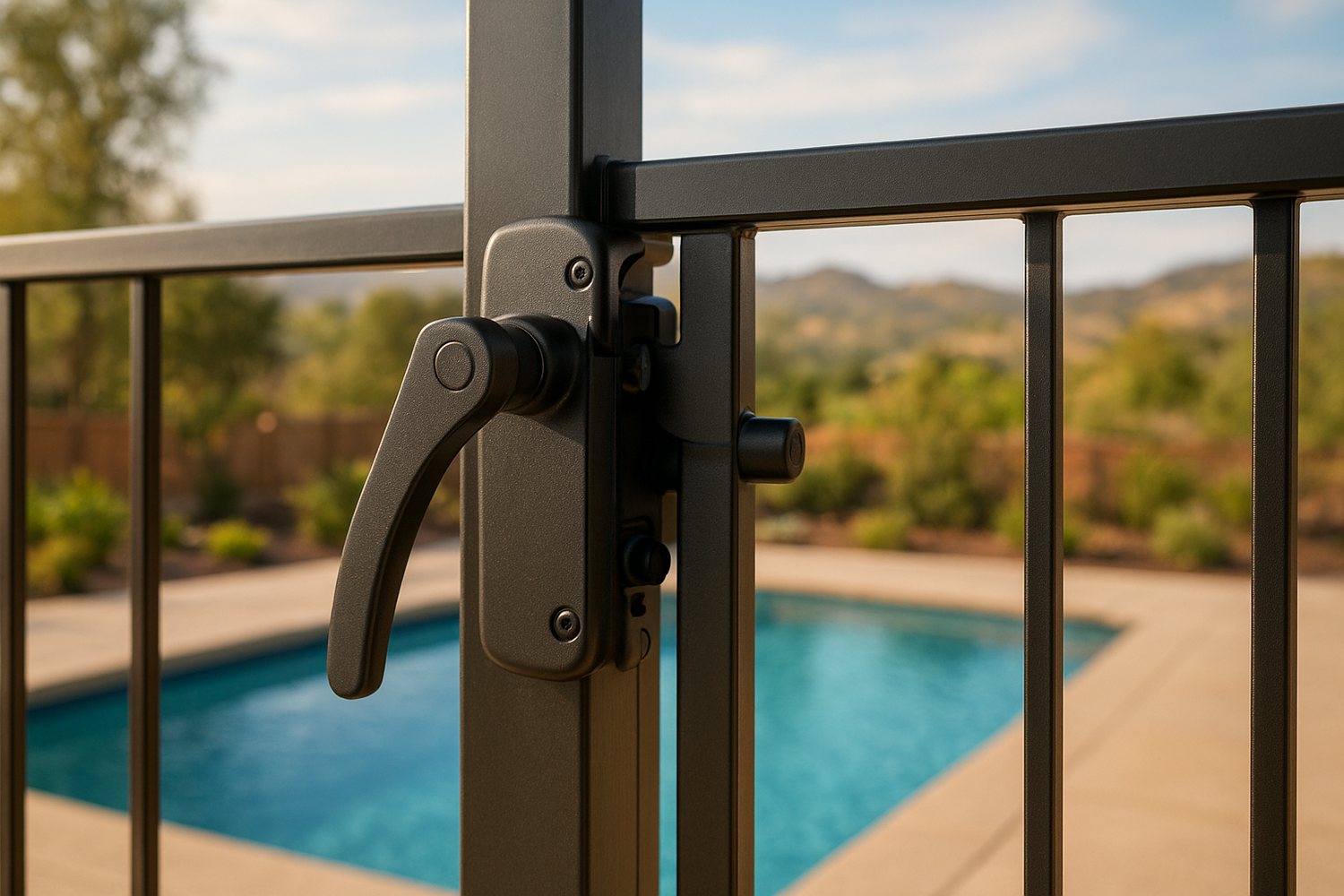
Every pool fence needs at least one gate that reliably shuts and latches on its own, with a key lock or latch release mounted out of reach of small children. These gates swing away from the pool for added protection. Hinges and latches should be designed for outdoor use and checked regularly for wear or misalignment.
Pool Surface Alarms and Door Alarms
For added detection, water surface alarms alert you the instant something—or someone—enters the pool unexpectedly. If the fence is not fully isolating the pool, local law usually requires alarms on any doors leading from the house to the pool area. Choose alarms designed for harsh outdoor conditions, with a test and reset function and loud output.
Automatic or Manual Safety Covers
A true safety cover is rated to support an adult’s full weight and attaches securely on all sides. Motorized versions make daily use easier, while manual safety covers are more affordable but require diligence. Covers help stop accidental entries, slow evaporation, and keep debris out—especially valuable in households with small children or pets.
Anti-Entrapment Drain Covers and Systems
All new and remodeled pools in California must have suction outlets and drains compliant with anti-entrapment standards. Modern covers prevent body, limb, or hair entrapment accidents and are critical for any pool with an older circulation system. For ultimate safety, we recommend dual-drain systems and regularly inspecting covers for cracks or missing screws.
Steps, Handrails, and Adequate Lighting
Well-designed, slip-resistant steps and sturdy handrails make entry and exit safer for swimmers of all ages and abilities. Proper lighting—especially in and around steps and pool edges—prevents trips, slips, and confusion after dark. All wiring and fixtures should be installed for outdoor, wet environments and maintained free of corrosion or damage.
How Quality Pool Safety Installations Are Built
A truly effective pool safety system is more than an add-on—it’s integrated into the project from day one. Marty oversees every phase, treating each jobsite as if it were his own property. Whether you’re installing a new fence, retrofitting a cover, or updating drains and lighting, our approach is methodical, thorough, and up to the strictest standards.
- Site Preparation: Assess pool area for slopes, soil conditions, and existing surfaces. Mark all utilities, review local codes, and adjust layout for required clearances and HOA or city approvals.
- Subgrade: Remove vegetation and debris. Level or grade soil for fence posts or gate hardware, checking for clay, decomposed granite, or hidden roots that could later undermine stability.
- Base Installation: For fences, set posts in concrete footings with attention to alignment and depth, factoring in frost lines and drainage patterns. For covers, secure anchors to a reinforced deck and inspect slab for cracks.
- Framing or Forms: Assemble fence panels, ensuring all vertical pickets and rails meet spacing rules. Gate frames are plumbed and square, tested for smooth swing and fit. For steps or handrails, install mounting brackets anchored to solid backing.
- Reinforcement: For fences in active soils or near slopes, additional post bracing or deeper footings are installed. Safety covers have anchor points set with quality concrete, and any added steps or rails are set with stainless fasteners for durability.
- Finishing: Double-check gate operation, latch and lock function, and picket/wire integrity. For covers, test the mechanical operation and seal all hardware. Drain covers are torqued to manufacturer specs. Lighting fixtures are sealed and checked for watertightness.
- Inspection and Handover: Conduct final walkthrough with homeowner, demonstrate each safety feature, and provide maintenance tips and required documentation for any code or HOA inspections.

Weighing Pros and Cons of Pool Safety Features
Strengths
- Maximizes protection for children, pets, and non-swimmers.
- Required by California law for new pools and crucial for insurance and resale value.
- Reduces legal risk and personal liability in the event of an accident.
- Improves peace of mind and daily usability for the whole family.
- Many safety features—like covers and insulated fencing—help keep your pool cleaner and more energy-efficient.
Trade-offs
- Proper installation takes time, planning, and a meaningful investment.
- Fencing and safety barriers can change the aesthetics of your pool or block views of landscaping.
- Automatic covers and alarms require regular upkeep, testing, and potential repairs.
- In rare cases, families may find daily use less convenient if barriers or covers are not used or maintained consistently.
Pool Safety Features and Fencing: What Impacts Cost
The cost of adding or upgrading pool safety features varies significantly based on pool layout, access points, soil conditions, materials, and the number of features you choose. Exceptional quality demands skilled labor, premium hardware, and careful attention throughout the build. At California Hardscapes, we believe the safest project is always the one with no corners cut—built to last, not just to code.
- Size and shape of the pool and surrounding area—the more fence linear feet, gates, or cover span, the greater the materials and labor involved.
- Type of fencing material (steel, aluminum, vinyl, mesh) and preferred finish or color.
- Complexity of gates, latch hardware, and whether self-closing/self-latching mechanisms are included.
- Choice and automation level of safety covers (manual, semi-automatic, fully automatic).
- Amount and type of smart safety features (surface alarms, door alarms, lighting upgrades).
- Site conditions such as slope, roots, rocky subsoil, drainage requirements, and needed repairs or modifications for proper installation.
Maintaining Pool Safety Features for Longevity and Effectiveness
Routine maintenance is the backbone of pool safety. Check fences and gates monthly for alignment, loose hardware, or rust—tighten, re-set or re-paint as needed. Clean and lubricate gate hinges. Ensure key locks and latch releases remain out of child reach. Test all alarms per manufacturer instructions, replace batteries seasonally, and document that covers retract fully and anchor securely. Covers require periodic cleaning to prevent mildew or debris buildup, and drain covers deserve annual or post-storm inspection for cracks or signs of tampering.
A well-installed pool safety system can last decades with attentive care, especially in our varied Northern California climate. Fencing usually needs repainting or sealer every 3 to 7 years, depending on material and sun exposure. Automatic covers require more regular motor service and cover panel replacement every 5 to 10 years, depending on use and UV exposure. The life expectancy of steps, handrails, and drain covers hinges on water chemistry, proper use, and avoiding corrosion from hard water or leaf acids.
Compare other options

Gunite and shotcrete pools
Explore gunite and shotcrete pools: benefits, build process, costs, care, and trade-offs for Rocklin, Roseville, Granite Bay, Folsom, Auburn homeowners.
Explore →
Plunge pools and small-yard pools
Discover if a plunge pool or compact pool is right for your small Rocklin, Roseville, or Auburn yard. Sizes, design, costs & honest pros and cons explained.
Explore →
Pool waterfalls, sheer descents and deck jets
Explore pool waterfalls, sheer descents, scuppers, bubblers, deck jets in Rocklin. Learn about choices, benefits, care, costs, and key trade-offs.
Explore →Frequently Asked Pool Safety Questions
What pool safety features are required by law for new pools in California?
State law mandates at least two approved drowning-prevention features for most new in-ground pools, though requirements can vary based on local ordinances and home layout. Fencing with a self-closing, self-latching gate is almost always required. Additional features may include safety covers, window or door alarms, and anti-entrapment drain covers. Some counties or HOAs have specific requirements that exceed state minimums—always check with your city or HOA before building or remodeling.
Can I add a safety fence or cover to an existing pool?
Absolutely. While older pools may have been built before current code standards, adding a four-sided isolation fence, new gate hardware, monitored alarms, or a rated safety cover is strongly recommended—especially in homes with children or visiting grandchildren. Upgrading an existing pool may need a site assessment and, in some cases, approval or notification to your city or HOA before work begins.
Do I have to fence around my entire backyard, or just the pool?
For best safety and compliance, fence the pool area itself so children cannot reach the water unsupervised—even if other portions of the yard remain open. Full-perimeter or ‘isolation’ fencing around the pool prevents access from the home, patios, or side gates. Some local codes allow less, but most insurers and safety experts recommend isolating the pool from all entry points.
Are mesh pool safety fences safe and durable?
Mesh pool safety fences are a flexible option that meets California safety requirements when installed correctly. Quality mesh fencing is climb-resistant and offers clear sightlines, but may lack the longevity or rigidity of metal options if not properly maintained. Mesh panels can be removed for events or off-season, but always reinstall and check alignment before use—temporary posts are less forgiving of shifting soils.
How do automatic pool covers improve safety and convenience?
Automatic pool covers, when closed, create a walkable barrier that can support most children and even pets. They’re easy to operate, making daily closing realistic even in busy households, and help reduce evaporation and heat loss. However, safety covers only protect when fully closed, and regular inspections of cables, motors, and fabric are necessary to maintain integrity.
What steps prevent drain entrapment in pools?
Modern pools use anti-entrapment drain covers screwed securely over all suction outlets. Many also feature dual or multiple main drains, reducing suction at any one point. Retrofitting older pools with approved covers and, if needed, adding a second drain or a vacuum release system dramatically reduces entrapment risk for swimmers, especially children. These components should be inspected annually for wear or damage.
How do I choose the right safety features for my family?
Start by assessing your household: small children, frequent guests, pets, and special needs may dictate extra layers of protection. Always install a four-sided isolation fence and self-closing gate as a baseline. Add alarms if any entrances lead directly to the pool, and consider an automatic safety cover for busy schedules or frequent use. Prioritize materials and products with a reputation for reliability and ease of maintenance in your climate.
What maintenance is needed to keep my pool fencing and safety features effective?
Routine inspection is key. Gates and fences should be checked monthly for damage, loose hinges, or signs of tampering. Clean and lubricate moving parts, and quickly address rust or corrosion. Covers need regular cleaning and occasional mechanical service, especially after severe weather. Test alarms on doors and windows regularly, and replace batteries twice a year to ensure they respond instantly when needed.
Ready for a Safer Backyard Pool?
Contact us by emailing sales@californiahardscapes.com with your address, a brief description of your pool area, and photos to start the conversation.