Pool and Spa Combinations: All You Need to Know
A custom-designed pool and spa combination transforms your yard into a private retreat. Explore the options and considerations for building yours right, from spa edges to heating setups.
A Backyard Escape with Pool and Spa Combinations
Best for: Homeowners who want year-round use, hydrotherapy, and a visually stunning backyard centerpiece.
A pool and spa combination is the hallmark of premium outdoor living—from brisk morning swims to late evening soaks under the stars, it brings resort-level enjoyment home. Having both pool and spa built together as a unified structure means seamless usability, distinct visual impact, and the flexibility to enjoy water on your terms. Whether for entertaining or pure relaxation, a well-integrated pool and spa combination elevates both lifestyle and property value.
At California Hardscapes, we see pool and spa combos as more than an upgrade—they are an investment in comfort, health, and quality time. Each project is customized for your property, your family’s needs, and how you actually want to use the space. We dig into the details, from spillover spa edges that catch the afternoon sun just right, to heating systems and quiet pumps sized for reliability and energy efficiency.
Deciding on the right configuration involves balancing practical choices—like spa placement for privacy and wind-shelter, choosing between raised or flush settings, and how you’ll transition from pool to spa, season after season. Our approach: every detail counts, no corners cut. If you’re considering a pool and spa, this guide covers what matters so you can move forward with confidence.

Design Choices for Pool and Spa Combinations
Raised vs. Flush Spa
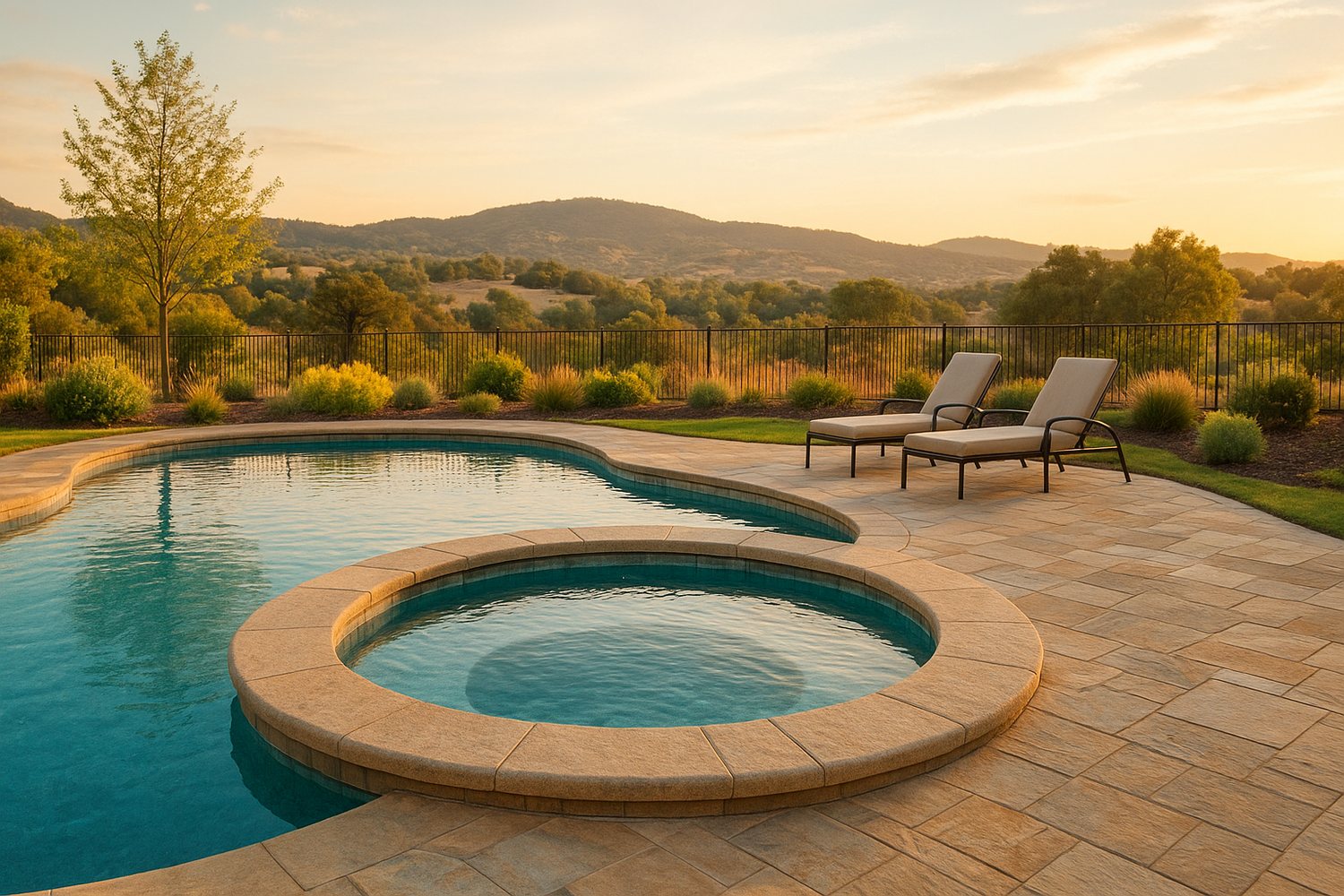
A raised spa sits visibly higher than the pool, often 12–18 inches, creating dramatic visual contrast and opportunities for water features like sheer descents or spillways. Raised spas also allow for easier step-in access, better seating views, and a more prominent spa edge. Flush spas, built level with the pool, offer a sleek, modern line and an easy transition—but less visual separation.
Spillover Edges
Spillover spas feature a section (or the entire edge) designed for water to gently cascade from spa to pool. This not only looks stunning but also helps with temperature and chemical mixing. Waterfall sheets or stone ‘lips’ can be customized for sound, width, and materials—from classic tile to natural stone, matching your pool’s style.
Heating: Shared vs. Separate
Most combos use a shared heating system and equipment—heating the spa quickly with diverter valves, then switching to circulate the pool. Some homeowners choose entirely separate heaters and controls for complex uses. Shared systems are more cost-effective, while dedicated heaters for each maximize flexibility and can be useful for year-round spa use when you don’t want to heat the whole pool.
Jets, Bubblers, and Seating
Spa jets add hydrotherapy benefits—relief for tired muscles, enhanced circulation, and relaxation. Jet layouts vary by spa size, bench shape, and depth; more jets and customized placement mean better comfort. Some spas also add air bubbler systems for full-body massage. Seating is tailored for the planned number of users, from cozy intimate soaks to larger group gatherings.
Placement for Views and Privacy
Spa placement is about more than symmetry: it means considering prevailing breezes, neighboring windows, sun angles, and sightlines. Tucked-away spas can maximize privacy, while orienting a raised spa toward distant vistas creates a focal point—especially for sunset or foothill views. Your landscape, patio, and existing structures all factor into optimal location.
Spa Covers and Controls
A locking, insulated spa cover preserves heat, keeps out debris, and enhances safety—especially if you have kids or pets around. Today’s covers range from traditional manual styles to automated retractable designs. Controls, meanwhile, can be wall-mounted, remote, or integrated with mobile apps, giving you precise temperature and jet settings from anywhere in the yard or home.
How a Quality Pool and Spa Combo Is Built
A successful pool and spa combination demands experienced planning and execution. We approach every build as if we were working at our own home, sticking with what’s proven to last in our region’s climate and soils. Here’s how our work proceeds, from breaking ground to that first soak.
- Subgrade: The site is excavated well below finished elevation, carefully shaping separate spaces for pool and spa, and evaluating soil (clay, decomposed granite, or rock) for stability. Spoils are properly managed to maintain access and drainage.
- Base: A compacted gravel base is installed to support the pool and spa shells, preventing future settlement. The thickness, choice of materials, and compaction technique are matched to local soil and water table conditions to ensure long-term performance.
- Forms: High-precision wood or composite forms are set to create clean transitions between pool and spa, as well as for any raised spa walls or spillover features. Laser leveling ensures accurate heights—crucial for spill edges, steps, and safety ledges.
- Reinforcement: Steel rebar cages are fabricated and tied on-site for both pool and spa. Special attention goes to tie points where water will flow or where raised elements meet flush sections. Proper rebar layout means durability against shifting and winter freezes.
- Joints: Control and expansion joints are designed into the shell and decking, especially around spas and water features, to handle drying shrinkage, future movement, and varied temperatures. This controls cracking and keeps water tight.
- Finishing: After gunite or shotcrete placement, surfaces are shaped and troweled for consistent depth, smooth seating, and precise spillover lips. Tile, coping, and deck finishes are applied with full attention to weather exposure and slip resistance.
- Curing and Sealing: The concrete and tilework are allowed to cure fully, with careful moisture control to reach strength goals. Where needed, specialty sealants are applied to spillway stones and decks—protecting against weather, pool chemicals, and hard water.
Pool and Spa Combo Advantages and Drawbacks
Strengths
- Year-round enjoyment: Warm water soaks in winter, refreshing pool in summer—all in one space.
- Hydrotherapy and relaxation: Spa jets deliver muscle relief and stress reduction only a true spa setting allows.
- Integrated visuals: Raised or spillover spas create movement, sound, and dramatic design statements that elevate the whole yard.
- Efficiency: Shared heating and equipment (vs. separate outdoor spa and pool) lower installation, maintenance, and operational costs.
- Property value: Properly designed combos are desirable in today’s real estate market, especially in sought-after California suburbs.
Trade-offs
- Upfront investment: Pool and spa combos require more excavation, plumbing, and finishing work than a basic pool alone.
- Space requirements: For best results, combos need enough yard area for both pool, spa, and access—not always practical on very tight lots.
- Maintenance: Two water bodies mean more complexity in balancing water chemistry and cleaning, though automation helps.
- Heat loss: Raised or spillover spas, while beautiful, lose heat faster to the air—boosting heating needs unless a quality insulated cover is used faithfully.
Understanding Combo Pool and Spa Costs
Pool and spa combinations are a significant investment, with costs shaped by design, finish level, technical options, and site conditions. With decades of regional experience, we believe in transparency: we don’t compete to be the lowest bid, but to build right the first time, lasting for years beyond any trend or shortcut. Several factors drive pricing and can be fine-tuned to fit your priorities.
- Excavation complexity: Decomposed granite, clay, or rock—plus yard access—impact machinery and labor needed for a safe, clean dig.
- Spa type and elevation: Raised spas require more concrete, finishing, and waterproofing than flush installations.
- Heating and plumbing: Choice of shared vs. dedicated heaters, extra plumbing lines, and automation level drive equipment costs.
- Finish upgrades: Tile type, coping material, decking finishes, and special water features (like multiple spillways) add material and labor.
- Equipment specification: Variable speed pumps, energy-efficient heaters, multi-color LED lighting, and advanced controls affect initial outlay.
- Site preparation: Things like correcting slope, building retaining walls, handling oak roots, and protecting drainage add scope and complexity.
Caring for Your Pool and Spa Combination
Routine care for a pool and spa combo centers on balanced water chemistry (pH, alkalinity, sanitizer), debris removal, and pump/filter maintenance. Spa water, being hotter, is more prone to scale and requires tighter monitoring for sanitizer and calcium, especially with local hard water. Inspect spillover edges and tile for mineral buildup, particularly if you use the spa heavily or run hard well water.
Periodic resealing of exposed stone or tile spillways (every 2–4 years, depending on use, sun, and water chemistry) keeps finishes looking sharp and helps prevent leaks or staining. The major lifespan determinant is the build quality of concrete shell, waterproofing, and tile; with diligent maintenance, expect decades of service from the structure—while covers, heaters, and minor finishes are replaced or updated every 7–15 years.
Compare other options

Plunge pools and small-yard pools
Discover if a plunge pool or compact pool is right for your small Rocklin, Roseville, or Auburn yard. Sizes, design, costs & honest pros and cons explained.
Explore →
Pool waterfalls, sheer descents and deck jets
Explore pool waterfalls, sheer descents, scuppers, bubblers, deck jets in Rocklin. Learn about choices, benefits, care, costs, and key trade-offs.
Explore →
Gunite and shotcrete pools
Explore gunite and shotcrete pools: benefits, build process, costs, care, and trade-offs for Rocklin, Roseville, Granite Bay, Folsom, Auburn homeowners.
Explore →Frequently Asked Questions About Pool and Spa Combos
Can I use just the spa in winter without heating the whole pool?
Yes. Most pool and spa combos are plumbed so you can isolate water flow and heating to only the spa, using diverter valves and automation. This means you can heat and enjoy the spa even in the coldest months, without the expense of running the main pool heater—making the combo usable year-round.
Does a raised spa cost more than a flush spa?
In general, yes—a raised spa requires more concrete, specialty formwork, finishing, and waterproofing compared to a flush spa. Added materials and the complexity of creating watertight spillover features mean labor and costs run higher. However, the visual impact, improved seating views, and sound of water flow are significant benefits many homeowners value.
How much space do I need for a pool and spa combo?
While every yard is different, a pool and spa combination usually needs enough flat space for both water bodies and at least a few feet of deck or hardscape access on each side. Tight lots may require creative shaping, retaining walls, or compact spa placement. Local setbacks and HOA rules can affect placement, so a site visit and review of property lines is always recommended.
What is involved in keeping the spa clean and safe?
Regular spa care includes testing and balancing water chemistry (pH, sanitizer, calcium), skimming debris, and running circulation pumps as directed. Draining and refilling is typically needed less often than portable spas since the water volume is higher and shared with the pool, but maintaining a tight-fitting, insulated cover is key for sanitation and energy savings. Automation can simplify chemical dosing and scheduling.
Can I add special features like lighting or waterfalls to my combo?
Absolutely—LED lighting (including color-changing options), bubblers, deck jets, and custom waterfall or spillway features are all available. These options are best planned during initial design, since adding them later often requires breaking into deck or shell. We help you plan for the experience and look you want from the outset.
How important is insulation for my spa?
Insulation in the shell and a quality spa cover both help retain heat, crucial in our climate with cool nights and hot days. Exposed raised spas lose more heat to wind and air, so we recommend heavy-duty, well-insulated covers and, where feasible, thermal breaks in the construction. Good covers also keep leaves, debris, and summer dust out.
Will the spa or pool crack from local clay soil movement?
A properly engineered subgrade and reinforced shell are critical for dealing with the swelling and shrinkage of clay soils found throughout the region. Careful compaction, base prep, steel layout, and high-strength gunite or shotcrete keep the pool and spa stable and minimize risk of cracks. We design with your property’s specific soil in mind and never take shortcuts.
Do I need HOA or city approval for a pool and spa combo?
Nearly all homes here require either HOA architectural approval and/or city/county permits for new pools and spas. Review timelines, plan requirements, and inspection steps vary by address and neighborhood—some are straightforward, others much more detailed. We recommend you check early and gather any documents your association or jurisdiction requests before starting construction.
Ready to Explore Your Pool and Spa Options?
Email sales@californiahardscapes.com with your address, a brief description of your goals, and a few site photos to start the conversation.