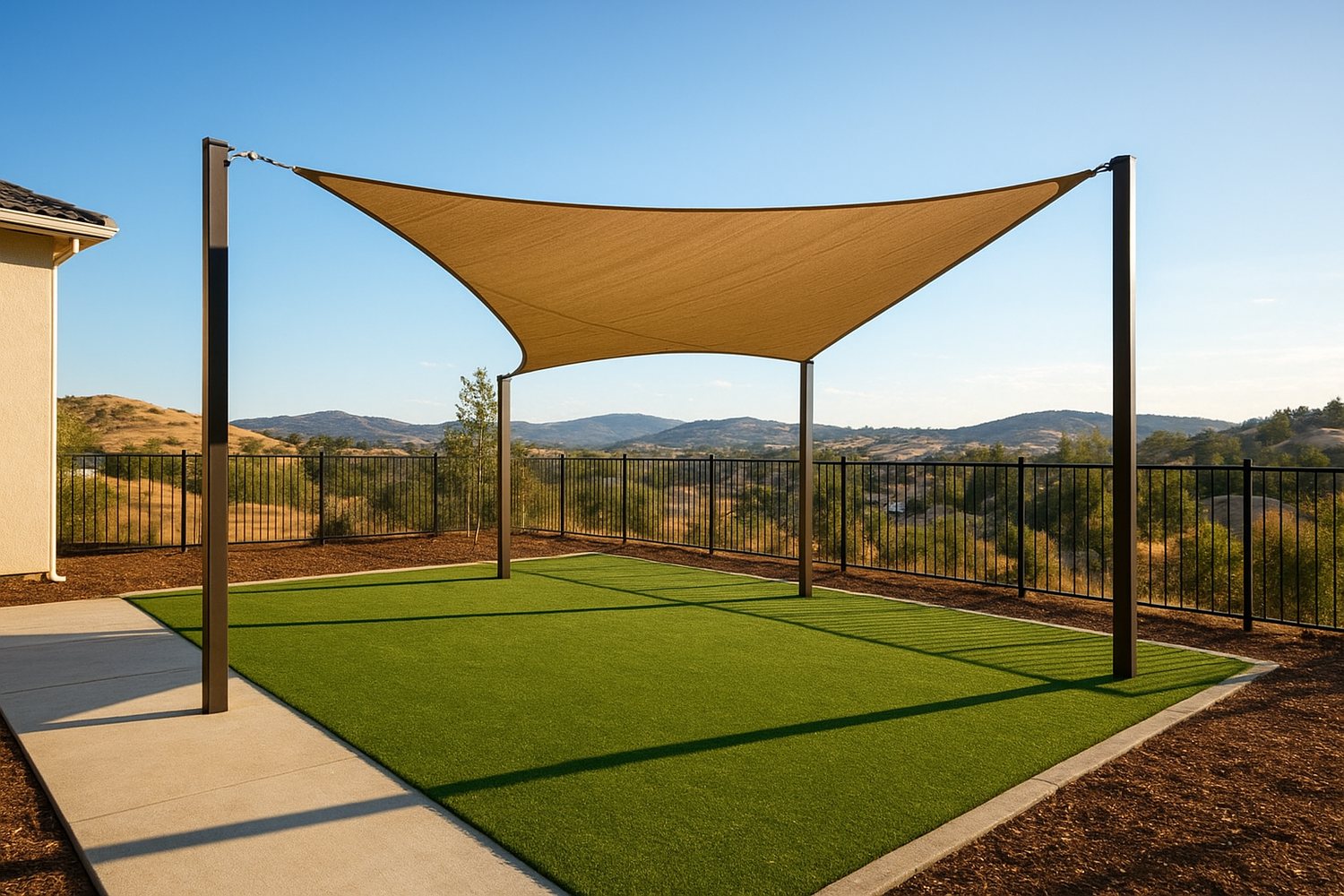
Why Playground Turf Safety Padding Matters for Local Backyards
Good playground turf is more than green grass — it’s a safety system. Local families can learn what’s underfoot makes backyards safer for active play.
Homeowners in Rocklin, Roseville, and neighboring areas are choosing artificial turf for backyard playsets. But what goes beneath the turf matters most for safety.
Understanding the Purpose of Safety Padding
When it comes to playground turf safety, the padding beneath the artificial grass is arguably the most critical layer. This padding is engineered to cushion falls, reduce injury risk, and provide a consistent playing surface for children. Especially beneath swings, slides, and climbing structures, the right padding is essential.
For active families in Placer, Sacramento, and El Dorado Counties, peace of mind starts below the surface. Safety padding works by absorbing impact energy, decreasing the force that children experience in falls from playsets. A properly padded play area can be the difference between a minor scare and a serious injury.
Homeowners often focus on turf appearance, yet regional soil conditions, drainage, and temperature all play a role in how well a safety pad performs. To create a playground that truly protects, understanding your options is just as important as choosing a quality turf.
If you want deeper information about safe artificial grass options for play, see thePlay area and playground turfpage.
Why Local Conditions Influence Padding Choices
The climate and ground in Northern California differ from other areas, affecting the longevity and effectiveness of playground turf safety padding. Heat-resistant and well-draining materials hold up better in the warm, dry summers typical of Rocklin, Roseville, and Granite Bay.
Clay-heavy soils in some parts of Placer and Sacramento counties can trap water under playground surfaces. Choosing padding solutions designed for rapid drainage will help prevent sogginess, mildew, or shifting after rain or irrigation events.
Local regulations and common backyard slopes also impact choice. Proper installation addresses grade, compaction, and water flow, ensuring the safety pad remains stable for years. Selecting padding suited to your climate and yard type is as important as the turf you’ll see above.
- Heat resistance prevents surface softening
- Drainage keeps play areas dry and stable
- Padding thickness may vary by equipment height
Comparing Common Safety Padding Materials
Playground safety padding comes in several forms, each with its own trade-offs. The most common include foam pads, rubber tiles, and specialty shock pads—all rated for impact safety by independent standards.
Foam pads are lightweight and often used for residential settings, but may degrade faster in extreme sun. Rubber tiles are more durable and provide consistent impact absorption, especially under heavy use or higher equipment. Specialty shock pads often blend performance and drainage, tailored for regional climates.
The right choice depends on equipment height, budget, and expected use. Consulting with local professionals familiar with our area’s soils and weather helps homeowners select a solution tailored for both safety and longevity.
| Padding Type | Best For | Durability | Drainage | Notes |
|---|---|---|---|---|
| Foam Pad | Low-height playsets | Medium | Varies | Affordable, less UV resistant |
| Rubber Tile | Medium-high playsets | High | Moderate | Thicker, excellent impact absorption |
| Shock Pad | All equipment | High | Excellent | Best combo of safety and drainage |
| No Padding | Not recommended | N/A | N/A | Safety risk, not code-compliant |
Installation Techniques That Enhance Safety
Correct installation underpins the entire effectiveness of playground turf safety padding. Steps include grading for drainage, compacting the subbase, and securely anchoring the padding to prevent shifting over time.
Mistakes such as inadequate compaction or skipping an edge barrier can lead to uneven turf, exposed seams, or water pooling. These issues undermine the purpose of high-quality safety padding and may shorten its useful life.
California Hardscapes ensures attention to every detail, from drainage evaluation to seamless turf joins over the padding. Involving professionals early can head off problems that may not appear until the first wet season or heavy use.
- Start with properly graded base
- Install padding with tight seams and secure edges
- Top with turf suited for play and temperature conditions
How Padding Thickness Affects Playset Safety
Not all playground padding offers the same level of protection. Thickness directly relates to the fall height rating—the maximum equipment height where a child can fall and stay within injury risk guidelines.
For most residential playsets, one to two inches of high-quality safety pad is typical. However, for taller swings or climbing equipment, homeowners may need two-inch or thicker pads to meet safety best practices.
Choosing the right thickness is not just about following manufacturer recommendations. It’s also about considering how your play area will be used as children grow and how local soil compaction may change the underlying base.
For a look at other artificial turf possibilities, browse theArtificial Turfoptions overview.
Drainage: Preventing Soggy, Slippery Turf Zones
Proper drainage safeguards your investment in turf and padding. Frequent watering and occasional storms in Placer and Sacramento regions mean water must flow away quickly, preventing a muddy base and turf separation.
Safety padding with built-in drainage channels paired with well-laid sub-bases is ideal for these local soil conditions. This design ensures standing water does not build up, which could make surfaces hazardous and degrade the padding.
A wet, unstable surface can shorten turf and pad lifespans, making drainage planning as important as the safety material itself. Experienced contractors know where to route water and how to grade, keeping surfaces dry and play-ready after every rain.
- Integrated drainage channels in padding
- Sub-base slopes prevent puddling
- Gravel bases often recommended locally
Considering Turf and Padding as a Whole System
Playground turf should be chosen and installed to work hand-in-hand with the safety padding beneath. For example, not all turf types will work optimally with every padding material, especially in regions with variable summer heat.
Look for a balance: soft, resilient blades on top combined with reliable, impact-absorbing pads underfoot. The overall play area system must resist high foot traffic, swings, and climbing traffic, all while keeping children safe.
Factoring in local pet use, exposure to direct sun, and seasonal wetness will help you select the right pairing. Trusted local professionals provide recommendations based on hands-on experience with our region’s unique outdoor environments.
Next Steps for Your Safe Backyard Play Area
Evaluating a safe playground for your home starts by considering your family’s needs and your property’s unique features. Don’t overlook what’s under the turf—padding and sub-base are the foundation of long-lasting, safe play.
Take time to discuss your goals, your yard’s slope and soil, and the anticipated play equipment with a knowledgeable contractor. They can guide you toward the best-suited padding and turf combination for years of peace of mind.
California Hardscapes, led by Marty and his decades of experience in outdoor construction and materials, welcomes questions from local homeowners at any project stage. An expert eye early on reduces complications and ensures kids can play safely from day one.
Ready to discuss your own backyard project?Request a consultationwith California Hardscapes today.
Planning an artificial turf project?
Call or text 916-741-0633, or email sales@californiahardscapes.com with your address, a short description and a few photos, and we will arrange a consultation.