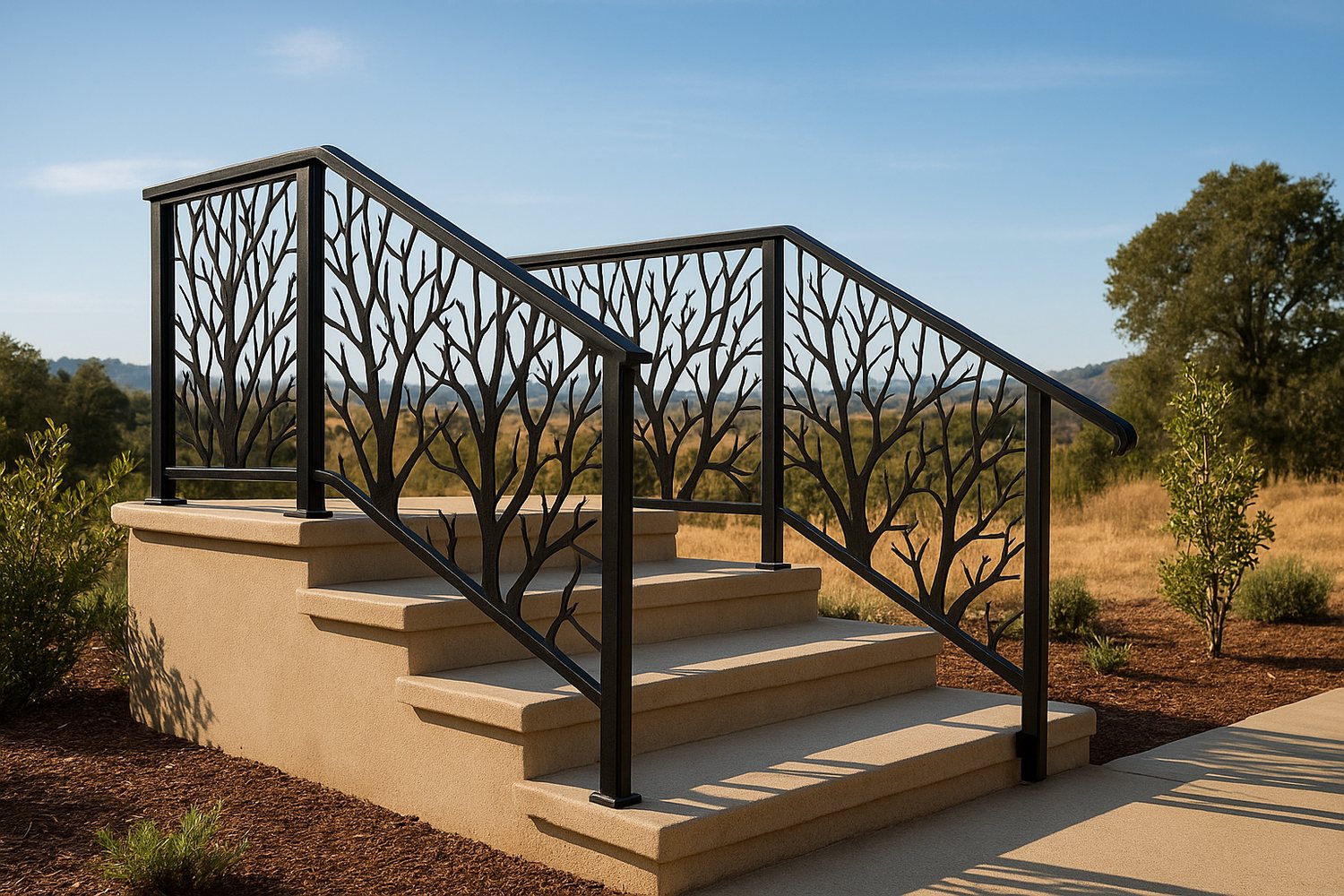
Metal Railings: Heights, Spacing, and Local Code Insights
Understand metal railing requirements with practical tips for safe, code-compliant installations in Rocklin, Roseville, Granite Bay, Folsom, Auburn, and nearby communities.
Railing design is more than aesthetic—it’s essential for safety and meeting local codes. Homeowners in Placer, Sacramento, and El Dorado counties should understand railing heights and spacing as well as check local regulations.
Why Metal Railings Matter
Metal railings offer strength and longevity for decks, balconies, and stairs. Aside from the obvious safety factor, modern metal designs can be tailored to match any style and are durable in Northern California’s climate. High-quality fabrication means fewer worries about warping, rot, or insect damage, compared to wood.
Safety is a prime reason to install railings, especially where drops or stairs are concerned. Properly designed railings are engineered to withstand force, supporting users steadily. For homes where children or older adults are present, the right railing can prevent serious accidents.
Beyond function, metal railings are a long-term investment in appearance and security. In this region, with variable weather and strong sunlight, metal resists fading and decay. Choosing a design that’s custom-created for your home ensures the best blend of visual appeal and performance.
- Metal railings outlast most wood options
- Design flexibility for any architecture
- Critical for deck, stair, and balcony safety
For a deeper dive into our custom metal railing solutions, visit the mainMetal Railingspage.
Understanding Railing Heights
For homeowners in areas like Rocklin, Roseville, and Folsom, railing height is crucial for both comfort and compliance. Most residential codes in California require guardrails to be at least 42 inches high when installed on decks or balconies more than 30 inches above the ground.
Handrails for stairs, however, are typically set at a different height, generally between 34 and 38 inches above the tread nosing. These measurements are standards, but city and county codes may vary slightly, so it’s always wise to confirm local requirements before finalizing designs.
Ensuring the correct height isn’t just about avoiding penalties—it’s a fundamental aspect of making your outdoor spaces safe for family and visitors. A small difference in height can impact safety and usability, so taking measurements seriously is key.
- Deck and balcony rails: 42 inches minimum
- Stair handrails: typically 34–38 inches
- Always double-check local amendments
Spacing and Openings: What’s Allowed?
The gaps or openings in a metal railing are as important as the height. To ensure children and pets don’t squeeze through, most codes specify that a sphere 4 inches in diameter cannot pass through any opening in the guardrail or stair railing.
This 4-inch rule applies to picket spacing, as well as openings below the bottom rail. Some areas might have slight interpretations for stair risers or unique architectural features, but 4 inches is the standard across most local codes.
Keeping openings consistent ensures your project both meets regulations and delivers lasting peace of mind. During planning, measure picket spacing carefully and review with licensed, bonded, and insured contractors familiar with Placer, Sacramento, and El Dorado County codes.
- Maximum 4-inch opening between balusters
- Check bottom rail to surface gap, too
- Review unusual areas for exceptions
| Feature | California Standard | Placer/Sacramento Typical | Check Local Amendments |
|---|---|---|---|
| Guardrail Height on Deck | 42 in minimum | 42 in minimum | Always confirm locally |
| Stair Railing Height | 34–38 in | 34–38 in | Check for local adjustment |
| Max Opening Size | 4 in | 4 in | Consult city/county codes |
| Custom Patterns | Allowed if code met | Allowed if code met | Design review recommended |
Navigating Local Codes and Updates
Different communities around Rocklin, Granite Bay, and Auburn can have unique code amendments. Homeowners should know that what’s allowed in one city might require adjustment in another. Consulting local building departments or experienced contractors is an essential early step.
Local codes may be based on the California Building Code but often have extra provisions. Changes can occur yearly or after new safety studies, so even experienced homeowners should verify current standards before proceeding with a metal railing project.
Work with contractors who are familiar with the specific local regulations. California Hardscapes builds with licensed, bonded, and insured teams who understand regional differences and can help ensure your project is approved and safe.
- Regulations can vary by city and county
- Recent code changes may affect height or spacing
- Expert advice prevents costly corrections
How Design Choices Impact Code Compliance
The metal railing pattern you prefer—whether modern, classic, or fully custom—should always be checked against code requirements. Laser-cut panels and unique profiles are popular, but openings must still meet the 4-inch rule, and the overall height must comply.
Intricate patterns with cutouts can sometimes create unintended openings. That’s why finalizing design details is a step best taken with a professional who understands the line between creative freedom and code limits. At California Hardscapes, pattern and design choices are settled during your consultation.
If in doubt, request drawings or templates in advance and ask contractors to verify that your preferences won’t interfere with code. This extra planning ensures you get the look you want without running into inspection issues down the road.
- Custom patterns must honor opening rules
- Work with specialists for creative designs
- Discuss options in your consultation
See all available styles and choices in our comprehensiveMetal Railings optionsoverview.
Deciding on a Metal Railing for Your Property
Choosing a new railing is both practical and personal. Think about your main goals—do you want more light, improved views, or just solid protection? Metal railings offer versatility for homeowners concerned with curb appeal as well as safety.
Consider how the railing fits with your home’s architecture and landscape. California Hardscapes offers design solutions tailored to your property, taking into account regional building practices and the natural surroundings unique to our foothill and valley neighborhoods.
When ready, schedule a consultation to discuss your ideas and needs. The process includes reviewing potential designs, exploring patterns, and confirming all code requirements with a licensed, bonded, and insured team.
- Clarify priorities: style, view, or safety
- Choose a design suited to your home’s look
- Plan a consultation to review all options
Staying Ahead: Regular Checks and Maintenance
Once installed, proper care extends your railing’s lifespan and ensures it continues to meet code. Periodically inspect for any wobbles, loose fasteners, or changes in spacing that could develop as foundations shift over time.
If you notice gaps widening or railings losing their rigidity, schedule a professional assessment. Occasional cleaning and quick attention to minor issues help keep your investment looking and working its best for years to come.
Maintenance guidelines can be discussed with California Hardscapes during your consultation for custom metal railing projects, ensuring practical, long-term guidance.
- Check spaces and fasteners regularly
- Address any changes promptly
- Consult professionals for repairs
Next Steps: Ready to Plan Your Metal Railing?
If you’re considering a metal railing for a new or existing deck, stair, or balcony, make code compliance a top priority from the start. Understanding height, spacing, and local rules minimizes project hiccups.
California Hardscapes offers design consultations where you can discuss patterns, sizes, openings, and local code requirements. It’s an efficient process focused on your property’s unique needs, ensuring results that are both beautiful and safe.
Contact us today to start a conversation about your project. We’ll help you navigate code questions and practical details, so you can invest confidently in custom metal railings designed for Northern California living.
- Prioritize safety in every design decision
- Schedule a railing consultation early
- Build with licensed, bonded, and insured contractors
To discuss your ideas or get guidance on what’s right for your home,request a consultationtoday.
Planning a metal railings project?
Call or text 916-741-0633, or email sales@californiahardscapes.com with your address, a short description and a few photos, and we will arrange a consultation.