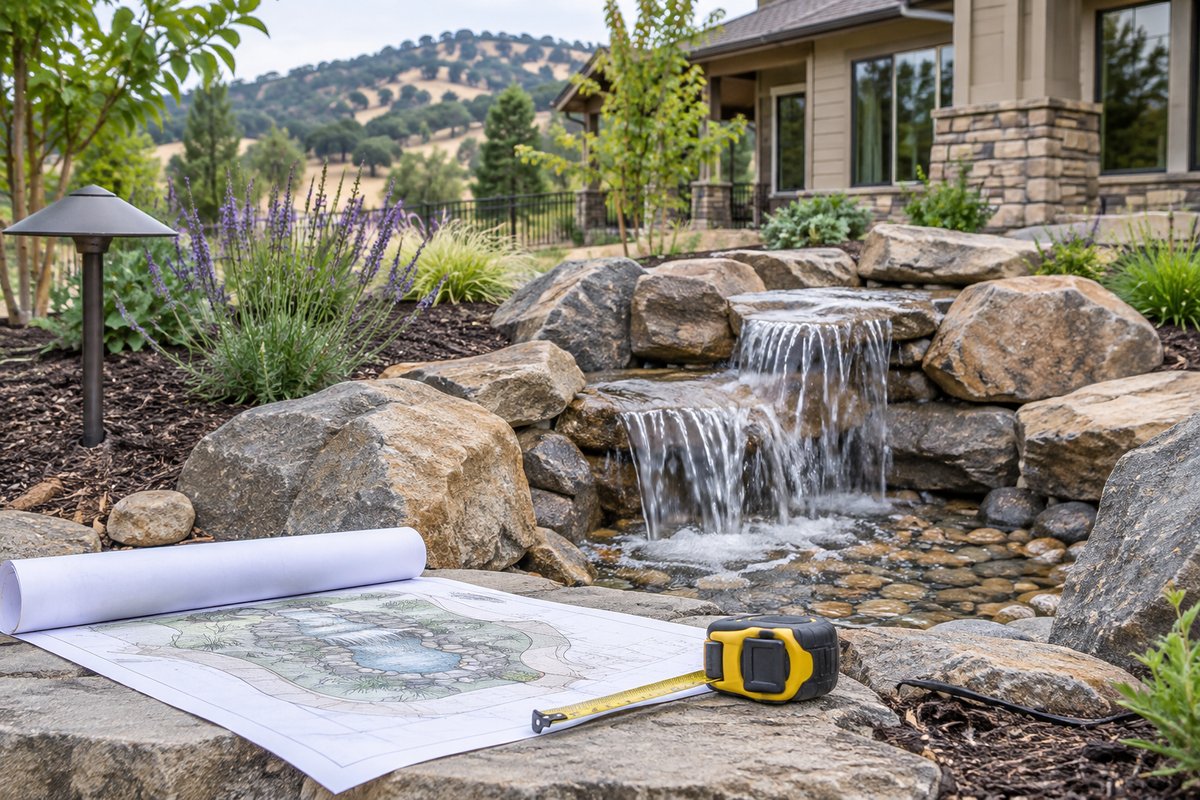
A Homeowner’s Guide to Planning Water Features in Newcastle, CA
Thinking about adding a water feature in Newcastle, CA? Learn the practical steps, from utility marking to soil prep and timing projects for local weather.
Smart Planning for Water Features in Newcastle
Bringing a water feature to your Newcastle property is about more than aesthetics. Every garden fountain, pondless waterfall, koi pond, or water wall needs careful preparation to withstand California’s unique terrain and climate. Whether you’re envisioning a modern water feature or a classic garden pond, this guide covers practical planning steps for a lasting, high-quality result that goes well beyond choosing shapes and finishes.
Here’s what every homeowner in Newcastle should consider before breaking ground: local utility lines, city and HOA rules, challenging soils, hillside slopes, drainage needs, and understanding local weather cycles. These basics make all the difference in how enjoyable, and how enduring, your new feature will be.
Permits, HOA Rules, and Local Codes
Before a single shovel hits the soil, Newcastle homeowners should check with city planning and review any HOA requirements that could impact water features. Permit needs vary with every municipality and the kind of structure you’re planning. For instance, a garden fountain often has fewer requirements than a structural koi pond, but setbacks, heights, and water use can all be factors.
If you live in a neighborhood governed by a homeowners association, approval is often required for visible changes – especially those involving plumbing, lighting, or safety fencing. Features like fire and water elements can have specific conditions for safe installation. Because regulations can change, it’s best to consult directly with the city office or your HOA board; for electric service requirements, PG&E’s service area map confirms Newcastle is under their coverage.
Permits or engineering may be required for deeper earthwork, larger ponds, or when incorporating structural elements. Always verify details – permit conditions depend on your exact plans and location on the lot.
Call Before You Dig: Locating Utilities
Every successful water feature installation begins with safe site prep. Newcastle is a patchwork of older rural lots, newer subdivisions, and everything in between. Underground utility lines – power, gas, water, or telecom – can run in unpredictable patterns. State law requires utility location before any excavation, deep irrigation trenching, or electrical conduit install.
Use the 811 “Call Before You Dig” service before any digging. It’s the homeowner’s responsibility to ensure all lines are marked and clearance is given. Even something seeming as simple as anchoring a bubbling urn or running low-voltage lighting for a garden stream can turn costly or dangerous if lines are struck.
If your project includes pumps, spillways, or perimeter conduits, plan these details early with your contractor so layouts and safety checks are coordinated long before work begins.
Soil Matters: Building on Newcastle’s Granite and Clay
Newcastle’s soils are famously variable—even a single lot can range from hard decomposed granite to heavy, slick clay. This matters for both installation and ongoing performance. Clay-rich soils expand and contract with moisture, which impacts everything from settling to edge stability of a koi pond, while granite can restrict drainage and make excavation challenging.
Proper base preparation, compaction, and drainage mitigation are non-negotiable. Features like reflecting pools or large ponds must be engineered to sit stable year-round. If you’re considering a spillway bowl or lined channel, good soil prep minimizes cracking, leaking, or shifting that could cause problems later. California Hardscapes’ contractors routinely address these conditions in Newcastle when preparing for both natural and formal features.
If your yard has obvious water runoff, flooding patches, or a history of shifting retaining walls, bring these issues up in the planning phase. Every detail, from liner selection to footing design, should account for your native ground.
Slope and Drainage: Designing for Newcastle’s Hills
Many properties in Newcastle include sloped sections or natural terraces. While these add beauty and variety to a landscape, they also bring extra considerations for any water feature. It’s essential to consider how water will move across your lot, especially if you’re planning something like a pondless waterfall, stream, or even a wall fountain installation.
Proper design channels surface water away from buildings and directs overflow safely. Poor grading or an undersized drain can contribute to erosion, unwanted pooling, or property damage during heavy winter storms. Always evaluate where feature discharge goes, how much runoff to expect in the rainy season, and how seasonal changes in Newcastle might affect flow rates. For accurate local rainfall expectations, the National Weather Service’s forecast for Newcastle offers reliable reference data.
Creative use of slopes—such as stepping stones or naturalistic garden streams—can transform a challenging yard into a functional, engaging landscape. It all comes down to careful grading and thoughtful drainage integration in the overall plan.
Weather Challenges: Surviving Summer Heat and Winter Rain
Newcastle’s climate brings long, hot summers that can top 100°F and short, often intense winter rains. Both extremes test the durability and maintenance needs of water features. Materials, pump sizing, and planting choices should factor in exposure to sun, wind, and water loss rates.
During the dry season, ponds and fountains lose water to evaporation—features with engineered liners and shaded placement demand less top-off. Choosing native or water-wise plants can soften the zone around a garden fountain or pond, minimize heat stress, and keep water temperatures stable for fish habitats. Conversely, winter brings the risk of overflow and debris clogging. Features like bubblers or pondless designs minimize standing water and simplify winter care.
Plan each installation in tune with seasonal cycles. Use the extended forecasts provided by the National Weather Service to time major work around the driest stretch each year. This minimizes risk of weather delays and site saturation that can set back progress.
Best Project Timing for Newcastle Homes
While water features can be installed nearly any time in Newcastle, the ideal window is after spring rain but before ultra-hot summer temperatures. Soft ground is easier to dig and shape, but too much moisture can lead to soil compaction problems. Fall installation also works well, as cooler weather gives plants time to establish before the heat returns.
Larger features—like koi ponds or fire and water features—often need phased construction. Allow for proper curing of concrete or stonework, and plan buffer time for inspection and final adjustments. A realistic schedule, coordinated around local weather, soil conditions, and any required permits or HOA reviews, ensures the process is smooth and the end product lasts for decades.
Finally, keep a margin for any required follow-ups—such as utility marking callbacks or HOA inspection walk-throughs—before you consider your water feature officially complete and ready to enjoy.
Choosing Water Features for Newcastle: What Works Best?
Newcastle’s residential lots can support a variety of water features, but not every option fits every site. Consider maintenance, space, sun exposure, and how you want your feature to feel within your landscape. A pondless waterfall is well-suited to small lots or families concerned about open water, while a classic garden fountain or reflecting pool adds a timeless touch for formal spaces or courtyards.
Sloped terrain favors streams and cascades, letting gravity power a dramatic custom watercourse. If your priority is movement and sound with low upkeep, consider bubbling urns or garden streams for a soft, tranquil presence. Newcastle’s warmer summers also make shaded or partially covered installations a wise choice, reducing maintenance and helping manage evaporation.
California Hardscapes brings decades of experience in tailored design and installation—every feature is completed by licensed, bonded, and insured contractors, and built to the site’s conditions and owner’s vision. For a full overview of possibilities, visit their Water Features page.
FAQ: Newcastle Water Feature Planning
Do I need a permit for a water feature in Newcastle?
Permit requirements depend on the size, use, and type of feature. Structural elements or deeper ponds may require city permits and inspections. Always check with the city office before starting site work for current requirements.
How can I check for buried utilities before digging?
Always use the 811 utility marking service before excavation. All major utilities serving the Newcastle area, including PG&E, participate. It’s required by law and helps prevent costly or dangerous accidents.
Which water features handle Newcastle’s summer heat best?
Pondless waterfalls, bubblers, and garden fountains with engineered liners are well-suited to dry, hot conditions. Shaded placement or water-wise surrounding plantings help reduce evaporation and keep features running efficiently.
- PG&E service area—electric utility coverage details
- Newcastle Weather Forecast—plan timing and maintenance with local data
Ready to transform your Newcastle property with a premium water feature, tailored for local conditions and lasting quality? Request a consultation with California Hardscapes to start planning your project, from design through completion—built with pride, finished with excellence.
Planning a project in Newcastle, CA?
Call or text 916-741-0633, or email sales@californiahardscapes.com with your address, a short description and a few photos, and we will arrange a consultation.