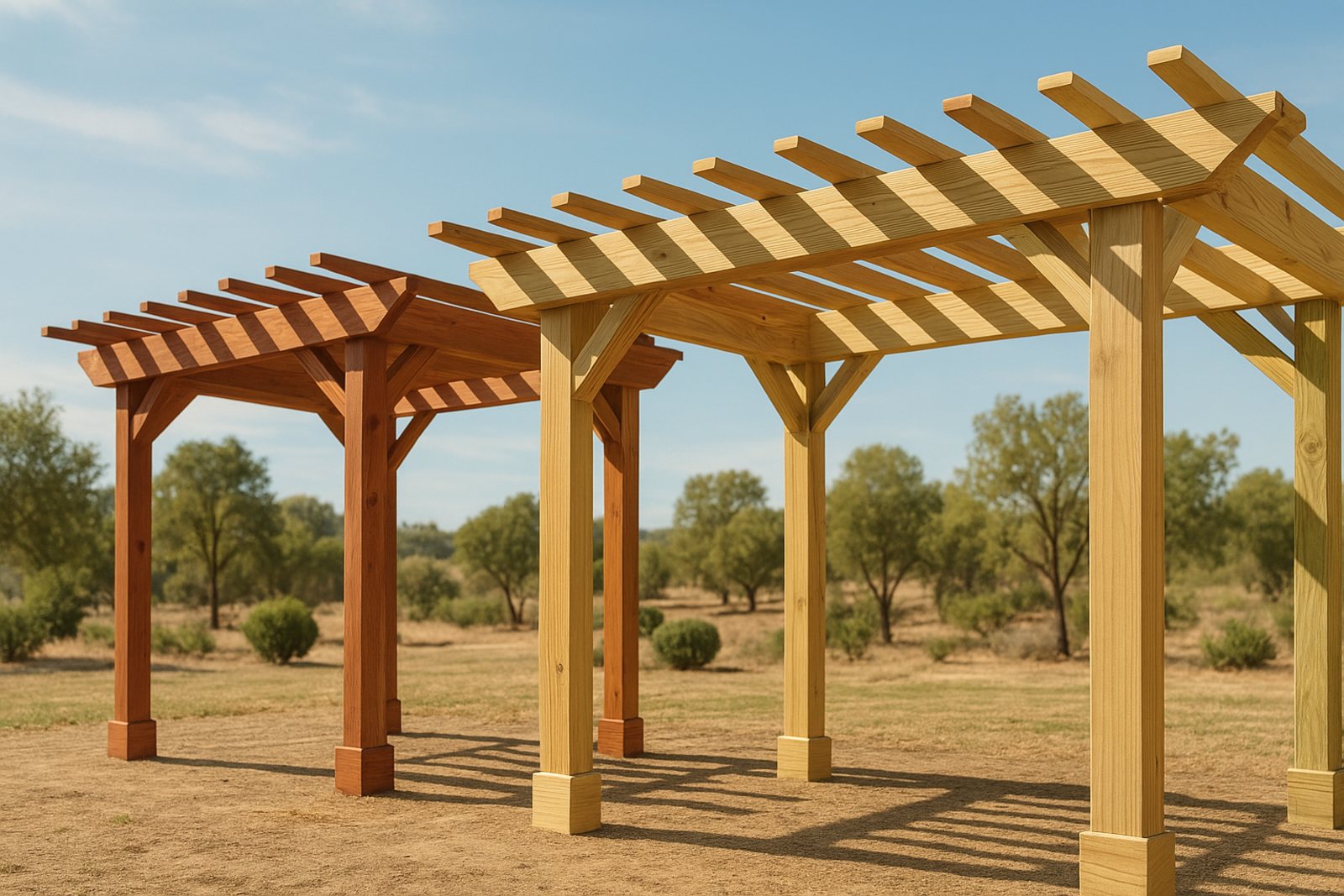
Cedar vs. Redwood vs. Pressure-Treated Pine: Choosing Pergola Wood
Compare cedar, redwood, and pressure-treated pine for pergolas—specific to the California Foothills region. Find out what matters for lasting outdoor living.
If you’re planning a wood pergola here in Rocklin, Roseville, or nearby, your lumber choice makes a real difference. Let’s break down cedar, redwood, and pressure-treated pine for beautiful, durable outdoor spaces in our climate.
Why Wood Selection Matters for Pergolas Here
Rocklin, Roseville, Granite Bay, and neighboring communities have climate quirks—hot summers, occasional winter storms, and plenty of sun. Pergolas stand exposed, so not all woods fare the same long-term here.
The right material keeps a pergola looking sharp while minimizing ongoing work or early replacements. Some homeowners want wood that weathers attractively; others value minimal maintenance. Our environment puts a premium on both durability and resistance to insects and rot.
Beyond technical concerns, your choice shapes the look and feel of the space—classic redwood, warm cedar grain, or the flexibility of pressure-treated pine. Picking the right wood balances beauty, upkeep, and lifespan in our region.
- High solar exposure
- Seasonal rain and moisture
- Value in longevity and easy care
Learn more about design options and benefits on ourWood pergolaspage.
Cedar: Reputation, Performance, and Practicalities
Cedar is a favorite for outdoor projects in Northern California. Its naturally occurring oils help it resist insects and decay, which is important in areas where termites can be an issue. Cedar’s distinct, light color and subtle aroma also bring a welcoming, natural feel to backyard living.
Typically lightweight yet strong, cedar pergolas offer easy workability and a refined appearance. Left unstained, cedar weathers to a silvery patina, but regular sealing preserves its fresh look. However, it is softer than some woods, so heavy impacts or rough treatment can dent or scratch boards.
The main tradeoff is price: cedar comes at a premium compared to pressure-treated pine. Still, its combination of looks, durability, and moderate upkeep make it a top choice for many here, especially for those who prefer a less reddish look than redwood.
- Naturally resists pests and decay
- Ages to a classic gray if untreated
- Moderate maintenance needed
Redwood: Beauty and Resilience for the California Pergola
Many associate pergolas in our region with redwood—thanks to its deep color and presence throughout California. Redwood contains tannins that provide reliable natural resistance to insects and fungi, which adds to its reputation for lasting outdoors.
Redwood ranges from light pinkish tones to rich, darker reds. This visually striking grain stands out, whether you seal it to maintain the color or let it weather naturally. Redwood’s stability helps minimize warping, especially when clear heartwood grades are used.
While typically more expensive than pine and often comparable or higher in cost than cedar, redwood offers longevity and little maintenance beyond sealing. If you value a signature look and legacy California backyard feel, redwood is a confident choice.
- Distinct, bold color selection
- Stands up to sun and rain
- Requires sealing to preserve tone
| Feature | Cedar | Redwood | Pressure-Treated Pine |
|---|---|---|---|
| Natural Resist. to Rot/Insects | High (natural oils) | Very High (tannins) | Very High (chemical treatment) |
| Color/Grain | Light, straight grain | Rich red, bold grain | Pale to greenish, visible knots |
| Maintenance Needed | Moderate (seal every 1–3 years) | Low–Moderate (seal to preserve color) | High (seal/paint regularly) |
| Avg. Longevity Outdoors | 15–25 yrs (sealed) | 20–30 yrs (sealed) | 10–20 yrs (with care) |
| Cost (relative) | $$$ | $$$$ | $ |
Pressure-Treated Pine: Value, Strength, and Considerations
Pressure-treated pine is a cost-effective and accessible option for pergolas that need to stand up to the elements. Chemical treatment makes pine highly resistant to rot and insects, addressing concerns common in the Foothills and valley communities.
Pine’s relative strength allows for larger spans at lower cost, making it practical for broad-coverage pergolas. However, natural pine has a less refined grain and sometimes greenish or uneven tones from the treatment process. Paint or stain evens out the appearance and adds protection.
Compared to cedar and redwood, pressure-treated pine tends to need more maintenance: regular sealing or painting and inspecting fasteners as wood can swell or split over time. Still, it’s often chosen for budget-conscious projects needing a sturdy, functional result.
- Budget-friendly
- Excellent rot and pest resistance due to treatment
- Appearance customizable with stains or paints
Durability and Maintenance: What to Expect in Our Climate
Summers are long and dry here, but winter moisture and UV rays are the real challenge. Cedar and redwood naturally fend off decay, but all pergola woods need sealing for maximum lifespan—typically every 1 to 3 years, depending on sun exposure.
Pressure-treated pine’s treatment wards off rot, yet it can check or split if it dries too quickly. Aligning boards with grain in mind and pre-drilling fasteners helps manage this. All wood pergolas benefit from yearly checks for cracks, loose fasteners, and fading finish.
For truly low-maintenance outdoor living, covering or shading a pergola and adding an occasional cleaning routine keeps each wood type looking its best long-term. Factor ongoing upkeep into your decision—especially if you plan for decades under your pergola.
- Annual inspection extends pergola life
- Sealing frequency depends on exposure
- Deep shades may fade faster in direct sun
If you’re exploring more ideas for your space, visit ourOutdoor Livingoverview.
Local Availability and Look: What’s on Hand
Sourcing high-quality lumber matters—Northern California yards often stock all three materials, but premium, sustainably harvested grades make a real difference. Clear cedar and select redwood cost more, but offer the highest aesthetic impact and structural integrity.
Pressure-treated pine is the most widely available and typically in ready supply year-round. Redwood supplies can fluctuate depending on harvests and demand, while cedar remains a reliable option, often carried by local suppliers who serve Rocklin, Roseville, and beyond.
Matching your home’s style and landscaping to your pergola’s color, grain, and finish creates harmony. On-site viewing of lumber can help you pick the right boards, and experienced builders know how to select pieces with optimal grain and appearance.
- Clear grades command higher prices
- Local yards stock multiple options
- Careful selection maximizes structure and style
Cost Considerations and Long-Term Value
Initial cost is only part of the equation—factoring in maintenance, longevity, and potential repairs matters. Cedar and redwood may cost more upfront, but their natural resistance often means lower maintenance and replacement costs over time in our region.
Pressure-treated pine offers budget flexibility but could need more investment in finish upkeep and monitoring for splitting or warping. For many homeowners, the wood’s perceived value, appearance over time, and fit with overall outdoor plans are just as important as the sticker price.
Work with a builder familiar with local climate and materials. Thoughtful construction, correct fasteners for the wood, and sealant matched to our weather maximize your pergola investment—whatever material you choose.
- Compare upfront and lifetime costs
- Longevity factors into overall value
- Installation and finishing affect outcomes
Making the Choice: Matching Material to Your Vision
Start by clarifying your pergola goals: Is standout style or low maintenance your priority? Will it frame an outdoor kitchen, shade a pool, or anchor a garden getaway? Each wood has a best use depending on how it fits your daily life.
Walk the yard and look at example boards. If possible, view structures of various woods in person and see how they’ve weathered over time. Take a few moments to hold, smell, and imagine each wood in your environment—it helps clarify true preferences.
Finally, a conversation with an experienced local team can help translate your vision to reality. With the right advice, you’ll arrive at a pergola that complements your home and stands up to the unique demands of our Northern California communities.
- Align wood choice with lifestyle and maintenance goals
- Seeing examples in person helps
- Expert guidance brings your vision to life
Ready to explore your pergola project?Request a consultationwith our team today.
Planning an outdoor living project?
Call or text 916-741-0633, or email sales@californiahardscapes.com with your address, a short description and a few photos, and we will arrange a consultation.