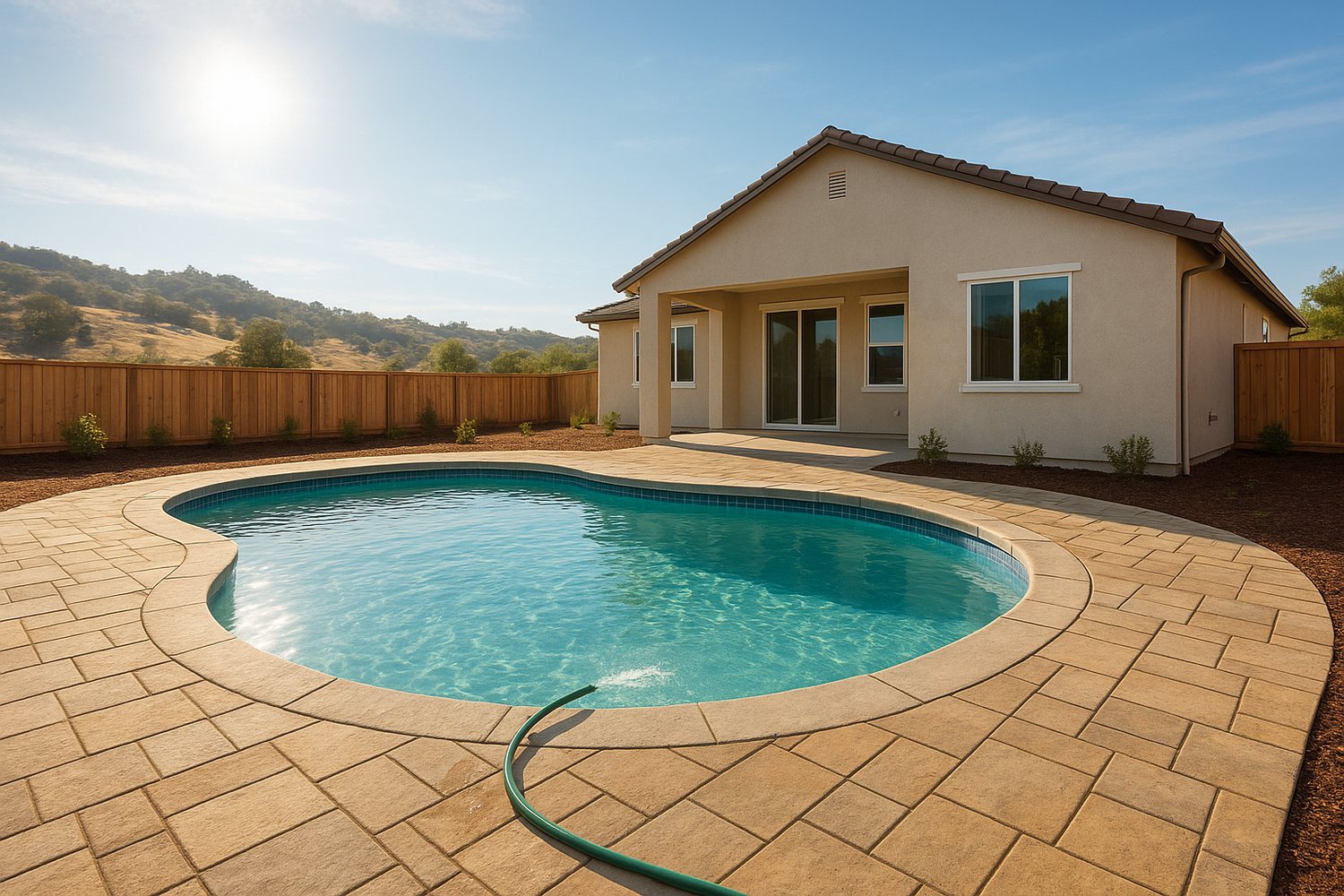
Deciding on a Custom Pool: What Every Homeowner Should Know Early
If you’re planning a custom pool, get key decisions right from the start. This guide explains what to settle early, and why those choices really matter.
Your dream pool is built on smart early decisions—size, depth, spa, and equipment. Each shapes your backyard experience and is hard to change later.
Why Early Decisions Matter for Custom Pools
When designing a custom pool, certain choices have a big impact on usability, budget, and long-term satisfaction. Size, shape, and features like spas and ledges all tie into the structural concrete and internal plumbing. Once concrete is poured and systems are installed, changes are difficult and costly—sometimes impossible.
Rocklin, Roseville, Granite Bay, Folsom, Auburn, and surrounding areas have specific site considerations, from sloped lots to local climate and soil. Addressing these early means your pool will not only function well but fit in with your property’s needs and your lifestyle.
Careful planning with an experienced contractor can help you clarify your priorities. Whether you’re after a lap pool, a family hub, or something for entertaining, mapping out details at the outset keeps your project on track and future regrets to a minimum.
Learn more about what’s possible with a custom pool on ourCustom Poolspage.
Selecting the Right Pool Size
Pool size shapes nearly every backyard experience. Consider how many swimmers you’ll host, how you’ll use the space, and your yard’s proportions. Larger pools work for families or frequent gatherings, while smaller designs fit compact yards or a focus on relaxation.
Local regulations in our region may affect how close your pool can be to property lines, easements, or retaining walls. These factors often set a maximum footprint before you select shape or features.
Remember, increasing a pool’s size after construction isn’t practical. Take measurements, consider how patios, pool decks, and landscaping will integrate, and talk through scenarios with your builder. Early sizing discussions are key to a functional, attractive result.
- Measure yard and sketch all structures
- Factor in required setbacks
- Consider patios, seating, and future hardscapes
Determining Pool Depth: More Than Just Preference
Depth is a major design commitment. At this stage, think about who will use the pool and what activities it should support—lap swimming, games, or lounging. Younger kids and casual swimmers often need shallower, safer depths, while deeper pools allow for diving and competitive swimming.
Changing depth later typically requires total demolition and reconstruction. Standard depths range from around 3.5 feet for lounging to 6–8 feet for diving, with many families choosing a gradual slope or a dedicated deep end.
Regional preferences in Placer and Sacramento Counties also influence choices, as sun exposure and water heating needs can affect comfortable use. Discuss practical needs and legal diving depth minimums with your contractor to find the best configuration.
- 3.5–4.5 ft: Fun & relaxation
- 5–6 ft: Swim & play
- 6–8 ft: Diving & tricks
| Feature | Changeable Later? | Cost to Change | Impact on Use |
|---|---|---|---|
| Size | Rarely | High | Major |
| Depth | Almost Never | Very High | Major |
| Spa Integration | Difficult | Very High | Major |
| Equipment | Sometimes | Moderate | Moderate |
| Lighting | Sometimes | Moderate | Noticeable |
Do You Want a Spa? Decide Early
A spa is a popular custom pool upgrade, providing year-round relaxation and hydrotherapy. Integrating a spa into the pool design affects plumbing, electrical systems, and equipment pad sizing. Adding a spa later can mean major demolition and expense, so it’s best decided from the start.
In cooler seasons, a heated spa can extend outdoor enjoyment in Rocklin, Granite Bay, and Folsom. A built-in spa can also improve resale value and flexibility for entertaining guests or unwinding after a long day.
Talk through your routines. Do you envision evening soaks or hosting gatherings? For many, the combination of pool and spa brings the best of both worlds, but advanced planning is key to achieving seamless integration.
- Spa jets and seating
- Heating options for year-round use
- Integrated or standalone location
Choosing the Right Equipment
Pool equipment selection is more than just checking a box. Pumps, filters, and heaters all contribute to water quality and energy efficiency—especially with our region’s hot summers and cooler nights. Oversized or undersized equipment can impact maintenance and utility bills.
Equipment is usually placed discreetly but needs access and airflow, so assess the best locations relative to fences and landscaping. Once plumbing is installed, it’s exceedingly disruptive to upgrade components such as heaters, automation controls, or specialty filtration.
Homeowners in this region often prioritize variable-speed pumps for efficiency and reliable filtration for water clarity. Early equipment discussions safeguard long-term performance and comfort, even as your use habits evolve.
- Variable-speed vs. single-speed pumps
- Saltwater vs. traditional chlorination
- Automation options for controls
For design ideas and feature comparisons, visit our overview ofall Custom Pools options.
Planning for Lighting and Automation
Pool lighting transforms both appearance and safety, especially in backyards that host evening gatherings. LEDs, fiber optic, and specialty accent lights have become standard upgrades, but these choices must be made before concrete and coping are finalized.
Automation allows homeowners to manage pools and spas from their smartphones—adjusting temperature, lights, and water features with ease. Planning ahead saves on labor and materials and avoids retrofit headaches.
In the Rocklin and Granite Bay area, pool owners increasingly blend lighting design with outdoor living features, such as patios and seating walls. Consider your outdoor spaces holistically and discuss automation options at the design stage for best results.
- LED, halogen, or fiber optics
- Wireless smartphone controls
- Integrated timers for efficiency
Landscaping, Hardscapes, and Retaining Walls: Early Impact
The pool’s surroundings are as critical as the pool itself. Features like patios, paths, planters, and retaining walls all influence how you enjoy your outdoor space. In sloped or uneven yards common in this region, retaining walls can be essential to keep patios flat and control drainage.
Landscaping impacts both pool maintenance and the overall look. Early planning helps you prevent future headaches, such as overhanging trees shedding debris or walkways directing runoff into the pool.
By addressing these elements from the outset, you’ll ensure safe, convenient access to your pool, a tailored look, and easy care—while staying compliant with local codes.
- Retaining walls for slopes
- Patio extensions for entertaining
- Plant selections for low debris
Work With a Practical, Experienced Builder
Custom pools are not DIY territory. Working with a local contractor who understands the soil, climate, and building codes in Rocklin, Roseville, and neighboring communities is invaluable. Experienced builders guide you through what’s possible—and what must be decided up front.
Marty of California Hardscapes brings over three decades in concrete and construction to every project. From concrete flatwork to full outdoor living spaces, his expertise helps you make informed, practical choices that stand the test of time.
Bringing your vision to life takes smart early decisions, informed by real experience and local knowledge. The right builder makes sure your pool, patio, and landscaping work together for years of enjoyment.
If you’re ready to start planning,request a consultationwith California Hardscapes.
Planning a custom pools project?
Call or text 916-741-0633, or email sales@californiahardscapes.com with your address, a short description and a few photos, and we will arrange a consultation.