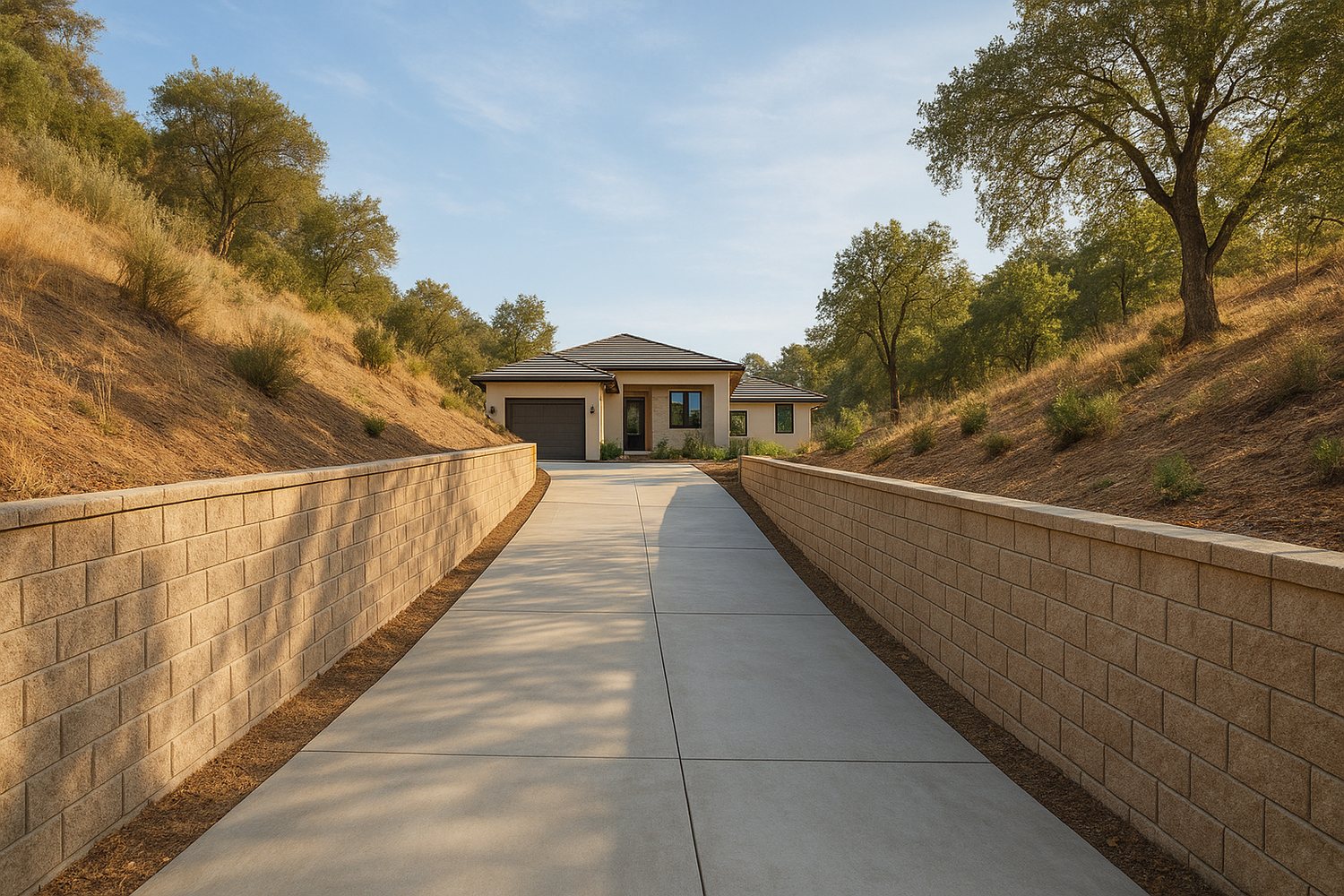
Planning Driveway and Front Yard Retaining Walls: Regional Considerations
Learn how to approach planning driveway and front yard retaining walls with a focus on vehicle loads and site-specific needs in the Rocklin area.
Effective planning for driveway and front yard retaining walls protects your investment, landscape, and peace of mind. Knowing what matters will save you trouble down the road.
Understanding California Driveway Retaining Walls
Driveway retaining walls in California’s varied neighborhoods serve both functional and visual purposes. Unlike garden walls, these structural elements must withstand the weight, movement, and pressure from vehicles. That means they’re engineered and built quite differently from low landscape edges or decorative borders.
Our regional soils—from the decomposed granite of Granite Bay to the loam clay in Folsom—add another layer of planning. Local slopes, groundwater behavior, and code requirements all play a part. The key is matching your wall’s design and construction to work with these unique factors, not against them.
Homeowners should be ready for practical questions: How high will the wall need to be? Will it bear vehicle loads directly, or support soil next to a driveway? Professional insight at this early stage helps keep projects safe, long-lasting, and code-compliant.
For more on driveway and entry retaining wall solutions, visit ourDriveway and front yard wallspage.
Why Vehicle Loads Matter
Vehicles introduce heavy, shifting loads to retaining walls near driveways, causing potential pressures that small garden walls never experience. Even light daily use stacks up—cars, trucks, RVs, or trailers all create wide variances in load intensity. That’s why residential driveway retaining walls need different materials and methods than backyard planters.
With a wall supporting soil at driveway height, that surcharge—the downward or lateral force from cars—must be factored in. That could mean deeper footings, thicker wall sections, reinforced concrete or block, or even specialized geogrid to stabilize soils behind the wall.
Mistakes here are costly, but entirely avoidable with good planning. Design overlooking vehicle loads often leads to cracking, leaning, or even expensive failure that could affect safety and property value.
- Vehicle weight adds complex pressure to wall structure
- Soil, water, and freeze-thaw cycles intensify load effects
- Proper engineering extends the wall’s safe lifespan
Local Soil and Slope Considerations
In Rocklin, Roseville, Folsom, Auburn and surrounding foothills, soils shift considerably over short distances. Some lots have fast-draining decomposed granite, while others sit on sticky, expanding clay. The underlying soil dramatically impacts drainage design, footing requirements, and retaining wall material choices.
Steeper slopes in older neighborhoods or newer, terraced developments present challenges with soil creep and water movement. Here, walls must be engineered for both earth pressure and surface runoff. Overlooking slope direction and native drainage patterns often causes headaches later when water finds a path where it shouldn’t.
Understanding local site geotech isn’t just smart—it’s necessary. A reputable contractor will bring up these regional quirks early, helping you make site-specific choices and troubleshoot potential risks ahead of time.
- Test your soil or discuss local type with your builder
- Plan for both surface and subsurface water management
- Slopes require special attention for stable results
| Material | Load Strength | Appearance | Maintenance | Cost (Relative) |
|---|---|---|---|---|
| Concrete Block | High | Versatile Modern/Traditional | Low | Medium |
| Poured Concrete | Very High | Sleek/Contemporary | Low | Medium-High |
| Natural Stone | Moderate | Classic/Organic | Medium | High |
| Timber | Low | Rustic | High | Low-Medium |
Retaining Wall Materials: Pros and Cons
Driveway retaining walls aren’t one-size-fits-all. In our region concrete block, poured concrete, and natural stone are popular. Your final choice should blend what’s best for vehicle loads, drainage, property style, and ongoing maintenance.
Concrete block offers consistent engineering, strong reinforcement options, and flexible shapes. Poured concrete provides a clean look and resists movement when poured correctly with proper footings and drainage. Natural stone can suit traditional home styles but may require more attention to drainage and reinforcement when facing vehicle traffic.
When choosing, factor in not just upfront cost but long-term repairs, appearance, and what best fits your property’s terrain. Matching the material to both function and style will ensure your wall stays attractive and strong.
Drainage: The Unsung Hero
Adequate drainage behind any retaining wall is non-negotiable, especially where cars and driveway runoff compound water load. Walls holding saturated soil, especially in clay-heavy areas, are at higher risk for shifting and long-term structural issues.
A proper drainage plan often includes gravel backfill, perforated drain pipe (French drain), and weep holes where necessary. It’s also essential to divert roof or driveway water away from walls using grading or drain inlets—most wall failures involve poor drainage, not poor materials.
Every foot of wall facing water flow deserves thoughtful consideration. Take the time to do the drainage right, or your wall may not last through the next season’s storms.
- Gravel and pipe relieve water pressure fast
- Direct downspouts away from wall bases
- Ongoing gutter maintenance protects your investment
See a complete overview of materials and design strategies in ourRetaining Wallssection.
Engineering and Permits: What to Expect
In Placer, Sacramento, and El Dorado Counties, driveway retaining walls over certain heights or those supporting vehicle loads must be engineered and permitted. This isn’t just paperwork—it’s about safety, liability, and lasting value.
Expect your professional to discuss the need for proper plans, city or county review, and in some cases, stamped engineering drawings. Cutting corners here risks costly delays, missed inspections, or forced reconstructions. A collaborative approach with local inspectors speeds things up.
Even for lower walls, consider an engineered design if you expect future driveway work, want to support heavy equipment, or foresee any changes in grading. Proactive planning pays off, preventing surprises down the road.
Planning Practicalities: Budget, Timeline, and Upkeep
Budgeting for a driveway retaining wall depends on site access, material choice, wall height, drainage complexity, and engineering needs. While it’s tempting to chase the lowest bid, investing upfront in good materials and craftmanship keeps long-term costs down.
Expect project timelines to account for inspection, material delivery, and coordination with landscaping or driveway construction. Good planning slots wall construction early in outdoor remodels, allowing for synchronized work with driveways or irrigation.
Ongoing upkeep is straightforward: keep drainage paths clear, watch for shifting or cracks, and address water pooling early. Proactive owners avoid big repairs by taking small steps annually.
- Higher walls and vehicle loads increase engineering needs
- Early planning prevents timeline bottlenecks
- Upkeep tasks protect your investment season after season
Working With a Professional: Local Trust Matters
Choosing a contractor familiar with Rocklin-area conditions helps ensure your wall suits both your needs and local demands. A builder with deep concrete and hardscape experience understands what works in our climate, soil, and regulatory environment.
Marty at California Hardscapes has spent over 30 years in Northern California construction, with hands-on background in every aspect of hardscaping and concrete. He welcomes practical discussions and problem-solving tailored to your home, not cookie-cutter solutions.
Ask your builder about prior experience with retaining walls on vehicle-access sites, knowledge of regional soils, and strategies for lasting drainage. Trust built on local expertise is the foundation for long-lasting curb appeal.
- Pick a contractor who knows the local soils and codes
- Look for experience with engineering for vehicle loads
- Clear, direct communication saves you stress and money
Want tailored advice?Request a consultationwith Marty and the California Hardscapes team.
Planning a retaining walls project?
Call or text 916-741-0633, or email sales@californiahardscapes.com with your address, a short description and a few photos, and we will arrange a consultation.