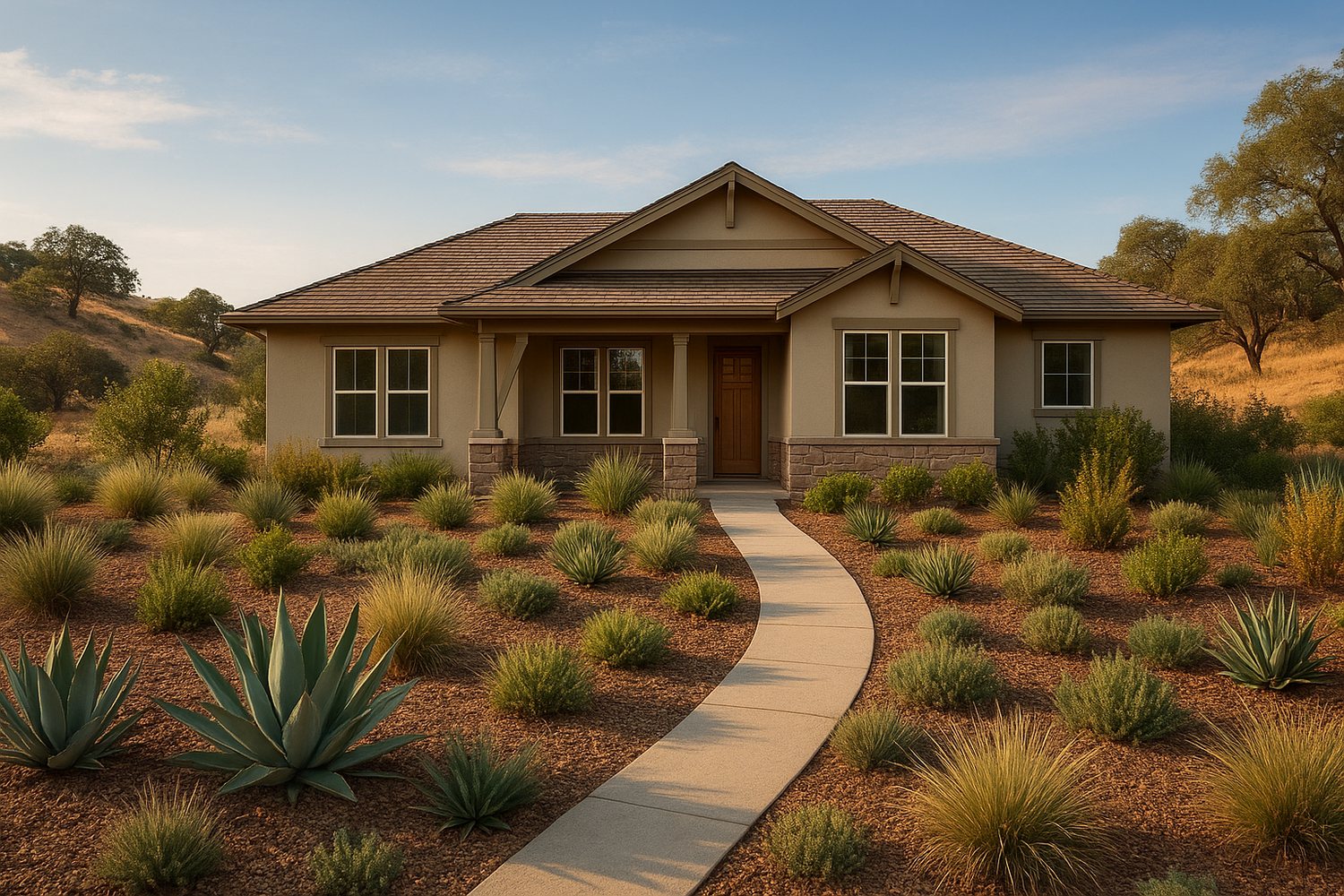
Planning a Drought-Tolerant Landscape Conversion in Placer and Sacramento County
Learn how to plan for efficient, beautiful drought-tolerant landscaping in Rocklin, Roseville, Granite Bay, Folsom, Auburn, and beyond.
California homeowners are rethinking their landscapes to meet a hotter, drier future. Smart planning is the essential first step in converting thirsty yards to attractive, drought-tolerant gardens.
Why Drought-Tolerant Planning Makes Sense Now
Water restrictions and persistent drought are the reality for our region. Traditional turf lawns and high-water plantings can put a strain on your water bill and local resources. Shifting to drought-tolerant landscaping makes practical sense for homeowners looking to future-proof their outdoor spaces.
Drought-tolerant landscaping combines responsible water use with beauty, offering lush textures and seasonal color with far less irrigation. Instead of fighting our climate, you create a landscape that thrives in it. That means a sustainable yard that stays attractive year-round with meaningful water savings.
Transitioning to drought-tolerant doesn’t require a full yard overhaul. With the right plan, you can convert areas in phases. Start with the thirstiest zones, like front lawns or backyard corners, and develop a plan tailored for your microclimate and household needs.
For a deeper dive into plant choices, irrigation, and local examples, visit our mainDrought-tolerant landscapingpage.
Evaluate Your Current Landscape
Begin by assessing which spots in your yard use the most water and which elements could be replaced. Note sunny, hot areas where lawn and certain plants struggle during summer. Areas with compacted soil or poor drainage may also underperform and waste water.
Map out what’s thriving and what isn’t. Consider removing water-hungry grass, underused flower beds, or high-maintenance shrubs. Focus first on areas you rarely use or see—these can often be converted with the least disruption to your enjoyment of the yard.
Think about sight lines and usage patterns. Does your lawn dominate the view, or could an entry path or patio be softened with low-water plantings? Each yard has unique opportunities for increased function and curb appeal through smart planting changes.
- Check irrigation system efficiency
- Prioritize south- and west-facing exposures
- Document sun, shade, and soil conditions
Understand Local Plant Choices
California’s Mediterranean climate means plant choices matter. Focus on native species and proven drought-tolerant varieties adapted to Rocklin, Roseville, Granite Bay, Folsom, Auburn, and neighboring areas. These selections endure heat waves, resist pests, and often require little fertilization.
Look for plants like manzanita, ceanothus, and many sages. Ornamental grasses, succulents, and Mediterranean perennials can add texture and color with limited water use. Always check for invasiveness and favor those with low water and low maintenance needs.
Work in layers: groundcovers for erosion control, shrubs for structure, and trees for shading. Diversity also helps support pollinators and beneficial wildlife, contributing to a healthy yard ecosystem.
bullets": [ "Choose local native plants", "Mix evergreens and deciduous for year-round interest", "Avoid thirsty or shallow-rooted species" ]
Hardscape Strategies to Conserve Water
Replacing thirsty lawn with hardscape elements is a direct way to lower water use. Concrete, paver patios, decomposed granite paths, and low-maintenance dry creek beds can all play a role in your design. These options provide gathering space, direct foot traffic, and integrate well with plantings that require minimal irrigation.
Hardscape doesn’t mean sacrificing greenery—successful designs pair durable surfaces with pockets of drought-tolerant plants, boulders, and mulch. The result is a dynamic, attractive yard that’s easy to maintain and efficient to irrigate.
Consider how the right mix of hardscape and plantings can address sloped areas, awkward corners, or high-traffic zones. Retaining walls and terraces further help with water management, preventing runoff and protecting your investment.
- Integrate patios and seating areas
- Use permeable materials for paths
- Accent with boulders or dry riverbeds
Smart Irrigation for Drought-Tolerant Yards
Even drought-tolerant landscapes benefit from some irrigation, especially until plants are established. Upgrading to a drip irrigation system can significantly reduce wasted water compared to overhead sprinklers and delivers moisture right to plant roots.
Consider installing weather-based controllers that automatically adjust watering schedules based on local conditions. Smart controllers paired with efficient layouts ensure that you give the right amount of water where it’s needed most—and no more.
Group plants with similar water needs together in hydrozones. This approach prevents overwatering and makes maintenance much simpler. Don’t forget to regularly inspect, repair, and adjust your system seasonally.
- Retrofit zones for drip irrigation
- Use mulch to retain soil moisture
- Inspect for leaks and clogs regularly
Explore otherLandscaping optionsfor your home and see how drought-tolerant techniques can integrate with outdoor living upgrades.
Soil Prep and Mulching: Setting Up for Success
Healthy soil is the foundation of any successful drought-tolerant garden. Before planting, loosen compacted soil and amend with compost as needed to encourage deep roots. Well-draining soil allows plants to survive dry spells by reaching available moisture.
After planting, top with two to three inches of organic mulch. Mulch insulates roots, reduces water evaporation, suppresses weeds, and improves soil over time as it breaks down. Choose mulch types that match your plants—for example, shredded bark for shrubs or gravel for succulents.
Plan to replenish mulch annually or as needed. This low-effort step pays big dividends in water savings and overall landscape health.
- Loosen and amend soil before planting
- Apply 2-3 inches of mulch
- Avoid mounding mulch against stems
What to Expect: Timeline and Maintenance
A typical drought-tolerant conversion project can be phased in over several weeks or months, depending on your budget and goals. Initial planning, design, and plant selection set the stage for lasting results.
Once installed, these landscapes need regular watering until plants are established—usually the first year. After that, expect to water far less than with a traditional lawn. Occasional pruning, mulch renewal, and irrigation checks keep everything looking sharp.
Over time, many homeowners are surprised by how much easier and more enjoyable their new landscape is to care for compared to traditional lawns. You’ll likely appreciate the year-round structure and reduced time spent on mowing and fertilizing.
- Plan for 1–2 seasons for full maturity
- Monitor water use and plant health
- Adjust maintenance as plants settle in
Working with Local Pros
While DIY conversions are possible, collaborating with experienced local contractors ensures your landscape is both beautiful and functional. Professionals familiar with regional soils, climate, and proven materials can save you from costly mistakes.
A full-service team will coordinate design, hardscape, irrigation, and planting for a seamless result. Look for contractors who are licensed, bonded, and insured to protect your investment. Trust and communication are just as important as technical skill.
You don’t have to make all these decisions alone. Reputable pros will guide you through plant selection, layout, and maintenance choices, ensuring a successful conversion for years to come.
- Consult with landscape designers or contractors
- Verify licensing, bonding, and insurance
- Request references and clear project timelines
Ready to transform your yard?Request a consultationto get tailored advice for your landscape.
Planning a landscaping project?
Call or text 916-741-0633, or email sales@californiahardscapes.com with your address, a short description and a few photos, and we will arrange a consultation.