Planning Your Lawn to Turf Conversion: Changing Irrigation for Big Water Savings
Converting your grass lawn to artificial turf unlocks serious water savings, but proper irrigation planning is key. Here’s what homeowners in the Rocklin area need to consider.
Replacing real grass with artificial turf is a smart move for conserving water. The irrigation setup you choose during planning will make or break your future results.
Understanding Turf’s Dramatically Different Water Needs
Artificial turf eliminates the relentless watering cycle that real lawns require, especially in the dry months common across Placer, Sacramento, and El Dorado County communities. While you won’t be irrigating to keep turf green, you may still want to address occasional rinsing, dust control, and cooling needs.
Planning for these unique water requirements up front saves hassle and money later. Many homeowners mistakenly leave existing sprinklers in place, but those systems are overkill for artificial turf. Instead, regionally-tuned drip or low-volume systems are the right call if you want the option to rinse or clean your turf without overwatering—or for irrigating adjacent flower beds.
Consider turf’s main needs: far less frequent rinsing, occasional spot cooling, and possibly an integrated pet-odor solution. Matching irrigation to these minimal needs ensures you maximize water savings and reduce future maintenance headaches.
- No regular turf watering required
- Consider occasional cleaning or cooling
- Rethink traditional lawn systems
Read our complete guide onLawn to turf conversion and water savingsto get a bird’s-eye view of the process.
Assessing Your Existing Irrigation Setup
Before you begin your turf conversion, take a careful look at your current irrigation system. In many older neighborhoods of Rocklin, Roseville, Folsom and Auburn, lawns are irrigated with spray heads or rotors spaced for blanket coverage. These are designed for the deep root zones of natural grass.
Artificial turf does not have roots, so these watering patterns become obsolete. If left as-is, old sprinklers can create problems: wasted water, soil saturation, and even hardware that damages your new turf’s backing. It pays to evaluate each line, valve, and head for removal or repurposing.
Walk the yard with a plan: map which irrigation zones once served the lawn, and note any borders where you want to keep irrigating shrubs or plants. Smart planning here keeps water precisely where you need it, and nowhere else.
- Document current irrigation zones
- Separate turf from garden areas
- Identify obsolete hardware
Retrofitting for Minimal, Efficient Turf Watering
Swapping out traditional spray systems for a more focused, low-flow irrigation design is a best practice for artificial turf conversions. This usually involves capping or removing spray heads and adapting lines to serve only plant beds that need moisture.
For most turf installations, surface irrigation may be totally unnecessary. Instead, install a few in-ground hose bibs or quick coupler valves around the perimeter. These allow for convenient spot rinsing as needed, rather than programmed watering cycles.
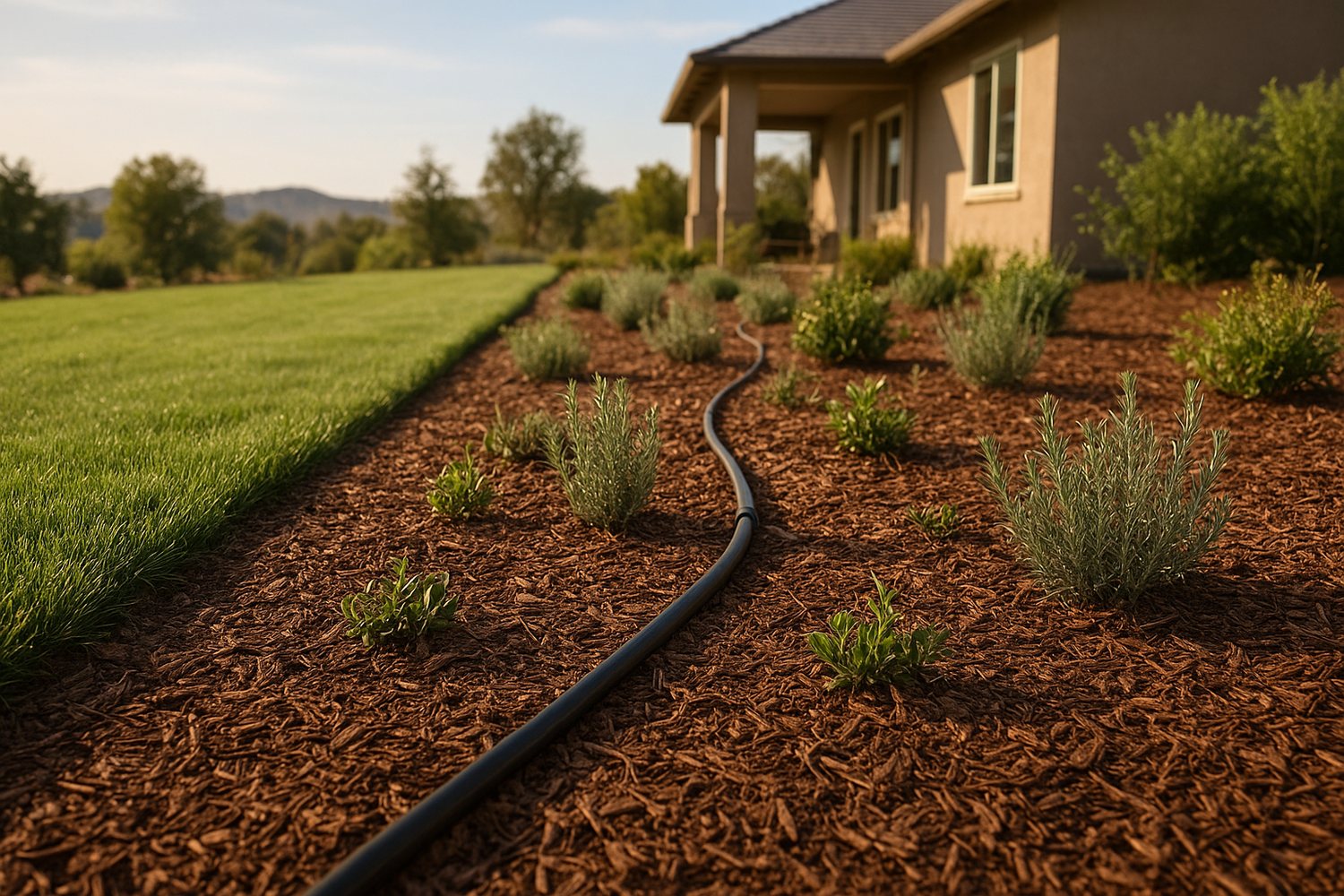
If your property includes trees or perennial borders near turf areas, consider sub-surface drip lines or micro-sprays directed only where roots need water. Local supply houses around the Sacramento foothills can help match components and pressure needs to your landscape layout.
- Cap or remove old spray heads
- Install hose bibs or quick couplers
- Use drip lines for remaining plants
Managing Drainage Is Just as Important as Irrigation
While you’ll reduce water input with turf, efficient drainage remains vital, especially during heavy rain or power-washing. Local soils in the Placer and El Dorado hill country can retain moisture, so proper grading and base prep beneath your turf keeps surfaces dry and prevents pooling.
Integrate perimeter drains or French drains where needed, particularly on slopes or clay-rich sites. Any water you do use for cleaning must escape efficiently. Avoid allowing irrigation runoff to collect under or around your turf structure.
A professional contractor can recommend drain placements based on your soil type, property grade, and the footprint of your new turf. A dry, clean turf surface depends as much on what’s underneath as what you do above.
- Check grading and soil type
- Integrate drains on slopes
- Prevent water from pooling
Making the Most of Water Savings in Our Regional Climate
Water is a precious resource in northern California, and outdoor use spikes during our hot, dry months. Converting to artificial turf can cut your home’s landscape water needs by up to 70%, compared to traditional lawns.
Placer, Sacramento, and El Dorado County homeowners with municipal water face rising rates and sometimes drought restrictions. The less you rely on irrigation, the more resilient—and cost-efficient—your landscape.
In addition to cutting usage, you’ll help conserve water in the larger watershed, which is a real local concern. Minimal irrigation means less runoff, less opportunity for fertilizers or pesticides to reach storm drains, and peace of mind when weather gets dry.
- Drastically lower outdoor water bills
- Less concern about drought cycles
- Protect our local watersheds
Explore all your choices with ourArtificial Turf options overviewfor detailed product guidance.
How to Plan for Existing Plant Beds and Trees
If your front or backyard includes trees, shrubs, or flower beds bordering the new turf, planning a targeted irrigation approach is critical. Contrary to some beliefs, it’s possible to keep beloved plants thriving without compromising turf performance.
Zone your irrigation so plant beds receive drip or micro-spray watering—never full-coverage spray heads. Most homeowners in Granite Bay and Folsom find this is much more efficient and precise than legacy lawn sprinklers.
Think about integrating separate automatic timers or smart irrigation controllers for these zones. This lets you accommodate the diverse moisture needs of both existing landscape plants and your new water-sipping turf.
- Maintain plant health with targeted watering
- Use drip for precise delivery
- Zone turf separately from beds
DIY vs. Professional Help: What to Tackle Yourself
Some irrigation upgrades can be handled by handy homeowners—capping sprinkler heads, installing quick couplers, or repositioning drip lines. However, reconfiguring multiple zones, re-routing controllers, or major drainage installs often benefit from expert input.
Professional outdoor contractors familiar with the soil and climate of the foothills can assess your system as part of a turf conversion project, and identify where your current layout may waste water or risk future turf problems.
If you’re unsure whether your irrigation setup is suitable for artificial turf, consultation is a smart first step. It pays off in long-term savings, reliability, and peace of mind for your landscape investment.
- Simple irrigation tasks: DIY possible
- Complex retrofits: consider an expert
- Professional help means fewer headaches
Getting Ready: The Steps to Your Water-Saving Turf Transition
Start your conversion by documenting all irrigated zones and which plants they support. Mark lines for removal or capping, and note where you’ll want hose access or new drip zones for surrounding beds.
Work with a contractor or irrigation specialist to lay out drain placements, irrigation timers, and any necessary grading improvements. Smart upfront planning saves time, trouble, and water in the future.
Once turf is installed, check the new irrigation adjustments in action. Watch for leaks, accidental overspray, or places that need further simplification. Proper planning and a regionally-adapted approach ensure your landscape thrives while cutting your water use.
- Map your irrigation system first
- Consult for plant and site-specific advice
- Double check results after installation
Have questions?Request a consultationwith Marty to talk about your irrigation and turf planning.
Planning an artificial turf project?
Call or text 916-741-0633, or email sales@californiahardscapes.com with your address, a short description and a few photos, and we will arrange a consultation.