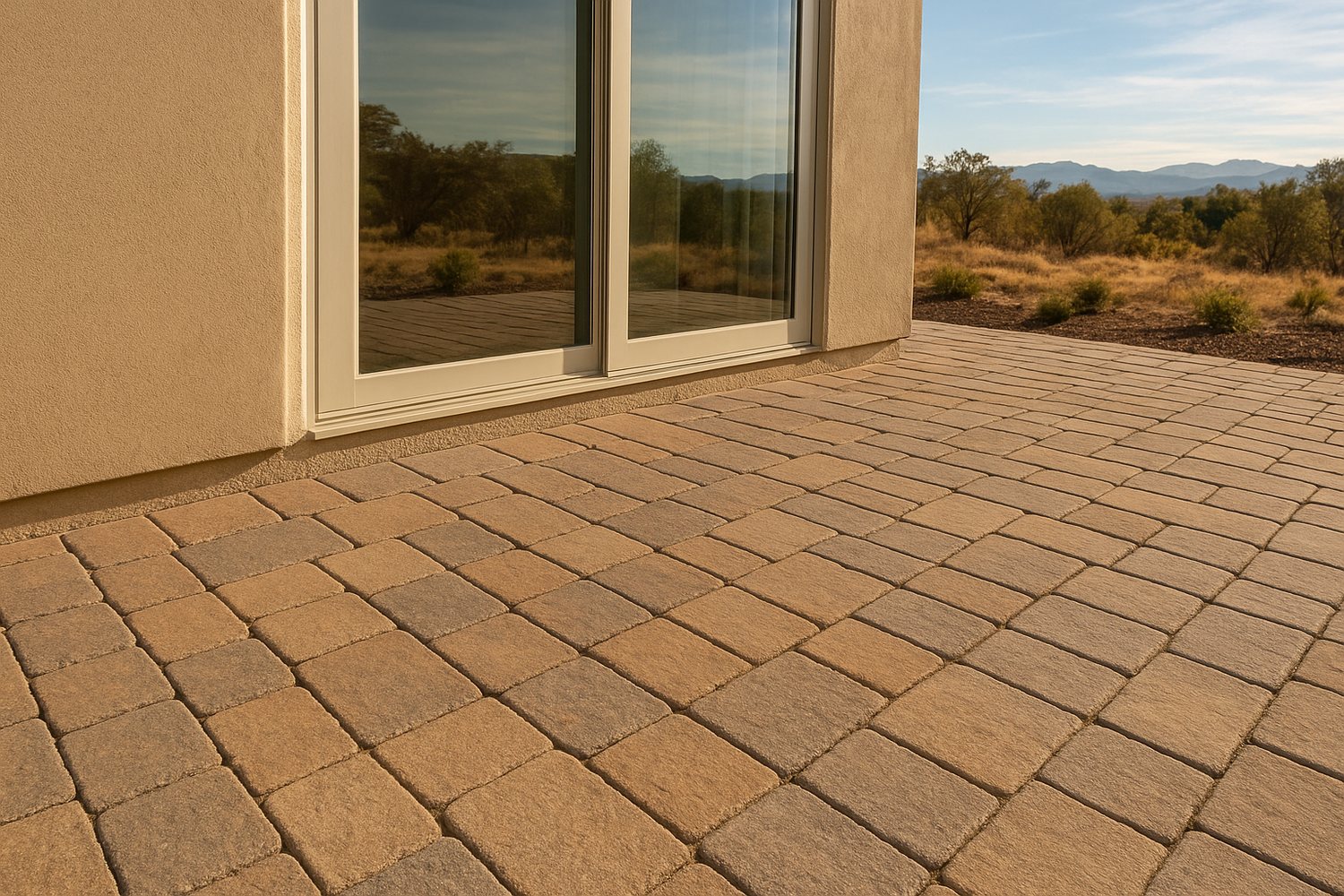
Transform Plain Concrete Patios with Pavers and Borders
Revitalize your plain concrete patio with pavers and stylish borders. California Hardscapes explains design options and practical steps tailored for Sacramento-area homeowners.
A plain concrete patio doesn’t have to stay plain. Adding pavers and a sharp border is a practical way to refresh your outdoor space for real curb appeal.
Why Overlay Concrete Patios with Pavers?
If you find your existing concrete patio uninspired or worn, you’re not alone. Many older patios across Rocklin, Roseville, Granite Bay, Folsom, Auburn and surrounding communities were poured as simple slabs with little visual interest. That drab expanse can make the entire backyard feel unfinished or outdated.
Pavers offer an opportunity to introduce color, texture, and pattern—while saving the time, cost, and disruption of full demolition. An existing concrete base can actually provide stability for pavers installed on top, making this upgrade both sturdy and efficient.
The result is an outdoor living space that looks custom, cohesive, and thoughtfully designed. Whether you’re seeking a classic pattern or something with contemporary flair, the right paver choice can completely rejuvenate your concrete patio’s look.
Discover more about how pavers can be installed over an existing concrete surface on our mainPavers over existing concretepage.
Design Options: Patterns, Borders, and Color
Paver overlays open up new design directions. Herringbone or running bond patterns offer timeless appeal, while modular layouts and mixed-width combinations create an updated vibe. Color choices in this region typically lean warm and earthy—think tan, charcoal, or blends that work with local styles and home finishes.
A border—sometimes called a ‘soldier course’—framing the patio with contrasting or complementary pavers adds a finished look. Borders can highlight steps, define zones, or tie together the patio with walkways or garden edges. It’s a detail that instantly distinguishes DIY from a designer result.
Don’t forget: accent patterns and inlays are also options. Just keep in mind your property’s overall style and how the patio connects with garden beds, pool decks, or nearby walls so everything feels intentional.
- Herringbone, running bond, or modular patterns
- Contrasting or matching paver borders
- Warm, regionally suited color blends
Preparing the Concrete for an Overlay
An overlay project begins with a thorough evaluation of the concrete slab’s condition. In most cases, small cracks or mild surface wear won’t prevent a paver overlay. However, major fractures, large shifts, or ongoing drainage issues may need addressing first for a lasting result.
The slab must be cleaned and free of loose debris. If needed, high spots are ground down and minor imperfections are patched so the finished paver surface sits flat and secure. The height of existing thresholds and steps also gets checked to ensure a comfortable, safe transition once the overlay is complete.
In the climate of Placer, Sacramento, and El Dorado counties, freeze-thaw isn’t a constant concern—but drainage is. Setting the right slope is key to ensuring rainwater won’t pool on the new surface or near foundations.
- Address major cracks or settling first
- Clean, patch, and prep the slab
- Confirm drainage and step heights
| Feature | Paver Overlay | Demolition & New Concrete | Demolition & New Pavers |
|---|---|---|---|
| Time | Usually faster | Longer, due to demo | Longest, multiple phases |
| Disruption | Minimal (keeps existing slab) | High (removal equipment, dust) | High (removal + additional prep) |
| Customization | Pattern/border change only | Can resize, regrade | Max design flexibility |
| Drainage Correction | Limited by existing slope | Can address any issue | Can address any issue |
| Cost Efficiency | Most efficient | Higher cost | Highest cost |
Installation: Setting Pavers Over Concrete
There are two primary installation methods for pavers over concrete: a sand-set method with a thin bedding layer, or a mortar-set approach for extra stability. Each has its benefits depending on patio use, slope, and personal preference.
Sand-set installations allow for straightforward maintenance and let rainwater drain through joints. Mortar-set pavers, meanwhile, can handle higher traffic or specific border details where movement must be minimized. California Hardscapes chooses the option that best fits your patio’s needs, factoring in local soil and climate.
Precision during layout is essential for crisp edges, straight lines, and stable borders. Joint sand or polymeric sand is swept into gaps for a finished, secure appearance. Every detail matters for both function and appearance in a premium result.
Making a Design Statement with Borders
A thoughtfully designed border defines your patio edge with a sense of craftsmanship. For Rocklin-area homes, neutral or subtly contrasting tones are popular, creating a refined, timeless effect that stands up over years of sun and family use.
Borders can be laid as single or double rows, or even curved to echo garden beds. You might use a slightly larger or smaller paver than the field for an intentional frame. Integrating borders into steps, corners, and other transitions gives the whole patio a unified, high-end look.
Consider a color that picks up an accent from your home’s exterior to tie everything together. This design move makes the new patio addition feel original to the property, not like an afterthought.
- Single or double row border options
- Curved versus straight border lines
- Accent color selection advice
Explore other creative upgrades for your property on ourHardscapes & Patiosoverview page.
Comparing Overlay vs. Demolition and Rebuild
Choosing between paver overlay and starting from scratch with full demolition can be a tough call. Overlay typically delivers a refreshed look faster and with less mess, especially when the existing slab is still structurally sound.
A full demolition and rebuild allows for adjustments to patio size, elevation, or underlying drainage, but comes with more disruption. The overlay approach, by contrast, keeps most prep and construction above the original concrete level.
In our local area, overlays are a practical option for most patios in good basic condition. If you’re unsure, an onsite assessment is the best way to make a confident, informed decision.
Care, Longevity, and Practical Tips
A professionally installed paver overlay requires minimal maintenance. Occasional sweeping and re-application of joint sand—especially after rainy seasons—help keep things looking fresh. If an individual paver is scratched or stained, it’s easily replaced without disturbing the surrounding surface.
Unlike unadorned concrete, pavers resist cracking and can handle the expansion and contraction of our regional temperature swings. Sealing is an option for added stain resistance and easier upkeep, but not strictly necessary for most homeowners.
For the best results, avoid heavy de-icing salts and address drainage promptly. With local soils and weather, a quality overlay can provide decades of good looks and solid use.
- Inspect and refill joint sand annually
- Replace individual pavers if damaged
- Optional sealing for extra protection
Get Started: Consulting the Right Team
Planning a patio upgrade can feel overwhelming given the options and steps involved. Working with an experienced contractor who understands local soils, weather, and neighborhood styles makes a real difference. At California Hardscapes, the company is led by Marty, who brings over three decades in concrete and construction, and every project is built with licensed, bonded and insured contractors.
From selecting the right materials to handling prep, installation, and finishing touches, a trusted professional ensures no detail is missed. The goal: a design that fits your lifestyle, tastes, and property.
If you’re ready to refresh your concrete patio with pavers and borders, or just exploring ideas, reach out for a straightforward, no-pressure consultation.
- Expert, locally-focused guidance
- Advice on design, drainage, and materials
- Personal project oversight from Marty
Ready to talk ideas?Request a consultationfor your patio project with California Hardscapes.
Planning a hardscapes & patios project?
Call or text 916-741-0633, or email sales@californiahardscapes.com with your address, a short description and a few photos, and we will arrange a consultation.