Can You Lay Pavers Over Existing Concrete? Local Planning Essentials
Should you put pavers over concrete? Understand the right situations, common pitfalls, and what matters in this part of California.
Laying pavers over existing concrete sounds simple, but not every slab is a good candidate. Here’s how we approach these projects across our Northern California communities.
Why Consider Pavers Over Concrete?
Many homeowners hope to upgrade old concrete with pavers, often for improved looks or to fix surface issues. Overlaying pavers can save time and effort versus demo and disposal—but it’s not always the right call. In the greater Rocklin and Roseville area, practical concerns like drainage, slab condition, and curb height play big roles in the decision.
Installing pavers over concrete can maintain accessibility and avoid messy demolition. For patios or walkways, the approach creates a new surface in days, with a variety of style options. But you want lasting value, not just a quick cover-up—so a careful assessment is a must.
Your hardscape should work as well as it looks. Before paving over an existing slab in Placer, Sacramento, or El Dorado County, it’s wise to get clear about your goals, the concrete’s condition, and the best way to achieve a durable, attractive result.
- Overlaying skips messy removal
- Pavers upgrade tired or plain concrete
- Not every slab is suitable—planning matters
For more detailed options and specifics, visit our mainPavers Over Existing Concretepage.
Assessing Your Existing Concrete
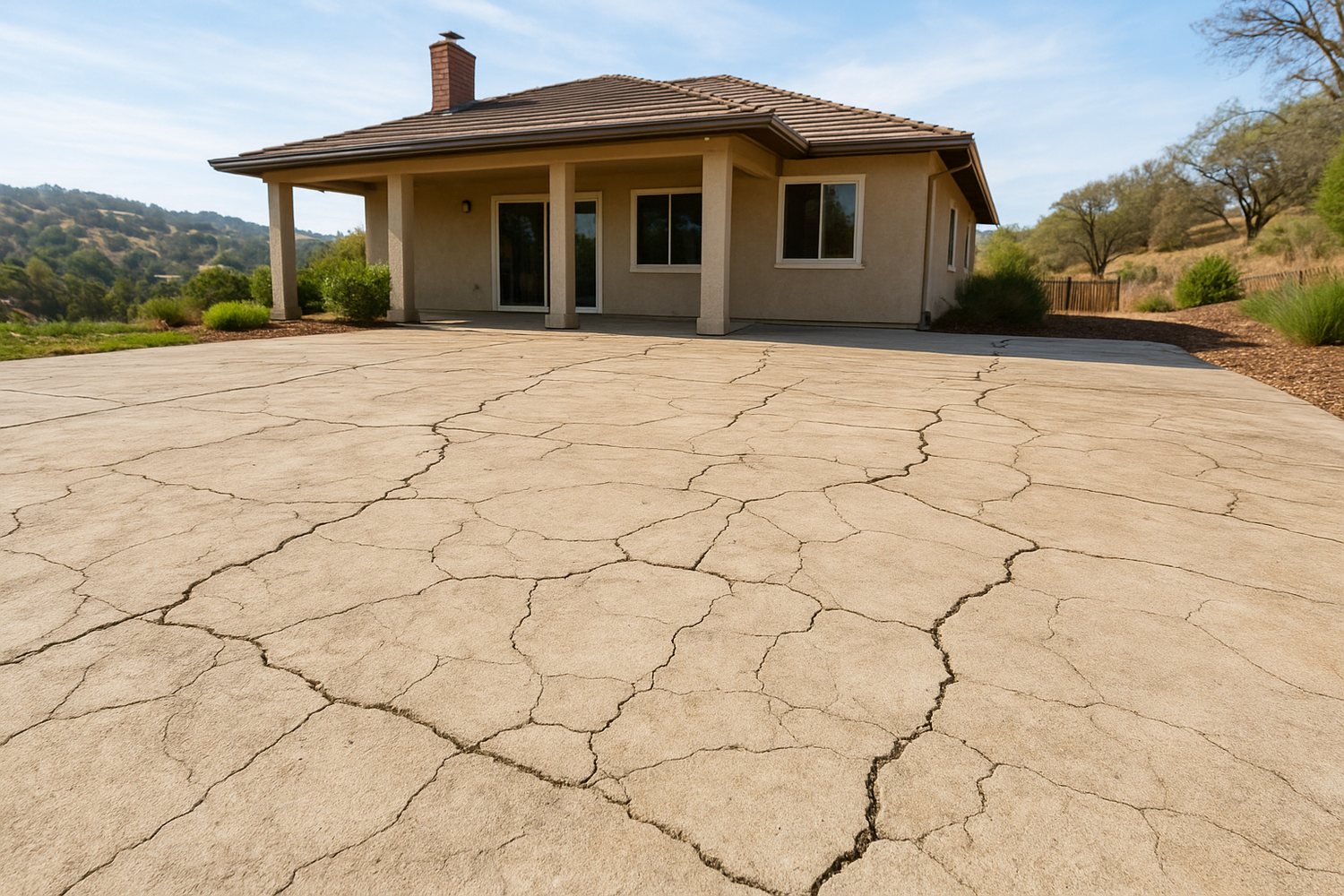
Not all concrete slabs are created equal. Before you think about pavers, it’s crucial to see if your existing slab is structurally sound. Look for large cracks, spalling (surface flaking), or sections that have settled over time. Small, stable hairline cracks are usually fine, but shifting or crumbling concrete will undermine any paver installation.
Moisture and drainage can quickly turn a good idea into future headaches. Sealed, low-porosity concrete may block water, trapping it under pavers and causing shifting or moss. In our climate, the rainfall, sprinkler overspray, and clay soils all make proper water management essential.
If your patio or walkway drains toward your home, adding pavers might worsen water flow. The right solution depends on the state of your slab, surrounding grading, and where water goes during storms or irrigation.
- Large cracks or settlement? Rethink overlays.
- Test for drainage issues before proceeding.
- Solid, clean slabs see the best results.
Local Climate and Surface Movement
Northern California’s temperature swings, occasional freeze-thaw cycles, and expansive soils all impact outdoor surfaces. Concrete slabs in the Rocklin and Folsom area may move slightly with the seasons. If your old slab heaves or settles, layered pavers can mirror those same issues.
Unlike poured concrete, pavers themselves flex and shift just a bit, making them more durable over unstable ground. However, underlying problems—like major tree roots or weak soils—will transfer upward unless properly addressed first.
When planning, consider the age of your slab and local tree activity. Short-term solutions rarely pay off on or near unstable ground. Always use a base that drains well, and watch for new movement over time, especially around pool decks or heavily irrigated soils.
- Clay soils expand in wet years
- Pavers can accommodate slight movement
- Old or shifting slabs need extra caution
| Factor | Overlay OK | Overlay Risky | Best Solution |
|---|---|---|---|
| Slab condition | Strong, uncracked | Cracked, settling | Remove & rebuild |
| Drainage | Slopes away, dry | Puddling, slopes to home | Address grading or drains |
| Height at doorways | Plenty of clearance | Tight, flush, or above code limit | Consider full demo |
| Surrounding grade | Flat, room for edges | Steps, steep slopes | Advanced edge treatment |
| Surface movement | Minimal or none | Active heaving/settling | Stabilize or replace base |
Thickness and Height Constraints
Adding pavers and bedding materials increases the finished height of your patio or walkway. In many Granite Bay and Auburn homes, there are transitions: steps, door thresholds, garage slabs, or landscape borders. Stacking pavers over concrete might create trip hazards, code issues, or awkward drainage slopes.
Check your elevations carefully. Adding as little as two inches at a doorway can create problems—especially if there’s little clearance to begin with. Slabs poured flush with siding, steps, or drains usually need alternatives beyond a straightforward overlay.
There are ways to taper edges or finish with a border, but planning is crucial. California Hardscapes often reviews several approaches to achieve a clean, practical transition between house, patio, and yard.
- Paver overlays add 1.5–3 inches in height
- Check all transitions and clearances
- Think about water flow away from buildings
When an Overlay is a Good Choice
Some scenarios are ideal for paver overlays. If your concrete is strong (no major cracks, heaving, or pitting), drains well, and all thresholds or heights are workable, you can often proceed. Covered patios, pool decks away from entry doors, and utility areas are often good fits in El Dorado and Placer Counties.
The original slab’s surface should be clean and stable—no major settling, and preferably built on good subgrade. Any minor cracks should be filled. Interlocking pavers, set on a thin bedding layer, provide significant upgrades in both form and function.
Most importantly, overlays work when you don’t create unintended water or height issues. If you’re not sure, a qualified contractor can help you evaluate every factor specific to your site.
- Solid, uncracked slabs
- Adequate drainage away from structures
- No door or step clearance issues
Explore the full range of possibilities on theHardscapes & Patiosoverview.
When You Shouldn’t Lay Pavers Over Concrete
Overlay projects are not for every slab. If your concrete is breaking up or has settled unevenly, it will compromise the paver surface above. The extra weight and moisture retention can accelerate damage or mask ongoing movement, making future repairs more challenging.
Height and drainage are dealbreakers. If adding pavers creates trip points at stairs or blocks water from escaping, you may do more harm than good. Areas where the slab is too high (relative to siding, thresholds, or drains) won’t perform well with an overlay.
Instead, removal and replacement of damaged slabs—followed by a traditional paver installation—often sets you up for success. Honest site assessment keeps you from paying more in the long run.
- Settled, cracked, or unstable concrete
- Inadequate drainage or positive slope to house
- Thresholds and code clearances not met
Techniques for Success
A quality overlay begins with thorough cleaning; power washing removes stains, moss, and old sealers. Fill cracks with flexible, waterproof filler to prevent moisture intrusion. A thin bedding layer—usually sand or specialty bedding compound—helps lock pavers in place and accommodate small irregularities.
Edge restraint is crucial for overlays. Without the ability to dig a perimeter base, concrete adhesive or mechanical restraints (and sometimes both) keep pavers from shifting. Joint sand helps deter weeds, especially in shaded spots or under oak trees typical of local neighborhoods.
Finally, always consider managing runoff. Direct downspouts away from the new surface. A perimeter channel drain may prevent puddling in tight patio spaces, and periodic checks help keep everything in top condition year-round.
- Power wash before starting
- Flexible crack fillers extend longevity
- Edge restraints prevent shifting
Getting Local Advice Makes a Difference
Every site is unique, and successful hardscape overlays in the Rocklin, Roseville, and Folsom area depend on experience with the region’s soils and climates. A thorough local assessment weighs all your surfaces, drainage, and nearby landscaping. Sometimes, skipping the overlay in favor of new construction is the more durable path.
Working with a team that understands local codes and typical grading avoids expensive mistakes. With over three decades of hands-on experience, Marty and California Hardscapes offer a practical perspective on every patio, path, or pool project.
Thinking through every variable—concrete condition, paver styles, local weather, and elevations—gives your investment lasting value. Before deciding, consider getting an expert opinion tailored to your property’s needs.
- Site-specific drainage checks
- Experience with local soil challenges
- Practical, honest recommendations
If you’d like a professional site review and recommendations,request a consultation today.
Planning a hardscapes & patios project?
Call or text 916-741-0633, or email sales@californiahardscapes.com with your address, a short description and a few photos, and we will arrange a consultation.