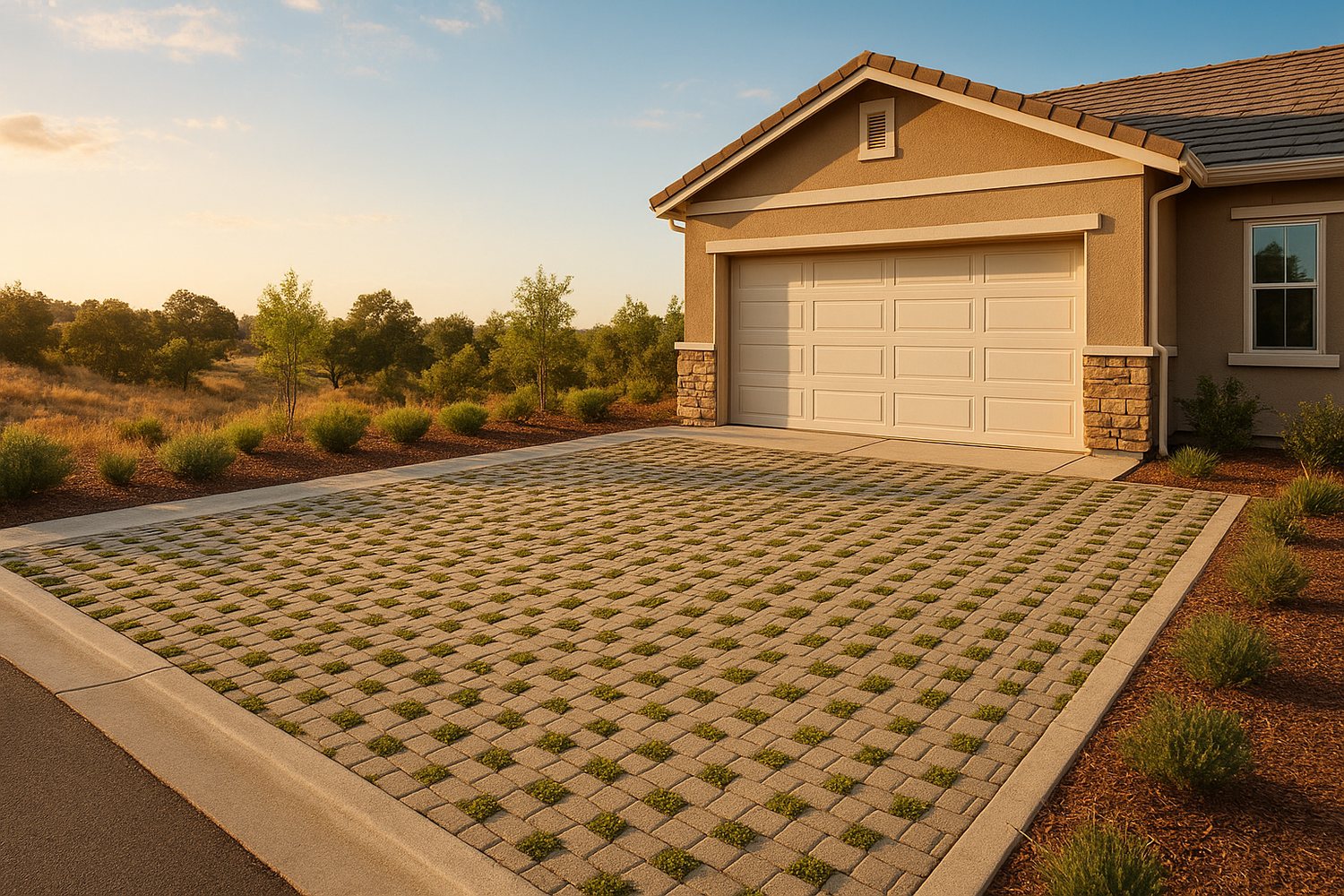
Care Tips for Permeable Paver Joints in Placer & Sacramento Homes
Permeable pavers work best when their joints stay open. Here’s how homeowners around Rocklin, Roseville, Folsom, and Auburn can keep their patios low-maintenance.
Properly cared-for permeable paver joints are the secret to patios that drain, last, and stay beautiful. Here’s what you need to know, and how to keep yours working.
Why Proper Joint Care Matters for Permeable Pavers
Permeable pavers are valued for their ability to allow water to pass through the joints, reducing runoff and helping recharge groundwater. The joints between the pavers are filled with clean, angular stone—not sand—which creates voids for water flow. If those joints become clogged, the system loses its effectiveness in handling rain and irrigation, especially in areas with our clay-heavy local soils.
Homeowners in communities like Rocklin, Roseville, and Folsom benefit from permeable patios that function reliably year-round. However, letting debris build up in the joints can cause slow draining or even pooling during winter storms or spring showers. The difference between a hardscape that works and one with problems often comes down to joint care.
Attention to the joints not only maintains permeability but extends the life of your entire patio or walkway. Regular joint care helps prevent costly repairs down the line. The good news? The upkeep is straightforward with just a bit of routine effort and the right materials.
- Joints matter for drainage and longevity
- Debris build-up causes water issues
- Easy ongoing care pays off
For more in-depth guidance and specifics on products, visit ourpermeable pavers page.
How Joint Cleaning Works – Step by Step
Keeping paver joints open starts with surface cleaning. Remove leaves, mulch, dirt, and organic material regularly—especially after the first fall storms. Use a leaf blower or a stiff broom, taking care not to blast out the joint stone. For stubborn debris, a gentle rinse with a hose (not a pressure washer on high) can help.
Over time, moss or weeds may take hold in shaded or damp areas, even on permeable patios. Remove any visible weeds by hand. Never use herbicides that could wash into groundwater. For moss, try a stiff broom; stubborn growth may respond to diluted vinegar—apply sparingly, avoiding runoff.
If joints appear compacted, topped with dirt, or overgrown, consider replenishing with clean angular stone. Never use regular sand or soil, as it can block water flow. Joint material is readily available at landscape supply yards serving Placer and Sacramento County.
- Blow or sweep away organics regularly
- Hand-remove weeds or moss as needed
- Top off joints only with approved stone
Choosing the Right Joint Stone for Northern California
Not all joint materials are created equal. For permeable pavers in our region, the best choice is a crushed, angular stone such as 1/8" or 3/16" chipped rock. It provides stable support while allowing maximum water infiltration. Rounded gravel or sand will compact too tightly and block flow, while standard polymeric sand is never recommended for true permeable patios.
Ask your contractor or supplier for "graded, washed stone for permeable joints" to ensure it’s free of fines and dust that would bind together. This product often goes by names like chip gravel, No. 8, or open-graded aggregate at local yards.
Having extra joint stone on hand makes seasonal touch-ups easier. If you see joints settling or disappearing under debris, clean out the area and broom in fresh material. California Hardscapes can help specify the right aggregate if you’re unsure.
- Use only angular, washed stone—never sand
- Specifically request material for permeable pavers
- Keep a small supply for quick top-ups
Troubleshooting: When Pavers Still Don’t Drain
If your patio or driveway holds water even after cleaning, it’s time to look deeper. Joints clogged with invisible soil or decomposed organics sometimes require a more thorough flush. Use a wet-dry vacuum to gently remove old joint stone, then refill with clean aggregate. Avoid aggressive pressure washing which can disturb the pavers’ setting base.
Occasionally, local high clay content or compacted subsoils can slow infiltration beyond the paver joints. In these cases, consult a professional. Ensuring the subbase is permeable—and hasn’t become capped with fines—might require a partial rebuild in serious cases.
Persistent weed or moss growth may also indicate poor sunlight, standing shade moisture, or that the area is not draining as originally designed. If you spot recurring problems, discuss options with a seasoned professional to restore full performance without guesswork.
- Wet-vac joints if deeply clogged
- Consult a pro for subbase issues
- Recurring moss/weeds may point to drainage design problems
| Maintenance Task | Permeable Pavers | Traditional Pavers | Typical Frequency |
|---|---|---|---|
| Sweep debris | Essential | Important | Monthly (or as needed) |
| Joint refill | With clean stone | With sand | Annually or as needed |
| Moss/weed removal | Physical/manual | Less common | Twice a year |
| Flushing joints | Occasional (if clogged) | Not required | As needed |
Comparing Permeable vs. Traditional Paver Maintenance
It’s helpful to understand how permeable pavers differ from traditional pavers, especially in terms of ongoing care. While both types require routine sweeping and debris removal, permeable pavers need greater attention to keep joints functioning.
Traditional paver joints often use polymeric sand, which becomes hard and resists weed growth, but does not allow water through. Permeable systems avoid this in favor of open-graded stone. The key? Permeable joints can clog more easily if not maintained.
Yet, for homeowners wanting to manage runoff and reduce puddling, the slightly higher attention to permeable joint care is a worthwhile tradeoff for sustainable patios in the Rocklin and Placer County climate.
- Both systems need sweeping
- Permeable requires open joints, traditional uses sand
- Tradeoff: more maintenance vs. better drainage
Curious about other surface choices? Take a look at ourHardscapes & Patios overviewfor ideas.
The Role of Seasonal Care in Our Regional Climate
Rocklin, Roseville, and the Sierra foothills experience dry summers and wet winters. Fall leaf-dropping and winter rain present unique maintenance pressures for patio joints. Leaf buildup is the primary concern in autumn; plan on removing debris before storms hit.
During winter, check for slow draining or pooling after several consecutive rain events. Early detection of problems lets you act quickly, and you’ll often only need minor attention to keep things working. In spring, watch for early weed growth in shaded areas.
Twice-a-year walkthroughs—once in late fall, once in late spring—cover most homeowners’ needs. With a few quick cleanings and an eye on changing conditions, your permeable pavers will stay trouble-free and looking great all year.
- Remove leaves before winter rains
- Spring and fall cleanings catch most problems
- Monitor for pooling after storms
Smart Tools and Materials for the Job
You don’t need pro equipment to keep permeable joints in top shape. A sturdy broom, leaf blower, and hand tools for weeding do most of the work. Having a wet-dry vacuum available is helpful for clearing deeply filled joints if you have a big tree or lots of organics nearby.
Go light on water—avoid power washing except on the lowest setting and always angle away from joints. During dry spells, sweep or air-blow joints, keeping them clear of mulch and dust carried by the wind. For moss control, stick to physical removal over chemicals.
Stock up on a bag or bucket of the right joint stone for periodic touch-ups—ask your local supplier for chip stone for permeable pavers. Keep replacement material dry and free of soil contaminants. With a few basic supplies, typical joint upkeep is manageable for any homeowner.
- Broom, leaf blower, hand weeder cover basics
- Wet-dry vacuum for deeper cleaning
- Store extra joint stone for easy future repairs
When to Call an Expert for Maintenance Help
Most routine care is simple, but there are times to reach out for professional support. If you notice persistent pooling, uneven settling, or can’t identify the right joint material, a hardscape specialist can help you pinpoint the underlying issue.
Complex issues, such as a base that has shifted or patios where water no longer infiltrates even with clean joints, may require evaluation of the underlying construction. A reputable contractor will inspect the installation and recommend fixes—not just surface solutions.
Regular communication with an expert is especially wise for mature patios, or when your yard’s drainage has changed due to landscaping or remodels. If you ever have questions or want a pro assessment, don’t hesitate to get advice specific to your property from a trusted regional provider.
- Visible settling or pooling needs assessment
- Professional advice prevents bigger repairs
- Older or altered patios benefit from periodic expert review
Ready for advice or want help with upkeep?Request a consultationwith our team and get expert insight.
Planning a hardscapes & patios project?
Call or text 916-741-0633, or email sales@californiahardscapes.com with your address, a short description and a few photos, and we will arrange a consultation.