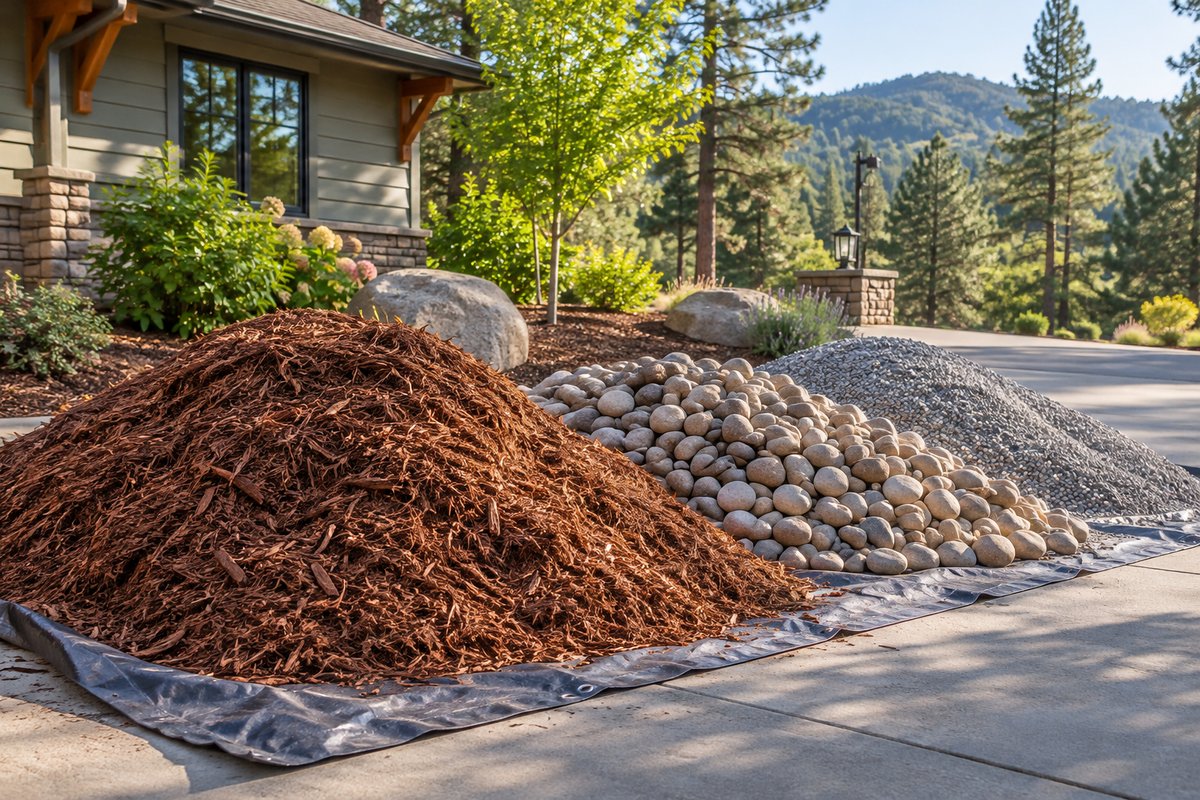
A Homeowner’s Guide: Planning for Landscape Materials Delivery in North Auburn
Planning landscape materials delivery in North Auburn, CA? This guide covers permits, soil, slope, drainage, utility marking, HOA rules, and material choices.
Plan Ahead: Permits, HOA Approvals, and Regulations in North Auburn
Starting a landscaping or hardscaping project at your North Auburn home means taking smart first steps. Before ordering hardscape and landscape materials like bark, mulch, rock, or pavers, it’s important to look into local rules and requirements. Many projects, such as new patios, retaining walls, or major grading, may need city building permits or HOA approval. Check with your HOA to see if aesthetic or usage restrictions exist for elements visible from the street or shared spaces. For any additions beyond basic plantings or mulch, review the Planning Division guidelines to determine which projects require permit applications inside Auburn city limits. While California Hardscapes works with licensed contractors, homeowners are responsible for their own permit applications and approvals as needed. A bit of research at the outset prevents costly project delays.
Permitting can impact project timelines, especially if your design changes the footprint of outdoor structures or involves significant earthwork. Having your project details clear when you consult the city or your HOA helps simplify the approval process. When in doubt, seek guidance from local officials—requirements can vary even for similar projects from street to street. Document approvals in writing before moving forward with material deliveries or contractor scheduling. This step-by-step approach keeps your project on track and avoids headaches for everyone involved.
Plan materials around anticipated start dates. For instance, requirements may influence if you can use pavers or landscape boulders in prominent spots, or how much decomposed granite is allowable for parking strips. If your project is near public easements or underground utilities, verify boundaries in your initial planning for delivery and installation.
Utility Safety: Calling 811 Before You Dig
Before digging for irrigation lines, planting trees, or preparing a foundation for new hardscaping, utility marking is an essential North Auburn safety practice. California law requires everyone to call 811 at least two working days before any project that involves ground disturbance deeper than six inches. Marked lines reduce the risk of accidental strikes on gas, water, electric, or communications infrastructure.
When you call 811, utility personnel visit to flag or paint the paths of buried lines. Doing so is crucial whether you’re excavating for tree planting, installing base rock and drain rock for a new retaining wall, or spreading several yards of topsoil and soil amendments in garden beds. Projects adjacent to streets, driveways, or near neighborhood mailboxes require special attention, since lines often run along property edges. Coordinating utility marking before scheduling material delivery helps prevent costly accidents and keeps your project on time.
Document where markings appear and communicate those locations to licensed contractors overseeing your installation. Delivery of bulk materials, especially by large trucks, should also be planned with clear utility awareness—specify drop zones safely away from marked lines and future digging areas.
Understanding North Auburn’s Soils, Slope, and Drainage
North Auburn properties showcase a mix of rocky red soil, clay pockets, and older fill, often with mild to steep slopes. Selecting appropriate decorative rock, river rock and cobble, and mulch helps manage runoff and prevent erosion. If your site includes sloped areas, consider erosion control measures and evaluate whether your chosen materials, such as bark or mulch, are likely to stay in place after heavy rain. Adding landscape boulders or retaining walls, with contractor design and placement, can stabilize grades for a low-maintenance finish.
Clay-heavy soils tend to retain water and may become compacted with heavy machinery, so plan where bulk material deliveries will be dropped. Protect driveways and lawn edges from rutting by using plywood sheets or consulting the delivery driver about safe drop sites. For garden beds, new sod, or planting borders, improve drainage and fertility by incorporating organic amendments or decomposed granite as recommended for local conditions.
Assess the site’s natural flow of water during winter rain. French drains, swales, and strategic placement of drain rock direct water away from structures. Knowing how your slope and soil interact with local rainfall guides your choice of landscape materials and ensures your improvements last.
Fire-Wise and Weather-Smart Choices for North Auburn
North Auburn’s Mediterranean climate features hot, dry summers, winter rain, and periods of heightened wildfire concern. When selecting bark, mulch, and rock, look for materials that balance aesthetics with fire safety. Rock-based groundcovers such as decomposed granite, decorative gravel, or larger boulders can serve as attractive, functional firebreaks around patios and home perimeters.
For planting beds, mulch and bark moderate soil temperatures and reduce evaporation but choose types recommended by local fire agencies to minimize ignition risk. Maintain defensible space by keeping flammable organic mulches at least five feet away from the foundation and using rock or low-flammable materials within that zone.
Summer heat means soil can dry out quickly, so products like topsoil and soil amendments help establish resilient planting beds with deep, water-holding soils. For areas of heavy winter rain, consider using river rock and cobble or base rock and drain rock to promote infiltration and minimize ponding near patios, driveways, and walkways.
Project Scheduling: Timing Deliveries for North Auburn’s Seasons
North Auburn’s weather strongly influences material delivery timing. The optimal season for most landscaping installations is spring or early fall, when soil moisture is moderate and temperatures are milder for both plants and labor. Hot summer days make working with heavy rock, soil, or pavers challenging, and materials may dry too quickly for best compaction or plant establishment. In winter, persistent rain can soften soils, complicating deliveries and increasing risk for ruts or compaction in yards.
For spring and fall projects, coordinate topsoil delivery to precede planting. Hardscape features, such as landscape boulders or decomposed granite walkways, are best installed before winter rains. Plan for delays if your project needs city approval or HOA review during busy seasons, and always cushion your schedule for contractor availability.
Staggering deliveries allows for each phase of the project—grading, drainage, hardscape installation, and planting—to be completed in order. When organizing the drop-off of mulch and bark or decorative gravel, make sure the area is ready for immediate spreading to avoid material loss or unnecessary labor between phases.
Estimating Quantities and Choosing Drop Sites
Before ordering, accurately measure the area in square feet and determine desired coverage depth for your chosen material. Most bulk products, like mulch or decorative gravel, are priced by the cubic yard and cover about 100 square feet at three inches deep. For hardscape features, experienced contractors can assist with calculating quantities for pavers, boulders, or drain rock based on your project plan. When unsure, consult with California Hardscapes for advice on matching product to your specific application and for assistance in estimating order size.
Select a delivery drop site that is both accessible for large trucks and safe for your property. Ensure driveways, lawns, and hardscape surfaces are protected—lay down plywood if necessary—and verify that piles will not block roadway access or interfere with garbage pickup. Confirm with contractors and utility markings to ensure drop zones won’t conflict with future digging or installation work, especially if heavy materials like boulders are involved.
Plan for same-day spreading or moving when possible, particularly in wet months. Large piles of mulch left on lawns or driveways can trap moisture and damage underlying surfaces if not addressed promptly. Clear communication with all parties keeps your project organized and efficient.
Local Resources and Practical Guides
- For building permits, regulations, and city planning support, visit the Planning Division of the City of Auburn.
- Guidance on soil amendments, drainage, and selecting resilient plants for the Auburn area is available through the materials guides at Topsoil and Soil Amendments and Decomposed Granite.
Refer to city and product guides while planning your project to ensure long-lasting results. When in doubt regarding compliance, always verify with the linked city office above or appropriate local authorities.
Frequently Asked Questions
How do I know if my landscape project needs a permit?
Pergolas, retaining walls over a certain height, and substantial grading commonly require permits. Check detailed requirements with the Planning Division and your HOA before any major project in North Auburn.
What’s the best way to order the right amount of landscape materials?
Measure the square footage of the space and decide on your desired coverage depth. California Hardscapes can help confirm quantities for bark, mulch, gravel, topsoil, or pavers if you provide project area measurements.
Should I be concerned about material delivery on rainy days?
Wet conditions can affect where materials are dropped and how they are spread. Plan ahead to protect surfaces, and try to schedule mulch, soil, or decomposed granite deliveries for dry spells to prevent compaction and mess.
Start Planning Your North Auburn Landscape Project Today
Successful landscape projects in North Auburn start with informed decisions. Take time to review local requirements, prepare your yard for materials, and choose products that suit the climate and site conditions. Whether you need bark and mulch, decorative rock and gravel, river rock and cobble, boulders, decomposed granite, base and drain rock, or topsoil, planning ahead ensures your vision becomes reality.
Planning a project in North Auburn, CA?
Call or text 916-741-0633, or email sales@californiahardscapes.com with your address, a short description and a few photos, and we will arrange a consultation.