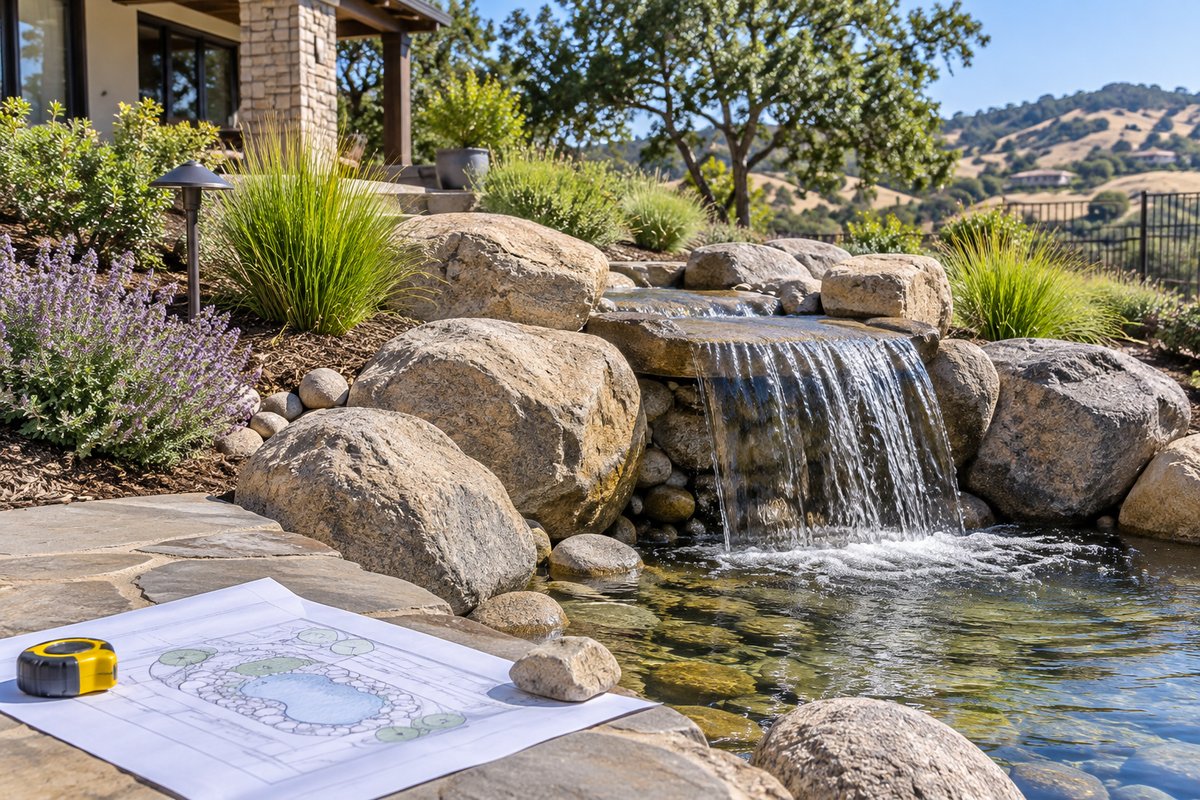
A Homeowner’s Practical Guide to Planning Water Features in El Dorado Hills
From permits and HOA approval to tackling local soils and timing, this educational guide provides El Dorado Hills homeowners essential steps for planning exceptional water features that stand the test of local weather and site conditions.
Understanding Local Rules: Permits, HOA and Approvals
In El Dorado Hills, installing water features such as garden fountains, pondless waterfalls, or koi ponds involves more than design taste and product selection. Most new construction or significant hardscape upgrades require following both county building requirements and HOA guidelines. For instance, backyard water features might need permits, especially if they involve plumbing, grading, or changes to drainage. Your HOA may have additional rules on style, noise, setback, or placement, and requirements for formal design review.
The most direct way to clarify requirements is to consult the El Dorado County Building Division Checklists and Guidance. These resources outline what types of projects require permits, what documents are needed, and how to begin—the approvals process can take several weeks to a couple of months depending on project scope and completeness of your application. For properties in HOA communities, coordinate early with the association and plan time for their review cycles, as some HOAs have only monthly review meetings.
It’s important to note that permit requirements can change with the specific details of a project, such as basin depth, water volume, structure height, or retaining wall needs. Clarification up front can minimize costly redos and delays in later phases. Always check directly with the offices linked above for the most current requirements for your water feature or related hardscape improvements.
Before You Dig: Utility Marking and Site Preparation
Every water feature project, from dramatic fire and water features to compact bubbling urns, starts with the safety of proper site evaluation. El Dorado Hills homes often have a web of underground utilities: gas, electric, cable, water, and irrigation lines. Hitting one can mean costly repairs or worse. Before breaking ground—even for shallow fountains or excavation for pumps—always call 811 to request utility marking. It’s a practical step that can save frustration and boost project safety.
Additionally, reviewing your landscape plans with your local electric provider, such as the Pacific Gas and Electric Company, helps identify mainline and service drop locations. This allows strategic placement of irrigation controllers, low-voltage landscape lighting, or feature pumps without interference. For projects involving significant electrical needs, consult the utility’s guidance for meter upgrades or service modifications as applicable.
Clearing the worksite of surface obstructions, marking protection zones for trees and existing structures, and providing clear access for equipment help ensure construction can proceed efficiently. On sloped properties or tight lots, pre-planning access points can also affect the costs and methods available for excavation and material staging.
Understanding El Dorado Hills Soils: Clay, Granite, and What They Mean
Soil conditions strongly influence not just how foundations are built, but also the long-term performance and maintenance needs of your water feature. In El Dorado Hills, it’s common to encounter decomposed granite hillsides or heavy clay subsoils. Each brings unique considerations to building everything from reflecting pools to dynamic garden streams.
Clay soils have poor drainage and are prone to swelling and shrinking with seasonal moisture changes. Without proper design, water features set into clay may develop rising and settling problems, cracked basins, or require additional underdrains. Decomposed granite, while offering excellent bearing, can allow too-rapid water seepage if not properly lined. Retaining structures and proper compaction are especially critical for hillside lots.
The solution lies in detailed site assessment and engineered construction methods tailored to your specific soils—project choices might include additional drainage layers, reinforced concrete pads, or flexible liner systems. A site evaluation may be required as part of the permit process; always review requirements at the county’s building division resources before finalizing your design or engaging a fountain contractor.
Designing for Slope, Drainage, and Water Movement
El Dorado Hills’ varied topography is both an opportunity and a challenge in water feature design. On gentle slopes, features like pondless waterfalls or garden creeks can appear almost natural, using grade changes to drive water flow. Steeper lots demand engineered retaining walls, precise grading, and drainage planning to move both garden and storm water safely away from structures.
Drainage is critical for project longevity, especially where hardscape meets lawn or planting. Properly sized overflow routes and subdrains reduce the risk of basin overflows and protect home foundations. When structures such as patios, seatwalls, or walkways are integrated around your feature, planning for surface water movement becomes even more important—especially with the local pattern of downpours during winter storm cycles.
For all of these reasons, consider a comprehensive plan that ties together water movement, plant selection, and functional grading. Site-specific solutions ensure your water feature appears refined, functions as intended, and delivers lasting value.
Timing Around Weather: Heat, Rain, and Construction Windows
The Mediterranean climate of El Dorado Hills brings triple-digit summer heat and cool, rainy winters. Each season shapes the timing and approach needed for constructing water features like wall fountains, koi ponds, or decorative reflecting pools. Dry summer weather is ideal for excavation, concrete work, and waterproofing stages—materials cure properly, truck access is easier, and scheduling is more reliable.
However, that same summer sun also demands attention to heat-sensitive installation processes and efficient moisture management for new plantings around your water feature. Planning planting for the fall can help new landscaping establish before the next summer’s drought conditions kick in.
In contrast, winter rains can stall or complicate excavation, site access, and foundation work. Monitoring weather through local sources such as the National Weather Service – Sacramento Metro/Western El Dorado Forecast is smart during project planning. Contractors experienced with local weather cycles know the importance of flexibility and weather-driven sequencing to keep projects on track.
Choosing the Right Feature: Water-wise and Practical Options
Water stewardship is top-of-mind for California homeowners. Modern water features can balance luxury and resource efficiency—options like pondless waterfalls recirculate water with minimal evaporation and no standing pools, while bubbling urns and bubblers offer sound and movement in a compact, water-referenced form. For those dreaming of abundant wildlife, koi and garden ponds create unique spaces, but with increased attention to filtration and maintenance.
Contemporary tastes can be matched with sculptural fire and water features or slim-profile water walls. Small gardens may benefit from still water spaces, such as those seen in reflecting pools. Consider how each product will interact with sun, wind, and shade on your site. For energy needs, coordinate your plans with your electric utility, such as Pacific Gas and Electric Company, especially for pumps or lighting.
Local experience matters when selecting and configuring each element, from basin waterproofing to pump sizing and plant pairing. Consult an experienced fountain contractor who understands El Dorado Hills’ conditions and can recommend solutions fitting your vision, resources, and site.
Coordinating Elements: Patios, Walls, and Landscape Around Water
The beauty and utility of a water feature often depend as much on what surrounds it as on the feature itself. Many projects in El Dorado Hills take a holistic approach, with water features designed integrally with new patios, seat walls, and landscape plantings.
Material choices such as colored concrete, natural stone, or tile should be coordinated between the feature and its surroundings to create a harmonious, durable space. Retaining walls or planters may functionally shape slopes and direct stormwater movement, supporting long-term stability and ease of maintenance. Carefully selected drought-resistant plants help stabilize slopes and minimize future irrigation needs.
Lighting, either incorporated in the basin or along the watercourse, extends enjoyment into the evening and can highlight key views. These can often be integrated with existing or upgraded service by reviewing site power and lighting options with your provider. Early planning ensures the end result is not just a beautiful feature, but part of a timeless outdoor living space.
Frequently Asked Questions
Do I need a permit for my new water feature?
Whether a permit is required depends on the size, location, and configuration of your proposed feature. Excavation, electrical work, or structural walls often require permits. Check current requirements at the El Dorado County Building Division before starting the design process.
How do I check for underground utilities before digging?
Always use the free 811 service before any excavation. Utility companies such as PG&E mark known utility lines, helping avoid damage and hazards during construction.
How do local weather cycles affect construction timelines?
Dry, stable summer weather favors most construction tasks, while winter rain can introduce delays or require special handling for sensitive work. Use the local weather forecast to track short-term trends and plan ahead for weather-sensitive stages of the project.
Ready to plan your water feature with peace of mind and expert guidance? Request a consultation with California Hardscapes and build outdoor spaces that stand the test of time.
Planning a project in El Dorado Hills, CA?
Call or text 916-741-0633, or email sales@californiahardscapes.com with your address, a short description and a few photos, and we will arrange a consultation.