Gunite and Shotcrete Pools: The Custom Pool Standard
A custom gunite or shotcrete pool lets you create any backyard vision—built to fit your landscape, lifestyle, and long-term expectations.
Why Gunite and Shotcrete Pools Set the Standard
Best for: Homeowners wanting truly custom pool shapes, lasting durability, and top-quality engineering.
A backyard pool should fit your family and your property—not a stock template. Gunite and shotcrete pools, which use steel-reinforced concrete, make it possible to design a pool of any shape, depth, and dimension. Whether your lot is gently sloped, rugged, or unusually shaped, these methods give you complete freedom to create curves, in-pool benches, vanishing edges, swim lanes, or attached spas—all perfectly tailored to your yard.
Compared to fiberglass or vinyl-liner pools, gunite and shotcrete concrete pools deliver unmatched strength and design versatility. The concrete shell is custom-shaped on site, then built up with layers of steel rebar and sprayed concrete that’s troweled smooth. You can choose any finish, from classic white plaster to pebble or tile, and even combine shallow lounging areas with deep diving ends, all in one structural shell.
At California Hardscapes, our philosophy is simple: We don’t compete on being the cheapest. We compete on quality, integrity, and results that exceed expectations. That approach means every custom pool we build is constructed as if it were our own—no corners cut, and no compromising on workmanship. Our expertise in concrete, site prep, materials, and hardscape integration ensures your new pool will be both a reliable investment and the highlight of your outdoor living space.
Custom Design Options for Gunite and Shotcrete Pools
Any Shape or Depth
Gunite and shotcrete pools are truly custom—rectangular, freeform, kidney-shaped, geometric, or a design no one else has. Depth options range from wading and tanning shelves to true deep ends for diving. Steps, benches, ledges, and even attached spas are designed into the shell, not added later.
Infinity Edges and Raised Walls
Concrete pools can incorporate infinity (vanishing) edges, raised bond beams, or sheer descent water features, adding architectural interest and luxury appeal. These design features are built directly into your pool’s structure, providing both function and form.
Custom Finishes
Choose classic plaster, aggregate pebble, quartz, or all-tile finishes in a wide spectrum of colors and textures. Each finish delivers a unique look and feel underfoot, with options for anti-slip surfaces, mosaic inlays, or glass bead accents for extra sparkle.
Integrated Steps, Benches, and Swim-outs
With gunite and shotcrete, you’re not limited to standard ladders or narrow entry steps. Enjoy broad, gently sloping entries, sun shelves, submerged seating, and wide swim-outs—all seamlessly built into your pool’s shell for comfort and safety.
Waterline Tile and Coping Choices
Personalize your pool’s appearance with waterline tile bands and coping materials: natural stone, brick, poured-in-place concrete, or precast pavers. Each detail is selected to suit your backyard’s style and connect visually to patios or outdoor kitchens.
Integrated Spa and Water Features
Include a custom spa—elevated or integrated—as part of your pool shell. Bubblers, deck jets, scuppers, and spillways can all be built into the hardscape and shell design for a unified, high-end finish.
How a Quality Gunite or Shotcrete Pool is Built
Building a concrete pool requires careful planning, methodical construction, and attention to detail at every step. California Hardscapes manages the entire process hands-on, using proven techniques and high-grade materials to ensure your pool’s strength and longevity. Here’s how a durable gunite or shotcrete pool comes together:
- Excavation and Subgrade: The site is surveyed, marked, and excavated to the precise shape and depths of your custom design. Subgrade soils are checked for stability, compacted, and adjusted as needed to create a firm, well-drained foundation.
- Base Preparation: Depending on soil type and engineering, a crushed rock or sand base may be placed and leveled to support the pool shell. Proper base prep is key in variable Northern California soils (clay or DG) to prevent movement over time.
- Formwork and Layout: Temporary wood or steel forms outline the pool’s shape, set edges, and define steps or raised features. Plumbing penetrations for drains, skimmers, jets, and returns are installed and pressure-tested before placing any steel.
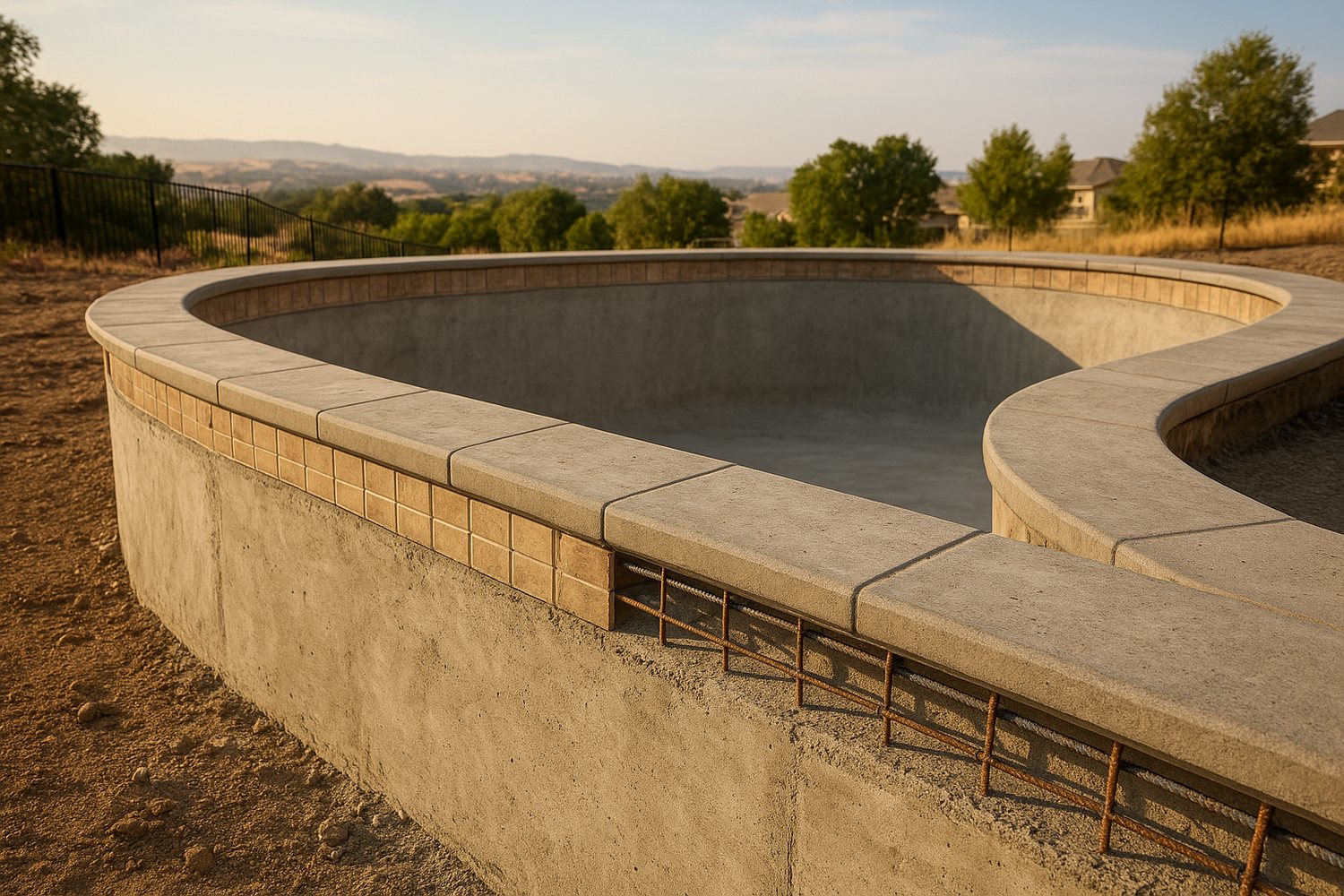
- Reinforcement (Steel Rebar): A cage of steel rebar is bent and tied throughout the pool area, following the exact contours, steps, and benches of your design. Structural shell thickness and reinforcement are sized per engineering for soil, span, and water volume.
- Plumbing and Bond Beam: Main drains, returns, suction lines, and spa loops are placed within the shell. The perimeter bond beam (with extra rebar) is formed for strength, tile, and coping—especially critical for raised edges or infinity perimeter.
- Spraying Gunite or Shotcrete: High-strength concrete (gunite: dry mix; shotcrete: wet mix) is sprayed at high velocity around the rebar and formwork, then hand-troweled to shape. Finished shell thickness typically ranges from 6" to 12" depending on location, with increased thickness at load points.
- Curing and Finishing: After spraying, the concrete shell is kept moist for at least 7 days (up to 28 for optimum strength), preventing surface cracks. Once cured, the pool is waterproofed, tile and coping are set, and the chosen interior finish is applied before filling with water.

Concrete Pools: Honest Pros and Cons
Strengths
- Total design flexibility—any shape, depth, curve, or feature is possible.
- Engineered longevity—steel and concrete shells last decades with proper care.
- Highly customizable finishes and details, from plaster to tile and in-pool benches.
- Handles challenging sites (slopes, tight spaces, oak roots, varying soils) with proper prep.
- Strong resale appeal and integration with surrounding hardscape or landscape.
Trade-offs
- Highest initial investment of pool types; longer build time than fiberglass or vinyl.
- Requires expert construction management—mistakes in shell, rebar, or curing can be costly to fix.
- Ongoing care like resurfacing (plaster) or tile cleaning needed on a long lifespan.
- Curing windows, weather, and soil conditions may slow progress or require adaptive solutions.
Cost Factors for Gunite and Shotcrete Pools
A custom concrete pool is more complex—and often more expensive up front—than prefabricated fiberglass or drop-in vinyl pools. Costs are driven by engineering, access, finishes, and site-specific needs. At California Hardscapes, we believe investing in proper site prep, premium materials, and skilled crews pays off many times over with a pool that’s tailored to your family, property, and long-term plans.
- Site conditions: grading, clay or decomposed granite soils, trees, access for excavation equipment.
- Pool size, shape, and features: curved edges, steps, benches, attached spas, vanishing edges.
- Structural shell thickness and reinforcement required for your soil and pool shape.
- Finish choices: standard plaster costs less than aggregate pebble, quartz, or all-tile surfaces.
- Custom details: water features, integrated lighting, raised bond beams, or specialty coping.
- Plumbing complexity: extra equipment, spa integration, multiple returns, and automatic cleaning systems.
Caring for Your Custom Concrete Pool
Concrete pools require routine maintenance to stay in top shape. Regular brushing and chemical balancing prevent algae and scale, while periodic cleaning of skimmer baskets and filters keeps water clear. Over time, the plaster or pebble finish will need resurfacing (typically every 8–15 years, depending on use and water chemistry). Tile bands and grout may require cleaning or repair in hard water conditions common in this region.
Lifespan of a properly built and cared-for concrete pool easily exceeds 30–40 years. Careful management of water chemistry, diligent cleaning, and professional repairs when needed help maximize your investment. Resealing or re-plastering intervals depend on your chosen finish, the quality of water, frequency of use, and how well winterization is managed during colder months.
Compare other options
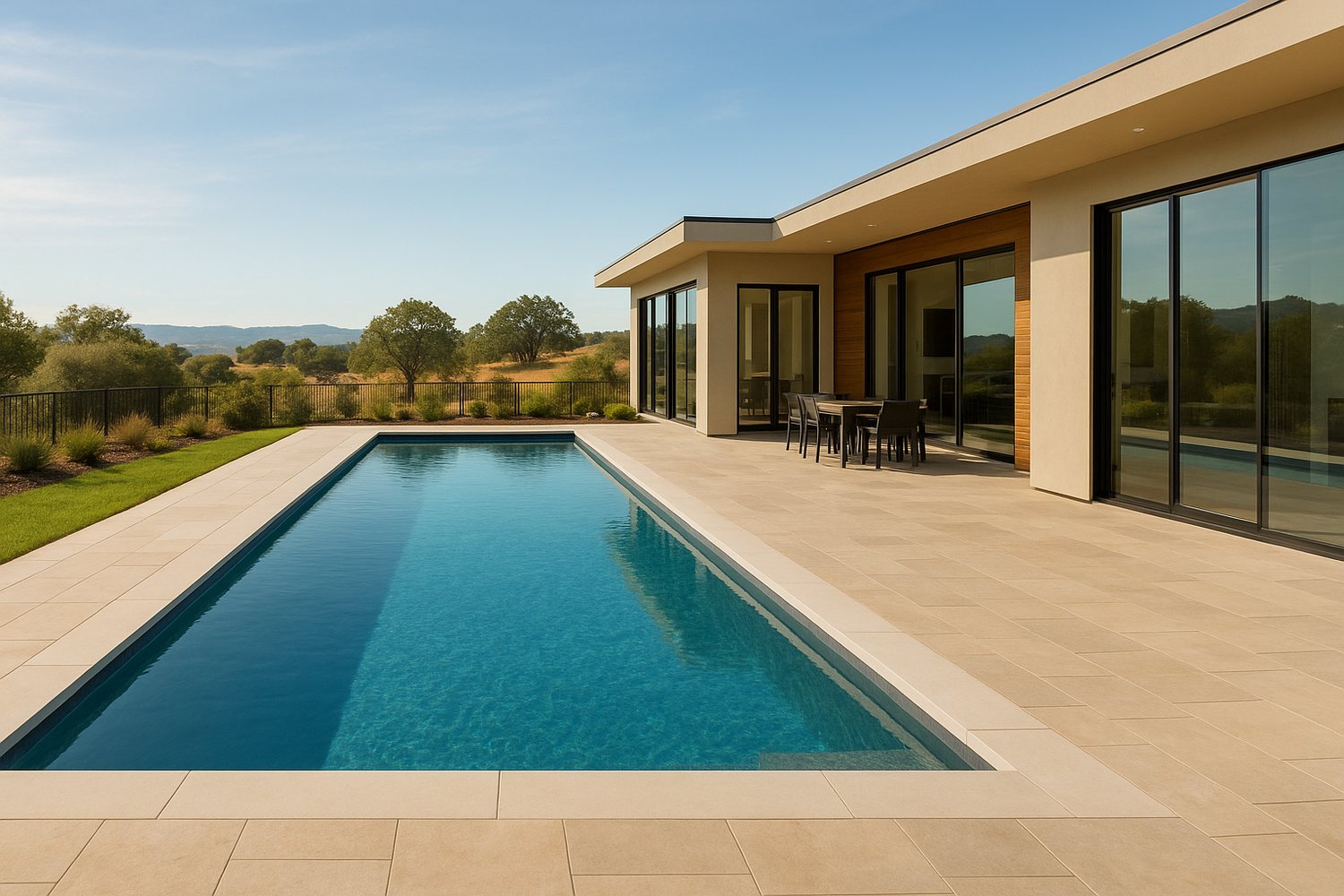
Modern and geometric pools
See if a modern geometric pool is right for your Rocklin area home: pros, cons, options, costs, build process, expert advice. California Hardscapes.
Explore →
Saltwater pools
Saltwater pools Rocklin homeowners ask about: how generators work, maintenance, finish choices, pros, cons and converting an existing pool.
Explore →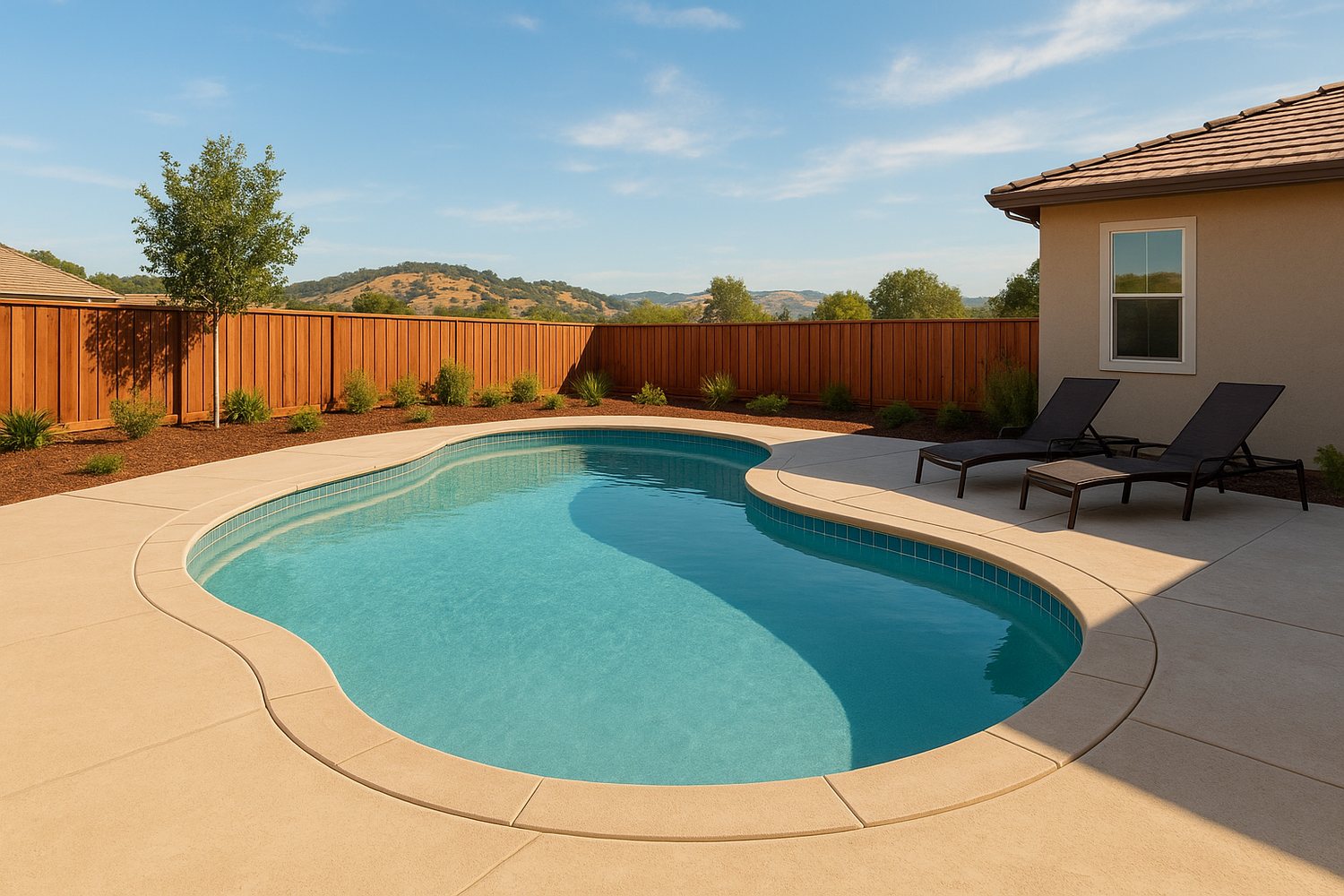
Pool remodeling and resurfacing
Expert pool remodeling and resurfacing in Rocklin and nearby areas. Honest guidance on finishes, coping, upgrades, cost, care, and relifespan.
Explore →Common Questions About Gunite and Shotcrete Pools
What’s the difference between gunite and shotcrete?
Both use high-strength concrete sprayed at high velocity onto a steel rebar framework. The main difference is in mixing: gunite is a dry-mix spray, where water is added at the nozzle; shotcrete is pre-mixed with water before spraying. Both methods, when expertly applied, deliver an equally solid and lasting pool shell.
How long does construction typically take?
A custom gunite or shotcrete pool usually takes from 8 to 16 weeks from excavation to ‘swim-ready,’ depending on the complexity of the design, site conditions, and weather. Unlike prefab pools, more steps are required: excavation, steelwork, spraying, curing, tile and coping, finishing, and start-up. Rain, heat, or challenging sites may extend the process.
Why choose a concrete pool over fiberglass or vinyl?
Concrete pools are the only real choice if you want total design freedom, integrated features, or have a non-standard yard. Fiberglass comes in factory-limited shapes and sizes; vinyl liners are quickest but more prone to puncture, and not ideal for curves or in-ground benches. Concrete costs more up front but delivers decades of durability and customization.
What about maintenance compared to other pools?
Concrete pools need regular brushing, chemical balance, and occasional surface cleaning, especially at the tile band where calcium buildup happens. Unlike vinyl, the shell isn’t at risk of punctures, but plaster or pebble may need resurfacing after 8–15 years. Automation and pool covers can reduce day-to-day demands.
Can gunite or shotcrete pools crack?
Hairline surface cracks are not unusual as concrete cures, but a well-designed, properly reinforced, and expertly cured pool shell should not develop structural cracks. Soil movement, poor curing, or shortcuts in prep can cause issues, which is why we never cut corners and work with engineers when soil or slope dictates.
Will local clay, oak roots, or drainage affect my pool?
Absolutely—site conditions here strongly influence how a pool should be designed and built. Clay shrinks and swells, decomposed granite can shift, and oak roots must be considered for stability and longevity. A truly durable pool starts with honest assessment of these factors and adapting the construction to suit.
Are gunite and shotcrete pools safe for saltwater systems?
Yes, concrete pools can be finished with materials that are compatible with saltwater chlorination. Some finishes handle salt better than others (e.g., pebble or high-end quartz), so let your builder know early if you’re planning a saltwater system to guide those choices.
How thick is the concrete shell, really?
Shell thickness varies with design, site, and engineer recommendations—most shells range from 6" to 12" thick, with added depth at bond beams, waterline, and areas supporting steps, benches, or raised walls. The steel rebar runs throughout for maximum stability and strength, tailored to the unique layout of your pool.
Ready to Explore a Custom Concrete Pool?
Email sales@californiahardscapes.com with your address, a short description of your project, and photos if possible to start a conversation about your options.