Plunge Pools and Small-Yard Pools for Sacramento Valley Homes
Not every backyard can fit a full-sized pool, but just about any space can be transformed with a custom plunge pool or small-yard pool. Done right, these water features add relaxation, exercise, and value—while preserving precious yard space.
Custom Plunge Pools: Designed for Small Backyards, Year-Round Use
Best for: Best for homeowners seeking the benefits of a pool—cooling, soaking, fitness, and beauty—without dedicating the entire yard.
Many backyards in Rocklin, Roseville, Granite Bay, Auburn and neighboring Placer, Sacramento and El Dorado County communities have limited space but big dreams for outdoor living. Plunge pools and compact pools unlock those possibilities without overwhelming your yard. As code restrictions tighten, setbacks grow, and lots get smaller, these tailored pools offer a smart answer for practical, year-round enjoyment.
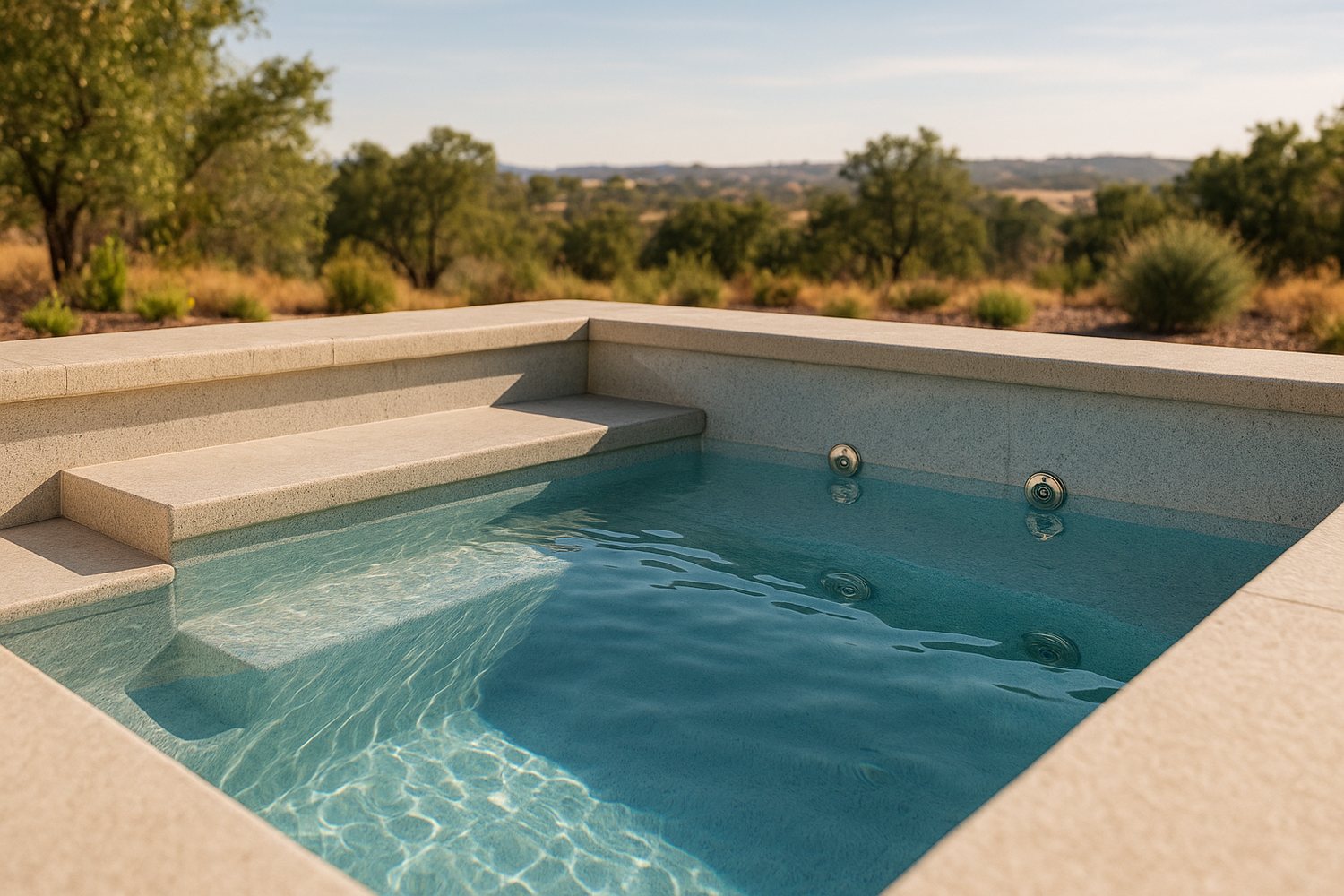
A plunge pool is a compact, deep pool—often 7 to 15 feet long and 5 to 8 feet wide, with depths from 4 to 7 feet. Small-yard pools take plunge pools a step further, mixing shapes and features like built-in benches, swim jets for low-impact exercise, and premium heating to make the most of our variable regional climate. Many homeowners combine these pools with new patios, retaining walls, or outdoor kitchens for one cohesive space.
Choosing a compact pool isn’t just about what fits—it’s about value, comfort, and how you actually use your yard. Plunge pools save water, simplify maintenance, and dodge many obstacles of full-sized pools. However, they also come with trade-offs: less room for laps, and in some designs, more bespoke construction costs. Our philosophy is simple: We don’t compete on being the cheapest. We compete on quality, integrity, and results that exceed expectations. Every pool is built as if it were our own home—done right, no corners cut.
Choosing Your Plunge or Small-Yard Pool: Six Key Options
Shapes & Sizes for Tight Spaces
Rectangular and square pools are most common for maximizing swim space in a compact area—think 8×12, 7×14, or 10×16 feet. Round and oval plunge pools offer a relaxed soak or spa-like feel, fitting into corners and odd-shaped spaces. A professional site assessment will identify what’s possible, factoring in city setbacks and private easements.
Depth & Entry Styles
Most plunge pools are 4 to 6 feet deep throughout—a depth that allows for immersion but is safer for family use than a deep-end pool. Entry steps can be built on one or more sides, and built-in benches or sun ledges can double as shallow entry zones for lounging.
Built-In Benches & Seating
Permanent benches—set in corners, along a wall, or circling the perimeter—turn a plunge pool into a true relaxation zone. These seats can hold jets, be shaped for ergonomic comfort, and make the pool more social. Benches also simplify pool entry and exit for all ages.
Hydrotherapy & Exercise Jets
For homeowners interested in swimming-in-place exercise or aquatic therapy, counter-current jets can be installed even in short pools. These high-power swim jets enable endless laps and resistance workouts. Combine with spa-style hydrotherapy jets for both exercise and relaxation in one package.
Heating & Temperature Control
To extend your use year-round—especially for soaking or hydrotherapy—consider an electric or gas heater paired with smart pool automation. Electric heat pumps tend to cost less to run, but either option should be sized for the pool’s smaller volume and our regional temperature swings.
Integrating Patio & Hardscape
A plunge pool shines when paired with a surrounding paver or concrete patio. Choose finished coping and edge details, low-maintenance decking, built-in planters, and custom lighting—all of which can be tailored to small yards. Connecting your pool to the outdoor living area makes even the smallest space feel expansive.
How We Build a Plunge or Small-Yard Pool (No Corners Cut)
The recipe for a long-lasting plunge pool combines site preparation, skilled concrete forming, and careful finishing—without shortcuts. Every pool we build is managed as if it were our own property, using reinforced concrete with the right base and drainage for Sacramento Valley soils. Here’s how a premium small pool installation typically unfolds:
- Subgrade: We start by excavating to precise measurements, removing organic material and assessing for oak roots, clay pockets, or drainage issues that can affect stability.
- Base Preparation: A layer of compacted crushed stone or decomposed granite is installed to facilitate drainage and evenly support the pool shell.
- Forming: Durable forms are built to exact dimensions, ensuring straight edges, crisp corners, and correct alignment—accounting for setbacks and any required spacing from structures.
- Reinforcement: Rebar cages and wire mesh are placed throughout to prevent cracking and ensure a structurally sound shell, factoring in expansion soil and freeze-thaw cycles.
- Placing Concrete: High-strength concrete is poured (or shotcreted), vibrated, and leveled to avoid air pockets or weak spots. Specialized concrete mixes are used for regional needs, such as resistance to hard water.
- Finishing & Joints: All surfaces are finished to the desired texture—brushed, exposed aggregate, smooth, or tile-lined. Expansion and control joints are installed to manage seasonal movement.
- Curing, Sealing & Filling: The shell is cured for recommended timeframes, then carefully sealed for longevity against winter rains and chemical exposure. Pool equipment, tile, and coping are installed as finishing steps.

Is a Compact or Plunge Pool Right for You? Pros & Cons to Consider
Strengths
- Fits in small or oddly-shaped yards without dominating the landscape.
- Lower water consumption and reduced maintenance compared to large pools.
- Usable year-round with proper heating and thoughtful design.
- Versatile—can provide soaking, hydrotherapy, and resistance exercise in one feature.
- Enhances property value and maximizes usable outdoor living space.
Trade-offs
- Limited swim length: not suitable for traditional laps or large group play.
- Per-square-foot installation cost can be higher than bigger pools due to custom work and limited economies of scale.
- May require city or HOA approvals; often stricter on setbacks in small yards.
- Less shaded water area—tends to warm quickly in summer, increasing evaporation and chemical management needs.
Pool Cost Considerations: What Impacts Your Budget?
Building a compact pool the right way costs less overall than a standard or resort-sized pool, but quality construction, reputable crews, and thoughtful features add to the investment. Some variables may be unavoidable due to site or city code. At California Hardscapes, our pricing reflects skilled, honest work—definitely not the cheapest, but always fair for the level of craftsmanship and materials delivered.
- Overall pool size and complexity of layout (rectangle, round, custom).
- Soil conditions—clay, rocks, tree roots, slope—affect excavation and base prep costs.
- Decking and patio integration: choice of materials, patterns, and the amount of finished space around the pool.
- Added features such as benches, lighting, swim jets, or advanced heating systems.
- Hauling, access, and the logistics of building in a tight or fenced yard.
- Review and inspection requirements from city or HOA, which may require engineered plans or additional permits.
Maintenance & Lifespan: Caring for Your Compact Pool
Plunge pools and small-yard pools require less daily upkeep than traditional pools, but still need balanced water chemistry, regular skimming, and filter care. With modern automation and a pool cover, most owners find weekly or even twice-monthly attention is enough. Seasonal closing and reopening aren’t usually required in our region, but winterizing equipment can help during rare freezes.
Concrete and tile finishes will last for decades when maintained, but resealing tile grout or bonding surfaces every 4–8 years is a good rule of thumb, based on use and exposure. Lifespan depends on proper construction, regular chemical balance (especially with our hard water), and keeping tree roots away from the shell. Benches, lighting, and jets should be checked annually for performance.
Compare other options

Saltwater pools
Saltwater pools Rocklin homeowners ask about: how generators work, maintenance, finish choices, pros, cons and converting an existing pool.
Explore →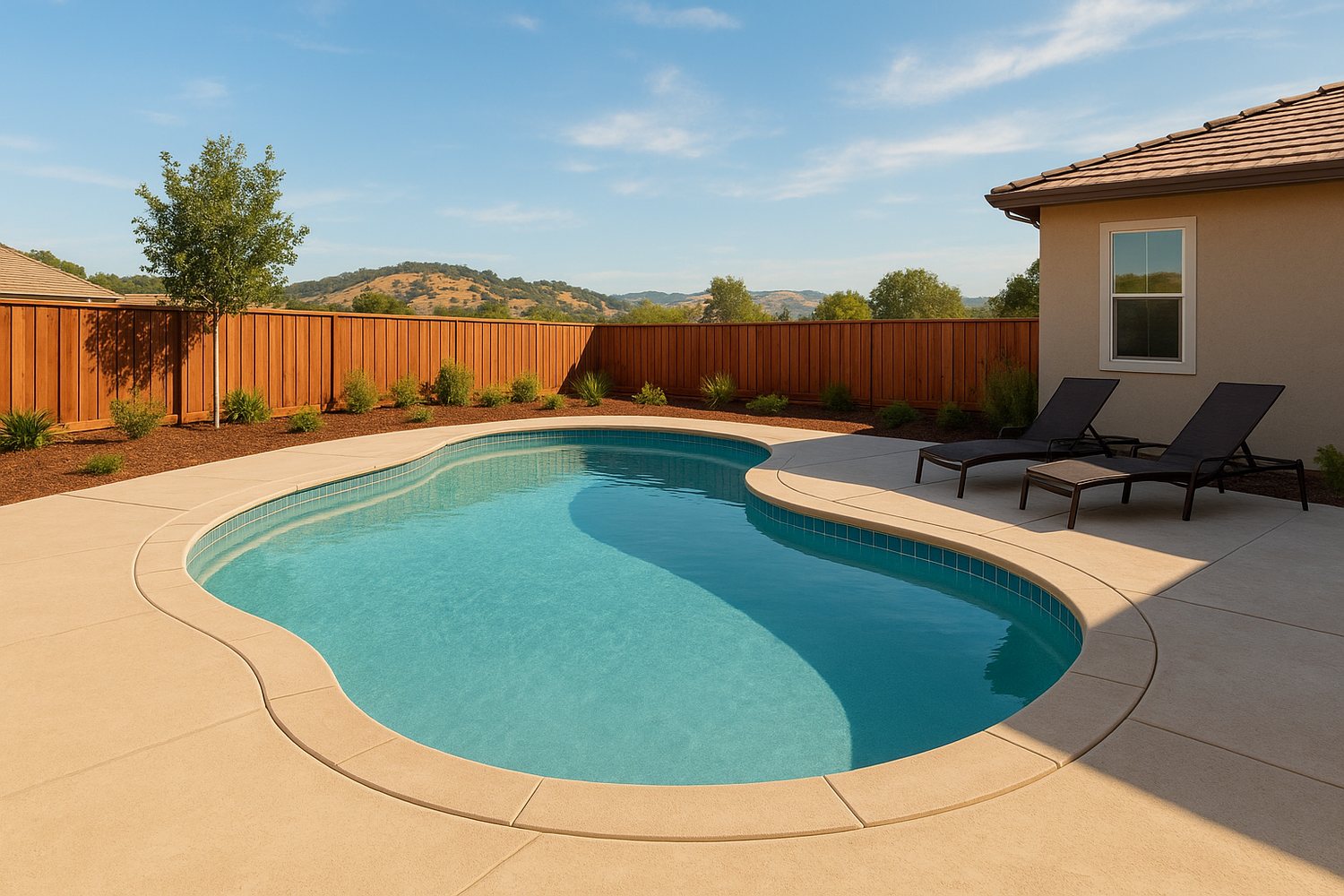
Pool remodeling and resurfacing
Expert pool remodeling and resurfacing in Rocklin and nearby areas. Honest guidance on finishes, coping, upgrades, cost, care, and relifespan.
Explore →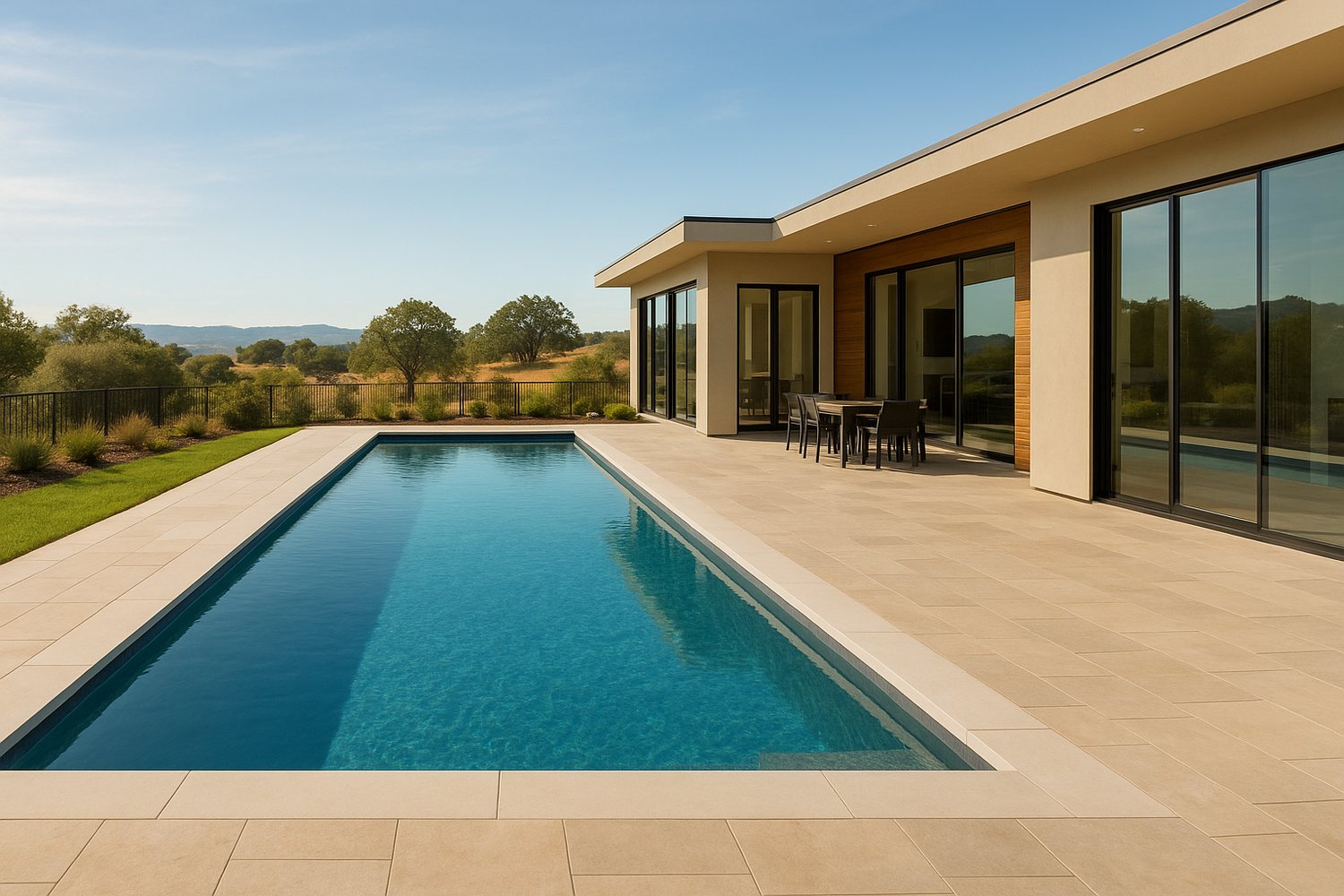
Modern and geometric pools
See if a modern geometric pool is right for your Rocklin area home: pros, cons, options, costs, build process, expert advice. California Hardscapes.
Explore →Frequently Asked Questions: Plunge Pools & Small-Yard Pools
How small can a plunge pool be and still be practical?
A practical plunge pool can be as small as 7×10 feet, though most are 8×12 or larger. Depth can range from 4 to 7 feet depending on your goals—soaking, exercise, or cooling off. Even in the smallest yards, a compact pool provides meaningful enjoyment without crowding out everything else.
Will I need permits for a small-yard pool?
Yes. Nearly all California cities and counties require permits for pools of any size, and most HOAs have their own review process to ensure setback, fencing, and safety compliance. Requirements, fees, and timelines vary by address, so it’s wise to check early in the design phase.
Can I use my plunge pool for exercise?
Absolutely. While these pools aren’t designed for lap swimming, adding swim jets creates a powerful current for in-place swimming, resistance training, or aquatic therapy. Built-in benches can also help with stretching and low-impact rehab exercises.
Are plunge pools cheaper than standard pools?
Overall project costs are usually lower, but the per-square-foot cost can sometimes be higher, especially when factoring in custom features and site constraints. For most homeowners, the savings in water, chemicals, and energy over the years more than balances the upfront investment.
What finish options are available for compact pools?
Popular finishes include plaster, colored quartz, exposed aggregate, or tile. Edges can be done with premium coping stones, poured concrete, or pavers. The finish affects both appearance and long-term durability, especially in our climate—each has its pros and cons, depending on slip-resistance, maintenance, and budget.
How does hard water affect pool care?
Hard water common in our area can cause mineral buildup on tile, equipment, and in pool plumbing. It’s important to test water frequently, use appropriate chemicals, and occasionally remove scale from surfaces. Certain finishes and tile types are more resistant to hard water spots and staining.
How do you address drainage and slope in local yards?
Proper grading, sub-base preparation, and sometimes retaining walls are essential to prevent shifting or settling. On clay or decomposed granite soils, additional drainage materials are typically installed beneath and around the pool. Our region’s rain and slope demand extra attention so your pool lasts a lifetime and resists movement.
How long does it take to build a plunge pool?
Most well-planned projects take from 4 to 10 weeks depending on site conditions, weather, HOA or city inspection schedules, and the complexity of hardscape integration. The build sequence is similar to a standard pool but on a smaller scale, with equally high standards for prep and finish.
Get a Custom Pool Plan for Your Small Yard
Ready to explore your options? Email sales@californiahardscapes.com with your address, a short description, and photos of your yard to start the conversation. We can help you determine if a plunge pool or compact custom pool is the right answer for you.