Pool Waterfalls, Sheer Descents & Deck Jets: Options, Benefits, and Honest Advice
Explore the possibilities and practicalities of pool water features—from sheer descents to fire and water bowls—in and around your California pool.
Water Features: Elevate Your Pool Experience
Best for: Best for homeowners seeking to transform their backyard pool into a sensory centerpiece that blends aesthetics with the relaxing sights and sounds of moving water.
The right water feature can turn an ordinary pool into an extraordinary retreat. From sleek, modern sheer descents to playful deck jets and dramatic rock waterfalls, today’s custom pool water features cater to every taste—while adding sound, beauty, and a new dimension to your outdoor space. But they’re more than just eye-catching. These features encourage relaxation, improve ambiance, and can even help mask neighborhood noise.
Choosing to add elements like scuppers, bubblers, or fire and water bowls to a pool isn’t just about style. It’s a matter of balancing visual effect, long-term maintenance, water use, and the practical needs of your home and yard. The options are compelling, but each one comes with its own distinct trade-offs when it comes to cost, upkeep, sound, water evaporation, and durability.
At California Hardscapes, our philosophy is simple: We don’t compete on being the cheapest. We compete on quality, integrity, and results that exceed expectations. Marty, who manages every project like it’s his own home, guides homeowners through the design and choices that will perform beautifully now and for years to come. Here, we break down your options, from the most subtle features to bold, resort-style statements—honestly, specifically, and without cutting any corners.
Popular Pool Water Feature Options
Sheer Descents
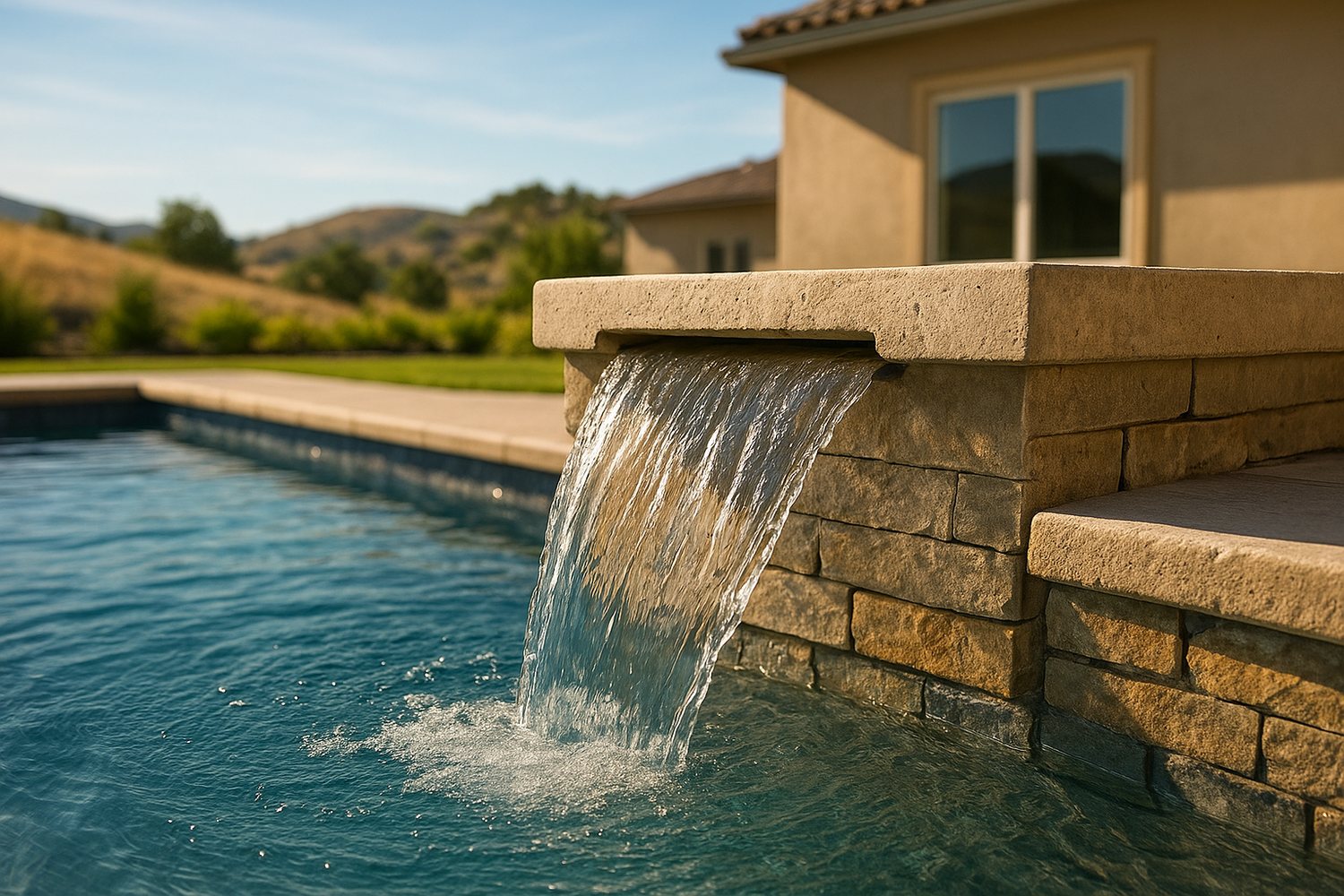
Sheer descents are slim, linear waterfalls set into a pool wall. They produce a clear, uninterrupted sheet of water that falls at right angles to the pool—perfect for a modern, minimal look. Sheer descents are quiet compared to boulder waterfalls, and flow can often be adjusted for impact. Spans range from a single accent to full-width effects.
Scuppers
A scupper is a type of spout or slot installed in pool walls or raised planters, channeling water in an arc or stream back into the pool. Designs range from sleek metal rectangles to traditional terra cotta or custom shapes. Scuppers are often combined with water bowls or planters and, with a moderate flow rate, they create a distinctive gurgling sound.
Deck Jets
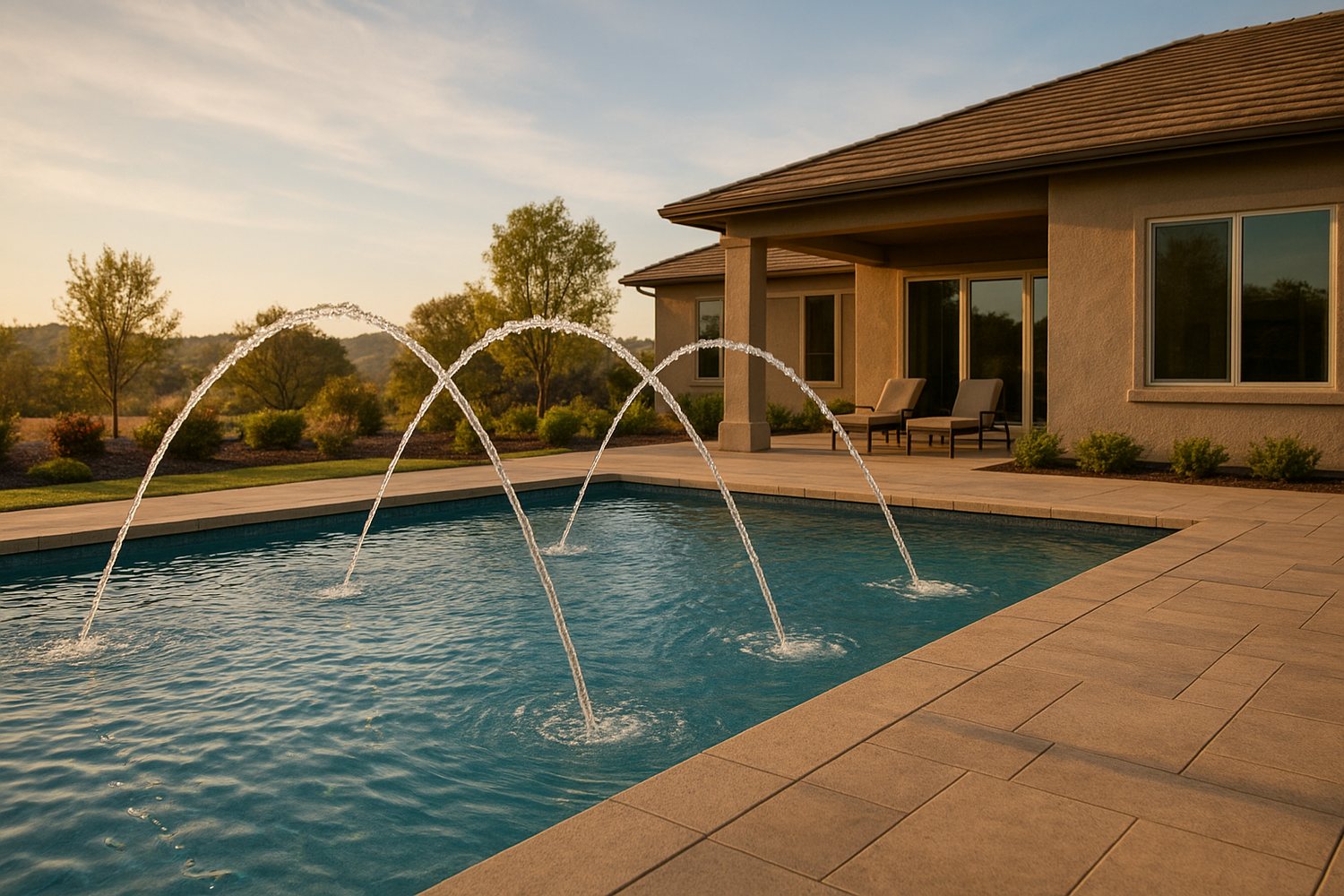
Deck jets send graceful streams of water from the deck or coping into the pool. They’re a favorite for families with kids (and for night lighting effects), but also fit minimalist, resort-inspired designs. Deck jets can be subtle or dramatic, with arc heights and placement tailored during installation—be mindful that prevailing winds may occasionally disrupt their path.
Bubblers
Bubblers, also called gushers, sit on shallow sun shelves (baja shelves) or in children’s play areas. Water wells up gently or bursts in playful gouts, depending on the design. They’re typically adjustable and kid-friendly, creating moving water without much splash-out or evaporation—making them a practical choice for narrow or small deck areas.
Rock Waterfalls
Rock waterfalls are made from real or artificial boulders, piled and mortared to form tumbling cascades into your pool or spa. They evoke a naturalistic feel, offer robust sound, and draw in wildlife like birds. This feature is visually striking but typically requires the most skilled craftsmanship—and the most careful attention to controlling over-splash and pool water chemistry.
Fire and Water Bowls
Fire and water bowls combine open flames with moving water for a dramatic focal point. Placed on piers or columns flanking the pool or spa, they create visual warmth and ambiance, especially in the evening. This option requires careful integration of gas, electrical, and water lines and benefits from regular maintenance and professional oversight.
How Quality Pool Water Features Are Built
A well-built pool water feature isn’t just a decorative add-on; it’s an integrated part of your pool structure. Attention to construction sequence, proper reinforcement, hydraulics, and finishing is what prevents leaks, noise issues, and premature failure. We approach every detail as if working on our own home.
- Subgrade: Site is evaluated and stabilized, with attention to underlying clay or decomposed granite, sloping, and root intrusion. Proper subgrade ensures stability for the water feature and eliminates future shifting or settling.
- Base: A concrete footing or pad is installed, leveled, and compacted—sized appropriately for the weight of rocks, bowls, walls, or plumbing. Drainage trenches and piping are roughed in during this stage, as required.
- Forms: Custom forms are built for walls, spillways, and structural accents. Precision here sets the final shape and helps ensure the intended water trajectory and sound. Unique shapes for scuppers, bowls, or jets require specialized forming.
- Reinforcement: Steel rebar is laid out and tied according to load requirements and geometry. This step is critical for resisting soil movement and preventing cracks, especially in local expansive clay or freeze-prone spots.
- Joints: Expansion and control joints are installed where necessary to allow for thermal movement and soil shifts. Proper joining limits future cracking or separation, especially with large elements like boulder waterfalls or wide spillways.
- Finishing: After concrete is poured, surfaces are finished according to design—smooth for sheer descents or custom texturing for natural rock. Plumbing and electrical components are positioned and tested, with pumps, valves, and controllers installed and checked for flow and leaks.
- Curing & Sealing: Concrete is allowed to cure under controlled conditions to develop full strength. For longevity and ease of cleaning, surfaces in direct splash zones are sealed with a premium sealer designed for pools and water features.
Advantages and Trade-Offs of Adding Pool Water Features
Strengths
- Visual impact: Moving water draws the eye, reflects sunlight, and can be tailored for bold or subtle effects depending on your style.
- Sound masking: Water features muffle street noise and create a peaceful, relaxing atmosphere, especially in dense suburban neighborhoods.
- Customizable: Wide choice of styles, flow rates, and placements—from modern geometric to naturalistic—makes it easy to match your landscape vision.
- Increased home value: Quality water features can enhance curb appeal and the perceived value of your property, especially when built by skilled professionals.
- Added interactivity: Bubblers, deck jets, and waterfalls can be enjoyed by children and adults alike, making the pool area more engaging.
Trade-offs
- Higher water use: Additional surface area and splash-out can increase evaporation, meaning more frequent topping-off and slightly higher water bills.
- Maintenance: Moving parts, pumps, and plumbing require periodic inspection and care, plus cleaning to prevent calcium buildup or clogging.
- Initial cost: Water features involve engineering, plumbing, and specialized materials—an investment beyond a basic pool or spa.
- Noise concerns: Not everyone enjoys constant water noise; higher flows can interfere with conversation or, in some cases, neighboring properties.
What Affects the Cost of Water Features?
The investment for pool water features varies with design scale, materials, and complexity. Costs are not just about hardware—site conditions, integration with pool systems, and long-term serviceability are just as important. At California Hardscapes, we prioritize durability and attention to detail, never chasing the bottom dollar at the expense of lasting performance.
- Size and number of features: Each additional waterfall, sheer descent, or jet requires more infrastructure, plumbing, and materials.
- Material choices: Options like natural stone, specialty metals, or fire-rated bowls generally cost more than basic precast or concrete.
- Hydraulics and pumps: More complex features may require dedicated pumps, adjustable valves, and higher-capacity filtration systems.
- Site access and prep: Challenging slopes, tree roots, limited machinery space, or need for heavy-duty footings can raise construction effort.
- Integration with pool systems: Automated controls, lighting, or tie-in to existing pool plumbing add complexity and necessary labor.
- Finish details: High-end sealers, custom colors, or premium fitting and hardware further influence the final investment.
Caring for Your Pool Water Feature
Routine maintenance includes clearing leaves and debris, checking and cleaning intake fittings, and flushing scuppers or jets to prevent calcium and algae buildup. Inspect pump baskets and valves seasonally. Where hard water is prevalent, plan on gentle acid washing or using specialty cleaners to keep spillways crisp and free-flowing.
For surfaces finished or sealed, expect to reseal every 2 to 5 years, depending on sun exposure and how frequently the feature runs. Bubblers and jets in shallow areas may get heavy use and, with that, more cleaning. Quality installation and attentive maintenance help most water features last as long as your pool—15 years or more before extensive servicing is needed.
Compare other options
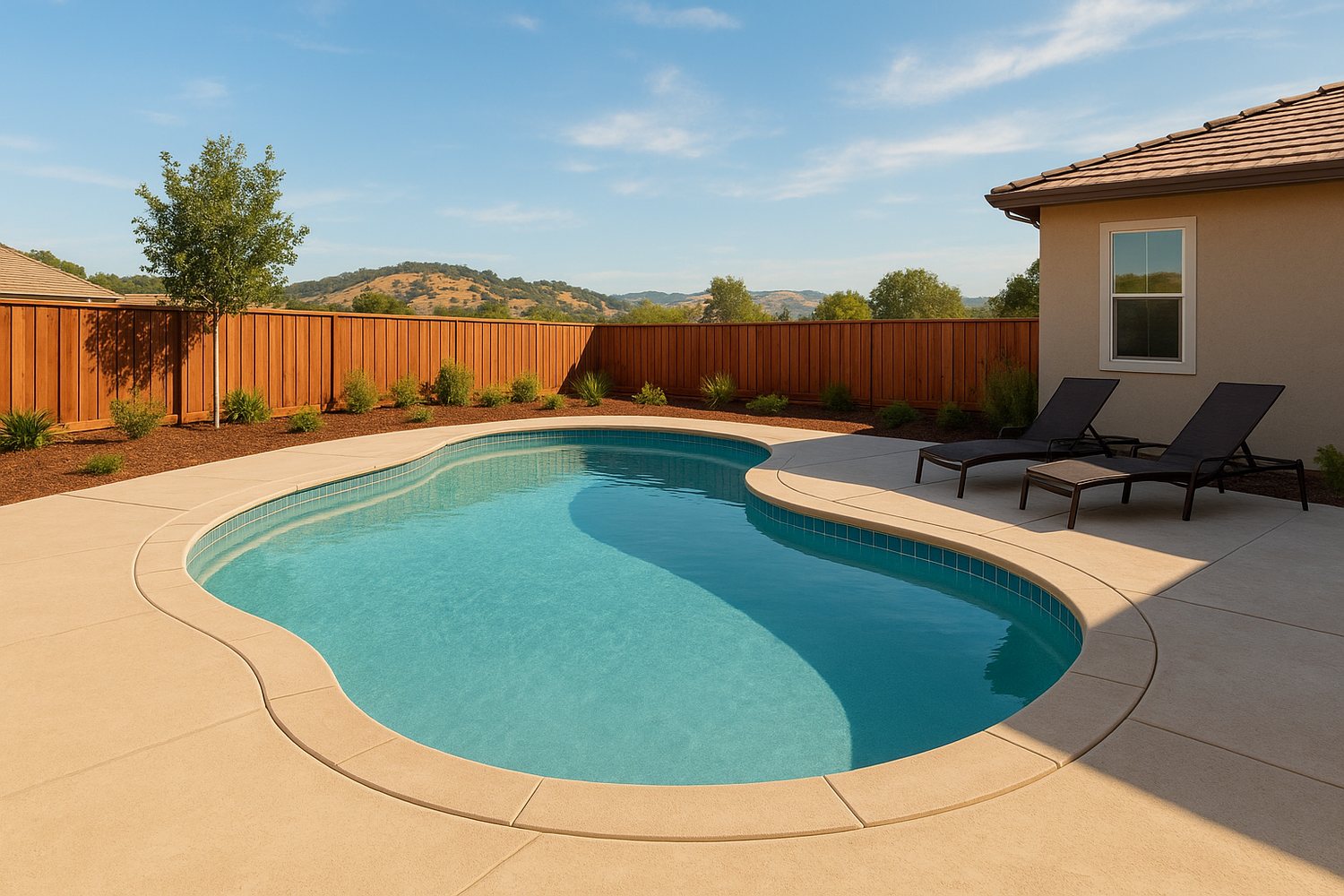
Pool remodeling and resurfacing
Expert pool remodeling and resurfacing in Rocklin and nearby areas. Honest guidance on finishes, coping, upgrades, cost, care, and relifespan.
Explore →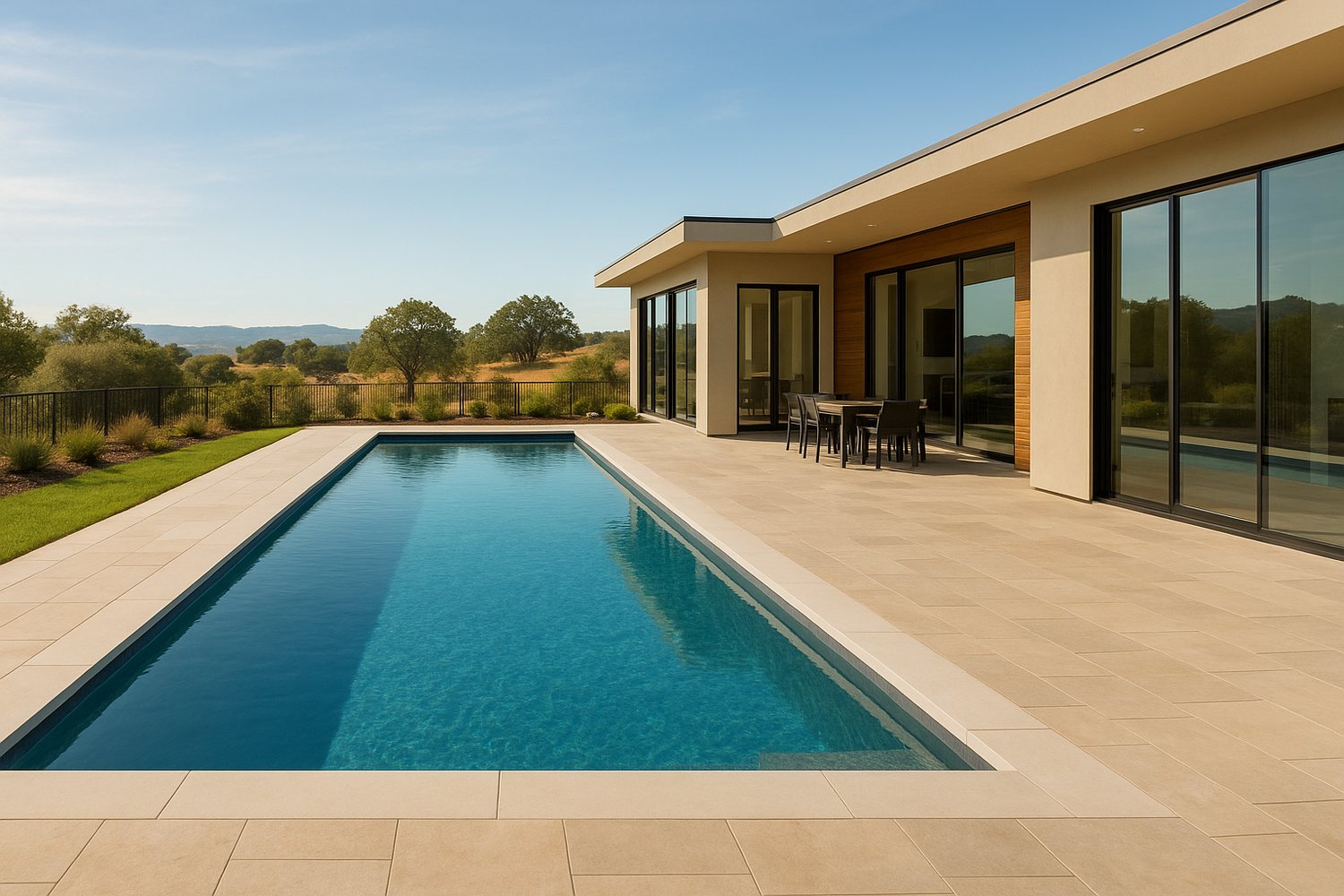
Modern and geometric pools
See if a modern geometric pool is right for your Rocklin area home: pros, cons, options, costs, build process, expert advice. California Hardscapes.
Explore →
Saltwater pools
Saltwater pools Rocklin homeowners ask about: how generators work, maintenance, finish choices, pros, cons and converting an existing pool.
Explore →Frequently Asked Questions About Pool Water Features
Do water features add a lot to pool operating costs?
They can add modestly to electricity and water use, especially with large waterfalls or high-flow features. A well-designed system uses energy-efficient pumps, run on timers or variable speeds. Some evaporation is inevitable—particularly from features with splashing or fine mist—but topping up is typically a minor part of overall pool operation, especially with careful design.
How noisy are pool water features?
Sound varies by design and flow rate. Sheer descents and scuppers tend to produce a gentle, pleasant background sound, while larger rock waterfalls can be quite loud—great for masking traffic, but possibly overwhelming in small yards. It’s important to determine your preferred sound level before building; adjustability is possible with flow controls, but not all features can be easily tuned after installation.
Will water features make my pool lose water faster?
Any moving water will increase evaporation slightly, and splash-out is a consideration, particularly with high or irregularly shaped spillways. The increase is usually manageable if features are sized for your pool, oriented thoughtfully to avoid prevailing winds, and run on a schedule—automatic pool fillers can help, but you should expect to add water more often than with a still pool.
Are special permits or engineering needed?
Permit requirements vary depending on the city, county, and your HOA. Major features—especially those with electrical, gas, or heavy masonry—may need additional review or engineering. It’s best to submit a plan showing the layout, utilities, and drainage for approval before any work begins. Local codes also dictate setbacks and safety measures for fire and water elements.
How are pumps and plumbing sized for water features?
Pump and plumbing must match the type and volume of water movement you want. Undersized or incorrectly installed equipment can cause noise, leaks, or weak flow. High-quality installations take into account pool volume, intended use, elevation changes, and future service needs, ensuring long-lasting reliability without excess energy use or maintenance headaches.
How long does it take to build pool water features?
Timelines vary by design complexity and current site conditions. Simple scuppers or jets can be added in a week or two if coordinated during pool construction. Larger rock waterfalls, integrated walls, or fire features may require several additional weeks, especially if extensive footings, custom plumbing, or multiple trade inspections are required. Good planning prevents costly rework later.
Which water feature is easiest to maintain?
Simple sheer descents or deck jets require the least ongoing care. They have fewer parts, less exposure to leaves and minerals, and limited splash zones. Rock waterfalls and fire/water bowls are more involved, with cleaning, burner checks, and more plumbing. Bubblers and jets may need extra attention if you have hard water or many overhanging trees, but proper upfront design makes maintenance straightforward.
Can I retrofit a water feature to an existing pool?
It’s possible in many cases, especially for surface-mounted jets, scuppers, or modular waterfalls, but integration can be limited by existing plumbing, deck space, and pump capacity. Remodeling for larger or more complex features may require demolition, new plumbing runs, or electrical upgrades. Early design consultation saves time and helps identify feasible options for your pool.
Ready to Explore Water Features for Your Pool?
Email sales@californiahardscapes.com with your address, a short description of your vision, and a few photos of your pool area. We’ll help you decide which options fit your home best.