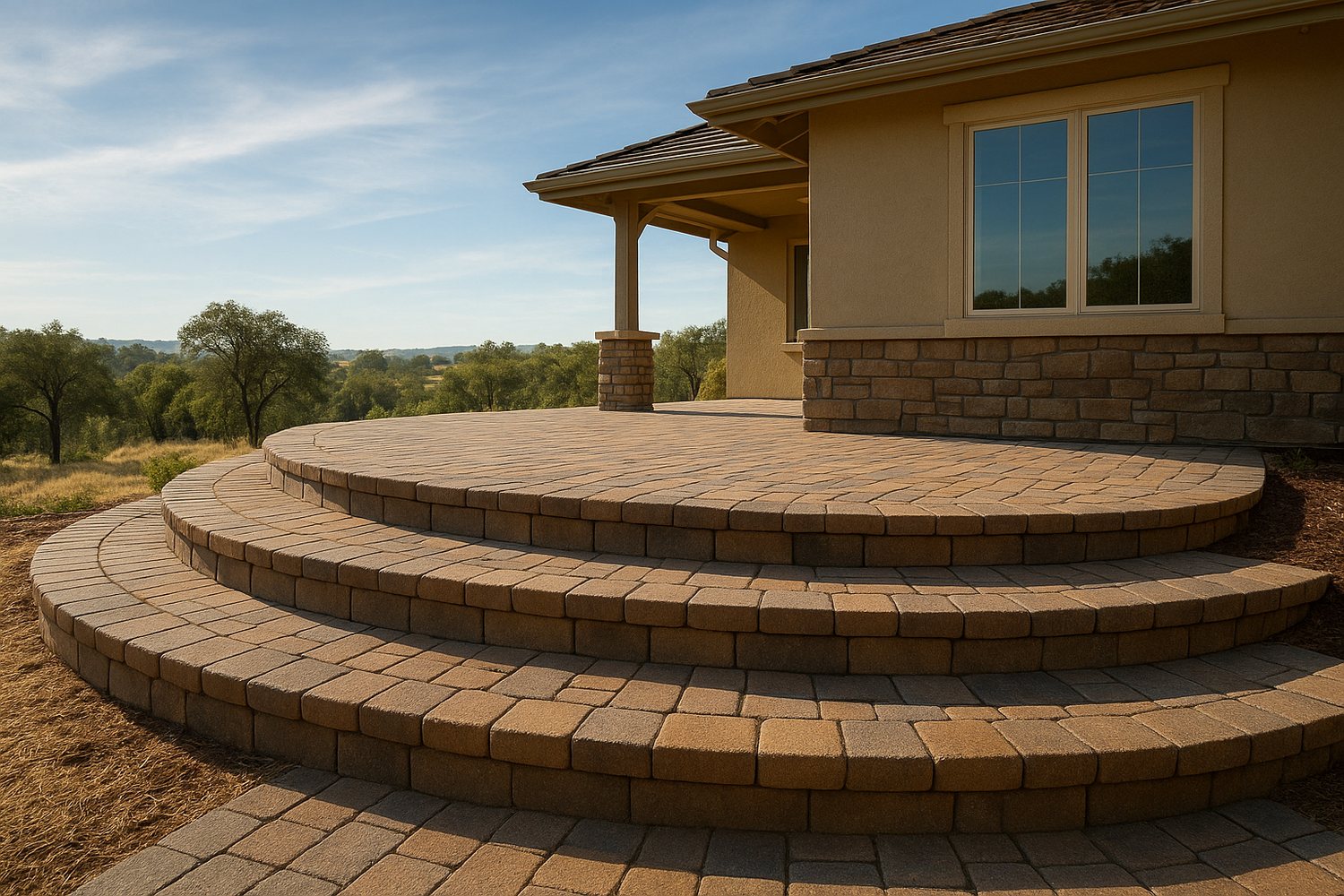
Planning Paver and Stone Steps for Sloped Yards in Placer County
Sloped yards can be a challenge, but thoughtful planning with paver and stone steps creates accessible, attractive spaces. Explore practical steps for homeowners.
Gentle, sturdy paths transform steep yards into places you’ll actually use. With the right steps and landings, slopes become assets, not obstacles.
Understanding the Challenges of Sloped Yards
Homeowners in areas like Rocklin and Granite Bay know that sloped yards create unique design and usability challenges. Uneven ground isn’t just inconvenient; it can limit access and enjoyment of your outdoor space. Seasonal rains and irrigation can also cause muddy spots or even erosion without proper planning.
Paver and stone steps offer a solution by creating defined, safe ways to move through your landscape. Where grass or dirt paths become slippery, solid steps provide sure footing. Smart step placement also helps direct foot traffic and prevent worn, unsightly trails.
The right step system can unlock underused areas of your property, making outdoor dining patios, fire pits, or gardens more accessible. Approach planning with a clear sense of how you want to move through the space and where easier access will improve your daily life.
For more details on material choices and planning, visit ourPaver and stone stepspage.
Why Choose Paver and Stone Steps?
Paver and stone steps are more than a style choice; they’re especially well-suited for the clay soils and temperature swings common in Placer and Sacramento counties. Natural and manufactured stone reliably stand up to seasonal changes, while modular pavers create level, secure surfaces with strong traction.
Compared to poured concrete, pavers and stones give you design flexibility, letting you blend new steps with existing patios or hardscape. The materials’ modular nature also makes repairs easier if shifting or settling occurs after heavy rain or dry seasons.
These materials work well with both traditional and contemporary landscapes, and offer earthy color palettes that echo Northern California’s natural surroundings. That makes for steps that not only function well, but also look right at home.
- Excellent traction, even in damp winter conditions
- Can be matched to patios and retaining walls
- Offer flexible layout options for tight or wide spaces
Essential Steps in Planning Your Hardscape Pathway
A successful step and landing system always starts with a site analysis. Walk the slope and mark main destinations: entries, patios, sheds, or lower gardens. Notice pinch points and how much elevation change you’re handling—a longer, gentle run is usually more comfortable than a steep, short set.
Work with natural contours rather than against them. Lay out steps to follow the hillside’s lines, using landings where the slope levels off or changes direction. Generous landings offer safe pauses and transition zones, and can double as small gathering spaces.
Consider how drainage, sun, and shade affect your layout. In our local climate, hardscapes sometimes need to handle both muddy winters and hot, sunny summers. Proper grading, edge restraints, and permeable materials can keep your steps stable and safe year-round.
- Mark start and end points before finalizing design
- Allow for comfortable riser and tread dimensions
- Plan landings where views or resting spots make sense
| Material | Appearance | Durability | Maintenance | Best Fit |
|---|---|---|---|---|
| Concrete Pavers | Uniform, customizable | Very High | Low | Most slopes, patios |
| Natural Stone | Varied, organic | High | Medium | Rustic or naturalistic settings |
| Precast Steps | Simple, modular | High | Low | Quick installs, utility areas |
| Poured Concrete | Clean, seamless | Medium | Medium | Modern patios, landings |
| Permeable Pavers | Natural, eco-friendly | High | Low | Drainage-challenged areas |
Comparing Step and Landing Materials
Material choice matters, both for appearance and durability. Local homeowners often weigh pavers against natural stone, poured concrete, or precast blocks. Each has strengths for the soil and slopes common to this region.
Natural stone—like granite or slate—offers unmatched character, blending seamlessly with rock outcroppings or rustic surroundings. Modular concrete pavers deliver uniformity and safety with slip-resistant features. Precast steps can speed up larger projects.
Consider long-term maintenance as well as looks and budget. Does the chosen material need sealing? How will it wear over the years? Discuss options with a professional who understands the local terrain and weather challenges.
Design Techniques for Comfort and Appearance
Step systems should be as comfortable as they are attractive. Maintain consistent riser height and tread depth for easy use; standard recommendations usually work, but customized sizing is wise when serving children, older adults, or anyone with mobility concerns.
Use wider treads or generous landings near doors, gates, or outdoor living zones. Even a small landing at a direction change makes steps feel more inviting. Borders, lighting, or contrasting materials can help guide visitors and define the path.
Don’t overlook landscaping elements: well-placed groundcover, boulders, or low-maintenance ornamental grasses soften edges and anchor steps to surrounding beds. This approach ties the whole landscape together, creating a balanced look.
- Aim for level, stable surfaces at every step
- Accentuate steps with landscape lighting
- Incorporate plants for a finished, local look
You can also explore the full range of outdoor solutions on ourHardscapes & Patiosoverview.
Drainage, Foundation, and Erosion Control
In areas like Folsom or Auburn, winter rains and clay soil require vigilant drainage planning. Steps and landings should always be built on well-compacted, free-draining bases to avoid future shifting or washouts.
Incorporate swales, French drains, or permeable pavers where runoff collects. If your slope is particularly steep or at risk of erosion, retaining walls or integrated risers may be necessary. These hold back soil and offer stability both for steps and plantings.
Plan ahead for irrigation, too. Overwatering near steps can wash away bases or lead to slick surfaces. Smart layout and careful grading mean less maintenance and safer steps, especially through wet winters and dry summers.
Choosing a Builder: What to Look For
Selecting a builder or contractor is as much about knowledge of local soils as design ability. Look for someone experienced in area-specific challenges—especially proper base preparation, drainage, and step layout for changing grades.
Ask about previous experience with concrete, pavers, and natural stone projects in this climate. A good contractor should guide material selection, layout recommendations, and site preparation for lasting results. Open communication through design and construction ensures your needs are understood.
Before work begins, confirm details about grading, edge management, and the process for unexpected soil conditions. Reputable professionals are upfront about timelines and communicate well throughout the build to keep your project on track.
- Clear, practical planning advice
- Knowledge of local soil and climate
- Experience with drainage and erosion solutions
Getting Started: Next Steps for Your Outdoor Upgrade
Ready to reimagine your sloped yard? Begin by sketching basic layouts and identifying problem areas or must-have features. Gather inspiration from homes in Rocklin, Roseville, or nearby; neighbors’ hardscapes often offer useful real-world ideas.
Arrange a site consultation to review possibilities and avoid headaches down the road. A professional can help you balance design goals, function, and future maintenance. Whether you need a single pathway or a full outdoor living upgrade, careful planning makes all the difference.
A transformed outdoor space is within reach with the right steps and landings. Approach the project with local know-how and practical planning, and your hillside can soon become a favorite, functional part of your home.
If you’re ready to start your project,request a consultationwith our team for tailored guidance.
Planning a hardscapes & patios project?
Call or text 916-741-0633, or email sales@californiahardscapes.com with your address, a short description and a few photos, and we will arrange a consultation.