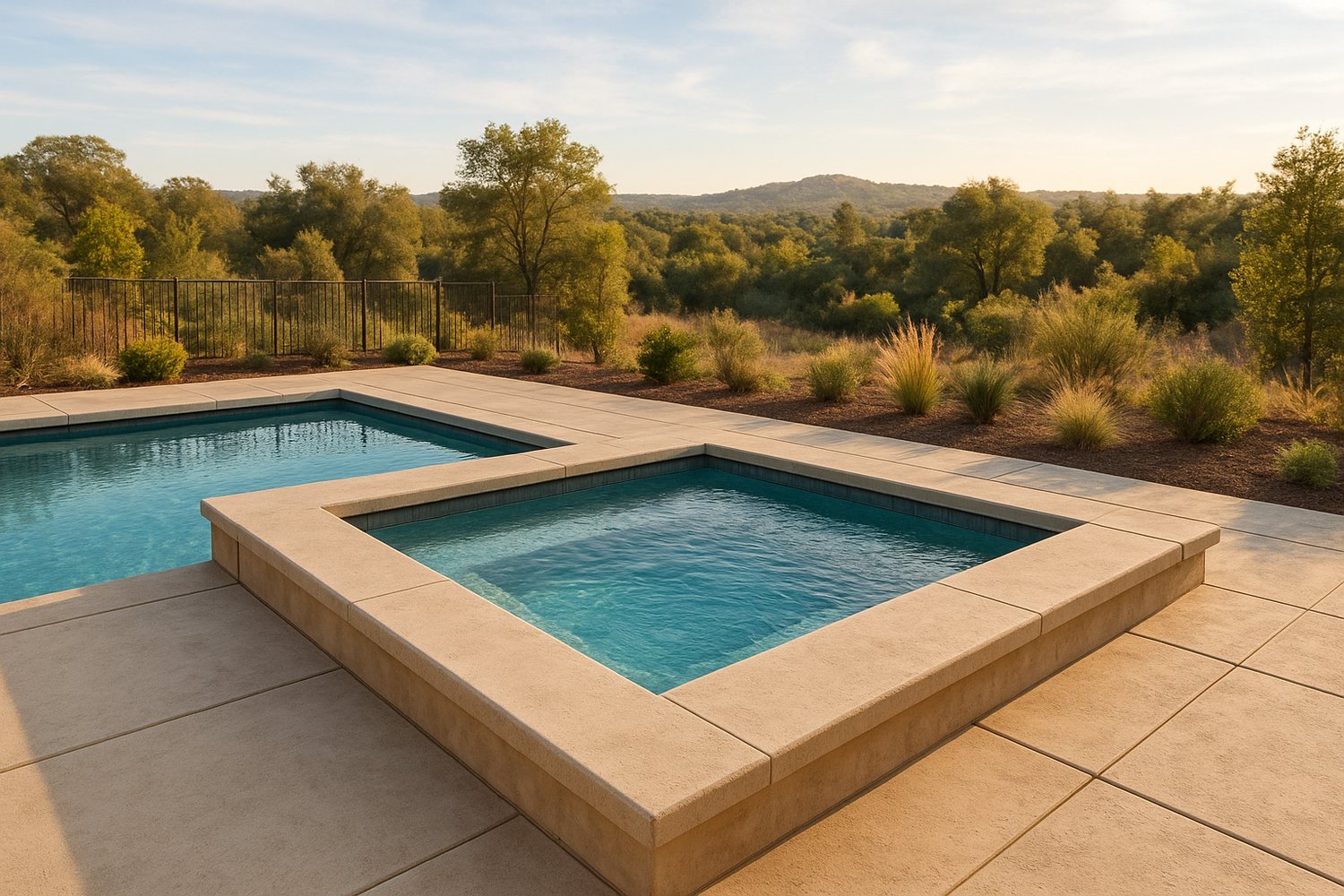
Raised Spillover Spas vs Flush Spas: Choosing Your Custom Pool Combo
Not sure whether to add a raised spillover or flush spa to your new pool? This article breaks down the design and decision factors specific to local homes.
When planning a custom pool and spa, your choice between a raised spillover spa and a flush spa shapes everything from backyard style to year-round comfort. Here’s what to consider, locally.
What Are Raised Spillover Spas?
Raised spillover spas, also known as elevated spas, are built above the main pool, typically by 12 to 18 inches. The spa water spills over a finished edge into the pool, creating a visual and audible focal point. This look is popular in many upscale homes throughout Rocklin, Granite Bay, and Folsom for both its style and functionality.
One of the signature benefits is the dramatic effect. Water flowing from spa to pool catches light, cools the air, and produces a soothing sound. Elevated spas also tend to stay warmer than flush designs, thanks to less heat transfer to the pool. For many, this makes them a practical choice for evenings or cooler months in our region.
Installation options are versatile: you can align the raised spa for privacy, visibility, or convenient access from a patio. The added elevation allows for creative coping, tilework, and materials that can match or contrast with decks and retaining walls. However, keep in mind it involves more construction steps and materials than a flush spa.
- Eye-catching water spillover effect
- Can warm up faster than flush spas
- Enhanced elevation for privacy and style
See more about integrated pool and spa designs on ourPool and spa combinationspage.
Understanding Flush Spa Designs
Flush spas, sometimes called level or integrated spas, are built at the same height as your pool’s waterline. They blend seamlessly into the main pool, without separated walls or dramatic elevation changes. This design creates a modern, unified look well suited to contemporary outdoor spaces seen in many Roseville and El Dorado County homes.
The simplicity of a flush spa offers advantages. It’s easier to enter and exit, especially for children or anyone with mobility concerns. The smoother transition between pool and spa spaces is often a good fit for smaller yards or minimalist landscaping styles common in the Sacramento area.
While flush spas lose the spillover feature, their clean lines appeal to homeowners aiming for understated luxury. This style often requires fewer retaining features and steps, which can streamline the construction phase. Be aware that flush spas may cool off a bit quicker compared to raised options, as heat can transfer more easily to the pool water.
- Seamless, modern look
- Easy access for all ages
- Less complexity in construction
Local Climate and Placement Considerations
Our regional climate—hot, dry summers and cool, damp winters—impacts spa and pool planning more than you might expect. Raised spas, for example, tend to retain heat better during fall and winter, extending your backyard’s useful season for relaxing soaks. A higher profile can also visually shield seating areas from prevailing winds in breezier areas like Auburn and Folsom.
Flush spas, on the other hand, integrate beautifully when your yard backs up to open views or rolling hills. Without the visual break of a raised wall, the poolscape feels larger and connects smoothly with natural surroundings. This can heighten the sense of privacy, especially if perimeter landscaping is thoughtfully designed.
Placement also matters from a functional and design perspective. Consider sun exposure for both spa and pool, ways to manage leaves or debris, and how the elevation ties into patios and walkways. Thorough planning ensures your spa remains comfortable and accessible all year.
- Raised spas hold heat longer in cooler seasons
- Flush spas blend views and create unity
- Plan for wind, leaves, and sun in spa placement
| Feature | Raised Spillover Spa | Flush (Level) Spa |
|---|---|---|
| Visual Impact | Dramatic, elevated | Seamless, understated |
| Heat Retention | Better in cold seasons | More heat loss to pool |
| Maintenance | Focus on spillway/tile | Focus on shared water care |
| Accessibility | Step up/down required | Walk-in access |
| Construction | More complex, more materials | Simpler, faster |
Comparing Maintenance and Upkeep
Maintenance is often a deciding factor for busy families. Raised spillover spas can require more attention to tile and spillway cleaning, as water naturally travels over the coping daily. Because debris falls from above, these spas may accumulate more visible buildup, especially in yards with overhanging trees or nearby plantings.
Flush spas generally have simpler lines with fewer exposed edges, making routine cleaning quicker for many homeowners. However, their water shares more directly with the pool, so water chemistry is more closely linked between the two. This means treating the spa and pool as one body regarding pH, sanitizer, and temperature management.
Equipment access is another consideration. Raised spas may need additional plumbing runs, while flush spas are sometimes easier to pipe and fit into straightforward pool equipment layouts. Local contractors with concrete and landscape expertise can design both options for lasting durability and manageable maintenance.
- Raised spas: more tile/spillway cleaning
- Flush spas: greater integration with pool chemistry
- Consider debris and landscape placement
Design Features: Materials and Lighting
Both raised and flush spas offer plenty of room for customization. Raised spa walls can be topped with contrasting materials—natural stone, tile, or exposed aggregate—for a dramatic effect. Waterfalls or accent spillways can enhance that signature sensory experience, especially well suited for entertaining.
Flush spas let homeowners emphasize clean, continuous lines. Modern porcelain or glass tile can blend deck, coping, and spa together, while subtle lighting elements can create a glowing rim after dark. Simplicity doesn’t mean plain—elegant material choices can make even understated spas stand out.
Wherever your taste falls, pairing the right lighting and hardscape materials with your overall landscape plan is essential. Each element—be it concrete, lighting, or plantings—should support your pool and spa’s function for local seasons and lifestyles.
- Raised spas: bolder coping and tile options
- Flush spas: focus on seamless materials
- Lighting enhances safety and ambiance
For a complete overview of what’s possible, visit ourCustom Poolssection.
Safety, Accessibility, and Family Use
Safety and convenience are priorities for local families with children, guests, or older adults. Raised spas can present a step up or down, so built-in steps or handholds are key for safe entry. They can also offer a vantage point for supervising kids in the pool.
Flush spas remove that elevation change, making entry and exit more like walking into a shallow section of the main pool. This ease of use appeals to grandparents, growing families, or anyone interested in universal access for parties or rehabilitation.
No matter which you choose, thoughtful design—non-slip surfaces, clear lighting paths, and easy-to-reach controls—should be standard. Prioritizing safety upfront allows your pool and spa to be enjoyed by all your household and guests with confidence.
- Raised spas: add steps or rails for safety
- Flush spas: easiest for all-around access
- Lighting and surface finishes matter
Cost and Construction Impact
The construction process varies significantly between raised and flush spas. Raised spillover spas need additional walls, supports, and finishing touches, which increases the scope and complexity of the build. These elements allow for great design flexibility, but typically mean more material and coordination during construction.
For flush spas, their integrated nature can shortcut the building schedule by eliminating some of those steps. Equipment setup, excavation, plumbing and electrical runs may be slightly more direct, but this depends on how your spa fits into the landscape’s overall level and design plan.
When budgeting, remember to factor in the relationship between spa type, custom material choices, and existing site grades. Working with a builder experienced in concrete, landscaping, and local conditions ensures your investment pays off for years of backyard enjoyment.
- Raised spas: more materials and steps involved
- Flush spas: faster and more straightforward in many backyards
- Cost varies most with design complexity and finish choices
Which Spa Style is Right for You?
There’s no single answer for every homeowner across Rocklin, Roseville, Granite Bay, or beyond. Raised spillover spas suit those who love visual drama, sound, and warmth—a classic pairing for homes looking for a backyard centerpiece or elevated seating area.
Flush spas serve homeowners focused on easy access, open sightlines, and a clean, modern look. They can be a smart fit for compact gardens or anyone who values a seamless blend of pool and spa for lively gatherings or daily unwinding.
The smartest move is pairing your goals with advice from a builder who understands our region’s microclimates, soil, and landscape trends. This ensures your custom pool and spa combination delivers years of comfort, style, and reliable function.
- Raised spas: bold, warm, and dramatic
- Flush spas: accessible and modern
- Match style and function to your property
Ready to discuss your backyard goals?Request a consultationto get started.
Planning a custom pools project?
Call or text 916-741-0633, or email sales@californiahardscapes.com with your address, a short description and a few photos, and we will arrange a consultation.