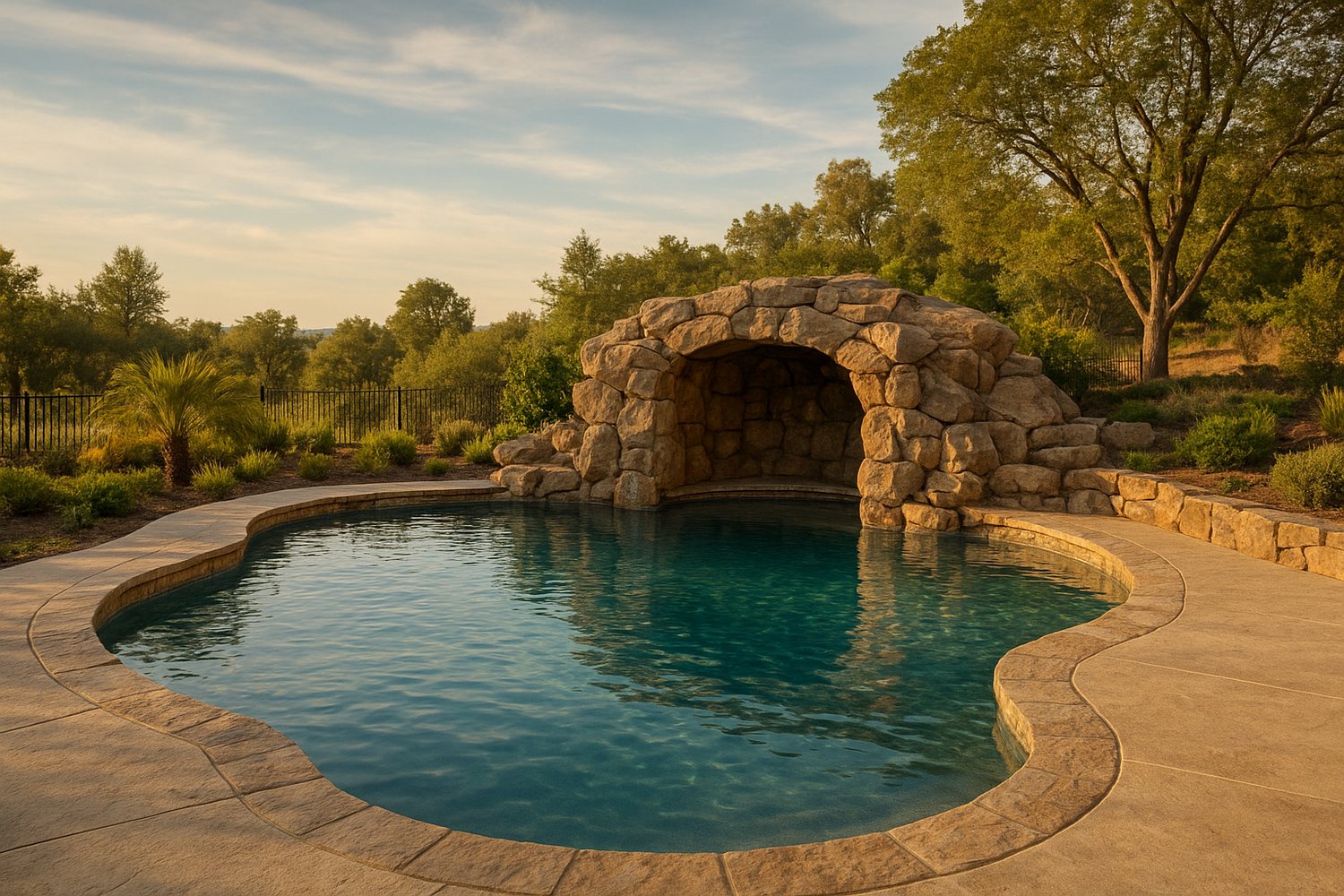
Real Boulders vs. Cast Rock: Natural Pool Edges Explained
Considering a natural pool edge? Here’s how real boulders and cast rock differ for freeform and custom pools, especially in the Placer and Sacramento region.
If you’re dreaming of a freeform or natural-style pool, the details along the edge make all the difference. Choosing between real boulders and cast rock has more impact than you might think—on style, upkeep, and cost.
What Makes a Pool ‘Natural-Style’?
Natural-style pools move away from geometric lines, favoring curves that mimic ponds or streams found in nature. Homeowners from Rocklin to Auburn often want their backyard pool to feel integrated with the landscape, with stone, planting, and water features. Freeform pools encourage a softer, organic look. The materials you select for edges and accents shape the final effect.
Edges play a big role in shaping the feel of a pool. While the waterline tile and coping matter, it’s the rocks along the edges that drive a true natural look. Using either real boulders or cast concrete rock, you can achieve this effect—each option offering distinct pros and considerations.
Understanding what works best for your property comes down to personal taste, functional needs, and regional context. Each option factors in maintenance, installation, and how it stands up to California’s unique weather and soils.
Key features of natural-style pools:
For more ideas on achieving a true backyard oasis, visit ourFreeform and natural-style poolspage.
Real Boulder Edges: Beauty from Nature
Sourcing real boulders delivers unmatched authenticity for pool edges. Each stone’s unique shape, color, and texture means your pool area will never look exactly like anyone else’s. Natural boulders immediately create a sense of age and permanence that works well with mature gardens and established trees so common in the Sacramento area.
Installing real boulders is as much an art as a science. Placement must be planned to ensure safety—smooth surfaces at swim entries, sturdy setting, and proper drainage. Transport and placement can be labor-intensive, especially when space or access is limited in communities like Folsom and Granite Bay.
For many, real stone satisfies a desire for authenticity. However, local stone availability varies, and some colors or sizes are harder to find. Real boulders can cost more upfront and weigh much more than manmade options, which impacts both design and logistics.
- Truly one-of-a-kind, organic look
- Durable against sun, water, and chemicals
- Range of color and size depends on local supply
Cast Rock: Engineered for Flexibility
Cast rock (sometimes called faux boulders or concrete rock) is molded from concrete to resemble natural stone, often finishing it with stains and textures by hand. Cast rock offers greater control over size, shape, and even color, which suits pool areas where space or design precision matter. It can be shaped for ergonomic seating or tiered waterfalls, appealing to diverse backyard goals.
In Placer and El Dorado County, cast rock lets homeowners match their vision without relying on quarry schedules or heavy machinery. These rocks are lighter than their natural counterparts and can be installed in tight access yards. Maintenance is usually straightforward—sealing every few years helps extend lifespan.
One consideration: While cast rock is engineered for toughness, impact damage or improper installation can lead to chips or cracks. Quality craftsmanship in forming and staining is crucial, so choose specialists who know local pool chemistry and concrete best practices.
- Customizable size, color, and texture
- Works well with pool features (waterfalls, slides)
- Generally easier to install where access is limited
| Feature | Real Boulder | Cast Rock | Best Use |
|---|---|---|---|
| Look & Feel | Unmatched authenticity | Highly customizable, realistic | Both—depends on budget & taste |
| Installation | Labor-intensive, heavy equipment | Lighter, flexible | Cast rock for tight sites |
| Durability | Very durable, ages naturally | Durable, needs periodic sealing | Both—maintenance varies |
| Cost Predictability | Variable—by size, type | More predictable | Cast rock for budgets |
| Design Flexibility | Limited by stone shape | Unlimited shapes | Cast rock for custom design |
How Climate and Soil Affect Your Choice
Rocklin, Roseville, and the foothill communities experience hot summers and cool, damp winters. Both real boulders and cast rock adapt well, but local clay soils can expand and contract, sometimes shifting heavier natural boulders. Careful base preparation is vital.
Cast rock can be poured and set to compensate for minor ground movement, especially useful in newer developments where landscaping is evolving. Sealing helps guard against freeze-thaw cycles and chemical exposure from pool water. Real stone naturally weathers, developing character but sometimes growing moss or lichen over time.
The amount of shade, irrigation, and direct sun will all influence surface durability and maintenance needs. Consulting with a pool and hardscape contractor familiar with local microclimates is often the best way to avoid surprises down the road.
- Pay attention to drainage around pool edges
- Ask about soil movement in your area
- Choose sealers and mortar designed for pool use
Comparing Installation and Upkeep
The logistics of installation matter as much as aesthetics. Real boulders require clear site access; for some neighborhoods in Folsom or tight backyard spaces, heavy machinery isn’t practical. Cast rock, assembled on-site as panels or poured in-place, can be managed with smaller crews and tools.
Upkeep is another consideration. Natural boulders resist chipping, but mineral stains and algae may need occasional power washing. Cast rock needs periodic sealing and inspection for cracks, but repairs are usually easier and less costly if issues arise.
If minimizing maintenance is a priority, cast rock typically has the edge. If you value an unchanging, truly natural look (and don’t mind some hands-on care), real boulders can be the preferred route.
- Real boulders: rare repairs, but occasional cleaning
- Cast rock: regular sealing prolongs life
- Both can last decades with good planning
Curious about our entire approach? See a summary of allCustom Poolsoptions in one place.
Budget and Planning Considerations
Cost differences arise from material, transport, and installation needs. Local boulders, especially large or unique ones, are priced according to weight and availability, and moving them to your backyard may require special equipment. Cast rock is often more predictable in price, but artistry and complexity (waterfalls, grottoes) can change the final cost.
Planning ahead avoids surprises. It’s smart to budget not just for the edges themselves, but for supporting work—stable bases, sealing, and landscaping. If you have existing hardscapes or landscaping, the choice may depend on whether these features can accommodate a natural stone’s unpredictability or need a more customized fit.
Talk through your vision with a builder who understands what works best for our climate and terrain. Their experience with materials and local suppliers can address questions you might not have thought to ask.
- Real stone cost depends on size, color, and rarity
- Cast rock pricing is more predictable
- Installation logistics can affect total project timing
Design Flexibility: Matching Your Style
If you have a strong design vision, cast rock offers the most flexibility. It can be colored to harmonize with existing patio, deck, or retaining walls, and shaped to snake through tight corners or rise into dramatic waterfalls. This makes it popular for highly customized or contemporary backyards common in newer developments.
Real boulders excel when you want a time-weathered look that complements large trees, native plantings, and existing stone features. Each is unique, so you get natural variation that can’t be pre-ordered. This is a classic choice for homes that lean rustic or woodland-inspired.
If your style sits somewhere in-between, consider blending both. Some homeowners in places like Granite Bay choose a few statement boulders anchored by cast rock accents to balance authenticity and practicality.
- Cast rock: best for custom shapes and colors
- Real boulders: unique shape and color, timeless look
- Hybrid designs offer the best of both worlds
Making the Right Decision for Your Home
Choosing between real boulders and cast rock for your custom pool edge isn’t just about looks—it’s about how you’ll use and enjoy your outdoor space for years to come. Think about your maintenance habits, backyard access, and how local climate impacts long-term durability.
Both options can create a relaxing, natural retreat that fits seamlessly into the California foothill landscape. The right choice ties your pool to your patio, landscaping, and your style preferences—so you get a pool area that feels truly yours.
Reach out to an experienced pool builder who understands regional soils, climates, and the full range of available materials. Their guidance is the quickest route to a pool edge that matches your aesthetic and fits your life.
- Assess site access and shade/sun exposure
- List your must-haves for maintenance and appearance
- Talk with local experts about your options
Ready to start planning?Request a consultationto talk materials and design for your own pool project.
Planning a custom pools project?
Call or text 916-741-0633, or email sales@californiahardscapes.com with your address, a short description and a few photos, and we will arrange a consultation.