How Saltwater Pools Actually Work—and What Care Looks Like
Saltwater pools are popular in Rocklin, Roseville, Granite Bay, Folsom, Auburn, and nearby areas. Here’s how they generate chlorine—and what that means for pool care.
Saltwater pools are changing the way Sacramento-area homeowners think about pool care. Understanding how they really work makes it easier to maintain your backyard pool.
Saltwater Pools: Not Chlorine-Free, Just Smarter
Many homeowners are drawn to saltwater pools thinking they’re entirely free of chlorine. The truth is, saltwater systems generate chlorine from dissolved salt. It’s a different process than traditional chlorine pools, but the sanitation goal remains the same: kill bacteria and keep your water safe.
The science works like this: salt added directly to your pool water passes through an electrolytic cell, which converts it into chlorine gas. The result? Continuous, low-level sanitization—no weekly chlorine tablets required.
For Rocklin, Roseville, Granite Bay, and other Northern California communities, saltwater pools mean less hassle with buying or storing jugs of liquid chlorine. But chlorine is still present, just produced in a gentler way.
Read more about the benefits and specifics of California Hardscapes’Saltwater poolson our main overview page.
How Does the Salt System Create Chlorine?
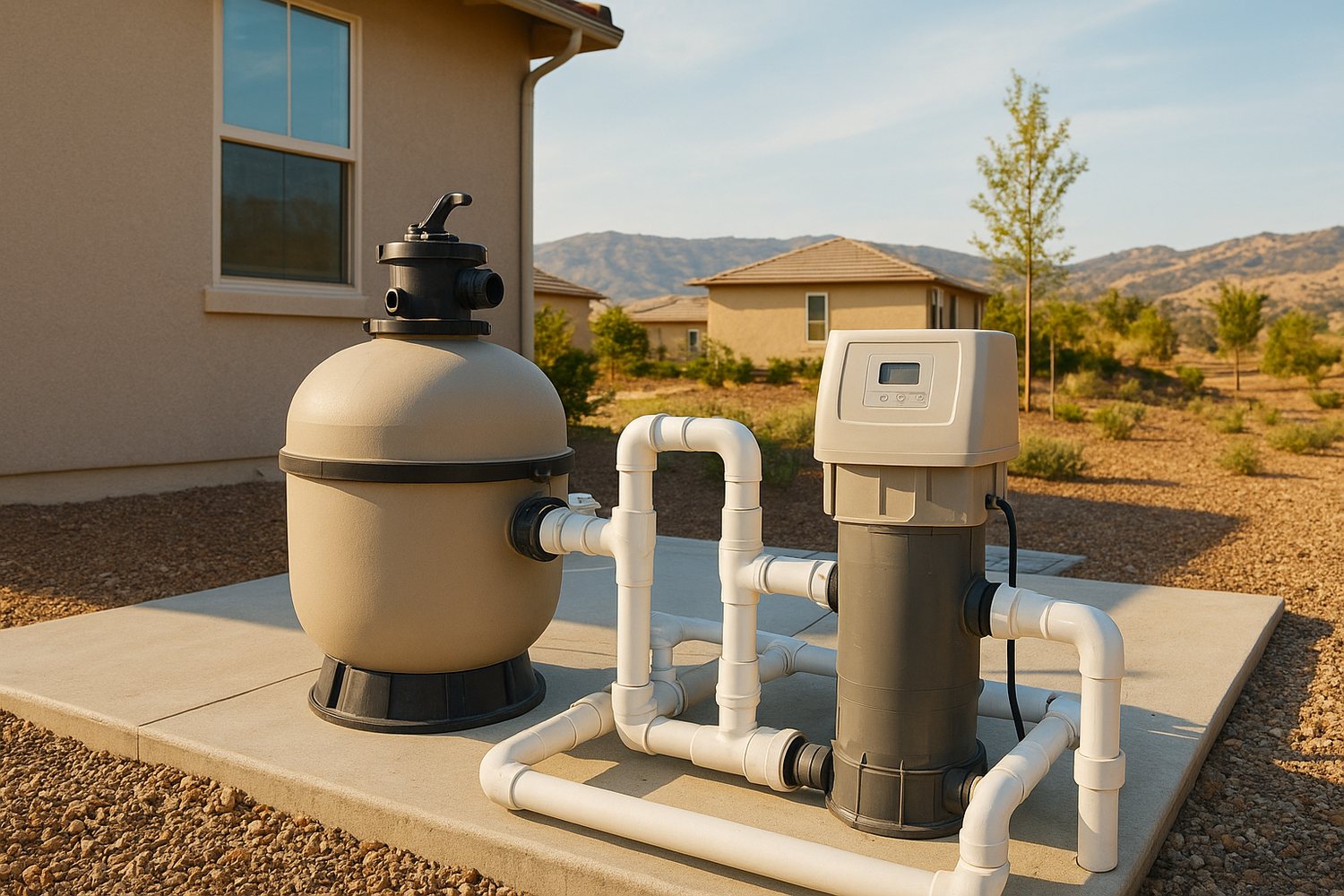
A saltwater pool relies on a device called a chlorine generator, commonly referred to as a salt cell. When salt-dissolved pool water flows through this cell, an electrical charge splits the salt (sodium chloride) into sodium and chlorine, releasing the chlorine into the pool water.
This process is continual as your pool pump operates, keeping chlorine levels steady without dramatic spikes or drops. Unlike traditional pools, you won’t experience the same sharp ‘chlorine’ smell or eye irritation.
The salt used isn’t ocean-level—just enough for the system to function, typically about a tenth of the concentration found in sea water. This subtle salinity provides a silkier feel, and diving in is noticeably gentler on eyes and skin.
Saltwater Pool Chemistry: What to Monitor Year-Round
Even though your saltwater system is making chlorine, regular maintenance is essential. You’ll want to test for sanitizer (chlorine), but also keep a close eye on pH, alkalinity, and stabilizer (cyanuric acid) levels. These elements are always important, no matter your pool type.
Saltwater pools in Placer and surrounding counties experience long swimming seasons and direct sun exposure, so UV protection for your chlorine is a must. Adjust your stabilizer to avoid rapid chlorine loss when the sun is out in full force.
Plan to add salt occasionally, especially after major water changes or heavy rain. Test kits and strips made for salt pools help you keep everything in balance so the pool looks and feels its best.
- Check pH and chlorine at least weekly.
- Inspect salt cell for calcium buildup monthly.
- Adjust stabilizer levels spring and fall for prime sun protection.
| Feature | Saltwater Pools | Traditional Chlorine Pools | Typical Water Feel | Chemical Handling |
|---|---|---|---|---|
| Chlorine Source | Generated from salt | Manual—tablets/liquid | Silky, less irritation | Minimal (add salt) |
| Water Chemistry | Needs salt & periodic balancing | Frequent manual testing | More stable | More handling needed |
| Equipment | Salt cell, control box | Standard chlorinator | Reduced ‘pool smell’ | Store chlorine safely |
| Care Routine | Inspect and clean cell | Dose and test weekly | Consistent with auto-system | Peaks after dosing |
Saltwater vs. Traditional Pools: A Quick Comparison
Wondering how salt-chlorine generation stacks up against classic chlorine pools? Both systems disinfect water using chlorine, but the delivery and maintenance differ.
Saltwater pools automate chlorination, reducing the need for chemical handling. Traditional pools rely on frequent manual dosing—tablets, powders, or liquid—leading to fluctuating chlorine levels.
Maintenance routines and user experience differ too. For homeowners across Sacramento and El Dorado Counties, your decision often comes down to daily care, water feel, and preferred upkeep style.
What Saltwater Means for Pool Care: The Real Differences
Caring for a saltwater pool is often simpler, but there are critical upkeep tasks unique to this system. The salt cell is a specialized piece of equipment that needs periodic inspection and, eventually, replacement.
Expect to prevent calcium scaling on the cell, especially with Rocklin and Granite Bay’s hard water. Soaking the cell in diluted acid occasionally helps maintain efficiency and lifespan.
Regularly testing your water’s salt level is essential. Too little, and chlorine production drops; too much can corrode pool hardware. Find the balance, and your saltwater system will outlast the season.
- Salt cells typically last 3–7 years with proper care.
- Check and clean scale every month, more often in summer.
- Replace salt only after backwashing or heavy rain dilution.
Looking for more ideas on custom pool solutions? Browse our completeCustom Poolsoptions for outdoor living inspiration.
Local Water Conditions: Tips for Northern California
Water hardness and source can affect any pool system. In Sacramento and surrounding counties, expect higher calcium content, which can contribute to scale build-up on surfaces and inside equipment.
Regular water testing—especially for calcium—pays off. If levels climb too high, scale forms more quickly on both tiles and your salt cell. Adjusting pH and alkalinity helps slow this process.
Contact a local pool store or your builder when chemistry adjustments seem complicated. Local expertise can guide you past common pitfalls of our region’s water.
- Monitor for white scale on pool edges and inside salt cell.
- Adjust alkalinity in spring, before peak summer heat.
- Consider professional water balancing at the start of swim season.
Is a Saltwater Pool Right for You?
Considering a saltwater conversion or new installation? Think beyond just maintenance. Salt pools feel smoother on the skin, and many families appreciate reduced chemical handling—especially in busy, sun-soaked backyards of Folsom and Auburn.
Initial equipment costs are one factor; ongoing care and comfort are just as important. If you travel or use a pool service, automated chlorination can make year-round care less stressful.
However, some homeowners prefer the control of manual dosing or want to avoid extra salt in the environment. Weigh your options based on daily habits and who’s handling your pool’s needs.
- Automated chlorine means less manual work.
- Saltwater is softer, less irritating, but not maintenance-free.
- Consider long-term costs—not just initial installation.
Start with Expert Guidance
Whether you’re in Rocklin, Roseville, Granite Bay, Folsom, or nearby, understanding your options makes custom pool decisions easier. Saltwater systems reward steady maintenance and the right setup.
Consult with experienced professionals who know local water chemistry and construction best practices. California Hardscapes provides guidance throughout the design and build process, so there are no surprises down the road.
Ready to explore a saltwater system or compare options? A straightforward conversation with someone who knows the industry—and the region—is the best next step.
To start planning or get advice on saltwater pool care in your neighborhood,request a consultationtoday.
Planning a custom pools project?
Call or text 916-741-0633, or email sales@californiahardscapes.com with your address, a short description and a few photos, and we will arrange a consultation.