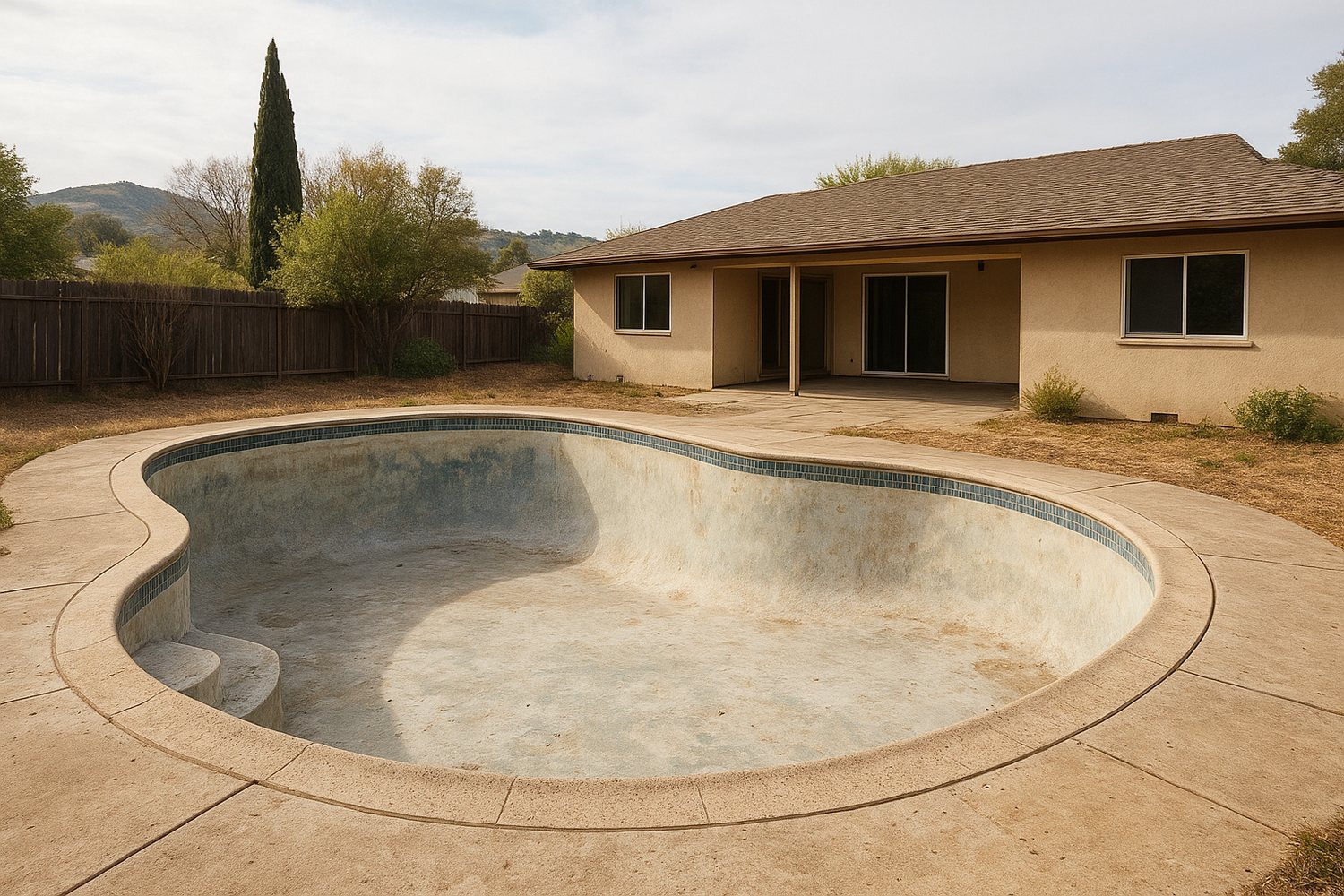
How to Know When Your Pool Needs Resurfacing, Retiling, or New Coping
Learn the telltale signs it’s time to resurface, retile, or update coping on your pool. Practical help for homeowners in the Rocklin region.
A well-maintained pool is a prized asset for any California backyard. But even the best custom pools eventually show signs of wear that go beyond simple cleaning.
Why Pool Surfaces Deteriorate in Our Region
The Sacramento Valley’s hot, dry summers and cool, damp winters are hard on pool surfaces. UV from our intense sun accelerates fading, and fluctuating temperatures put extra stress on concrete and pool finishes. Over time, natural calcium levels in Placer water can also lead to scaling and roughness.
If your pool is showing its age, it’s likely you’re seeing the effects of these regional pressures. Small cracks, rough patches, or discolored spots are not just cosmetic—they can hint at underlying issues. Environmental exposure is steady and unavoidable, but timely updates can keep your pool beautiful and functional.
Understanding why wear happens helps you plan for smart upgrades. Pool surfaces and tile aren’t designed to last forever. The key is catching deterioration early, so problems don’t compound and repairs stay manageable in scope and cost.
To read more about each option and process, visit ourPool remodeling and resurfacingpage.
Common Signs Your Pool Needs Resurfacing
Plaster, pebble, or aggregate pool surfaces break down differently, but warning signs are similar. If you’re feeling roughness underfoot, seeing pitting, or noticing stains that don’t scrub away, the surface may be wearing out. Cracks, especially ones that run across the floor or walls, are red flags.
Worn surfacing can harbor algae and bacteria, making cleaning harder and water quality worse. Surface material that’s flaking or coming loose isn’t just an eyesore. Over time, it can lead to water loss and damage to the structure underneath.
If you suspect an issue, don’t wait until leaks or expensive repairs force your hand. In our climate, prompt resurfacing not only restores appearance but also protects your long-term investment.
- Surface feels rough or sharp
- Persistent discoloration or stains
- Visible cracks in surface
Signs Pool Tile Needs Attention or Replacement
Tile isn’t just decorative—it protects the waterline from sun, debris, and constant wetting and drying. In the Rocklin and Roseville area, tile can loosen or discolor from hard water and temperature swings. Chips, missing segments, or sections with eroded grout signal it’s time for retiling.
If tiles rattle or fall out when touched, moisture may have breached underneath, weakening their bond. This can allow water to seep behind and threaten adjacent surfaces. In severe cases, you’ll notice whole strips coming loose or calcium crusting along grout lines.
Pro tip: Replacing individual tiles only works for isolated damage. Broad color changes, widespread loosening, or deep grout erosion usually mean full retiling is the best fix for both looks and longevity.
- Loose, cracked, or missing tiles
- Grout is worn or missing
- Heavy calcium scaling at waterline
| Surface Type | Typical Lifespan | Feel | Resilience | Notes |
|---|---|---|---|---|
| Plaster | 7–10 years | Smooth | Low–Moderate | Affordable, classic look |
| Pebble | 15+ years | Textured | High | Resists weather and minerals |
| Quartz Aggregate | 12–15 years | Slightly textured | Very High | Stain resistant |
| Tile (Waterline) | 20+ years | Smooth | Very High | Style impact; not a full surface |
| Polished Stone | 12–20 years | Very smooth | High | Premium feel, higher price |
Is Your Pool Coping Due for a Refresh?
Coping, the cap along your pool’s edge, sees more sun and splash than nearly any other material outside. Regionally popular concrete, stone, or precast coping can shift, crack, or fade after years of temperature swings and heavy use. This is more than cosmetic—it affects pool safety and maintenance.
You might notice coping edges that have lost their finish, are chipped, or have shifted out of alignment. Grass or dirt getting trapped between coping sections is also a common hint of underlying settling. Faded or spalling coping invites slips and detracts from the pool’s appeal.
Don’t ignore coping issues. Professionally updated coping gives your pool a crisp, safe transition from deck to water and helps prevent further water intrusion or deck damage.
- Jagged or loose edge pieces
- Color faded beyond cleaning
- Gaps forming between coping and deck
How Surface Choices Compare for Our Area
Selecting the right surface material is a long-term decision for local homeowners. The right choice balances durability, look, feel, and resilience to our summer heat and minerals in the water. Consider not only initial cost but how often each option typically needs renewal in the Sacramento region.
Plaster is classic and affordable but less durable than pebble or aggregate in our climate. Pebble finishes tend to last longer and better resist chemical wear. High-end tiles offer strong style statements, but tile alone isn’t a full pool surface solution—think of these as components of a custom system.
Ultimately, matching surface material to your usage, landscape character, and budget pays dividends over time. Ask experienced local professionals, like those at California Hardscapes, about what holds up best around Rocklin.
Explore the full range of creative upgrades on ourCustom Poolsoverview.
What to Expect During a Pool Remodel
A pool resurfacing or remodel is often less disruptive than a full rebuild but does involve some prep and downtime. Reliable crews will drain the pool, remove damaged surfaces or tile, and prep the structure for its new finish. The timeline depends on material choice, extent of repairs, and weather.
Expect some construction traffic and minor noise during the process. Protect landscaping and move outdoor furniture to help crews work efficiently. Reputable companies will communicate start and end dates, update on progress, and answer questions clearly.
Once complete, the new surface will need a specific curing and refilling process. Proper water balancing right after resurfacing ensures your investment lasts as long as possible. Ask for detailed aftercare tips before taking the first swim.
When to Schedule Pool Renovation in Northern California
Timing your project makes a difference. In our region, late spring or early fall is ideal for pool renovations—temperatures are moderate, and you’re less likely to interrupt swim season. Contractors also tend to have better availability outside midsummer rushes.
Scheduling outside rainy winter months means surfaces cure faster and crews work more efficiently, which can reduce delays. Plan ahead: reputable teams book in advance, especially for larger custom updates or specialty materials.
Keep an eye on your calendar if you have upcoming events or gatherings. A little planning ensures your pool is back in action when you want it—looking better and lasting longer.
- Best times: Spring, early fall
- Avoid wet, cold winter months
- Plan at least a few weeks ahead
Choosing a Pool Remodel Partner You Can Trust
Ultimately, working with professionals who understand local soils, materials, and permitting rules makes for a smoother remodel. Seek out companies with a practical track record across pools, concrete, and outdoor living—so they can handle all aspects, not just the waterline.
Check that your contractor offers clear communication, adaptable methods, and makes recommendations based on your pool’s condition, not a cookie-cutter approach. Ask for references and see if the company can coordinate related hardscape improvements if needed.
Marty and the California Hardscapes team combine decades in concrete, landscaping, and pool construction. Local expertise means fewer surprises—and results that suit how Northern California pools are really used.
Ready to see what’s possible?Request a consultationwith California Hardscapes today.
Planning a custom pools project?
Call or text 916-741-0633, or email sales@californiahardscapes.com with your address, a short description and a few photos, and we will arrange a consultation.