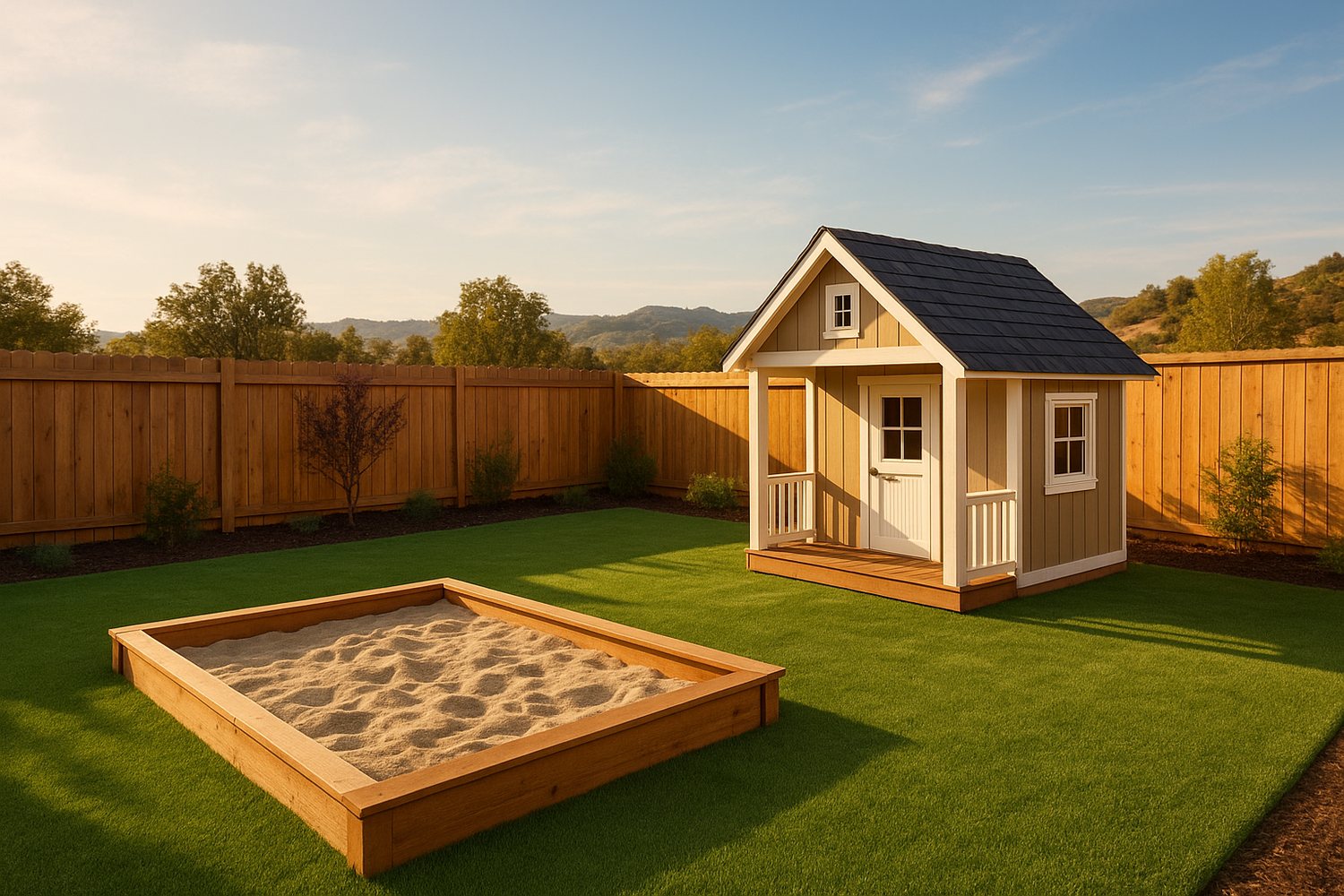
Planning a Premium Play Area with Turf, Shade, and Storage
A guide for homeowners mapping out backyard playgrounds with turf, thoughtful shade, and organized storage—practical strategies for families in the greater Rocklin area.
The right play space turns a yard into a family destination. This article explains how to lay out a backyard playground in our region, focusing on artificial turf, shade, and storage that work for Placer, Sacramento, and El Dorado County homes.
Assessing Your Yard and Family Needs
Start by walking your yard and observing how your children use the space now. Notice sunlight patterns, natural slope, existing trees, and any obstacles. Consider how you want both play and rest zones to fit near patios, pool decks, or lawn areas your family uses most.
Think seasonally; our dry summers and mild winters mean shade is key, but it’s also important that artificial turf surfaces have proper drainage for the rare heavy downpour. Decide which play features matter most—swings, slides, climbing nets, or open turf for running and games.
Factor in the age and activity level of your kids, and don’t forget pets. Outlining a rough sketch helps visualize everything, including future features like a shade sail or a storage crate for toys. The right early plan simplifies decisions as the project develops.
- Walk the yard at different times of day
- Note sun and shade patterns
- List must-have features
Learn more about backyard play surfaces on our mainPlay area and playground turfinformation page.
Choosing Artificial Turf for Safety and Play
Not all artificial turf products are equal, especially for play areas. Look for turf with durable, non-abrasive fibers and certified safety ratings that stand up to falls, slides, and repeated use. Shock-absorbing underlayment is worth considering, especially for younger children or where equipment sits directly on the surface.
The turf’s pile height, density, and infill all affect cushioning and comfort. Opt for materials tested for heavy foot traffic and easy cleaning after outdoor messes. In this region, you’ll want UV-stabilized fibers to resist fading from strong California sun.
Consult with a local professional or turf supplier to confirm suitable products for playground use, and always ask about heat resistance—some turf types stay cooler than others. Quality install ensures seams don’t become hazards and drainage handles rain and irrigation runoff.
- Prioritize non-abrasive, child-safe turf
- Ask about shock-absorbing pad options
- Select UV-stabilized and easy-clean varieties
Ensuring All-Weather Comfort with Smart Shade
Reliable shade is essential for comfort and safety in the Sacramento Valley’s climate. Tree canopies, pergolas, or purpose-built shade sails all work well depending on your yard’s layout and how much sun protection you want.
Think about shade placement during the hottest hours—usually afternoons. Installing shade either over the entire play zone or just over swings and slides creates relief for kids (and supervising adults) while still leaving open turf for sun-drenched winter play.
Permanent structures like pergolas need solid footings and careful planning, while lighter shade sails or umbrellas offer flexibility. If planting new trees, choose non-toxic, drought-tolerant species that thrive locally and won’t drop messy fruit onto your turf.
- Use existing trees for natural shade when possible
- Position shade for peak afternoon coverage
- Select drought-tolerant, low-mess trees
| Surface Type | Safety Padding | Heat Management | Maintenance | Best Use |
|---|---|---|---|---|
| Basic Synthetic Turf | Optional | Moderate | Low | Open Play |
| Playground-rated Turf | Integrated/Required | High | Low | Under Equipment |
| Natural Grass | None | Cool | High | All-ages Play |
| Rubber Tiles | Required | Cool | Medium | Under Swings/Slides |
| Mulch/Chips | Required | Cool | Medium | Budget Solutions |
Designing for Storage and Organization
Smooth play area routines depend on organized storage. Plan for easy access to outdoor toys, games, and sports gear, considering both kids’ independence and protection from the elements. Waterproof deck boxes or storage benches work well near play zones.
If space allows, a small shed or custom cabinets can house larger items like bikes or folding play nets. Extra hooks or shelves keep clutter off the turf itself, reducing tripping hazards and making it easier to mow or maintain adjacent natural lawn.
Blend storage visually with fences, retaining walls, or landscape beds for a premium look. Neutral-tone containers, wood accents, or built-in seating ensure storage complements rather than crowds your beautiful new play space.
- Place storage close to the primary play area
- Use weatherproof bins or benches
- Integrate storage into landscaping for aesthetics
Seamless Transitions: Integrating Turf with Hardscape
A thoughtful transition between artificial turf and existing patios, walkways, or concrete pads keeps your play area accessible and visually clean. Bordered edges with pavers or mow strips also help contain the turf, minimizing trip hazards and maintenance effort.
Hardscape materials like poured concrete, natural stone, or brick work well with turf and can highlight pathways to your play zone. If you’re adding a new patio or sitting area, consider how kids will move between spaces for snacks, rest, or adult supervision.
Expert install ensures outdoor surfaces slope correctly, preventing pooling water or uneven turf edges. The result: a tidy, durable play area that ties in naturally with the rest of your outdoor living spaces.
- Integrate turf with patios or walkways
- Use paver edges for safety and tidiness
- Check transitions for trip-free movement
For a full overview of available products in the region, see our guide toArtificial Turf options.
Addressing Drainage and Surface Temperatures
Good drainage is essential under artificial turf, especially for high-use playgrounds where water can pool or create muddy spots. Start by leveling subgrades and laying a permeable base beneath all turf installations for quick runoff during California’s rare heavy rains.
Surface temperature is another consideration, as summer sun can make some turf brands noticeably hot. Choosing turf designed to reflect sunlight and dissipate heat benefits barefoot comfort and overall usability, even on our hottest July afternoons.
If cooling is a top priority, look for infill materials made specifically to lower surface temperatures or incorporate shade into the design. Consult with your builder about any slope or low spots in your yard that might need extra attention during installation.
- Install a permeable base for drainage
- Choose turf and infill designed for heat reduction
- Check that all edges have slope for runoff
Customization and Local Considerations
Playground spaces in Placer and surrounding counties face unique challenges—controlling dust, staying cool in summer, and blending with established oak or pine landscapes. Custom layouts, tree protection, and wind screening should all be factored into the initial plan.
Pick materials and colors that reflect your home’s style and neighborhood traditions. Consult a local professional: area expertise matters when navigating slope, soil conditions, and regulations that may apply near creeks, easements, or on sloping lots common in Auburn or Folsom.
When in doubt, get a detailed site review. Practical experience helps avoid rework and makes sure your investment holds up, visually and structurally, year after year.
- Factor in local slope and soil constraints
- Choose colors/materials that fit your home
- Check local guidelines for play structures
Getting Ready to Build Your Family’s Play Space
Once your plan is mapped out—turf, shade, storage, and all—take time to verify steps and confirm your priorities. Start with grading, drainage, and hardscape, then move to turf and finish with shade and storage elements for a streamlined build.
Consult reputable local contractors familiar with all aspects of concrete, turf, and outdoor features. Their insights can help prevent common mistakes, suggest premium products available in our market, and ensure details like turf seams, edging, and storage placement are handled professionally.
When your play area is laid out properly, you’ll enjoy a safer, cleaner, and more inviting backyard—from sunny afternoons in Rocklin to weekend gatherings in Granite Bay. Good planning today leads to great play for years to come.
- Double-check your site sketch before breaking ground
- Build in logical stages for smoother installation
- Ask your contractor about long-term turf care
Ready to start planning?Request a no-obligation consultationwith our local team.
Planning an artificial turf project?
Call or text 916-741-0633, or email sales@californiahardscapes.com with your address, a short description and a few photos, and we will arrange a consultation.