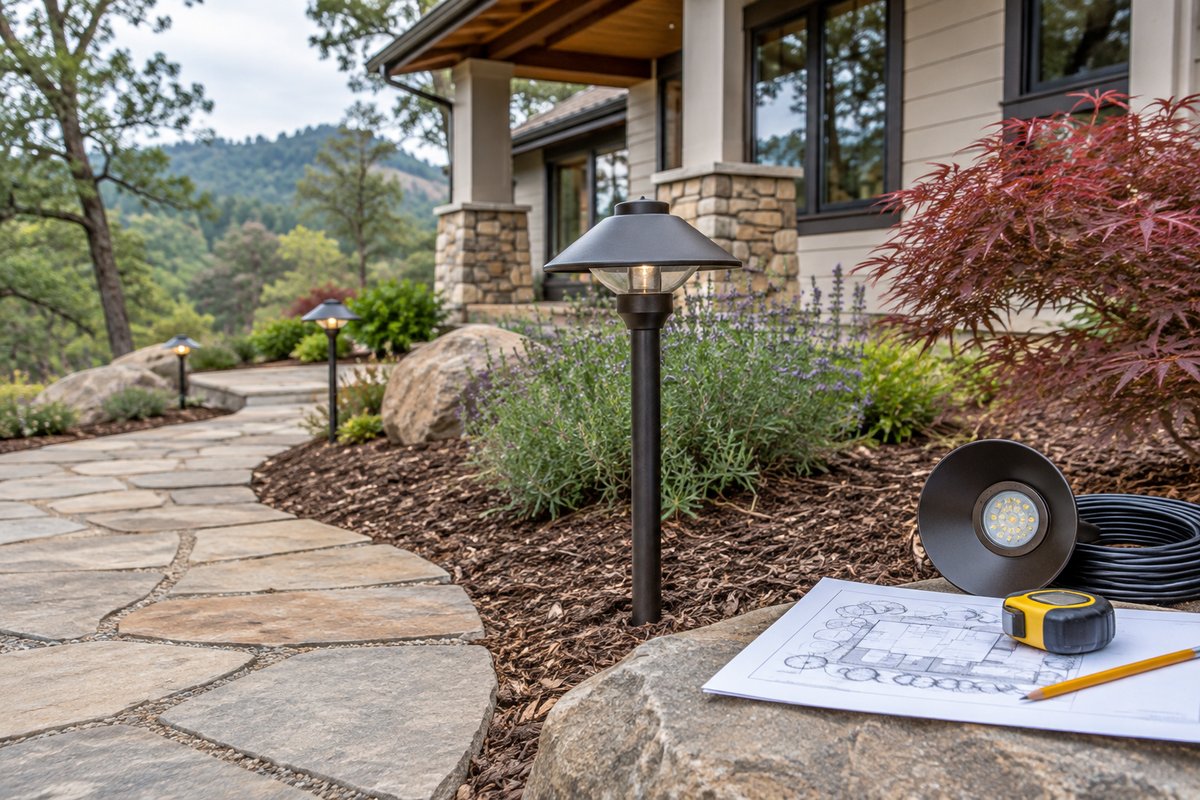
A Homeowner’s Planning Guide to Outdoor Lighting in Cameron Park, CA
Considering new outdoor lighting for your Cameron Park property? Get practical guidance on permits, HOA approvals, utility marking, weather, soil, and timing.
Planning Outdoor Lighting in Cameron Park: What Every Homeowner Should Know
Lighting upgrades or new installations can enhance curb appeal, safety, and enjoyment of your outdoor spaces. For homeowners in Cameron Park, careful planning is essential—local terrain, soils, HOA regulations, and seasonal weather all affect how to approach a lighting project. This guide covers practical steps for successful landscape lighting that not only look great but also last.
As you move forward, remember that California Hardscapes delivers every project with licensed, bonded, and insured contractors, led by Marty, who has decades of hands-on experience. Every detail, from outdoor lighting system design to the last fixture, is built with a commitment to excellence.
Permits, HOA Approvals, and Local Rules
Cameron Park has unique development guidelines—and if applicable, HOA covenants—that can affect your outdoor lighting plans. Many neighborhoods require homeowners to submit detailed plans for landscape changes, including lighting, before any work begins. Some upgrades, like low-voltage LED landscape lighting, may fall under simplified rules, but always verify before proceeding.
For city or county requirements, consult the Development Review Agency Contact List for El Dorado County. This resource details the agencies and contacts that govern building, design, and safety regulations. Homeowners are responsible for confirming what needs approval and for handling any submissions. For HOA requirements, review any CC&Rs (Covenants, Conditions, and Restrictions) for your neighborhood or reach out to your HOA board directly.
Be aware that each project’s permit needs vary: adding a new transformer for low-voltage LED systems, running power to new locations, or installing fixtures on hardscape walls may all involve different review processes. Taking the time to get this right supports long-term value and prevents costly do-overs.
Always Call Before Digging: Locating Utilities
Before any trenching or digging for new electrical runs, it is vital to have all utility lines located. Cameron Park lots often have underground power, gas, and communication lines close to potential work areas. Hitting these lines is dangerous and can disrupt service for you or your neighbors. California law requires a call to 811 before breaking ground, and this simple step should be done several days ahead to allow for marking by utility companies.
It is also a good practice to check for outages with the PG&E Outage Center before project starts. Power interruptions can delay work and may dictate when certain phases can proceed. Utility marking also helps contractors plan the safest, most efficient path for wiring, especially for path lighting or driveway entry lighting installations.
Expect utility marking to reveal challenges unique to your property, such as shallow cables where directional boring is necessary, or high water tables that may call for special hardware. Safety first—always.
Cameron Park Soils: Clay, Granite, and What They Mean for Lighting
The soils here range from dense clay to decomposed granite, depending on lot elevation and location. This affects not just landscaping, but also how hardscape wall lighting and fixture posts are set. Clay-heavy soils retain water and may shift, while granite drains quickly but can require specialized tools for trenching. Both influence fixture stability, grounding, and wire protection.
For homeowners, this means your outdoor lighting plan should call for the right mounting and wiring techniques—nothing sits “on the surface.” For lasting results, ask your contractor about how local soils shape fixture selection and installation depth. Patio and pergola lighting may need stouter mounts or flexible conduit to adapt to shifting soils, especially where slopes meet level pads.
Soil composition also influences plant selection: pairing landscape lighting with drought-adapted or deep-rooted plants suits both aesthetic and practical goals. Lighting should never increase erosion—proper installation always works with the land, not against it.
Slope, Drainage, and Outdoor Lighting Placement
Hills and slopes are woven into Cameron Park’s character. Steep or gentle grades affect not only where to place lighting, but how to manage drainage so fixtures last. Path lights must be positioned to avoid becoming trip hazards or collecting runoff. Step or deck lighting, especially on hillside lots, calls for extra care with water resistance and electrical safety.
When planning lighting upgrades and maintenance, evaluate how winter rain collects and drains. Properly routed wiring, sealed junctions, and stable footing for fixtures prevent issues down the road. Consider how water flows around driveway lighting or wall and facade lighting. In many cases, small grading adjustments make a big difference.
A professional drawing or design—required by most HOAs and helpful for all projects—should show all slopes, drains, and the relationship between lighting and other hardscaping. It’s worth investing the time up front for a lighting plan that considers all these elements together.
Summer Heat and Winter Rain: Weatherproofing and Product Choices
Cameron Park faces summer highs well over 100°F and soaking winter storms. Not every lighting fixture can take that abuse. All options—LED path lights, uplights for trees, string and café lights, or smart lighting controls—should be chosen for maximum durability and water resistance. Any exposed wiring needs extra protection to prevent sun or moisture damage over time.
LED systems excel here due to efficiency and low heat output—perfect for hot summers and cost-conscious operation. When reviewing choices, select low-voltage LED lighting systems with weather-resistant housings, and ensure all accessories or transformers are rated for outdoor, all-season use.
Lighting maintenance is simpler with fixtures that resist sun-fading, intrusion by water, or corrosion. Materials matter as much as design. If your property is exposed or subject to occasional power outages, coordinate your schedule with updates from the PG&E Outage Center to avoid delays and protect sensitive components.
Project Timing: When to Install Outdoor Lighting
In Cameron Park, timing your project around weather and yard conditions makes a real difference. Late spring through early summer is ideal for most installations. The soil is workable, rain is rare, and new landscaping can settle before harsh heat or winter rain arrives. For upgrades, you’ll avoid delays from wet ground and minimize risk to existing plants and hardscape.
Scheduling also matters for obtaining permits or HOA sign-off. Agencies’ review periods can take a few weeks, and heavy rain or heat waves can limit construction windows. Plan ahead to ensure you hit your target completion date. Complex work—like patio and pergola lighting or installs coordinated with new walls and landscaping—should be part of an overall yard plan, not an afterthought.
Maintenance and upgrades can be timely in late winter or early fall, while plantings are dormant and before the first storms. For best results, review your landscape lighting every year to identify any repairs or potential enhancements. See more about lighting maintenance, upgrades and repair for local conditions.
Lighting Options That Suit Cameron Park
Each home site is different, but certain solutions work particularly well with Cameron Park’s layout and climate. Pathway lighting adds safety and welcomes guests, while uplighting trees brings drama and highlights unique plantings. Driveway and entry lighting ensures security and guides visitors to your home, especially on winding hillside streets.
Decks and patios benefit from patio and pergola lighting, letting you use outdoor zones after dark. Wall and facade lighting can accent new or existing hardscapes, seamlessly blending illumination with structures. Recent advances make it easy to control entire systems using smart lighting controls—timer-based, app-driven, or responsive to daylight and motion.
When you work with contractors focused on quality, they will guide you through customizing these solutions for your lot’s slope, drainage, and unique exposures. Done right, lighting weaves together patios, steps, walls, and planting for beauty and performance.
FAQ: Outdoor Lighting Planning in Cameron Park
What utility steps should I take before my lighting project?
Always schedule 811 utility marking before digging. It’s quick, free, and critical to avoid hitting underground lines. Checking upcoming outages via the PG&E Outage Center helps with planning and safety, too.
Are permits or HOA approvals needed for my outdoor lighting?
Projects like adding new wired lighting, transformers, or changing lot grading often require approval either from the city/county or your HOA. See the Development Review Agency Contact List for contacts and requirements. Homeowner association review is project- and neighborhood-dependent.
What makes LED lighting a good choice here?
Low-voltage LED lighting is efficient for long summer nights and is well-suited to Cameron Park’s variable climate. Modern fixtures withstand both high heat and moisture, making them an ideal match for local conditions and energy goals.
When you are ready to bring new light to your yard, connect with experts committed to quality work from design to completion. Request a consultation today and plan a landscape lighting project made for Cameron Park.
Planning a project in Cameron Park, CA?
Call or text 916-741-0633, or email sales@californiahardscapes.com with your address, a short description and a few photos, and we will arrange a consultation.