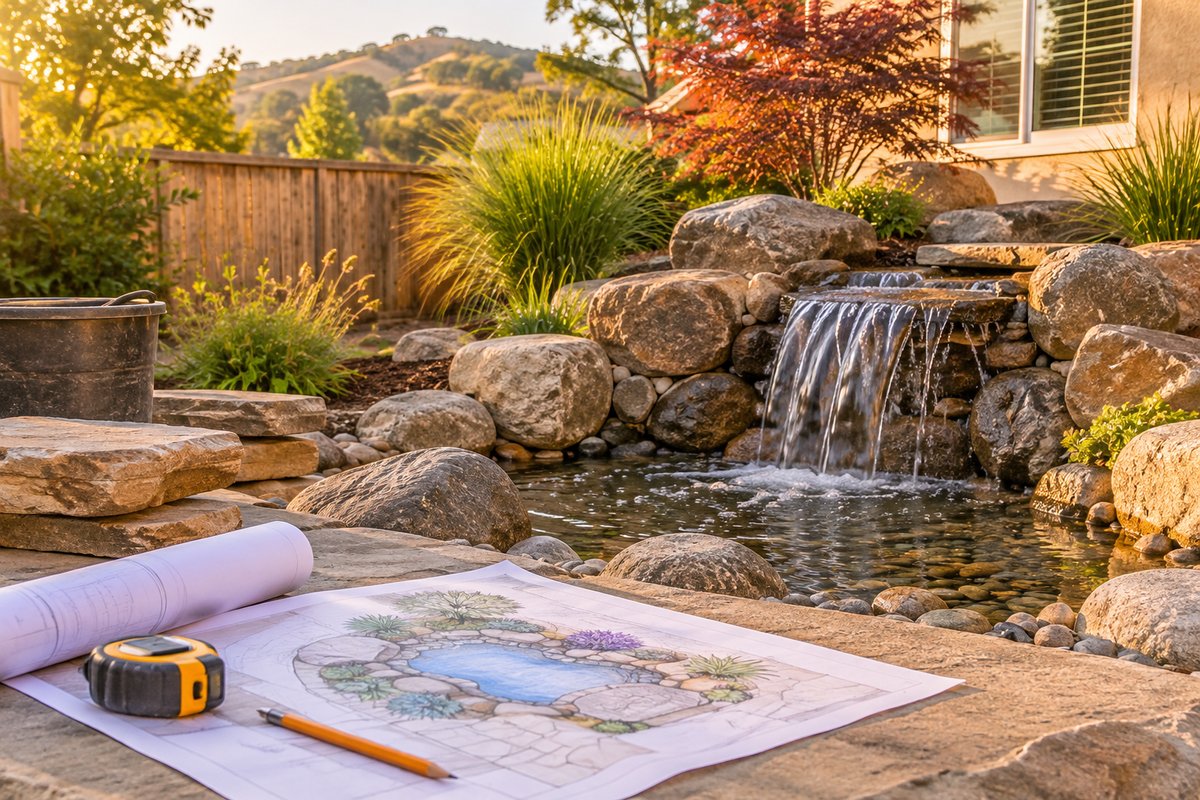
Planning Water Features in Rancho Cordova: A Homeowner’s Guide
Thinking of a garden fountain, pondless waterfall, or koi pond in Rancho Cordova? This guide covers practical steps: local permits, HOA rules, utility locating, soil conditions, and scheduling for success.
Start with Permits and HOA Rules
Adding a water feature brings beauty and peace to your Rancho Cordova yard, but it often starts with paperwork. Most projects, from garden fountains to pondless waterfalls, may be subject to permits or homeowners association (HOA) approval. City rules and HOA covenants can affect size, location, noise, fencing, and safety requirements for pools, ponds, and even bubbling urns. Homeowners should expect to coordinate with local offices or their HOA, especially if the feature affects drainage, uses pumps or electrical, or alters visible landscaping.
Start by reaching out to the City of Rancho Cordova planning department and your HOA to determine project-specific requirements. It’s common for authorities to request detailed plans or engineering, depending on scope and location. Always clarify who submits approval requests, and allow time in your planning for any review or revision cycles.
The approval process protects both you and your neighborhood, ensuring projects fit the local character and suit safety codes. Avoid surprises by discussing your water feature ideas early and documenting communication with officials or your HOA. For more information on local services, including power connections needed for lighting or pumps, see SMUD Start, Stop or Transfer Service.
Call Before You Dig: Protect Utilities
Before any digging for a koi pond, utility lines must be located. Rancho Cordova properties typically have underground electrical, gas, water, and communication lines—some in unexpected spots. California law requires you to contact 811 (Call Before You Dig) at least two business days before breaking ground. Professionals will identify and mark underground lines to prevent accidental damage, power loss, and costly repairs.
Never assume lines follow fence lines or sidewalks; past landscaping, repairs, or new construction often shift layouts. Marked utilities guide safe placement of ponds, plumbing, and wiring for pumps or lights, helping to avoid hazards and delays. This is especially important for features like bubbling urns or fire and water features that rely on both power and water access.
If your project coincides with changes to your home electric service (start, stop, or upgrade), coordinate with SMUD’s service portal to minimize disruption. Clear utility marking makes construction safer, protects your investment, and keeps your project on schedule.
Understand Your Lot: Soil, Slope, and Drainage
Rancho Cordova landscapes vary from flat clay soils to rolling slopes with pockets of granite. Soil and contour affect everything from excavation for reflecting pools to how you manage water runoff from a bubbling fountain. Clay soils can hold water, often requiring soil amendment for adequate drainage, while granite areas may need specialized equipment or structural reinforcement.
Evaluate existing drainage patterns on your lot—especially if you plan a larger feature. Poor drainage risks standing water, root rot, or soggy soil that threatens plantings and patios. Consult with licensed, bonded, and insured contractors experienced in local soils to identify any issues before design and construction.
Slope presents both challenges and creative opportunities. A gentle hill can inspire a cascading garden stream or naturalistic pondless waterfall, while steeper slopes may require retaining walls or stepped patios. Always factor your specific lot’s drainage and terrain into your plans for water flow, overflow prevention, and landscape harmony.
Weather Wisdom: Planning for Summer Heat and Winter Rain
Rancho Cordova experiences highs over 100°F in summer and late fall storms that can saturate the soil. Your water feature should be designed for these extremes. In summer, shallow or poorly shaded features—like small fountains—can experience rapid evaporation. Consider deeper basins or designs with moving water, like custom water features, to help reduce evaporation and algae buildup.
Water-wise planning includes selecting drought-tolerant companion plants and minimizing splash or overspray. Maintenance access for topping up water or cleaning is essential, particularly during heat waves or pollen season. During winter, be aware of potential overflow from heavy rain. Well-designed overflow mechanisms, like dry creek beds or hidden drains, help manage runoff and protect nearby patios or walkways.
Monitor upcoming weather using the NWS Sacramento Forecast for Rancho Cordova to plan work windows, especially for excavation or concrete work around your new water feature. Adjust scheduling to avoid rain delays or unexpected heat, which can affect curing and installation quality.
Project Timing: From Design to Walkthrough
Building a water feature—whether it’s a pondless waterfall, garden fountain, or koi pond—is a multi-step process. Planning, design, permitting, construction, and landscaping each have their own timeline. Early design meetings should include a discussion about your goals, local regulations, site conditions, and maintenance desires. From initial sketches to material selection, each step benefits from thoughtful pacing and clear communication.
Approval from city or HOA offices can take several weeks or even months during busy building seasons. Weather windows also influence project duration; some tasks require dry conditions or moderate temperatures for the best results. Rancho Cordova’s climate means the best periods for building involve spring and fall, avoiding the peak summer heat and winter wet spells. Tracking local weather through the NWS Sacramento Forecast helps minimize on-site delays.
Quality results take time. California Hardscapes, led by Marty with decades of experience in concrete and construction, relies on licensed, bonded, and insured contractors to ensure every stage—from excavation to final walkthrough—is completed with attention to detail and respect for your property.
Choosing Features that Fit Rancho Cordova
The character of Rancho Cordova lots ranges from compact suburban yards to expansive landscapes. Choose water features that match your property’s scale, microclimate, and aesthetic. For smaller spaces, bubbling urns and bubblers add motion and sound with minimal footprint and maintenance. For larger parcels or lots with slope, options like garden streams or fire and water features can create a dramatic focal point.
Koi ponds require careful planning for filtration, shade, and accessibility. Their success depends on correctly sizing for fish load, providing adequate circulation, and designing with secure, predator-resistant edges. Reflecting pools offer visual calm, perfect for formal gardens or courtyards where simplicity and modern lines are a priority.
Pondless waterfalls have become popular for families preferring flowing water without open bodies of standing water. Their recirculating design reduces maintenance and addresses many HOA safety concerns. Consider the year-round aesthetics, maintenance needs, and how each design complements your home’s architecture before you commit.
Working with Quality-First Contractors
Water feature construction requires expertise across concrete, plumbing, masonry, and landscaping. In Rancho Cordova, the difference between average and outstanding projects often comes down to skilled execution. California Hardscapes is led by Marty, who has worked in concrete and construction since age 17. Every project is built with licensed, bonded, and insured contractors focused on results that exceed expectations.
This intentional approach means no corners are cut and no unnecessary shortcuts. Designs are matched to your unique lot, factoring in slope, soil, climate, and local regulations. As the work is completed, attention to detail guards against common pitfalls—like poor drainage, unsightly cables, or mismatched materials. It’s this pride in quality and integrity, not price, that continues to set premium water features apart in Rancho Cordova yards.
Whether you choose a custom garden fountain, a modern water wall, or a naturalistic pond, the team behind the build ultimately defines the lasting appeal and reliability of your outdoor space.
FAQ: Water Feature Planning in Rancho Cordova
How do I know if my water feature needs a permit or HOA approval?
Requirements vary by neighborhood and project type. Contact the Rancho Cordova city planning office and your homeowners association before finalizing your design. Factors such as size, plumbing, electrical components, and location near property lines or easements can all affect approval needs.
What soil or drainage issues should I expect in Rancho Cordova?
Many local lots feature heavy clay or mixed soils, which may slow drainage or complicate excavation for features like koi ponds and streams. Steep slopes can also affect runoff patterns. It may be necessary to amend soil, include subsurface drainage, or add structural elements, depending on your property conditions.
How can I plan around Rancho Cordova weather when scheduling my project?
Extreme summer heat and winter rain can lengthen project timelines or affect construction quality. Monitor the local forecast with NWS Sacramento Forecast to identify favorable windows for site work and finishing. Spring and autumn are often the most reliable building seasons.
Plan with Confidence
Creating a water feature for your Rancho Cordova home is a rewarding investment in property value and outdoor enjoyment. Careful planning—covering permits, utility marking, lot conditions, and timing—lays a strong foundation for lasting beauty. Explore product options and find more resources for your project at Request a consultation with California Hardscapes today.
Planning a project in Rancho Cordova, CA?
Call or text 916-741-0633, or email sales@californiahardscapes.com with your address, a short description and a few photos, and we will arrange a consultation.