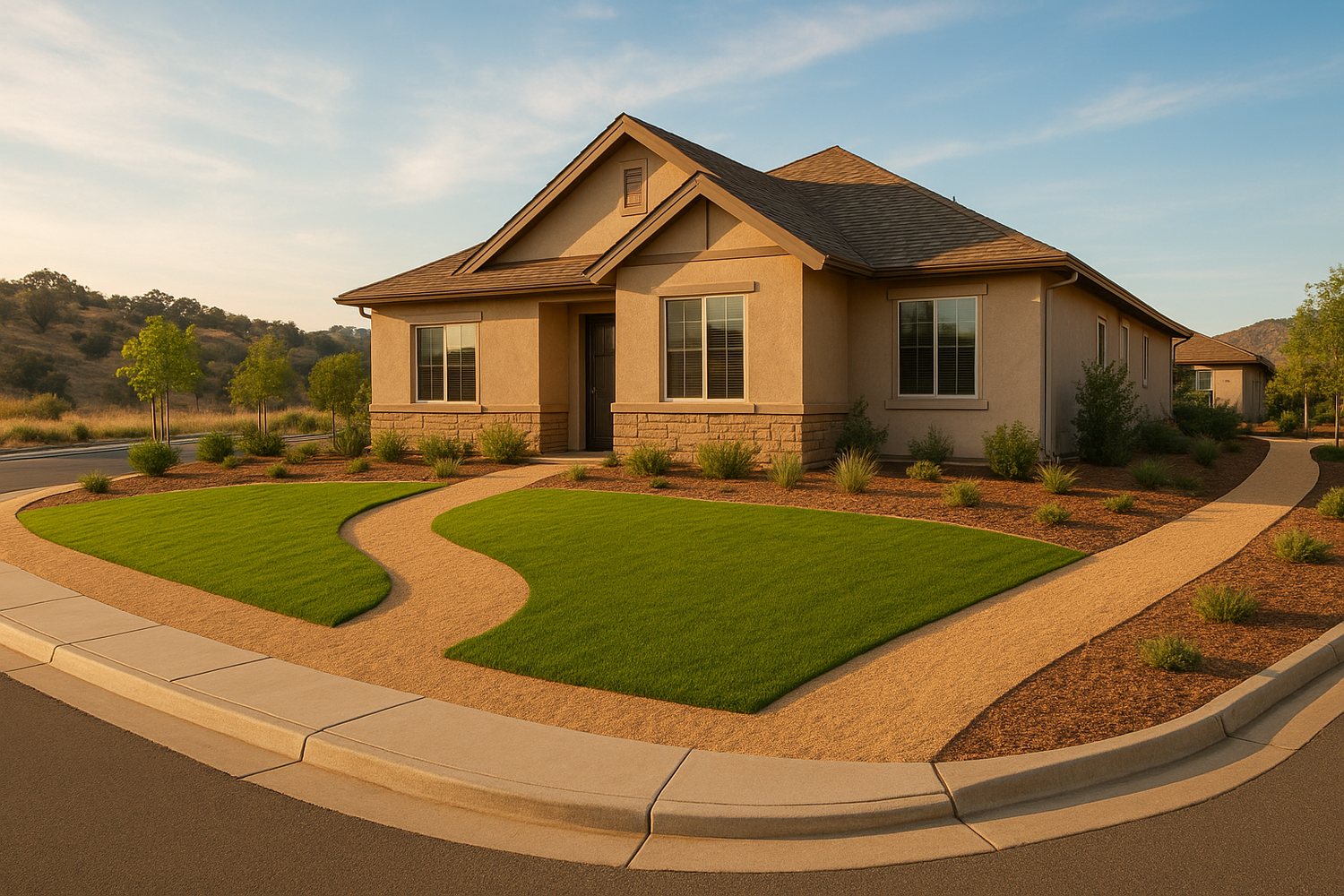
Front Yard Turf vs Drought-Tolerant Landscaping: A Practical Comparison
Explore the real differences between front yard artificial turf and drought-tolerant landscaping in greater Sacramento. Make the right choice for your home.
Homeowners in Rocklin, Roseville, Granite Bay, and surrounding areas face unique choices for water-wise front yard design. Here’s a straightforward comparison between artificial turf and drought-tolerant landscaping, specific to this region’s climate and conditions.
Why Consider Front Yard Artificial Turf?
Artificial turf is growing more popular in Placer, Sacramento, and El Dorado counties, particularly as water costs and drought concerns climb. For homeowners seeking a consistently green and tidy front yard, turf is a straightforward option. Its even appearance can instantly upgrade curb appeal.
The main appeal of artificial turf is low maintenance—no mowing, fertilizing, or irrigation required. Turf stands up to foot traffic and local weather, providing a lush look year-round. This is especially important in neighborhoods with strong HOA appearance standards.
However, artificial turf is not for everyone. Some homeowners prefer a more natural look or want to support pollinators and local wildlife. Assessing your individual needs, lifestyle, and neighborhood expectations is essential.
• Always green and tidy
Learn more aboutFront yard artificial turfbenefits, installation, and design ideas for Rocklin and beyond.
What Does Drought-Tolerant Landscaping Offer?
Drought-tolerant landscaping—sometimes called xeriscaping—uses region-appropriate plants and materials to conserve water. This style is increasingly popular in Rocklin, Folsom, and across the foothills, where water restrictions and dry summers are common. It can express personality through plant selection and creative design.
Often featuring rock, mulch, and low-water shrubs, drought-tolerant yards offer more ecological benefit than artificial turf. Native plants attract pollinators, reduce runoff, and can be adapted to changing climate. Maintenance centers around occasional trimming, weed control, and seasonal clean-up.
While drought-tolerant landscapes can be beautiful and functional, they do require more initial planning and ongoing adaptation than turf. There’s rarely a perfectly uniform look, so personal style and upkeep preference come into play.
• Lower irrigation need
Installation: What to Expect for Each Option
Installing artificial turf starts with removing any existing lawn, grading and compacting the soil, adding a base layer (often decomposed granite or crushed stone), and then rolling out and anchoring the turf. Edging is installed for a clean finish. Professional installation ensures long-lasting results.
Drought-tolerant landscaping might involve removing existing grass, reshaping the space, adding hardscape or mulch beds, and then planting a selection of appropriate shrubs, grasses, or succulents. Irrigation systems often get updated or reduced. Material delivery and layout logistics can be more complex if boulders or dry riverbeds are included.
Both approaches may require permits for significant grading or hardscape changes, especially in some neighborhoods. Timing is another factor—turf installs tend to be fast, while plant-based installations may evolve over several weeks as plants settle in.
• Professional prep is critical
| Feature | Artificial Turf | Drought-Tolerant Landscaping | Traditional Grass |
|---|---|---|---|
| Water Use | Very Low | Low | High |
| Maintenance | Very Low | Moderate | High |
| Ecological Benefit | Low | High | Low |
| Curb Appeal | Uniform green, always tidy | Creative, varied | Green when watered |
| Lifespan | 10–20 years | Plants can be replaced as needed | Unpredictable |
Maintenance and Long-Term Care Comparison
Artificial turf requires minimal maintenance. You’ll want to occasionally rinse or brush it to remove debris, especially under trees. Infrequent weed growth at the seams or edges may need spot attention, but there’s no mowing or routine watering once the turf is installed correctly.
Drought-tolerant landscaping needs a bit more ongoing attention: checking drip irrigation, managing mulch, and occasional trimming or replacing of plants. Some homeowners enjoy seasonal changes in appearance and the routine of tending to the garden beds.
When considering long-term costs and effort, turf stays highly predictable—almost set-and-forget—while drought-tolerant yards deliver ongoing interaction and flexibility. It’s about deciding what kind of maintenance experience you prefer.
• Turf: occasional rinsing, light weed control
Water Use and Environmental Impact
Artificial turf virtually eliminates front yard irrigation. This can save thousands of gallons a year in Roseville, Rocklin, and surrounding water districts. However, it doesn’t support soil health, insects, or birds, and it absorbs heat in direct sun. Turf infill can sometimes affect local runoff if not managed well.
Drought-tolerant landscaping can reduce water consumption significantly—often by 50-70% over a traditional lawn—but not all the way to zero. Thoughtful plant choices improve biodiversity, stabilize the soil, and can help cool the microclimate around your home.
Choosing between these two options means weighing practical water savings against ecological benefit. For many families in this area, either choice marks a major environmental improvement over the classic thirsty lawn.
• Turf: eliminates irrigation
See all yourArtificial Turfoptions for front and back yards, pet areas and play spaces.
Curb Appeal and Neighborhood Fit
Front yard artificial turf delivers a consistently manicured, lush green look, regardless of season. This can fit well in neighborhoods where uniformity, tidy appearance, and green spaces are highly valued by HOAs or neighbors.
Drought-tolerant yards offer a more varied aesthetic, from formal Mediterranean courtyards to wildflower meadows, using rock and native plants. This variation can make your home stand out, provided local expectations are met. Drought-tolerant design is gaining acceptance in established communities across Auburn, Folsom, and El Dorado Hills.
It’s wise to check HOA guidelines and observe what’s common on your block. Both styles can be adapted to flow naturally with patios, walkways, or driveway upgrades for a holistic hardscape look.
• Turf: always green and even
Cost Considerations: Upfront and Ongoing
Both turf and drought-tolerant landscaping require an upfront investment for removal of old grass, grading, material delivery, and professional installation. Artificial turf often costs more initially, but the maintenance and water bill savings kick in immediately.
Drought-tolerant yards tend to have lower installation costs if plant selection and rockwork are kept simple, but the need to replace plants, mulch, and adjust irrigation means ongoing (although usually small) outlays. Take the long view: reduced water costs and minimal summer upkeep add up over the years.
Calculating the true cost means considering not just your immediate budget, but also your time and long-term maintenance comfort. Consulting with an experienced outdoor construction partner is the best way to develop a realistic plan.
• Turf: higher upfront, very low ongoing costs
Making the Right Choice for Your Front Yard
Think about the feel you want for your front yard, your maintenance style, and the look that suits your home and neighborhood. Artificial turf and drought-tolerant landscaping each offer unique advantages—and both represent smart, water-wise solutions for our climate.
Assess how you plan to use your outdoor space. For some, consistent play space for kids or pets tips the scale toward turf; for others, a habitat garden or a creative blend of rocks and native plants is more rewarding. Don’t forget to walk your neighborhood and check in with local regulations before proceeding.
Partnering with a contractor experienced in both turf and sustainable landscape solutions can help bring your vision to life. Marty and the team at California Hardscapes are ready to answer questions and help you weigh your options with confidence.
Ready to talk through your front yard project?Request a consultationwith Marty at California Hardscapes.
Planning an artificial turf project?
Call or text 916-741-0633, or email sales@californiahardscapes.com with your address, a short description and a few photos, and we will arrange a consultation.