A Simple Cleaning Routine for Pet-Friendly Turf
Learn a straightforward routine for keeping artificial turf clean and fresh, even with dogs. Get confident, local advice for pet-friendly yards in Greater Sacramento.
Artificial turf is a smart choice for dog owners across Rocklin, Roseville, and nearby communities. With the right care routine, your pet-friendly grass can stay green, odor-free, and beautiful for years.
Why Pet-Friendly Turf Needs Special Care
Synthetic lawns are engineered to take heavy use from dogs, but without a little maintenance, odors and discoloration can creep in. Our dry, sunny region means turf spaces can see even higher usage from pets in summer and fall.
Dogs love to dig and mark their territory, which can leave behind residue and odors on standard artificial grass. Specialized pet turf and infill are designed to resist bacteria and break down messes, but you’ll still want a regular cleaning routine.
Paying a bit of attention to your artificial turf will keep it looking and smelling its best. A simple maintenance habit is key to long-term satisfaction, whether your dogs are occasional loungers or full-time backyard athletes.
For a closer look at our pet solutions, visit thePet-friendly artificial turfpage.
Gearing Up: The Right Tools for the Job
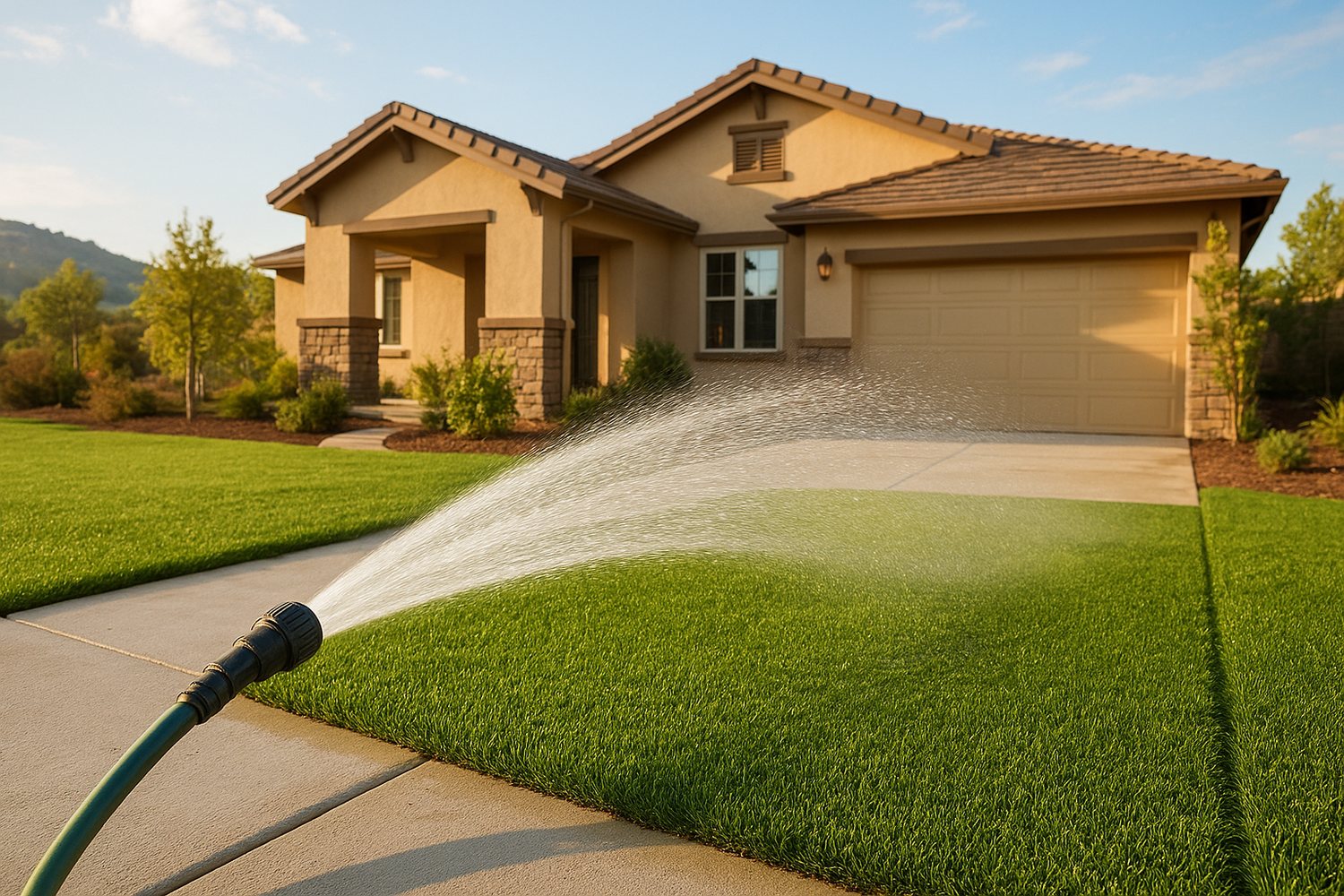
To keep your turf fresh and hygienic, you don’t need specialty products—just a handful of practical, local-friendly tools: a stiff-bristled broom, a hose with a spray nozzle, and a scoop or baggie for solid waste.
Certain areas benefit from enzyme cleaners made for artificial grass, especially where urine odors linger. These are widely available at pet or hardware stores and are safe for most turf fibers when used as directed.
A leaf blower can help remove dry leaves, pollen, and pet hair that settles into turf blades. Choose low to moderate speed to avoid disturbing infill. Focus on tools that fit your yard’s layout and the size of your dog.
- Stiff push broom for brushing fibers
- Garden hose with strong spray nozzle
- Enzyme cleaner (optional, for odor control)
- Pet waste scoop or bags
- Leaf blower (optional, for debris)
Daily and Weekly Care, Made Simple
Just as you’d clean a natural lawn, spend a few minutes each day removing solid pet waste—this stops odors before they start. Bag solid waste right away with a scoop or dog bag. Hose down any high-use potty spots weekly to keep them fresh.
If you notice odors after rinsing, use a turf-safe enzyme or vinegar-water solution. Spray generously, let it work for 5–10 minutes, and rinse again. Avoid bleach or harsh chemicals, as they may break down turf fibers in the summer heat.
Weekly, give your turf a brisk brush with a stiff broom. This lifts up flattened grass blades and keeps infill evenly spread. Periodic brushing is especially important in areas where pets run or lay down most often.
| Turf Cleaning Task | How Often | Tools Needed | Ideal Time of Day |
|---|---|---|---|
| Pick up solid waste | Daily | Scoop or bag | Morning/Evening |
| Hose down potty spots | Weekly | Garden hose | Evening |
| Brush turf blades | Weekly | Stiff broom | Morning |
| Apply enzyme cleaner | Monthly or as needed | Spray bottle, brush | Cool part of day |
| Blow/rake debris | Monthly | Leaf blower/rake | Any |
Monthly Deep Clean Techniques
Set aside time every month for a more thorough clean. Start by clearing away leaves, hair, or other yard debris. A light pass with a leaf blower makes this easy, but a broom works well too.
Next, rinse your whole turf area with a hose, working from one end to the other. Use more focus on pet ‘hot spots’ where accidents commonly happen. If stubborn odors or staining remain, apply enzyme cleaner generously and scrub lightly.
Deep cleaning also helps prevent bacteria buildup—a real challenge in the warm Central Valley climate. Consistent monthly care keeps both pets and people comfortable, discouraging digging and keeping your yard ready for entertaining.
- Remove all debris and lint monthly
- Rinse entire area thoroughly
- Treat odor spots with enzyme cleaner
- Brush to raise flattened areas
Weather Factors: What Local Homeowners Should Know
Our hot, sunny days mean turf dries quickly after rain or cleaning, but UV and extended heat can sometimes stress turf fibers. Early morning or evening is usually best for routine brushing and rinsing in Rocklin, Folsom, and surrounding towns.
In winter, rainfall can help flush your turf but don’t rely solely on precipitation—rain may not be enough to keep up with pet activity. During dry spells, plan on hosing down at least weekly and after gatherings.
Pollen, oak leaves, and dust are seasonal realities across the Sacramento foothills. A monthly blower session or more frequent brushing keeps turf clear and reduces stuff that can trap unwanted smells.
Read our complete list ofArtificial Turf optionsfor every type of yard.
Tackling Stubborn Odors and Wear
Persistent odors can build up in areas where pets favor a particular spot. First, thoroughly clean the area and apply an enzyme cleaner or a turf-safe deodorizing spray, repeating as needed until odors fade.
For tough stains or repeat offenders, let the cleaner soak longer—up to 20 minutes—then scrub gently with a nylon brush and rinse thoroughly. If smells or stains return, replacing the infill material underneath may be necessary.
Heavy-use areas can also begin to mat down. A power broom service (available from landscape suppliers) or more frequent brushing helps restore the upright look and feel of your pet turf.
- Treat odors with enzyme cleaner
- Soak and scrub tough spots
- Consider infill replacement if needed
- Use power brooming for matted turf
Protecting Your Investment: What to Avoid
Avoid harsh chemicals—bleach, ammonia, or undiluted vinegar can decolor turf or break down infill, especially in Placer County’s high-UV environment. Always use lawn-safe cleaners specifically designed for artificial turf.
Don’t allow standing water; poor drainage can mean odors, slick spots, and even ruined turf base over time. Regularly check for compacted soil, low spots, or obstructions in your turf’s drainage system.
Prevent pets from digging at the turf edges by installing secure borders and supervising play. Reinforce perimeters with landscape rock or edging to discourage inquisitive paws and reduce the risk of turf separation.
When to Bring in the Pros
If repeated odor and drainage issues persist, it could indicate underlying installation challenges. Professional maintenance may be needed to refresh infill, adjust base layers, or recommend upgrades for heavy-pet households.
Some cleaning tasks are best left to the experts, including power brooming and infill replacement. These are available through reputable landscape and hardscape contractors in our area who know local turf systems inside and out.
It’s smart to check in with your original installer or a specialist for advice before attempting deep repairs. An expert can tailor recommendations to your lawn, soil, number of pets, and your outdoor space’s layout.
- Pro help for persistent issues
- Power broom and infill upgrades
- Consult for installation fixes
If you have questions or want personalized advice, feel free torequest a consultation.
Planning an artificial turf project?
Call or text 916-741-0633, or email sales@californiahardscapes.com with your address, a short description and a few photos, and we will arrange a consultation.