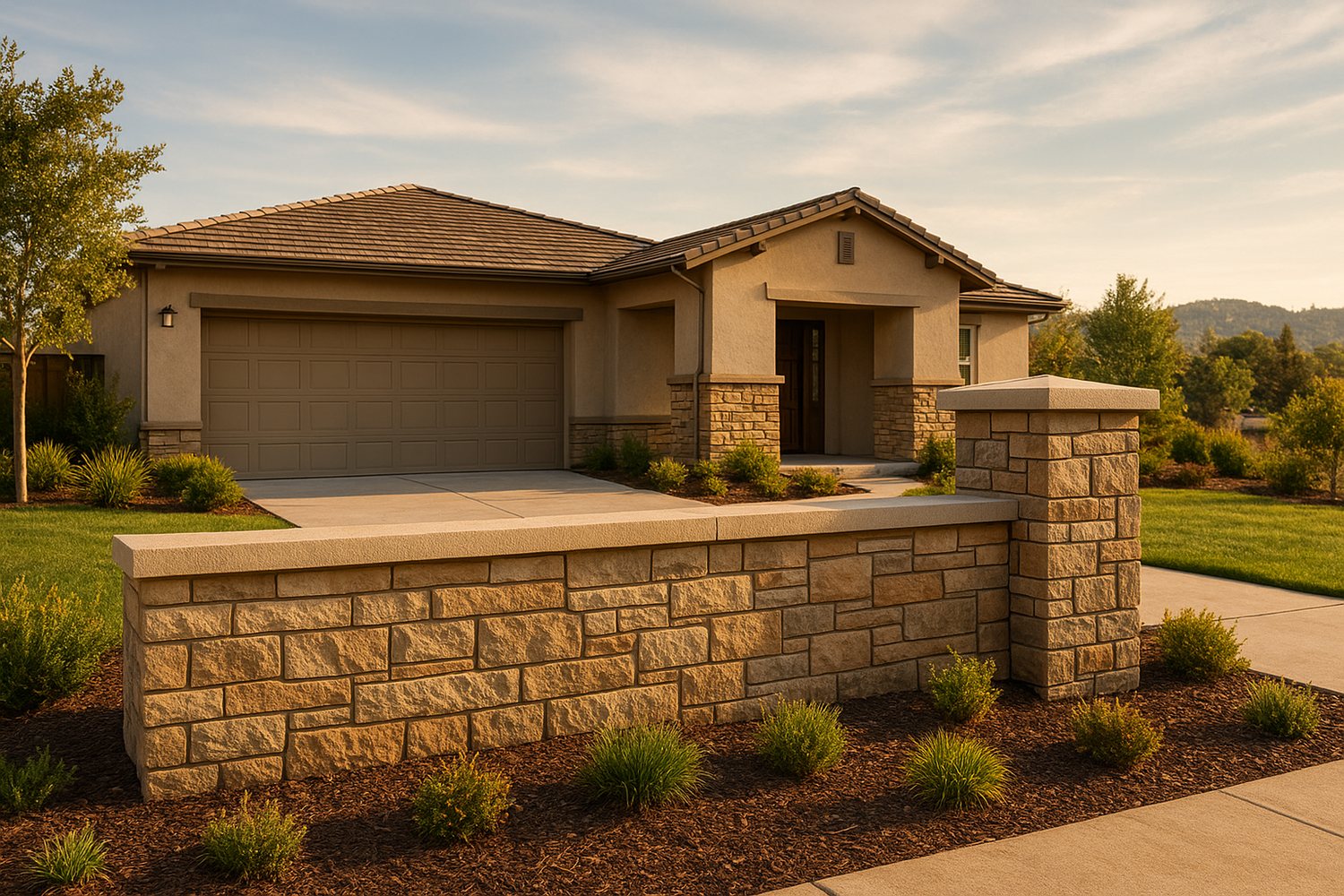
Front Yard Walls That Add Curb Appeal in Placer and Sacramento Counties
Thoughtfully designed front yard walls can turn an everyday driveway into a standout feature. Explore practical design ideas for lasting curb appeal.
Front yard walls and driveway retaining walls do more than hold soil—they shape your home’s first impression. Here’s what really works locally.
Why Front Yard Walls Matter for Curb Appeal
Front yard walls, whether low garden borders or substantial retaining structures, define the entrance to your home. In Rocklin, Roseville, Granite Bay, Folsom and surrounding communities, a well-designed wall does more than serve a practical purpose—it sets the tone for your property. Materials and scale play a vital role in framing your home with distinction.
Driveway retaining walls provide necessary support on sloped lots and help create usable land for landscaping or additional parking. But with attention to style, they also become an extension of your landscape design. The right wall balances hard lines and natural elements, complementing your home’s architecture.
In neighborhoods where first impressions count, thoughtful wall placement and materials can increase perceived value. The most successful walls don’t shout—rather, they guide visitors and passersby with subtle craftsmanship.
Benefits:
For more ideas and decision help, see theDriveway and front yard wallspage.
Choosing the Right Materials for Local Conditions
Our region has its own climate considerations, from soils containing granite and clay to swings between hot summers and wet winters. Select wall materials that both handle exposure and blend naturally with the landscape. Concrete block, stone, and integrally colored concrete are all proven for this area.
Concrete retaining walls, especially those with a textured or colored finish, offer durability and can be designed to echo surrounding landscape rock or masonry on your house. Natural stone brings a timeless look and works well in neighborhoods with a mix of woodland or rural characteristics.
Think about longevity, not just appearance. Materials like interlocking masonry block combine strength with a range of styles. Make sure your choice supports both the look and practical needs—especially important on sloped properties in Auburn or Folsom.
Considerations:
Design Elements That Elevate a Wall
A straight, utilitarian wall does the job—but a wall with thoughtful design details stands out. Consider varying heights, setting tiered walls, or following gentle curves to soften the look and introduce visual interest. Tiers let you create planters or terraces, providing space for colorful landscaping.
Incorporate wide capstones or ledges for both function and finish. They provide a place to sit or display plants. Use lighting integrated into the wall for added safety and nighttime curb appeal—important for driveways or main entries.
A few design tweaks can make a big difference. Tapered ends, contrasting textures, or columns at the driveway entrance all add interest without overcomplicating the wall’s role. The key is tying colors and shapes back to your home’s style for a unified appearance.
Design Tips:
| Material | Durability | Style Options | Maintenance | Best Use |
|---|---|---|---|---|
| Concrete Block | High | Textured, Colored | Low | Modern/traditional walls |
| Natural Stone | Very High | Varied, Timeless | Very Low | Rustic/woodland homes |
| Masonry Block | High | Multiple | Low | Structural & tall walls |
| Exposed Aggregate | High | Contemporary | Low | Accent features/driveways |
| Timber (for low walls) | Moderate | Rustic/natural | Medium | Short/temporary walls |
Blending Walls with Landscaping
Walls and plantings should work together. In local neighborhoods, layering shrubs and perennials in front of a retaining wall softens hard lines and blends built elements with the surrounding yard. Choose drought-resistant plants adapted to our Mediterranean climate.
Tiered retaining walls offer built-in opportunities for pockets of color and texture. Try mixing low-growing groundcovers, ornamental grasses, and seasonal flowering plants for visual interest year-round. Use mulch to unify planting beds and help retain moisture under the hot summer sun.
Don’t overlook the importance of transitions—steps, pathways, and lighting. Using the same stone or paver material across walls, borders, and walkways helps create a seamless effect from the street to your front door.
Landscaping Ideas:
Matching Wall Style to Architecture
The best curb appeal comes from walls that feel intentional, not tacked-on. Take cues from your home’s roofline, façade textures, and dominant colors when planning wall details. Tuscan, Craftsman, or modern styles each have go-to colors, capstone shapes, and wall profiles.
For homes with strong architectural statements—columns, arches, stone veneer—echo these in your retaining or driveway wall design. Simpler homes often benefit from clean-lined, textured concrete or subtle masonry treatments. Consistency in style builds a sense of purpose.
When in doubt, subtlety wins. A classic concrete block wall with integral color and matching capstones blends well with Placer County’s range of home styles and works with both traditional and modern landscapes.
If you’re exploring wall options, browse ourRetaining Wallsoverview.
Durability and Local Requirements
Retaining walls above certain heights need to meet building codes for structural strength, drainage, and sometimes setback from the property line. Working with an experienced contractor matters: knowledge of local soils, engineering, and municipal rules helps avoid surprises during construction.
For long-lasting results, drainage behind the wall is as important as the wall material itself. French drains, weep holes, and properly compacted backfill prevent water from pushing against the wall—an issue especially after heavy winter storms in this region.
Homeowners in Folsom, Auburn, or Rocklin should look for solutions that won’t require frequent maintenance or repair. Well-built concrete or masonry walls with proper reinforcement hold up to seasonal shifts and changing rainfall patterns.
Driveway Retaining Walls: Approaches That Work Here
Driveway walls serve both design and function. In granite-rich soil or on sloping entries, retaining walls built alongside driveways prevent erosion and support paving. California Hardscapes regularly sees homeowners needing both gentle landscape walls and engineered solutions for terrain changes.
A practical approach is to use walls as a transition—a low wall at the street, rising as the driveway elevates toward the home, possibly incorporating seating or lighting. For narrow lots, consider taller walls that maximize flat space while reducing the visual impact with planting beds.
Choose materials that blend with driveway pavers or poured concrete drives. Coloring, stamping, or exposed aggregate can help driveway walls feel less like utility structures and more a welcome feature.
Starting Your Wall Project
The first step is a walk-through of your property. Identify grade changes, water patterns, and how the front entry is used daily. Layout options might involve one substantial wall or a series of terraces. Your contractor should help you balance function, code, and curb appeal.
Gather material samples—block, stone, colored concrete—and compare them against your home in daylight. Discuss where to introduce planters, lighting, or steps into the design for usability and aesthetics. Good preparation avoids regret and helps guide your decisions.
Look for a construction partner with regional experience who can offer advice from the earliest design stages to finished installation. Curb appeal starts with a conversation about what’s possible and how it will hold up in our local conditions.
Ready to plan your project?Request a consultationwith California Hardscapes.
Planning a retaining walls project?
Call or text 916-741-0633, or email sales@californiahardscapes.com with your address, a short description and a few photos, and we will arrange a consultation.