Retaining Wall Drainage: Where Should the Water Go?
Proper retaining wall drainage prevents structural and landscape issues for California homes. Learn where drainage water should go and why planning is key.
Many retaining walls in Placer and Sacramento counties fail not from poor construction, but from poor drainage planning. Here’s how to make sure water ends up where it should.
Why Retaining Wall Drainage Matters
Water is the biggest threat to a retaining wall’s life and your home’s landscape. Poor planning leads to hydrostatic pressure that pushes against your wall—often causing cracks, bowing, or total collapse. In our region’s clay-based soils, drainage is especially critical after heavy winter rains and irrigation cycles.
Retaining walls without proper water diversion can cause soggy lawns, damaged hardscapes, and costly basement moisture problems. That’s why it pays to plan—not just for how water moves through your wall, but where it ends up. Every homeowner should ask: where exactly will the drainage go?
In northern California neighborhoods like Rocklin, Roseville, Folsom, and Granite Bay, drainage isn’t about luck. It’s about making informed choices, from permeable backfill to drainpipe layouts that ensure water flows away efficiently and legally. Let’s break down what you need to consider.
- Water can build up quickly during storms or irrigation
- Improper drainage may damage walls and neighboring lots
- Clay soils amplify drainage importance
If you want to learn more about proper retaining wall drainage, visit ourRetaining wall drainageinformation page.
The Basics: How Retaining Walls Handle Water
A well-built retaining wall does more than hold back soil—it manages water movement. Most walls use gravel backfill, filter fabric, and perforated drainpipes (often called ‘French drains’). These components let water escape without carrying soil with it, reducing the pressure on your wall.
Drainage pipes sit at the base of the wall and collect water, channeling it to an outlet. In mild slopes, weep holes may be used instead, but larger or taller walls in our area almost always need drainage pipe. The system’s performance depends on both the design and where the drainage line actually takes the water.
The ultimate goal? Make sure water doesn’t pool behind the wall or empty onto your walkways or neighbor’s yard. Understanding these basics is step one, but location planning is where most mistakes—and risks—happen.
- Most walls in our area require proper drainage systems
- Gravel and fabric prevent clogging and erosion
- Outlets direct water away from foundation and footpaths
Where Should Retaining Wall Drainage Water Go?
The most important drainage question isn’t ‘do I need it?’—it’s ‘where will all this water go when it leaves the retaining wall?’ Local rules, property slope, and surrounding structures all factor in. In many Rocklin and Granite Bay subdivisions, simply dumping water on your side yard or driveway isn’t good enough.
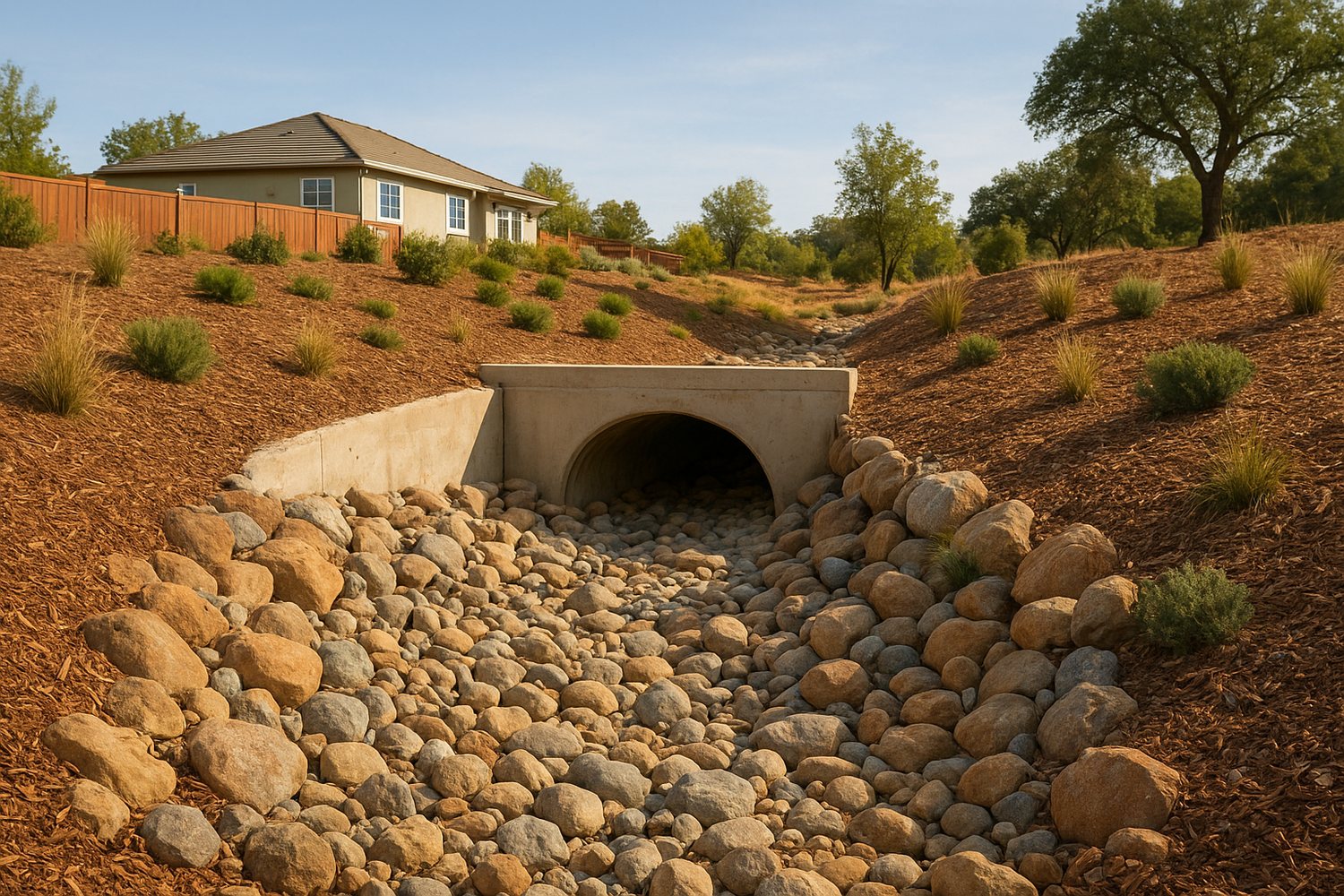
Options include discharging drainage water onto suitable landscaping areas, tying into existing yard drains, or running it to a curb gutter where local code allows. In sloped yards, route water downhill and far from your home, preventing muddy patches and foundation leaks. Never route it toward a neighbor’s property without a clear agreement.
Every property is different. A practical drainage plan is specific: Will the outlet interfere with patios, roots, or existing irrigation? Should you use a pop-up emitter or drain basin? Proactive choices today save headaches—and repairs—down the road.
- Discharge onto landscape, lawn, or a storm drain if possible
- Avoid increasing runoff onto adjacent properties
- Plan outlets away from structures and paths
Local Constraints: Codes and Landscape Features
Placer, Sacramento, and El Dorado counties all have basic site drainage requirements that may apply when building retaining walls. While not every city inspects small landscape walls, homeowners are responsible for preventing nuisance water and erosion affecting public or neighbor property.
Natural land features matter, too. Large trees nearby can divert or disrupt subsurface water paths. Hardscapes—for example, patios or driveways adjacent to a wall—may need special outlet placements or coordinated drainage. Review plans with an experienced professional who knows the specific rules and typical obstacles in your neighborhood.
If in doubt, reach out to your local building department or a trusted contractor. Drainage design should work with—not against—property slopes, walkways, and landscape features you plan to keep. Don’t overlook the impacts of even small changes to water’s exit route.
- Check local city or county drainage requirements
- Avoid running outlets through root zones
- Coordinate with existing hardscape plans
Surface vs. Subsurface Drainage: Practical Choices
Draining water from behind a wall can happen in two main ways: surface drainage and subsurface (pipe-based) drainage. Surface drainage moves water over the top or side of your wall into safe outlets, best for low walls handling only moderate rainfall or irrigation.
Most larger or load-bearing walls in our region need subsurface drainage—meaning perforated pipe and gravel. This is a must in clay soils and where stormwater pooling is a risk. The chosen method must fit both the wall’s size and the potential water load from weather and lawn watering.
Combining both methods is common for maximum reliability: subsurface drains handle most of the water, while surface outlets catch extra runoff during heavy storms. This belt-and-suspenders approach takes the guesswork out of our region’s unpredictable weather.
- Surface systems may suit short, low-impact walls
- Subsurface drainage prevents excess hydrostatic pressure
- Combining both gives extra protection
| Outlet Option | When To Use | Pros | Cons |
|---|---|---|---|
| Daylighting | Sloped yards, lowest grade available | Simple, cost-effective, visible outlet | May create soggy patches, erosion risk |
| Pop-up emitter | Flat lawns, patios, aesthetic needs | Discreet, releases only when needed | Requires maintenance, prone to clogging |
| Yard drain tie-in | Existing buried drainage system | Fast water removal, no landscape disruption | May overload older systems, code issues |
| Drain basin | Localized drainage spots | Can double as irrigation feature | Requires regular cleaning, less capacity |
Browse all your local options on our completeRetaining Wallssolutions overview.
Comparing Common Drainage Outlet Solutions
How should you release water safely? There are several solutions, each with pros and cons depending on your property’s shape and local restrictions. Three popular options in this area: daylighting, connection to yard drains, and pop-up emitters.
Daylighting means piping wall water to an exit point at the lowest, downhill grade—typically onto your own lawn or landscape bed. Pop-up emitters, meanwhile, let water out only when pressure builds, keeping your yard tidy. Yard drain tie-ins may be simpler if you already have a buried drainage system.
Match your outlet choice to your landscape, using more than one when needed. Each solution works best in specific situations, so take a strategic approach—and always avoid discharging water to hardscapes or onto neighbors by accident.
Long-Term Maintenance and Performance
Even the best drainage plan can be defeated by neglect. Pipes can clog with silt, roots, and landscape debris; pop-up emitters may stick open or closed. Factoring in easy access points for inspection and cleaning makes a big difference over the life of your wall.
Schedule occasional checks, especially after periods of heavy rain, construction, or major landscaping changes. Make sure outlets haven’t shifted, become blocked, or started draining toward unwanted areas. Your builder can install access points or use clean-out pipes at key bends on longer runs.
Keeping your retaining wall drainage in good shape preserves structural integrity and helps avoid sudden, expensive repairs. A proactive eye and simple maintenance are part of practical ownership, not just construction best practice.
- Check pipe outlets and pop-up emitters regularly
- Keep gravel backfill and catch basins clean
- Look for soggy spots indicating issues after storms
Planning for Success: Work With Experienced Pros
There’s a lot that goes into retaining wall drainage—most of it hidden underground. The best systems are designed specifically for your property’s grades, landscaping, and hardscape plans. Working with a professional helps avoid costly, preventable mistakes.
Contractors experienced in our climate and soil conditions know how to spot potential drainage challenges before walls go up. They can design integrated solutions that factor in city codes, irrigation, mature trees, and nearby hardscapes—saving you future headaches.
Whether you’re just starting a backyard upgrade or replacing an old wall, professional input pays off. Quality drainage design is an investment in your home’s value, stability, and long-term peace of mind.
- Local expertise ensures code compliance
- Tailored drainage matches your property’s needs
- Professional oversight prevents hidden problems
Schedule a practical assessment and tailored plan by using ourconsultation requestform.
Planning a retaining walls project?
Call or text 916-741-0633, or email sales@californiahardscapes.com with your address, a short description and a few photos, and we will arrange a consultation.