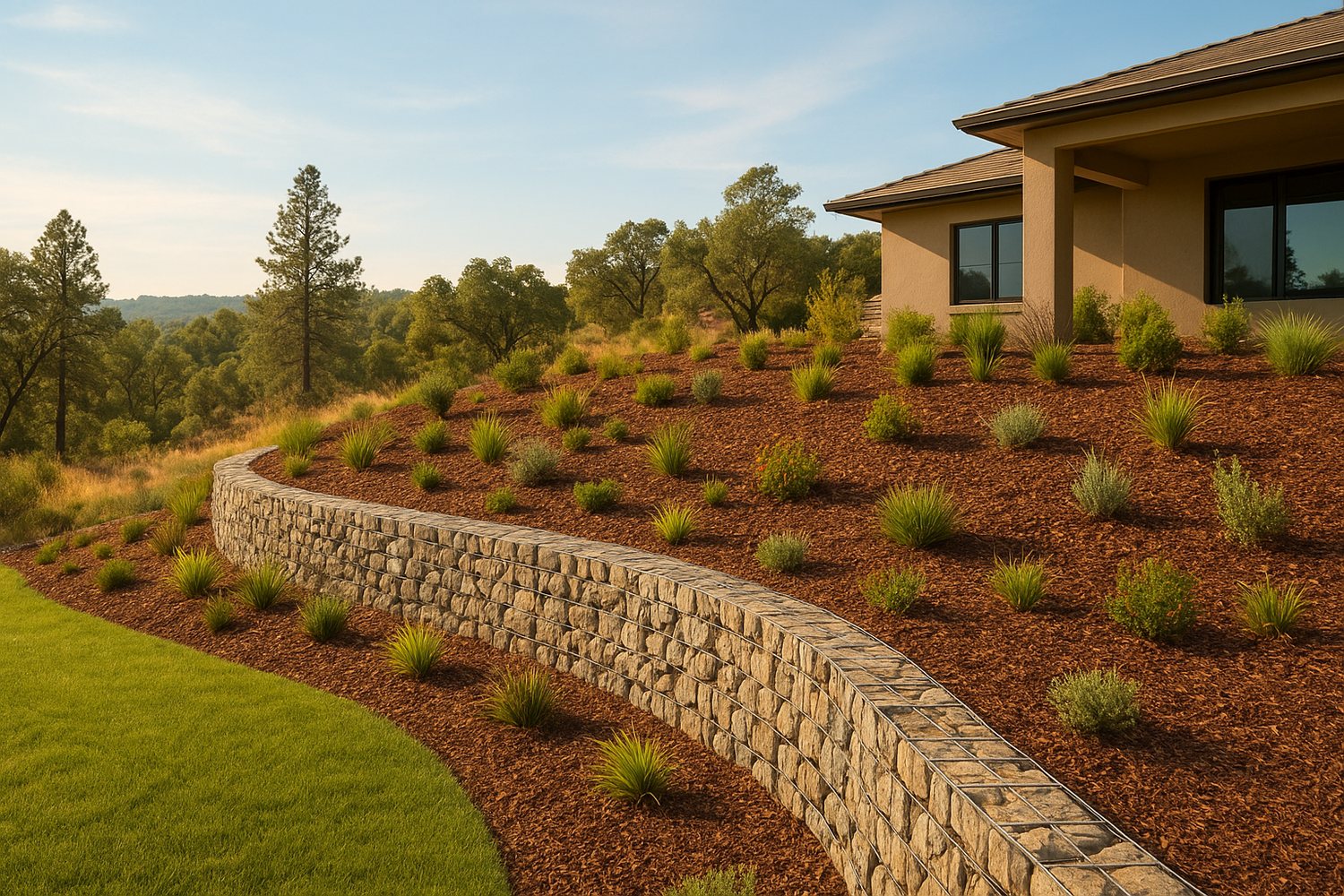
Gabion Walls: Modern Design Ideas for Placer County Homes
Gabion walls are emerging as a versatile solution for stylish, functional retaining walls in the Sacramento region. Discover smart modern uses and design strategies.
Gabion walls aren’t just a rugged fix for slope or drainage issues anymore. Today, they’re a go-to choice for distinctive, modern outdoor spaces across Rocklin, Roseville, Granite Bay, Folsom and Auburn.
What is a Gabion Wall?
A gabion wall is constructed from galvanized steel mesh cages filled with rock or stone. Originally, these structures were practical solutions for erosion control, but recent design trends have elevated their role in residential landscaping. Their raw texture and modular geometry are now prized for modern outdoor spaces.
In Placer, Sacramento, and El Dorado counties, homeowners face hilly properties and changing drainage needs. Gabion walls address these challenges while contributing architectural interest. They require durable materials suited to our region’s weather extremes, supporting both form and function.
Today’s gabion walls can stand alone as accent features or integrate with concrete, wood, or plantings. Their see-through structure makes them lighter in appearance than classic block walls while still providing reliable strength. With the right material, they fit contemporary, rustic, or even minimalist design schemes.
- Built from wire mesh cages and natural stone
- Great for slope stability and visual texture
- Fits both modern and rustic home styles
Want to learn more about construction details and design choices? Visit ourGabion Wallspage.
Modern Styles and Placement
Modern gabion walls aren’t limited to straight property lines. Creative placements include curved planters, tiered terraces, or as part of a multi-material retaining system. Stone choices range from tan local river rock to dark slate to brighten or ground your outdoor palette.
Gabions can be strategic privacy screens or backdrops for patios. Their modular build means you can incorporate lighting, benches, or vertical gardens. For sloped lots, staggered gabion terraces allow for graceful transitions between patio, lawn and garden levels.
We often see homeowners pair gabion segments with concrete walkways or seat walls. This blend offers both contrast and cohesion, especially when echoing the stone in patios or fire features. With proper planning, gabions add structure without crowding the space.
- Curve or step walls for new levels
- Use as feature walls or visual screens
- Integrate with lighting, wood, or greenery
Best Stone Choices for the Foothills
Not every rock works equally well in a gabion wall. The right selection depends on size, color, source, and purpose. In Rocklin and Granite Bay, quarried local granites or river rock blends are popular for their durability and natural fit.
Stone size matters—too small and the rocks slip out, too large and gaps appear. Most modern gabion walls feature 4-8 inch stones for stability and visual balance. Regional options like gold decomposed granite or Sierra slate create a sense of place while resisting weathering.
Consider contrast: pairing earth-toned rocks with greenery or capstones gives a modern clean look. For a bolder approach, mix colors or textures, but keep structural integrity in mind for walls higher than two feet. Practical design starts with honest material choices.
- Local granite and river rock work well
- Match stone size to mesh spacing
- Combine colors for a unique look
| Wall Type | Appearance | Drainage | Maintenance | Best Use |
|---|---|---|---|---|
| Gabion | Natural/stoney | Excellent | Low | Slopes, accents, drainage areas |
| Block | Clean/linear | Fair | Moderate | Straight lines, modern patios |
| Poured Concrete | Sleek/solid | Good (with drains) | Low | High load or tall walls |
| Timber | Warm/rustic | Poor | High | Temporary, informal gardens |
Engineering for Our Climate
Placer and Sacramento Valleys see winter storms followed by hot, dry summers. Gabion walls withstand these cycles especially well, since the rock-filled cages drain water rather than trap it. This reduces hydrostatic pressure that can challenge solid concrete or timber walls.
Proper installation starts with compacted gravel bases and level courses. Taller walls or those holding back slopes may need geogrid reinforcement or drainage pipe. Soil conditions vary widely from Auburn’s decomposed granite to Roseville’s clay; each requires its own approach.
Always consider longevity. Galvanized or PVC-coated mesh resists rust, though periodic checks for settlement are wise. For slopes or retaining larger amounts of soil, professional engineering ensures a wall’s safe performance for decades.
- Well-drained structure prevents water buildup
- Mesh coatings resist rust in our hot-cold cycle
- Install on stable, compacted ground
Comparing Gabion Walls to Other Retaining Wall Options
Choosing the right retaining wall comes down to budget, look, and what your landscape demands from a technical perspective. Gabion walls represent one of several strong, modern options for this region.
In Rocklin and nearby areas, block, poured concrete, and timber walls remain common. Each offers different strengths for soil types, wall height, and architectural style. We often suggest gabion as a compelling middle ground: visually interesting, solid-performing, and well-suited for severe slopes.
Consider combining styles—gabion lower tiers with a poured concrete seat wall up top, for example. The most successful retaining walls are those that support your style as much as your soil.
- Timber: rustic, but needs more upkeep
- Poured concrete: strong, sleek, more expensive
- Block: versatile, tidy finish, but less permeable than gabion
Not sure which wall type is right? Compare all in ourRetaining Walls overview.
Incorporating Gabion Walls into Outdoor Living Spaces
In today’s outdoor spaces, a retaining wall needs to do more than hold soil. Gabion features can become planters, fire pit surrounds, or low walls for built-in seating. Their natural shapes blend smartly with boulders and drought-tolerant plantings common in our region.
Gabion walls pair seamlessly with patios and outdoor lighting systems. Lighting within the cages or along their base highlights stone textures for dramatic evening effects. Vertical gardens or vines can soften lines and add seasonal interest, while gabion benches invite gathering.
If you’re updating an older landscape or planning new construction, consider these multi-use gabion elements. They add depth, function, and modern appeal to both new and established yards.
- Use as planters or built-in seating
- Combine with fire features or benches
- Integrate outdoor lighting for visual interest
Maintenance and Longevity
One of gabion’s biggest strengths is its low-maintenance nature. The structure drains naturally, which helps it resist shifting during heavy rainfall. Periodic inspection for settling or rock displacement is helpful, particularly after big storms.
Mesh corrosion isn’t much concern with today’s galvanized or coated wire, but areas in direct irrigation spray should be watched. Occasional tightening or topping-off of loose rocks preserves the clean lines that modern designs demand.
With the right material and careful installation, gabion walls can last for decades in the Folsom and Auburn climate. Regular checks and a little attention keep them secure and sharp-looking year-round.
- Check for settled or loose stones each season
- Monitor mesh for signs of rust—rare with modern coatings
- Minimal upkeep compared to some alternatives
Should You Use Gabion Walls in Your California Yard?
Gabion walls offer a blend of practicality and modern looks—especially suited to the dramatic terrain and bold outdoor lifestyles in Rocklin, Roseville, and beyond. They perform well in challenging soil and moisture conditions, and allow a personal touch through stone selection.
These walls aren’t right for every situation. For very tall or highly loaded walls, poured concrete or concrete block may suit better. But for most residential projects requiring 1-4 foot walls, gabion delivers a strong mix of design flexibility and easy maintenance.
Consult with experienced contractors familiar with local soils and weather. Good planning now leads to lasting, beautiful outdoor spaces—whatever wall material you choose.
- Modern look, versatile placement
- Performs well in varied soils
- Low maintenance and durable
Ready to talk it through?Request a consultationto get expert, local advice.
Planning a retaining walls project?
Call or text 916-741-0633, or email sales@californiahardscapes.com with your address, a short description and a few photos, and we will arrange a consultation.