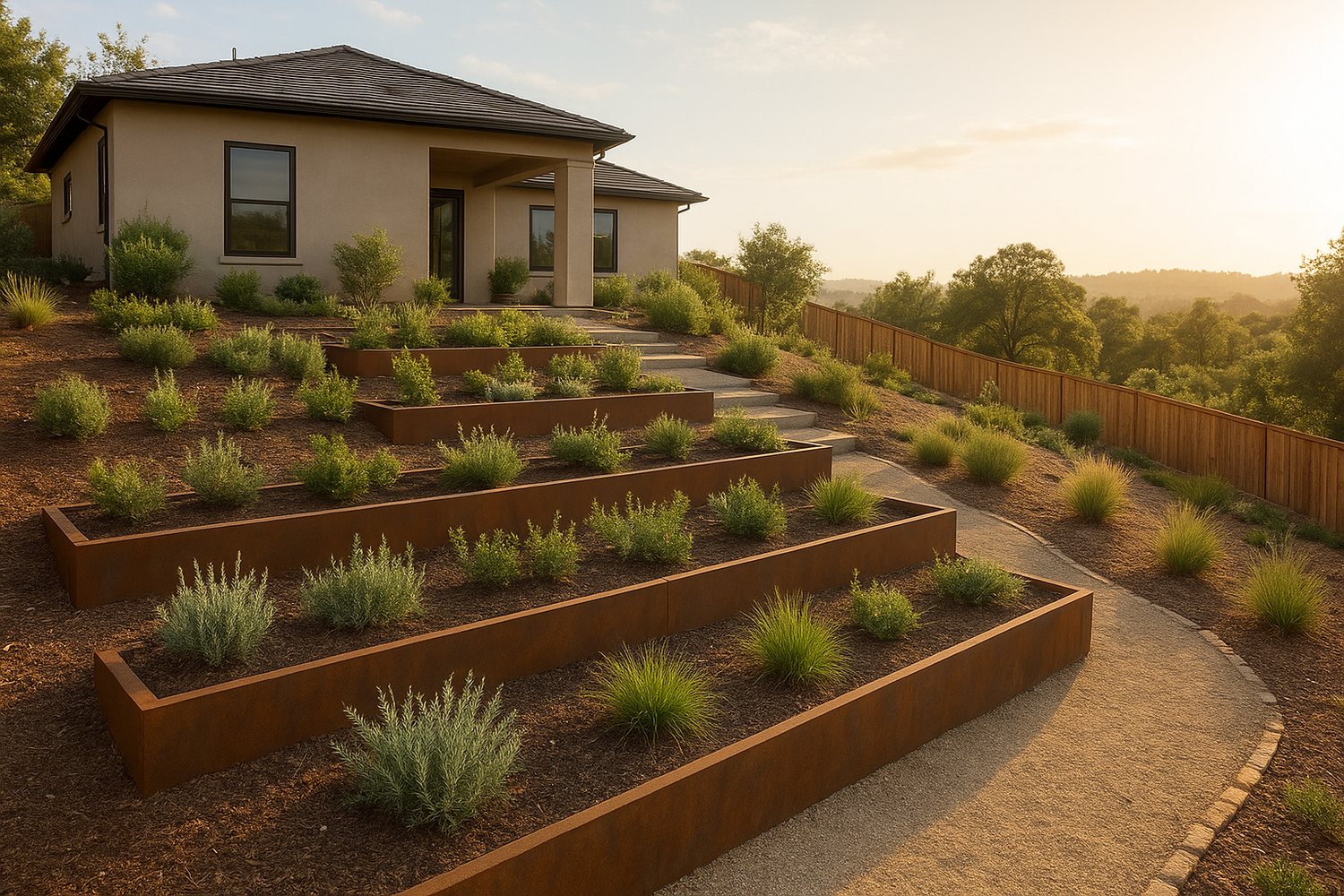
Planning Irrigation for Raised Planters and Garden Walls
Discover practical tips for planning irrigation for raised planters and garden walls. Avoid common pitfalls and keep your garden thriving year-round.
A well-designed raised planter or retaining wall elevates your landscape in more ways than one. But the difference between a thriving garden and a dry patch often comes down to planning the right irrigation system.
Why Irrigation Matters for Raised Planters
In our area’s hot, dry summers, irrigation is not optional for most raised planters and gardens. Plants grown above ground in Rocklin, Roseville, Granite Bay, Folsom, and Auburn dry out faster than those planted at grade. Concrete or block walls can intensify this effect by reflecting heat and blocking natural moisture movement.
Even drought-tolerant natives establish more reliably with some supplemental water, especially in their first seasons. Thoughtful irrigation doesn’t just save you hand-watering time. It also supports deeper rooting, healthier soil, and better plant growth all season long.
A poorly planned system can lead to dry corners, soggy spots, and other frustrating issues. If your garden walls or raised beds are part of a larger landscaping project, it’s wise to plan irrigation before any soil, concrete, or plantings go in.
For more project ideas and information, see ourRaised Planters and Garden Wallspage.
Assessing Your Site and Soil
Every property in the greater Placer and Sacramento area has its own microclimate factors. Consider where morning sun, afternoon shade, or drying winds might affect your planter. Raised beds may be more exposed on hilltops or open areas, making moisture management more important.
Soil type inside your planters also determines irrigation needs. Many planters use imported soil mixes rather than native clay, leading to faster drainage. Test your soil by watering and checking how long it retains moisture—then adjust your plan accordingly.
If your planters back up to retaining walls, check drainage direction and be aware that water can pool or run along the base. Good design starts with knowing your yard’s unique characteristics.
Drip Irrigation vs. Sprinklers: What Works Best?
For raised planters and beds near retaining walls, drip irrigation is usually the superior choice. Drip delivers low, slow water right at the plant roots, minimizing waste and runoff on sloped ground. This is especially helpful where concrete or stone could reflect extra heat.
Sprinklers can work for some ground-level beds, but typically lead to evaporative loss and uneven coverage on raised structures. Plus, above-ground sprinklers can wet hardscape surfaces and promote algae or residue on walls.
Choose thick-walled dripline or individual emitters, depending on plant layout, and consider adjustable flow rates for flexibility. A well-designed drip system keeps plants hydrated without watering the wall or walkway.
- Drip lines or tubing along each row of plants
- Pressure-compensating emitters for even flow
- Timer or smart controller for efficiency
| System Type | Water Efficiency | Ease of Installation | Best For | Maintenance |
|---|---|---|---|---|
| Drip Irrigation | High | Moderate | Raised beds, planters, retaining walls | Low |
| Sprinkler Heads | Medium | Easy | Ground-level lawns, large open beds | Medium |
| Soaker Hose | Medium | Easy | Short, straight raised beds | Low |
| Hand Watering | Low | N/A | Small planters, container gardens | High |
Smart Irrigation Solutions for California Yards
Smart irrigation controllers can adjust watering schedules based on weather and season, fitting especially well with drip systems in our region. Many controllers are Wi-Fi enabled, letting you monitor and reset them from your phone—ideal for those busy home schedules.
Moisture sensors placed inside raised planters give ultra-targeted feedback, reducing overwatering and plant stress. Consider a system that can handle multiple zones, especially if you have planters in both sun and shade.
It’s worth investing in quality valves and pressure regulators, as water pressure off city lines in communities like Rocklin and Folsom can fluctuate. The right hardware prevents broken lines or popped drip emitters after a hot afternoon.
Integrating Irrigation with Hardscape Construction
If you’re planning new retaining walls or raised beds, install sleeves or conduits for irrigation lines before pouring concrete or stacking blocks. This lets you pull new drip tubing in the future without tearing up hardscape or soil.
Work with your general contractor or builder to sequence soil delivery, wall building, and irrigation install in the right order. It’s easier to trench, lay pipes, and troubleshoot before walls are backfilled or capped.
California Hardscapes takes a full-project view, coordinating with clients and other trades to ensure irrigation and drainage are ready ahead of schedule changes. Early planning keeps future maintenance simple.
- Use 1.5–2" PVC sleeves across walkways and under walls
- Map out all planter locations before trenching
- Confirm heights for drip line outlets before backfilling
Learn about different wall types in our completeRetaining Walls options overview.
Dealing with Slopes and Drainage
Many area yards are sloped—especially in Auburn and Granite Bay—so retaining walls and raised planters often double as important grading features. Without careful attention, pooled water can lead to soggy beds or put pressure on wall foundations.
Install gravel backfill and perforated drainpipe behind retaining walls to direct excess water away. Make sure planting soils in raised beds drain well but don’t dry out too quickly; adding organic matter helps balance moisture for local conditions.
Water your planters deeply but less often, encouraging root growth while avoiding runoff down the wall face. It’s all about balancing the unique water movement every tier, step, or wall creates.
Ongoing Maintenance and Seasonal Adjustments
Even the best irrigation setup needs occasional maintenance. Check for leaks, clogs, or shifting lines, especially after any heavy rains or during early spring. Flush your drip system once a year to remove sediment, especially if you use well or canal water.
Adjust watering frequency with the seasons—hot summers in Rocklin and Folsom call for daily checks, while late fall through spring may require only occasional moisture. Smart controllers make these transitions almost automatic.
Don’t forget to adjust or shut off irrigation after planting annuals, dividing perennials, or completing any yard work near planters. Small disruptions can leave roots dry or saturated until the next timer cycle.
- Inspect for leaks or clogged emitters monthly
- Recalibrate your controller with the seasons
- Flush drip lines annually
Partnering with a Professional for Lasting Results
Combining expertise in hardscape construction, soil science, and irrigation leads to longer-lasting, attractive planters and walls. A well-installed irrigation system blends seamlessly with your overall design, requiring less intervention and producing healthier plants.
With decades of experience, California Hardscapes knows how to coordinate wall builds, soil delivery, plant selection, lighting, and irrigation installation for long-term success. Our approach saves you future headaches and maximizes landscape value.
If you’re ready to plan or update raised planters and retaining walls as part of your outdoor project, consider reaching out for advice tailored to your home’s layout and our local conditions.
Ready to get started?Request a design consultationwith California Hardscapes today.
Planning a retaining walls project?
Call or text 916-741-0633, or email sales@californiahardscapes.com with your address, a short description and a few photos, and we will arrange a consultation.