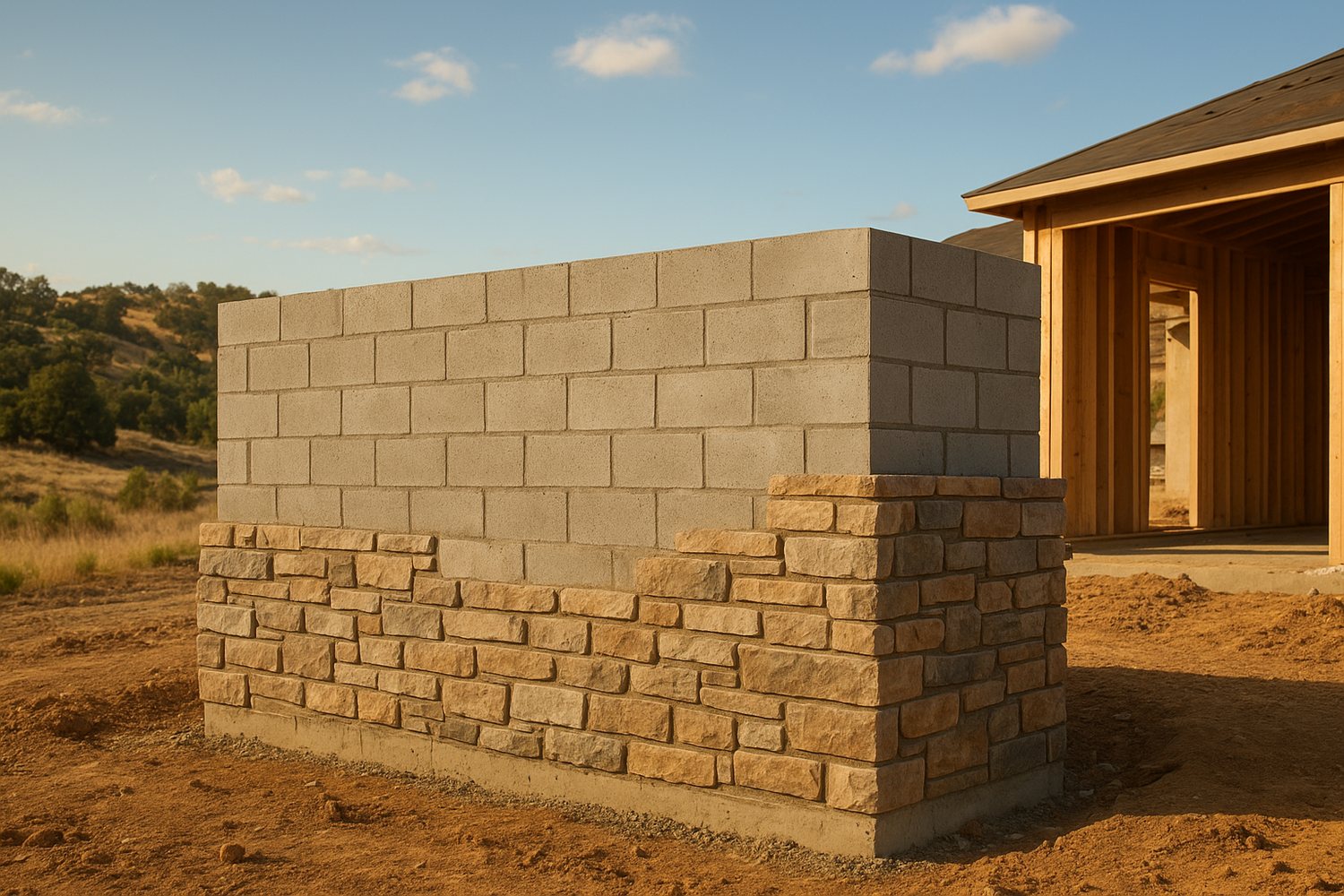
Stone Veneer vs. Stucco vs. Natural Stone for Retaining Walls
Stone veneer, stucco, and natural stone each bring unique strengths to retaining walls. Learn how to choose the right material for your yard’s look and needs.
Choosing between stone veneer, stucco, and natural stone for retaining walls isn’t just about appearance—it’s about balancing durability, style, and budget. In the foothills and communities of Placer, Sacramento, and El Dorado counties, each material behaves a little differently. Here’s what Rocklin-area homeowners need to know.
Stone Veneer Retaining Walls: Pros and Cons
Stone veneer offers the upscale look of stone without the weight and cost of full natural stone. It’s a popular pick for people wanting to blend luxury with practicality. Veneer is a manufactured facing—real or engineered stone—applied over structural block or concrete.
Durability is strong, especially when installed over proper block or poured concrete. In our region’s variable weather, premium stone veneers are resistant to both heat and winter chills. Maintenance needs are minimal, most often just rinsing off dust or gently cleaning spots.
Consider limitations: stone veneer is only as strong as what’s beneath it, so correct substrate and drainage are critical. Repairs for cracking veneer can require patching, but overall, with care and professional installation, it’s a smart, versatile choice for most Rocklin-area homes.
Key points:
For a deeper look at our process and details, visit ourStone and stucco veneer wallspage.
Stucco Veneer Walls: Sleek Looks and Affordability
Stucco veneer retaining walls create a clean, contemporary look that’s right at home in modern and Spanish-style landscapes. Stucco is applied over masonry or concrete block, offering good stability with a budget-friendlier finish compared to stone.
In hot summers and cool, damp winters, properly maintained stucco stands up well in Placer and Sacramento counties’ climate. It resists insects, doesn’t fade, and can be colored, textured, or even re-coated for a freshened look years later.
But stucco is a bit more prone to surface cracks, especially if there’s shifting soil or ground movement. Repairs may be straightforward with quick patching, but ongoing maintenance is smart. It’s best for level areas and walls not exposed to persistent irrigation spray.
Highlights:
Natural Stone Walls: Timeless Beauty and Maximum Durability
Natural stone retaining walls remain the gold standard for old-world charm and unmatched longevity. Built with stacked or mortared fieldstone, granite, or local basalt, these walls offer authenticity and rugged permanence—perfect for large or visible installations in foothill communities.
This option stands up exceptionally well to the Sacramento region’s swings in temperature and occasional heavy rainfall. Somber stone colors blend naturally with oak-studded hills and established landscapes in Granite Bay, Auburn, and surrounding areas.
However, natural stone demands more labor and material cost than veneers or stucco. Heavier stones require skilled stone setting and substantial footings. For homeowners who prize character over a tight budget, it’s hard to beat the lasting value of a genuine stone wall.
Advantages:
| Material | Longevity | Maintenance | Cost | Best For |
|---|---|---|---|---|
| Stone Veneer | 20–40 years | Low—cleaning, rare repairs | $$–$$$ | Versatile styles, mid-range budgets |
| Stucco Veneer | 15–30 years | Moderate—patching, color upkeep | $–$$ | Modern, budget-friendly projects |
| Natural Stone | 50+ years | Very low—just cleaning | $$$+ | Traditional, high-end, statement walls |
Cost, Curb Appeal, and Maintenance: Comparing Your Options
Choosing between stone veneer, stucco, and natural stone walls comes down to more than just looks. Consider how the price, curb appeal, and effort to maintain each option fits into your big-picture landscaping plan—especially in Rocklin, Roseville, Granite Bay, and Folsom.
Stucco leads if upfront cost is the main concern, followed closely by veneer stone for a higher-end appearance at a moderate price. Natural stone often commands the largest investment both in labor and materials, but also pays off in long-term durability and home value.
Think about routine upkeep. Stucco and veneer need the occasional touch-up or cleaning, while natural stone mostly requires little beyond the occasional rinse. Each wall also has specific strengths when it comes to local temperature swings, moisture, and soils.
Performance in Local Soils and Weather Conditions
In and around Rocklin and the Sierra foothills, clay soils and groundwater can challenge retaining walls. Stone veneer or stucco on block or reinforced concrete can be engineered to resist movement and drainage issues. Correct installation can be more important than the material itself.
Natural stone, with its mass and flexibility, is traditionally favored on sloping properties with well-draining soil. But a site with poor drainage might require significant prep, no matter which option you choose. French drains, weep holes, and quality backfill make a world of difference.
Local rainfall spikes and summer heat both play a role. All three wall types can endure these swings, provided they’re built to code and with an experienced eye—something especially important on the clay and decomposed granite soils found throughout Placer and El Dorado counties.
To compare more styles, check out our mainRetaining Wallsoverview for additional options.
Aesthetic Compatibility with Regional Architecture
The right retaining wall should complement—not compete with—your home’s style and the landscape’s character. In Placer and Sacramento’s suburbs, stone veneer lends itself to both rustic and elegant looks. It pairs well with Craftsman, Mediterranean, and contemporary properties.
Stucco shines for clean, simple lines, tying in seamlessly with modern, Southwestern, and Spanish Revival homes. Custom colors or finishes can be matched to trim or house paint. Stone veneer and stucco can both soften the mass of a long wall, breaking up monotony with patterns or accents.
Classic natural stone is at home on larger lots or when creating a standout garden feature—especially if you have an older or traditional-style home. Its variation in color and shape creates a natural transition between lawn, garden beds, and the untamed landscape beyond.
Longevity, Repairs, and Upkeep
Most property owners want a retaining wall that lasts for decades with minimal fuss. Stone and stucco veneers, when installed on expertly prepared supports, will serve reliably for many years, requiring only rare crack repairs or surface cleaning.
Natural stone’s reputation for longevity is well-earned, standing up to the region’s tree roots, shifting soils, and rainy winters without missing a beat. Most repairs are cosmetic, and it’s rare for properly built stone to need structural work.
Think about wear areas—near downspouts, heavy irrigation, or where weeds creep in. Each material can be vulnerable if drainage and grading aren’t handled carefully. An experienced contractor familiar with the local environment is your best defense against preventable issues.
Making the Right Choice for Your Landscape
Start by weighing the look you want, your site’s specific needs, and your comfort with ongoing maintenance. Veneer and stucco can balance modern style with value. Natural stone promises unmatched authenticity and lifespan, but commands a bigger investment and installation effort.
Budget, design preferences, and future plans should all influence your retaining wall choice. Walk your property and imagine how each wall material might enhance key views, terraced beds, play spaces, or patios.
Get advice from local contractors who know the ins and outs of Placer, Sacramento, and El Dorado counties. A professional’s knowledge can help ensure whatever wall you choose will stay beautiful and functional for years to come.
Ready to discuss your own retaining wall?Request a consultationwith our team today.
Planning a retaining walls project?
Call or text 916-741-0633, or email sales@californiahardscapes.com with your address, a short description and a few photos, and we will arrange a consultation.