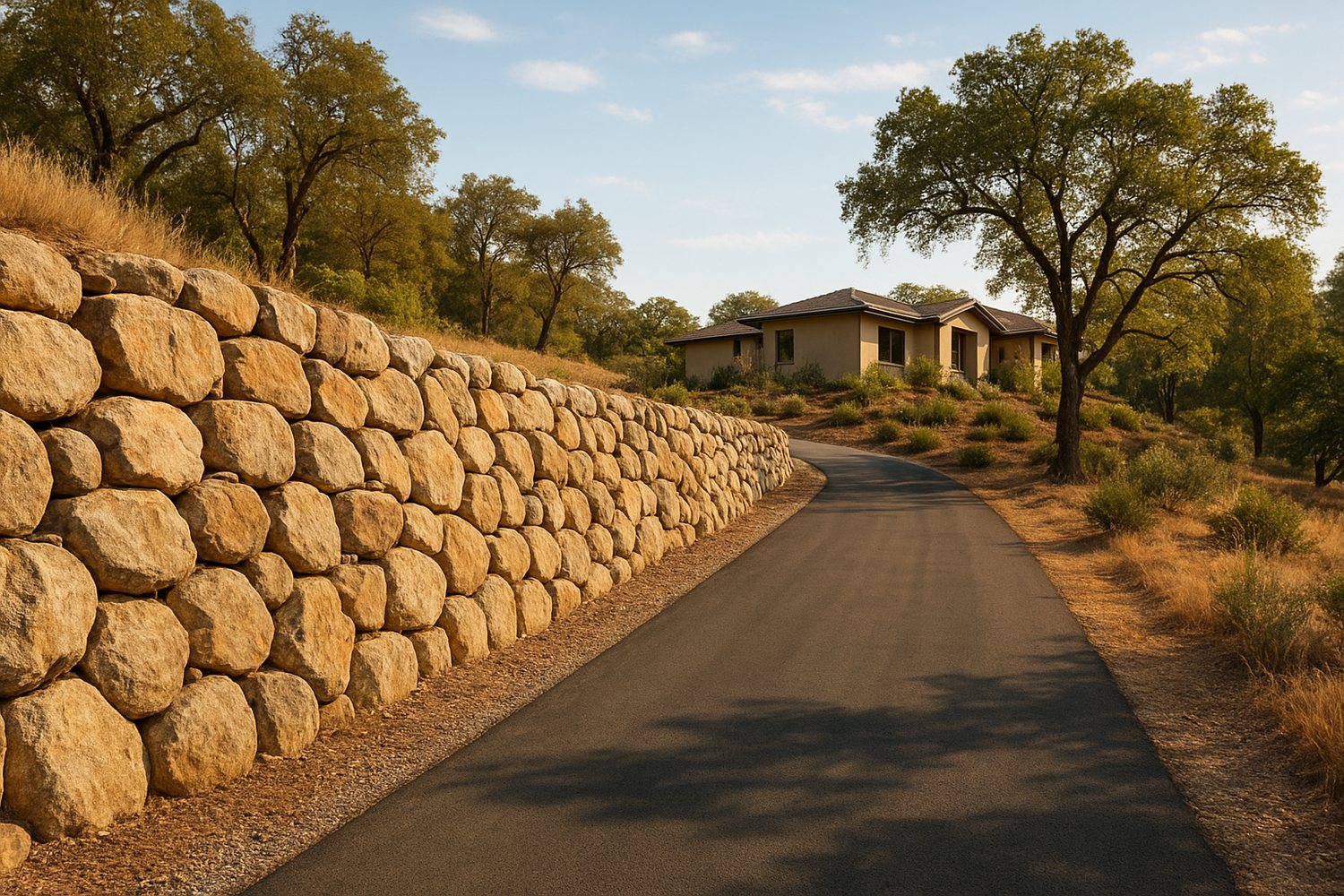
Designing Boulder Retaining Walls That Look Natural
Discover how to make boulder retaining walls look like a seamless part of your landscape. Practical, expert advice for your Northern California property.
Boulder retaining walls can blend beautifully into your landscape when designed intentionally. Here’s how homeowners in the Rocklin region can achieve a natural look.
The Appeal of Natural Boulder Walls
Boulder retaining walls offer a distinct, organic appearance that suits many Placer, Sacramento, and El Dorado County landscapes. Homeowners love the sense of permanence and timelessness the right boulder wall brings. Compared to manufactured blocks or poured concrete, natural stone has unmatched character.
In our region, boulder walls fit especially well where yards meet oak woodlands, rolling hills, or existing rock outcrops. This harmony not only boosts curb appeal but also makes the transition between built and natural elements feel effortless. The result is a landscape that never looks out of place.
Many choose boulder walls for their unique irregularity—no two boulders are ever the same. Balancing natural form with solid structure is key to achieving that cohesive, effortless look. But how do you ensure your wall fits seamlessly? The right design approach and attention to local stone details make all the difference.
Find more natural design inspiration and planning tips on ourboulder retaining walls page.
Choosing the Right Stone for Your Setting
One of the biggest decisions is which type of rock to use. In the Rocklin, Roseville, and Folsom area, local granite, basalt, and river rock are widely used for their durability and visual compatibility with the landscape. Native stone almost always blends best.
When natural integration matters, source boulders that echo what you see in nearby open spaces or your own yard. Color, size, and texture all play a role. Granite lends a classic Sierra foothill vibe, while varied river rock softens edges and brightens shady spots. The stone you choose lays the foundation for the wall’s character.
Before making a final decision, walk your property and take note of existing rocks, soil tones, and sun exposures. This helps you select boulders that look like they belong. Bringing samples to your site will often make the best match clear.
- Granite: durable, classic, regional favorite
- River rock: smooth, varied, softens lines
- Basalt: dark, bold, striking contrast
Planning the Wall Layout to Flow Naturally
Proper layout is what separates a wall that blends with the land from one that looks forced or out of place. Start by observing the contours and slopes of your property, as natural boulder walls should follow the lie of the land as closely as possible.
Avoid creating perfectly straight lines or uniform heights unless the setting truly requires it. Nature rarely follows a ruler, so gentle curves, staggered edges, and varied wall heights all help achieve an organic appearance. Let the largest, flattest boulders anchor the base and work upward with care.
In sloped yards, consider terracing for a cascading effect. Use larger stones at transitions or ends for stability and visual interest. Planning out these features onsite with spray paint or ropes can help you visualize and adjust before any heavy lifting begins.
- Follow natural grade changes
- Stick to soft curves over straight runs
- Blend wall ends into hillsides or planting beds
| Aspect | Boulder Walls | Block Walls | Poured Concrete |
|---|---|---|---|
| Appearance | Unique, organic, blends with nature | Uniform, modern, geometric | Smooth, solid, contemporary |
| Material Sourcing | Local stone, regional variety | Prefab blocks, limited colors | On-site mix, color/stamp options |
| Integration | Mimics local terrain | Easily stands out | Depends on design |
| Cost | Variable, often higher | Predictable, moderate | Variable, sometimes lower |
| Maintenance | Low, may shift over time | Low | Very low |
Techniques for a Seamless, Natural Appearance
How you install boulders impacts both appearance and longevity. The most convincing natural boulder walls ‘bury’ each stone as if it’s emerging from the ground—never simply stacked on the surface. Start with deep, stable footing and partially set each boulder below grade.
Mix boulder sizes and avoid repetitive shapes or obvious patterns. Use smaller rocks or gravel to fill joints, creating the look of ancient walls that have always been part of the land. Adjust spacing between stones to avoid the ‘block wall’ effect and allow space for plantings.
After main stones are set, backfill and adjust soil levels gradually. Tuck in smaller stones, accent plants, or groundcovers to break up outlines and create a lived-in effect. The goal: a wall that looks like it could have been revealed by erosion rather than constructed last week.
- Embed at least 1/3 of each boulder below grade
- Combine different sizes for a natural look
- Use native gravel or soil between stones
Complementing the Surrounding Landscape
A boulder wall should fit comfortably within your landscape, echoing native features. Cluster shrubs, perennial grasses, and even small trees near the wall to mimic how plants naturally gather around rocks in foothill environments.
Include planting pockets or wider spaces between boulders where greenery can thrive. Native species such as manzanita, ceanothus, or deer grass suit the local climate and help blur boundaries between masonry and nature.
Mulching with decomposed granite or river rock ties the whole scene together, and incorporating drip irrigation makes future maintenance easier. Stand back periodically during installation to check the overall effect and tweak plant placements for the most natural look.
- Integrate planting pockets in gaps
- Use mulch to match local soils
- Choose region-appropriate, drought-tolerant plants
Explore other materials and styles on ourRetaining Walls options overview.
Practical Considerations Unique to Our Region
Northern California soils can be rocky, clay-heavy, or experience heavy runoff in winter. Your wall’s base and drainage matter as much as stone selection. Plan for proper weep holes or behind-wall drainage to prevent erosion or bulging.
Wildfires and drought also influence material and design choices. Leave safe clearances between the wall and flammable plants, and limit mulch around the base. Boulder walls are naturally resilient, but thoughtful layout improves fire safety.
Keep in mind local wildlife, too; avoid wall gaps that trap small animals, and select stable, heavy boulders that resist shifting in our earthquake-prone area. With the region’s seasonal temperature swings, professional advice on footing depth is always wise.
- Design for winter runoff
- Adjust depth for clay or rocky soils
- Consider fire-safe plant selection
Working with a Professional for Best Results
Installing a boulder wall requires more than heavy machinery; it takes an experienced eye to create a structure that’s both secure and natural-looking. Experienced crews can read the land, select boulders, and place each with an artist’s skill.
Professional builders know how to properly set and interlock stones to prevent movement and support soil loads, especially critical for hillsides or multi-level terraces. A good partner will keep communication open, working with your ideas and the realities of your landscape.
Ask about sourcing local stone, creative design input, and long-term maintenance advice. Skilled guidance can mean the difference between a wall that blends in or one that looks like an afterthought. Choose a contractor who values details specific to the Sierra Foothills.
- Look for regionally experienced builders
- Review stone sourcing options
- Discuss drainage and soil issues before work begins
Moving Forward with Your Boulder Wall
Whether you’re building for function or beauty, taking the time to plan and design your boulder wall pays off in years of enjoyment. Start by envisioning how a wall can define or connect spaces, prevent erosion, or provide a peaceful backdrop.
Walk your property at different times of day to notice how light, shade, and existing features interact. Bring all your ideas and questions to a professional who understands local conditions and will guide you from the first concept to the final boulder set.
A natural stone wall should look like it’s always been part of your yard. With careful planning, smart material choices, and an expert touch, your boulder retaining wall can become a standout feature while fitting harmoniously into our Foothills landscape.
Ready to talk about your yard?Request a consultationwith our team for expert advice.
Planning a retaining walls project?
Call or text 916-741-0633, or email sales@californiahardscapes.com with your address, a short description and a few photos, and we will arrange a consultation.