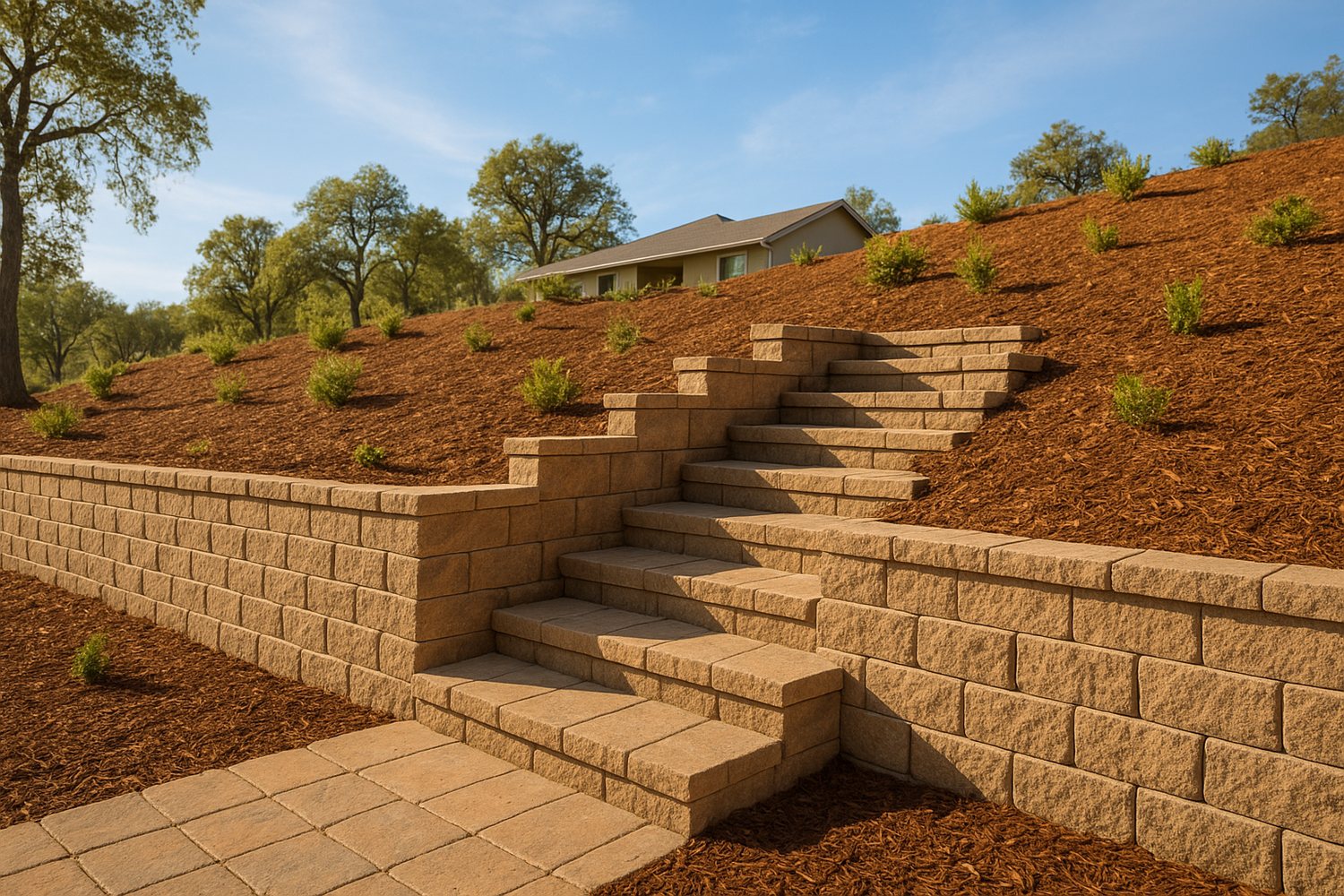
Comparing Segmental Block Retaining Wall Colors, Textures, and Cap Styles
Explore how block color, texture, and cap style affect segmental block retaining walls for homes in Placer and surrounding counties.
Segmental block retaining walls do more than hold back slopes—they set the tone for your entire landscape. In the Rocklin and Sacramento region, your choices in block color, texture, and cap style matter for both curb appeal and long-term satisfaction.
Understanding Segmental Block Walls
Segmental block retaining walls remain the go-to solution for homeowners needing both function and visual interest where grade changes demand support. Unlike poured concrete walls, these interlocking systems use pre-cast modular units that stack securely without mortar. Their versatility in design, drainage, and engineering make them a popular fit for properties across Placer, Sacramento, and El Dorado counties.
Because segmental block walls are engineered to be dry-stacked, they flex ever so slightly, withstanding the seasonal soil shifts familiar to our area. They’re practical for everything from subtle terracing to taller grade separations, where stability and longevity are musts. The system approach enables creative layouts from curves to corners, stairs or planters.
A key benefit: segmental blocks come in a range of colors, textures, and cap styles tailored for the aesthetics and needs of Northern California landscapes—so you’re not locked into a “cookie-cutter” look.
- Strong and adaptable for sloped yards
- Engineered for lasting performance
- Appealing design flexibility
To explore design ideas and construction methods, visit oursegmental block retaining wallspage.
Choosing the Right Block Color
Block color does more than complement your home—it affects how your retaining wall weathers and blends with the landscape. Lighter colors like tan, cream, or sandstone reflect our California sun, helping to keep walls looking brighter as years pass. Earthier tones—charcoal, brown, or moss—tend to mask soil or plant debris and naturally blend with oaks and pines common in Rocklin, Roseville, and Folsom.
Consider your home’s exterior, roof, and hardscape palette when selecting block color. Too close a match can look monotone, too stark a contrast can feel disjointed. Many homes benefit from blocks that either echo soil or stone in their environment or add a subtle accent shading.
Local suppliers often stock a standard range but also offer customization, mixing several pigments in one block for a blended, “tumbled” effect. This can soften the appearance and reduce the visibility of inevitable dust and minor stains.
- Tans: Bright, reflect light, unite with stucco homes
- Charcoal: Grounds design, hides marks
- Mixed blends: Camouflage dust, richer character
Texture Options: From Sleek to Rustic
Texture plays a big role in how a retaining wall reads in your landscape. Some blocks are manufactured with a smooth, almost contemporary finish, while others imitate the chiseling and rough edges of hand-forged stone. Your choice should balance personal style and fit with neighborhood context—Roseville’s suburban lots may lean toward clean lines, while Granite Bay properties set in natural landscapes often use rustic textures.
Split-face is one of the most popular textures: not too rough, easy to keep clean, and generally timeless. Tumbled or weathered finishes highlight shadow and light, boosting depth and hiding small chips or dirt. Smooth units allow a modern, architectural look that reads sleek, but can show stains more easily.
Texture also affects wall safety; rougher finishes provide a non-slip surface on capstones or adjacent stairs. Always preview samples outdoors in changing sunlight to get a sense of how texture impacts appearance and function.
- Split-face: Popular, balanced look
- Tumbled/Weathered: Old-world charm, hides dirt
- Smooth: Modern but can show grime
| Block Color | Texture | Cap Style | Best Uses |
|---|---|---|---|
| Tan/Cream | Split-face | Flat | South-facing/warm, matches stucco, easy to clean |
| Earth Brown | Tumbled | Bullnose | Blends with soil, rustic yards, softer edges for seating |
| Charcoal | Smooth | Sloped | Modern look, hides marks, rain runoff control |
| Multi-color Blend | Weathered | Multi-piece | Disguises dirt, high visual interest, varied properties |
Comparing Cap Styles for Retaining Walls
The cap—the topmost course of your retaining wall—is both a functional and design-critical detail. Caps help shed rain, discourage climbing, and visually “finish” the wall’s profile. Popular cap styles include flat, sloped, bullnose, and multi-piece options, each varying in practicality and impact.
Flat caps are sleek, comfortable for seating, and easy to lay. Sloped caps direct water away and can reduce water stains on wall faces. Bullnose caps offer a rounded, friendlier edge, popular along seating walls or garden beds. Multi-piece caps, often alternating short and long units, break up long stretches visually and provide more interest.
Material and color choices in the caps should complement—not clash with—the blocks below. Some homeowners match caps for a seamless look, while others contrast for a boundary effect.
- Flat cap: Sits flush, best for seating
- Sloped cap: Directs water, keeps walls cleaner
- Bullnose cap: Rounded, softer for outdoor living spaces
How Regional Factors Shape Your Choices
Our hot, dry summers and wet winters in the Sacramento Valley and Sierra foothill communities influence both the look and performance of retaining walls. Lighter block colors resist heat fade and reflect sun, reducing extreme surface temperatures—important for south-facing installs. In shady sites, moss or dark growth can be more visible on pale blocks, so mid-tones or blends may prove more forgiving.
Granite Bay, Auburn, and foothill soils are rich in minerals that can stain or interact with certain block surfaces over many rainy seasons. When selecting textures, consider how much debris your trees drop—rough or tumbled finishes disguise blemishes but can gather organic debris. Flat and smooth options may clean more easily, especially if nearby oaks or pines shed sap annually.
Finally, the local style trends and neighborhood guidelines sometimes influence your freedom in block color or cap style selection. Always check with local authorities or HOA rules before finalizing exterior wall details.
- Intense sun: Favors lighter block colors
- Rain and trees: Favor textures that conceal marks
- Check any HOA or community rules
For side-by-side comparisons, check out our overview ofretaining wall options.
Longevity and Maintenance Considerations
Durability and curb appeal go hand in hand with the right segmental block choices. High-quality pigment helps maintain color under California’s UV exposure. Textures that mimic natural stone are less likely to show small scratches, and sturdy capstones discourage weeds in wall joints. If you expect frequent cleaning—from dust, pollen, or leaves—simple profiles and split-face blocks offer an easier job over time.
Cap stones deserve attention, too. Properly adhered caps reduce chances of shifting or chipping, which can occur with seat walls or in high-traffic areas. Investing in caps with finished edges can prevent snags or sharp corners that might become a concern over years of use.
Maintenance needs are generally minimal with today’s popular segmental systems, but periodic rinsing and occasional re-adhesion of cap stones (if needed) keep your investment looking sharp.
- Sturdy caps prevent displacement
- Rough textures disguise minor wear
- Split-face or tumbled: Easiest to maintain
Combining Style, Function, and Value
Experienced hardscape designers, like the team at California Hardscapes led by Marty, know that segmental block retaining walls are more than just barriers—they’re design features that should gracefully suit your property’s contours and your family’s lifestyle. Color, texture, and cap choice are not just aesthetic decisions but impact value, comfort, and workability over time.
It’s smart to view samples in person, in actual sunlight, and to set them near your home’s existing finishes. This way, you ensure the final result has the personality and cohesion you want. Your final choice is about balance—matching property needs and environmental factors, using what works best for soil, maintenance, and visual goals around homes in Rocklin, Granite Bay, or Folsom.
Work with a contractor who is knowledgeable about local material suppliers and regional best practices, and who listens to your practical priorities before recommending specific designs or products.
- Prioritize lasting appeal and easy care
- Sample block and cap combinations outdoors
- Check for compatibility with existing hardscapes
Next Steps for Your Retaining Wall Project
Ready to move forward? The right segmental block wall begins with an honest assessment of your goals—supporting slopes, maximizing outdoor space, or simply refreshing curb appeal. Start by gathering ideas and viewing samples at local landscape supply yards.
Contact California Hardscapes to discuss how your wall should work and look for your unique property. With decades of wide-ranging concrete and outdoor construction experience, Marty guides each project with the insight only a local expert can provide. Clear, practical design guidance ensures your investment matches both personal and neighborhood style.
From color matching to selecting the safest cap stones, your choices today play out for decades in ease of maintenance and satisfaction. A tailored approach and expert installation deliver premium results, whether you’re building on a hillside in Auburn or updating a backyard in Roseville.
- Take photos of your preferred finishes
- Discuss wall functions with your contractor
- Request samples before making final decisions
If you’d like tailored advice for your landscape,request a consultation.
Planning a retaining walls project?
Call or text 916-741-0633, or email sales@californiahardscapes.com with your address, a short description and a few photos, and we will arrange a consultation.