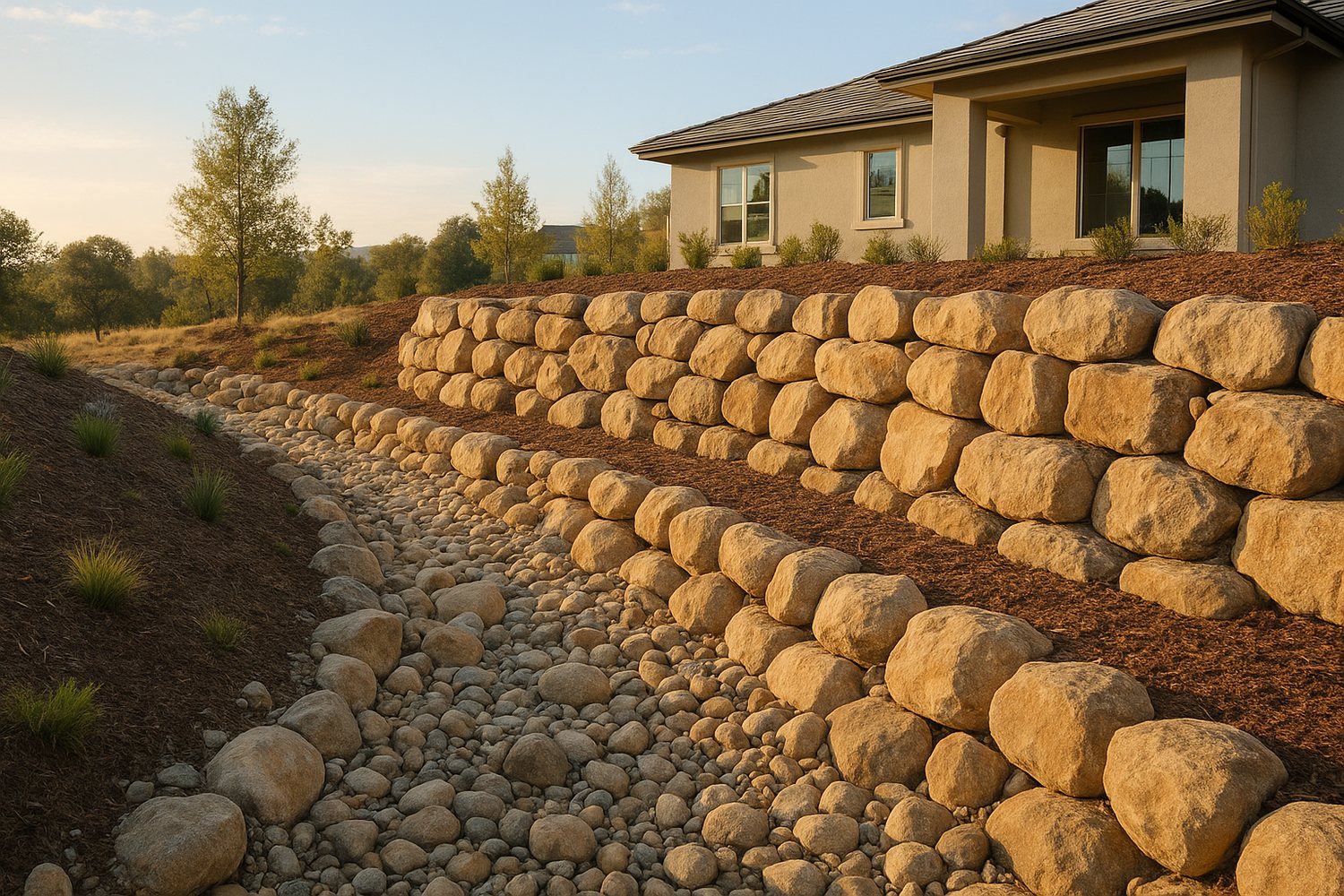
Boulder vs Block: Retaining Walls for Steep Slopes in Placer and Sacramento Counties
Deciding between boulder and block retaining walls for your steep slope? Get practical, region-specific insights from California Hardscapes.
Retaining walls are vital for managing steep slopes in the foothills. Choosing between boulders and blocks could determine your landscape’s stability and style.
Why Slope Matters in Wall Design
Steep slopes are common in Rocklin, Roseville, Granite Bay, Folsom, Auburn, and neighboring areas. These unique terrains require thoughtful retaining wall strategies to prevent soil erosion and property damage. Choosing the right method isn’t just about looks — it’s about protecting your investment.
Steep grades put extra pressure on any retaining structure. This means not every wall system is appropriate or practical in these conditions. Drainage and engineering play a bigger role as angle increases, impacting both longevity and safety.
Homeowners need a wall that’s structurally sound for their land’s slope. Both boulder and block systems have solid track records in our region, but how they handle gravity and water can differ. Understanding your options now can help avoid issues down the road.
For more details about natural stone installations, see theBoulder retaining wallspage.
Boulder Retaining Walls: A Natural Fit
Boulder walls use large, interlocking stones to create sturdy barriers on slopes. In many neighborhoods across Placer, Sacramento, and El Dorado counties, their rugged look blends seamlessly with native landscapes. Boulder walls excel in irregular, natural terrain where rigid block lines might stand out.
The irregular shapes and sizes of boulders mean they can be creatively arranged for stability and effective drainage. Proper placement by experienced crews ensures each boulder supports the next, distributing pressure. On steep ground, well-set boulders resist sliding and movement naturally.
For property owners seeking impact with a natural aesthetic, boulder retaining walls offer unmatched character. However, choosing the right stone and understanding how much setback is needed requires expert planning. Site access and sourcing locally quarried boulders may also factor into the decision.
- Blends naturally with foothill environments
- Adapts to irregular topography
- Excellent for informal or rustic settings
Block Retaining Walls: Orderly Strength
Segmental concrete block walls remain a popular choice in local developments and established neighborhoods. Their uniform size and design allow for clean, modern lines. Block walls are often used to support terraces, patios, and defined outdoor living spaces.
On steep slopes, block walls rely on engineered design to handle intense lateral pressure. Interlocking systems, geogrid reinforcement, and proper drainage make these installations robust, even on dramatic inclines. The modular approach allows predictable construction timelines and reliable results.
Homeowners drawn to a crisp, organized look may prefer block retaining walls. They offer a range of colors, faces, and modular layouts. However, installation often requires precise excavation and may be less adaptable to bumpy, rocky slopes than flexible boulder arrangements.
- Modern, tailored aesthetic
- Predictable engineering and materials
- Ideal for finished, level spaces
| Feature | Boulder | Block | Best Use | Key Consideration |
|---|---|---|---|---|
| Visual Style | Natural/rustic | Modern/organized | Informal slopes | Access/equipment |
| Adaptability | Irregular terrain | Straight lines | Variable grades | Precise excavation |
| Drainage | Natural gaps | Engineered pipes | Wet soils | Maintenance |
| Installation | Heavy machinery | Modular/manual | Open sites | Site prep |
| Maintenance | Low/moderate | Proactive | Steep ground | Annual checks |
Comparing Boulder and Block on Steep Slopes
Selecting between boulder and block depends on your property’s unique conditions. Consider your priorities: Is it cost, ease of maintenance, or matching natural scenery? Both systems stand up to Placer, Sacramento, and El Dorado climates, but each excels in certain settings.
Boulders fit irregular slopes and can hug existing contours without requiring total regrading. Blocks shine when a straight, structural line is paramount, especially for terraces and outdoor rooms. Keep in mind the type of drainage and soil behind the wall will affect both choices.
It’s wise to balance function with form. Boulder walls often require more space and equipment for placement. Block walls typically need thorough planning and base preparation. Consulting with experienced pros, familiar with our local soils and conditions, is essential before committing.
- Match wall choice to site complexity
- Factor in aesthetics, engineering, and access
- Consult with local retaining wall experts
Drainage: The Deciding Factor
Slopes make drainage even more critical for retaining walls. Inadequate drainage builds up hydrostatic pressure, risking wall failure regardless of material. Boulder walls have natural gaps for water to escape, while block systems require integrated drains and weep holes.
Both wall types benefit from gravel backfill and French drains, especially on clay-heavy soils found in many local neighborhoods. The angle of the hill and soil permeability will dictate the complexity of the drainage system required.
Oversight from a professional who understands local rain patterns and water flow is key to wall longevity. Drainage is one area where “set and forget” doesn’t apply — it should always be checked and maintained, especially after stormy winters.
Explore all your options with our overview ofRetaining Wallssolutions.
Access and Installation Considerations
Steep terrain sometimes limits equipment or material delivery. Boulder placements demand heavy machinery and skilled handling, often on narrow hillsides or tight lots. Sometimes access issues make boulder walls less practical despite their aesthetic appeal.
Block wall materials are easier to stage in smaller or fenced backyards, thanks to their modular nature. However, the need for precise setup, base compaction, and step-back levels can extend the prep phase, especially on tough slopes.
A detailed site review helps determine which type is feasible for your property. Factors like tree roots, fencing, and local setback requirements add to the equation, so early planning avoids surprises mid-project.
Maintenance and Longevity on Steep Slopes
Steep slopes put extra demands on any retaining wall over the long haul. Boulder walls, when properly placed and maintained, tend to settle naturally and require minimal upkeep beyond removing weeds or shifting stones as needed. However, inspection is still important after major rain events.
Block retaining walls, due to their precise engineering, can show issues sooner if there’s movement or shifting. Proactive attention to drainage, soil settlement, and wall alignment extends their lifespan and preserves that clean, engineered look.
Regardless of material, schedule annual checks, especially in the first few years. Early intervention is the key to lasting results on challenging hillsides. Work with pros who offer ongoing consultation, not just installation and walk-away.
Making the Best Choice for Your Property
Every hillside is unique in our foothill and valley communities. Carefully weigh the style you want, site challenges, access for equipment, and your comfort with ongoing maintenance. Both boulder and block retaining walls can succeed here with the right planning and installation.
If you prefer a natural look and have the space and access, boulders fit well with our region’s landscape and work best on rugged inclines. For formal spaces, tiered gardens or patios needing precision, block walls provide strength and flexibility.
A site consultation with a seasoned local contractor will dial in the best solution for your property’s grade and purpose. Your retaining wall isn’t just a barrier — it’s a long-term investment in your home’s safety, appearance, and functionality.
- Assess your site’s slope, access, and style needs
- Prioritize engineered drainage solutions
- Consult pros with regional experience
Ready to plan?Request a consultationwith California Hardscapes for expert advice.
Planning a retaining walls project?
Call or text 916-741-0633, or email sales@californiahardscapes.com with your address, a short description and a few photos, and we will arrange a consultation.