Material Selection for Hardscape & Landscape Projects
Every enduring outdoor space starts with the right materials. Our service hub will help you confidently choose the best stone, soil, and construction materials for long-lasting results.
Choosing Quality Materials Sets the Foundation for Lasting Results
At California Hardscapes, how you build matters just as much as what you build. Material selection is the launching point for a project that stands the test of time, looks great, and requires less upkeep over the years. Whether you’re refreshing curb appeal, upgrading outdoor entertaining areas, or planning practical solutions for drainage, the foundation is always quality materials, sourced and installed with skill.
Our approach is straightforward: we don’t compete on being the cheapest—we compete on quality, integrity, and results that exceed expectations. That means recommending proven materials and giving honest guidance, so your landscape or hardscape solution endures California’s seasons and daily life. Every project is built as if it were for our own home, with no corners cut. This philosophy comes backed by decades of concrete and materials expertise in the Sacramento Valley and foothill communities.
This page is your introduction to the key materials used for hardscape and landscape work: from decorative gravel and boulders to soil, flagstone, ready-mix concrete, pavers and more. For each material type, you’ll find a quick summary—and links to explore deeper if you’re ready to compare choices, see examples, or learn tips for estimating what you’ll need. Use these tools to make every square foot count.

Key Hardscape and Landscape Materials Explained
Not all stones, soils, or concrete mixes are created equal. Each has a specific purpose, aesthetic, and performance profile. Browse the quick guides below—then dive deeper for practical selection tips and buying advice tailored to our Sacramento and Sierra foothill climate.

Decorative gravel and rock
Decorative gravel and rock: Accent groundcover options in a wide range of colors and sizes for pathways, garden beds, driveways and low-water landscaping. Discover how to match texture, color, and function to your design vision.
Explore Decorative gravel →
Decomposed granite (DG) guide
Decomposed granite (DG) guide: Dirt-simple for informal patios, paths, or garden space, DG brings a rustic, natural look and packs down for a solid surface when installed correctly. Get pointers on choosing and maintaining DG in our region.
Explore DG →
Landscape boulders
Landscape boulders: Make a statement or anchor a design with large feature rocks. Learn how to select boulders by size, color and placement for organic results with real impact.
Explore Boulders →
River rock and cobble
River rock and cobble: Rounded by water, these smooth stones are ideal for dry creek beds, accent borders, or decorative drainage solutions. Review styles and practical installation tips for both visual and functional projects.
Explore River rock →
Base rock and drain rock
Base rock and drain rock: The unglamorous—but crucial—foundation materials for patios, pathways, and retaining walls. Find out which grades and depths are right for drainage, stability and longevity in any build.
Explore Base and drain rock →
Sand for hardscapes
Sand for hardscapes: High-quality sand is essential for paver bedding, joint fill, and mortar mixes. Understand the top choices for patios, walkways and setting flagstone or block.
Explore Sand →
Mulch and bark
Mulch and bark: Protect plant roots, suppress weeds, and finish garden beds with mulch or bark in a range of textures and colors. Explore regional mulch options best suited for local rainfall and sun exposure.
Explore Mulch →
Topsoil and soil amendments
Topsoil and soil amendments: Healthy landscapes start with the right base. Learn about soil blends and amendments to promote plant health, drainage, and moisture retention in foothill yards.
Explore Soil →
Flagstone and natural stone guide
Flagstone and natural stone guide: No two pieces are alike—flagstone and natural stone add timeless beauty to patios, pathways, and garden accents. Get tips on quality, shape, and installation for a truly custom effect.
Explore Flagstone →
Ready-mix concrete basics
Ready-mix concrete basics: The foundation of structural hardscaping. Know when ready-mix outperforms bagged concrete, how mix design affects performance, and what to specify for your project.
Explore Concrete mix →
Pavers and wall block guide
Pavers and wall block guide: Modern pavers and block offer precise fit and endless design possibilities for patios, driveways, walkways, seating, retaining walls and more. Learn which products are suited to your vision and site.
Explore Pavers and block →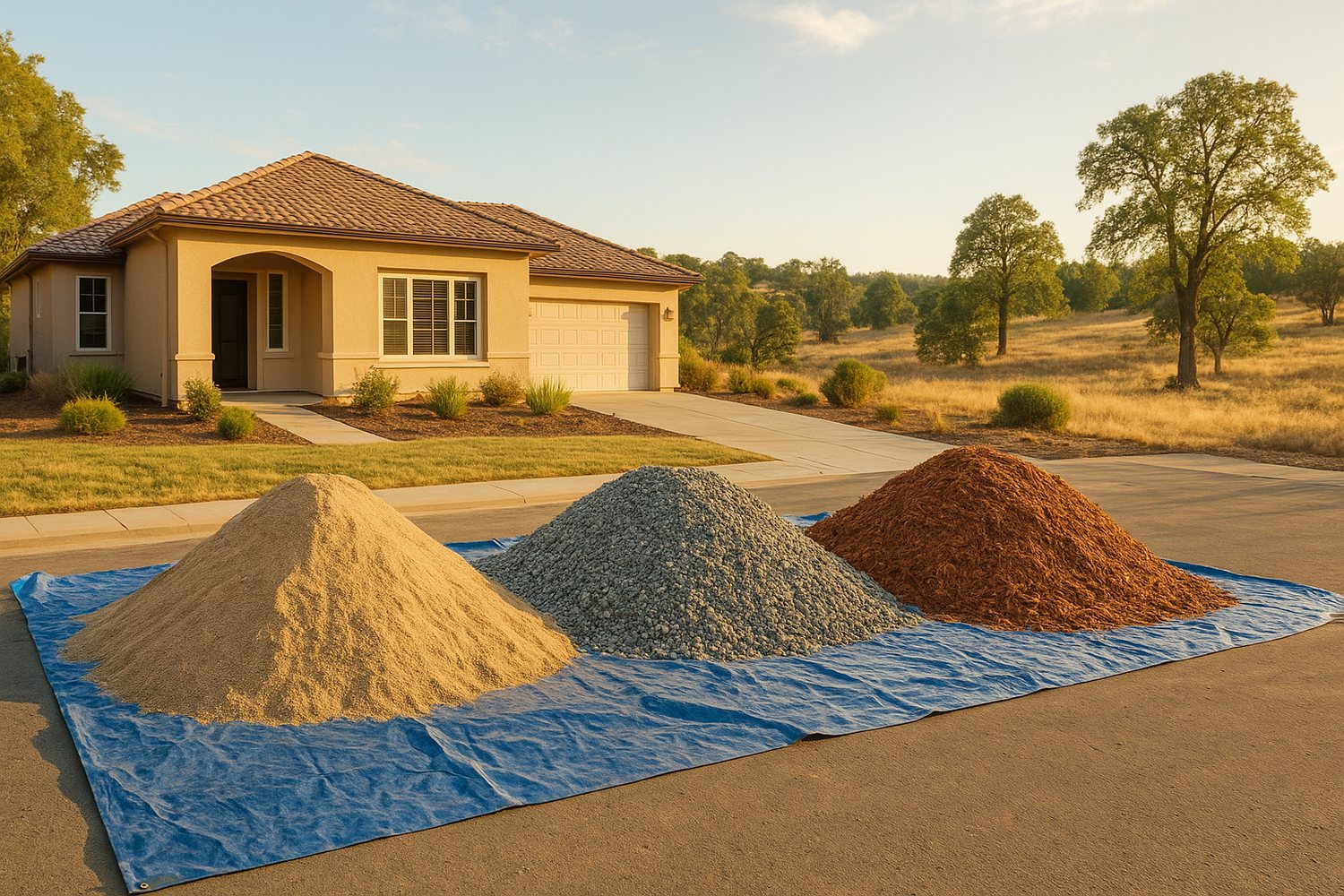
Estimating material quantities
Estimating material quantities: Take the guesswork out—see straightforward methods and charts for calculating how much rock, soil, mulch, sand or concrete you’ll need before you order or break ground.
Explore Quantities →Quick Comparison: Material Choices at a Glance
| Option | Look | Durability | Maintenance | Relative cost | Best for |
|---|---|---|---|---|---|
| Decorative gravel and rock | Wide range; colors from white to black, sizes up to 2" | High—does not break down | Occasional raking, weed control | $$ | Accent, groundcover, walkways, driveways |
| Decomposed granite (DG) | Natural, sandy, gold/tan hues, packs tight | Medium—compacts well but can erode in heavy rain | Regular regrading, touch-up | $ | Natural patios, informal paths, garden spaces |
| Landscape boulders | Large, organic statement pieces | Very high—lasts decades | Minimal (occasional debris removal) | $$$ | Focal points, grade transitions, natural design |
| River rock and cobble | Smooth, rounded, mixed earth tones | High—resistant to breakdown | Occasional leaf/debris clearing | $$ | Drainage, dry creek beds, borders |
| Base rock and drain rock | Gravel, crushed stone, gray tones; hidden when covered | Very high—forms strong base | None (buried) | $ | Under patios, retaining walls, drainage |
| Sand for hardscapes | Fine-textured, pale color | Medium—can migrate with water | May require top-off | $ | Paver bedding, joints, mortar setting |
| Mulch and bark | Natural wood, various sizes and colors | Medium—breaks down over time | Refresh every 1–2 years | $ | Garden beds, tree rings, moisture retention |
| Topsoil and soil amendments | Dark, loose for healthy planting | Medium—organic matter decomposes | Add compost, refresh as needed | $$ | Lawns, planting beds, garden builds |
| Flagstone and natural stone | Irregular, unique patterns, earth shades | Very high—resistant to weather | Occasional cleaning | $$$$ | Patios, paths, custom accents |
| Ready-mix concrete | Smooth, uniform, gray or colored | Very high—withstand vehicle & foot traffic | Sweep, occasional reseal | $$$ | Driveways, patios, pool decks, structures |
| Pavers and wall block | Clean edges, textures, multiple colors | High—engineered for longevity | Weed control, edge adjustment | $$$ | Patios, retaining walls, walkways, seating |
| Estimating material quantities | N/A | N/A | N/A | N/A | Project planning, budgeting, minimizing waste |
Material knowledge from years in the business
We don’t compete on being the cheapest. We compete on quality, integrity, and results that exceed expectations.
California Hardscapes is managed by Marty, who has worked in concrete and construction since he was 17, spent many years in concrete and landscape materials, and has contracted and overseen landscaping, outdoor lighting, retaining walls, patios and complete outdoor living environments.
Every project is built with licensed, bonded and insured contractors, and planned as if it were our own home.

Regional Factors for Materials in the Sacramento Valley and Foothills
Hot, Dry Summers
California’s summer heat and dry spells can break down poorly chosen mulches and overheat unprotected soil. Drought-tolerant groundcovers like decorative gravel and stone mulch help reflect sunlight and reduce evaporation, protecting plantings and minimizing irrigation needs.
Heavy Winter Rains
Winter storm events can bring rapid runoff. Install base rock, drain rock, or river cobble to support drainage and prevent saturated soils or erosion. Choose durable materials that won’t soften or wash out in prolonged wet spells.
Clay and Rocky Soils
Much of Placer, Sacramento, and El Dorado County sits on dense clay or rocky subsoils, which impact drainage and root health. Amending soil with compost and sand (or using raised beds with premium topsoil) improves plant success and reduces compaction.
Tree Debris and Leaf Litter
Oak, pine, and sycamore trees drop substantial seasonal debris. Select mulch with chunkier pieces that won’t mat down, or plan for periodic cleaning on gravel or rock pathways to avoid weeds building up from trapped organic matter.
Slope and Grade Management
The foothill terrain often requires creative grading and strategic placement of retaining walls, boulders, or dry creek features. Proper base rock and carefully positioned stone help manage runoff and control soil loss on sloped properties.
Wildfire Awareness
Fire-prone regions need careful material choices. Replace bark mulch near structures with rock or gravel, use hardscape buffer zones, and avoid accumulating dry plant material that could fuel embers. Consult local fire guidelines for defensible space standards.
How a Hardscape or Landscape Materials Project Comes Together
Initial Assessment and Vision
Start by identifying your goals—whether it’s curb appeal, practical access, safety, or entertainment. Walk the site, note sun/shade, slopes, runoff patterns, and existing vegetation to guide materials compatibility and layout.
Material Selection and Sourcing
Decide which materials best fit your needs, from gravel to natural stone, and account for function, look, and maintenance. Source from reputable suppliers—the right grades and consistent quality will save time and prevent later problems.
Site Prep and Base Installation
Clear and grade the area, then install proper base rock and/or sand layers as required by the material. Good foundations prevent uneven settling and drainage issues, extending the life and appearance of your project.
Placement and Finishing
Lay out stone, gravel, or pavers with careful attention to pattern, joint width and pitch for water runoff. Double-check spacing and edge connections for a polished, durable final install.
Water Management and Mulching
Integrate drain rock, dry creek features, or landscape boulders to direct water away from sensitive zones. Finish beds with mulch or fine gravel to tie the look together and control weeds and moisture.
Inspection and Ongoing Care
Review everything—check levels, grades, and firm placement. Plan on periodic sweeping, mulching, or joint top-offs where needed. Well-chosen materials keep maintenance quick and preserve lasting results.
Frequently Asked Questions about Hardscape and Landscape Materials
How do I decide between gravel, DG, and river rock for pathways?
Think about function, style, and maintenance. Gravel offers classic, casual looks and good drainage. DG compacts for a smoother, firmer walking surface and offers a natural, earthy look that blends well with native landscaping. River rock is best for accent or dry creek beds—it’s smooth but rolls underfoot, so it’s less comfortable for heavily trafficked paths.
What makes base rock and drain rock different from decorative gravel?
Base rock and drain rock are typically crushed, angular stones designed to lock together for stability and drainage. They’re mostly hidden under finished surfaces like pavers or concrete. Decorative gravel is chosen for its color and appearance—it’s meant to be seen and walked on, but doesn’t provide the compaction strength needed for a load-bearing base.
Are boulders mainly decorative, or do they serve a structural role?
Boulders certainly make a visual statement, but in the foothills they often double as functional elements—stabilizing slopes, breaking up grade transitions, or helping direct drainage. Proper placement can minimize erosion or soften the impact of a retaining wall, all while enhancing a natural look.
When should I choose concrete over pavers or flagstone?
Ready-mix concrete is best where you need uncompromising strength, a seamless surface, or custom shapes—such as driveways, large patios, or pool decks. Pavers excel for modularity, ease of repair, and texture variety. Flagstone shines when you want a natural, unique pattern and organic feel, especially in garden paths or outdoor rooms with a rustic style.
How often should I refresh mulch or bark, and which type lasts longer?
Most mulch and bark types need topping off every 1–2 years, as they break down or wash away. Hardwood and chunkier bark types often last longer than fine shredded mulch, especially during wet winters or in high-traffic beds. Rock and gravel don’t break down, so they’re more permanent if you want less frequent attention.
What are the keys to estimating material quantities accurately?
Carefully measure the area to cover and account for the material’s recommended depth. Use published coverage charts and always add 5–10% to account for compaction and shaping. For concrete, factor in thickness and slope. It’s best to overestimate slightly to avoid shortfalls and match during later touch-ups.
Is there a best sand type for patios, pavers, and joint fill?
Washed concrete sand (sometimes called coarse or sharp sand) performs best for bedding pavers and filling joints, as it compacts well, drains but doesn’t wash out easily, and resists weed growth better than playground or masonry sands. Always match the sand to the application for best results.
Should I upgrade my soil or just use what’s on site?
Most native soils in our region are heavy clay or rocky, which can impede drainage and root growth. Upgrading with blended topsoil and amendments like compost improves plant health, water absorption, and minimizes problems like compaction or standing water—especially important for new lawns, planting beds, or gardens.
Ready to Start? Let’s Help You Choose the Right Materials
Email sales@californiahardscapes.com with your address, a short description of your project, and photos of the area. We’ll help you take the first step toward a durable, beautiful outdoor space that’s built to last.