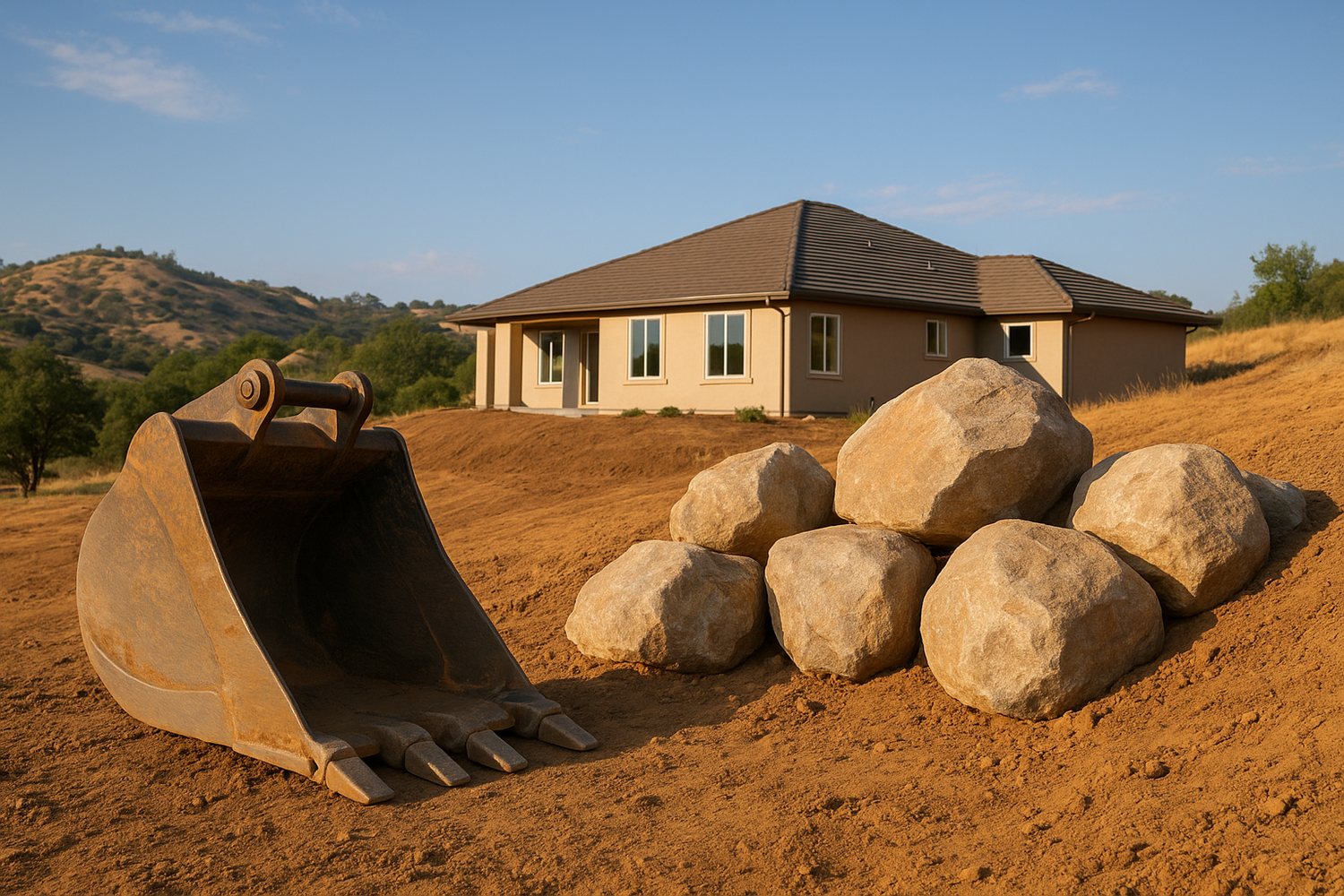
Planning for Boulder Retaining Wall Access and Equipment
Building a boulder retaining wall starts long before the first stone is set. Thorough planning for access and equipment is essential in our region’s varied terrain.
If you’re considering a boulder retaining wall, understanding site access and choosing the right equipment are the first steps to a long-lasting result.
Why Access Planning Matters for Boulder Walls
Before any work begins, it’s vital to assess how machinery and materials will reach your intended boulder wall location. Unlike small landscape elements, boulders are heavy and need large enough space for equipment entry. Narrow side yards, steep driveways, and mature landscaping can complicate access.
In Rocklin, Roseville, and surrounding areas, a typical property may have grade changes, fences, or obstacles. Planning ahead helps to avoid delays, higher costs, or unnecessary disruption to your yard. It also ensures the safety of equipment operators and your other outdoor features.
Addressing these access issues early helps shape the wall’s final design and placement. Effective planning can reduce the impact on lawns and gardens and speed up installation. Always expect a site walk with your contractor before deciding on the wall layout.
For a deeper dive into design and construction features, see ourBoulder retaining wallspage.
Evaluating Your Site’s Unique Challenges
Every property is different. A home in Folsom might have truck access along the side yard, while a Granite Bay hillside lot could mean lifting boulders by crane. The first step is identifying the best route for equipment—whether over grass, across a patio, or between structures.
Consider elevation changes, tight gates, large trees or pool decks in the path. Trees may have protected root zones, and existing hardscape can restrict vehicle width. Sometimes, temporary removal of fencing or gates is required for safe access.
Taking note of these details upfront minimizes surprises during construction. Accurate site measurements and clear markings help guide operators and reduce damage. Expect your contractor to advise on temporary protections for paving, driveways, or landscape beds.
- Look for narrow gates and overhanging branches
- Map the route from street to build site
- Identify obstacles needing temporary removal
Choosing the Right Equipment for the Job
Moving and setting boulders takes specific machinery, far more substantial than standard landscaping tools. For small to medium boulder walls, a skid steer loader or mini-excavator is usually required. These can maneuver in tighter spaces with tracked wheels that distribute weight and protect sensitive surfaces.
For large-scale walls or tight quarters, a larger excavator or even a small crane may be needed to lift and precisely set the heaviest rocks. Equipment selection depends on boulder size, wall height, access width, and the need to work over or around obstacles.
Working in Auburn or El Dorado County, local soil conditions (granite, decomposed granite, or clay) can also affect the choice of equipment—sometimes, heavier machinery is necessary for safe movement and stable placement. Your contractor should match tools to your site’s demands.
- Mini-excavator ideal for small, tight sites
- Tracked equipment protects lawns and paving
- Cranes may be needed for heavy or awkward sites
| Equipment Type | Access Needed (Width) | Best For | Surface Impact | Notes |
|---|---|---|---|---|
| Mini-Excavator | 3–4 ft | Small wall, tight sites | Low | Tracked, easy on lawns |
| Skid Steer Loader | 5–6 ft | Mid-size walls, moderate access | Medium | Needs flat, durable surfaces |
| Large Excavator | 8+ ft | Large boulders, open space | High | Best for major grade changes |
| Small Crane | 10+ ft (vertical) | Limited horizontal reach, heavy boulders | Low–Med | Rental required, used rarely |
Comparing Equipment Options for Placer Region Sites
Not all equipment is equally suited to every yard or site in our area. Selecting the right balance of size, reach, and surface impact matters for your property’s protection and the build’s efficiency.
Here’s a quick comparison of typical machinery used in boulder wall installations around Rocklin, Roseville, and nearby communities. Work with your contractor to review which best fits your home’s entrance, grade, and existing landscaping.
Discuss how each type of equipment may affect lawns, paths, and irrigation. Sometimes, a slightly longer route with smaller equipment is worth it to avoid unnecessary repair or restoration afterward.
Coordinating Material Deliveries and Staging
Boulders are delivered in large quantities and often staged onsite before installation begins. It’s important to choose a flat, accessible location for temporary boulder storage that doesn’t block driveways or create hazards.
The number of loads and timing of deliveries impacts your yard and daily routine. Coordinate with your contractor to ensure materials arrive right before or during construction—not so early they kill grass, and not so late they cause delays.
Protecting surfaces beneath stored boulders can minimize turf damage and future cleanup. Use plywood or temporary mats when possible. Efficient staging ensures a smoother, faster install with less disruption for you and your neighbors.
- Schedule boulder deliveries during dry weather if possible
- Use plywood or mats to protect grass and driveways
- Ask about traffic plans for your neighborhood
Explore your options with our fullRetaining Wallsoverview.
Protecting Your Property During Construction
Construction inevitably brings some disruption to your property, but smart planning limits the impact. Temporary barriers, turf protection, and covering walkways are options many homeowners appreciate during a boulder wall project.
Experienced contractors in Placer, Sacramento, and El Dorado Counties take extra care to avoid damaging irrigation, lighting, and other utilities. Clear communication before the work starts helps identify anything hidden underground or beneath planter beds.
After the wall is complete, prompt site cleanup and basic repairs—like raking soil or re-seeding compacted grass—should be part of the plan. Investing in up-front protection saves on restoration work once the build is finished.
- Identify and mark sprinkler heads in work zones
- Discuss routes for machinery in advance
- Secure pets during the workday
Timing Your Project for Our Region’s Seasons
The best time of year to build a boulder retaining wall in our area is typically during dry months. Avoiding rain reduces mud, improves equipment access, and keeps the work on schedule.
Around Rocklin and Folsom, heavy clay soils can become slippery and easily compacted when wet, while decomposed granite handles moisture better. Your contractor should help plan your project when site conditions are at their best.
Starting early in the building season allows you to enjoy your improved yard sooner and reduces the risk of weather delays. Plan your project consultation well ahead of your desired completion date for the smoothest experience.
Working with a Local Experienced Team
For boulder wall projects in this region, experience with local terrain and building practices makes a difference. A skilled team can accurately assess access needs and match equipment to your property’s specifics.
Personalized planning and communication help you understand each step, from site prep to project wrap-up. Look for a contractor who listens to your concerns and walks the site with you before committing to a design.
At California Hardscapes, our team is managed by Marty, who brings over 30 years of local construction and concrete material expertise. We provide clear expectations and practical solutions for every unique site challenge.
Ready to discuss your property?Request a consultation with our team.
Planning a retaining walls project?
Call or text 916-741-0633, or email sales@californiahardscapes.com with your address, a short description and a few photos, and we will arrange a consultation.