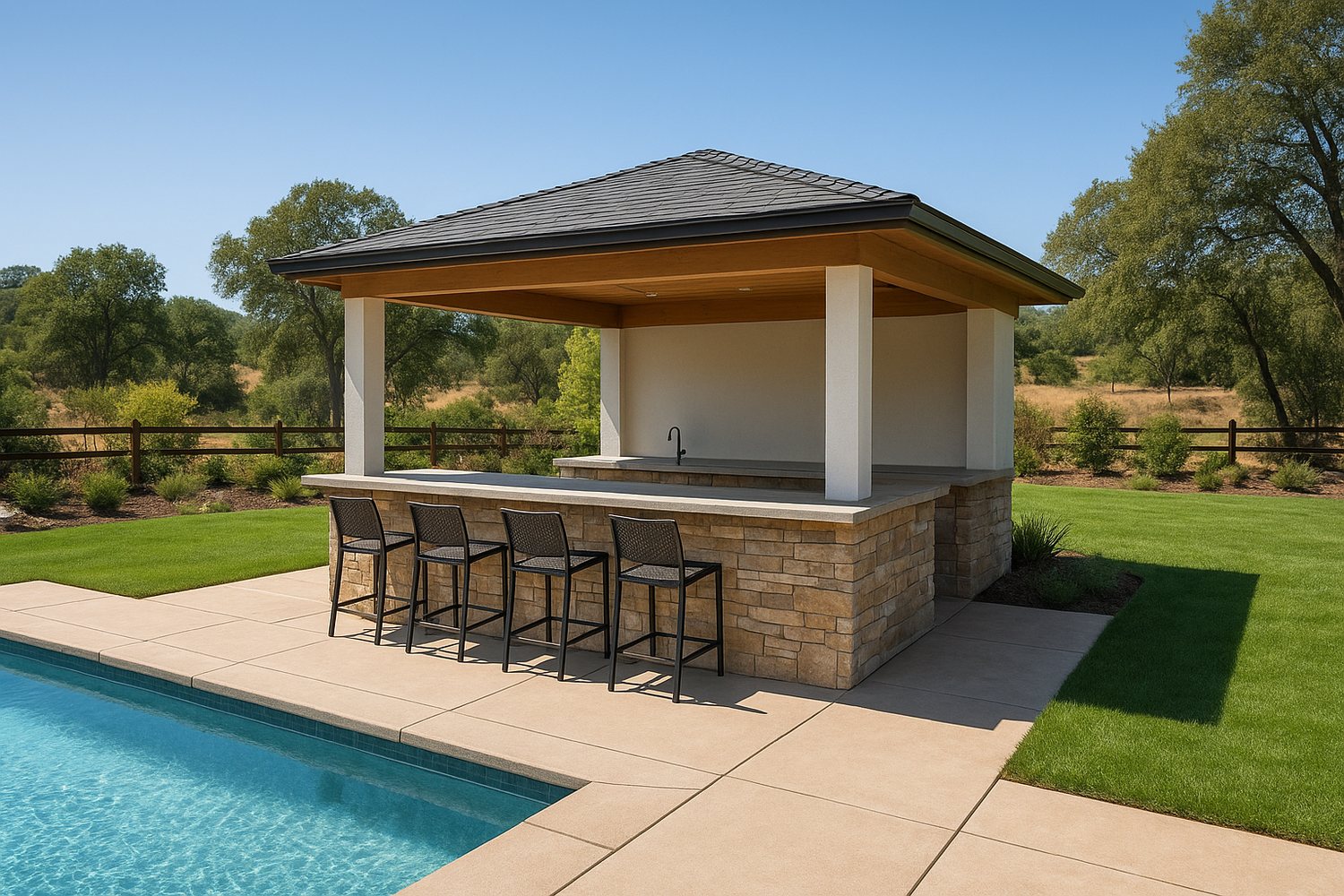
Plumbing, Power, and Drainage for Outdoor Bars: Key Decisions
Discover what every homeowner should know about planning plumbing, electrical, and drainage for outdoor bars in our region.
Thinking about an outdoor bar or entertaining space? The right groundwork—literally—can make all the difference here in our part of Northern California.
Why the Right Utilities Matter for Outdoor Entertaining
Adding an outdoor bar or entertainment area isn’t just about the countertop finishes or seating. Utilities—plumbing, power, and drainage—are the backbone of your space, keeping everything functional and comfortable. In Rocklin, Roseville, and nearby foothill areas, regional soil and weather require practical construction decisions.
Neglecting core utilities can lead to headaches later: poor water flow, unsafe outlets, or water pooling. Each adds unexpected repair costs or limits the features you want. That’s why every good plan starts beneath the surface.
A well-designed outdoor bar survives the seasons, resists common issues, and fits seamlessly with its surroundings. Durable plumbing, code-compliant wiring, and smart stormwater management aren’t upgrades—they’re essentials here.
Learn more about designing your own space on ourOutdoor bars and entertaining areaspage.
Plumbing for Outdoor Bars: Regional Realities
Outdoor bar sinks and prep stations are popular, but bringing water to your bar means solving a few practical challenges. Frost lines are shallow, but pipes must be protected from unexpected cold snaps in winter and heatwaves in summer.
Access to household water lines usually means trenching—and in many foothill neighborhoods, soil is rocky, so excavation takes experience. All pipes should be properly sleeved and sloped for reliable performance.
Drainage for bar sinks often connects to your main sewer system or a dedicated dry well. Placer and Sacramento County regulations may affect where and how these connections happen. A skilled contractor will coordinate inspections and ensure every installation meets code in your community.
- Protect supply lines from freeze-thaw cycles
- Use PEX or copper for durability
- Consider local water pressure for appliance choices
Safe, Reliable Outdoor Power for Entertaining Spaces
Powering refrigerators, blending stations, and lighting outdoors means robust wiring and weather-resistant outlets. Circuit layout must suit your appliances and entertainment needs, with room to expand later.
GFCI (Ground Fault Circuit Interrupter) outlets are not optional—they’re required by code for any outdoor or wet location. Placement matters, too: outlets should be out of splash zones and easy to access but protected from the elements.
From accent lighting to sound systems, consider low-voltage options for ambiance. Planning multiple circuits can avoid overloaded breakers during gatherings. Trust a qualified professional familiar with the regional requirements of Placer, Sacramento, and El Dorado counties.
- Use in-use weatherproof outlet covers
- Plan for both task and accent lighting
- Allow for future kitchen appliances or upgrades
| Feature | Standard Practice | Recommended Upgrade | Notes for Placer/Sacramento |
|---|---|---|---|
| Water Supply | PEX/copper with basic insulation | Heavier insulation & shut-off valves | Shallow frost line, but protect vs heat & freeze |
| Power Outlets | GFCI weather-resistant near bar | Multiple circuits; surge protection | Use in-use covers for reliability |
| Drainage | Sloped patio surface | Channel/French drains | Heavy clay may need gravel base |
| Wastewater | Tied to sewer where allowed | Dedicated dry well if sewer unavailable | Check local code on graywater/discharge |
| Lighting | Basic fixtures | Mix of task/accent, low voltage | Outdoor-rated, rated for cold/heat swings |
Drainage: Keeping Your Bar Dry and Usable Year-Round
Rain may be rare, but when it comes, it can dump hard—especially in the winter. Drainage planning keeps your outdoor bar usable in our variable climate, preventing puddles, slippery patios, or water damage to cabinets and finishes.
Sloping hardscape surfaces away from your bar ensures quick runoff. Consider trench or French drains if your bar’s near a slope or receives roof runoff. Permeable paving lets water soak down rather than pool.
In foothill communities, clay soils make drainage more challenging. Your builder should test soil percolation and adapt with gravel bases or added drains for peace of mind. Good drainage is invisible once built, but you’ll thank yourself during the next downpour.
- Grade patios at 1–2% slope away from structures
- Use channel drains at the bar base if needed
- Check local code for drainage discharge locations
Comparing Utility Planning Approaches for Outdoor Bars
Every outdoor bar project has similar goals, but not all methods fit the same property. Site layout, local codes, and soil conditions shape your options. It helps to talk through approaches with a contractor who understands our region.
Some homes allow direct connections and short utility runs. Others—especially hillside or larger lots—need more involved trenching and upgrades. Matching your expectations to physical realities saves time and money.
The table below breaks down fundamental choices across plumbing, power, and drainage so you can see at a glance what’s typical and what’s more advanced.
For more inspiring ideas, check ourOutdoor Livingoverview to explore the full range of opportunities.
Permits, Codes, and Inspections: What to Expect
Any time you add water, electricity, or drainage outdoors, permitting is involved. Local building departments review plans for code compliance, especially for electrical circuits and sewer tie-ins. This protects your home value and keeps everything insurable.
Expect to coordinate with county officials for plumbing and electrical inspections. In some parts of Auburn or Granite Bay, special zoning or setback rules may apply. An experienced project manager can guide you from the first sketch through final sign-off.
Upfront planning streamlines the whole process. Detailed, code-ready drawings and inspections mean fewer surprises and a smoother build. It’s worth the patience for peace of mind when entertaining family and friends down the road.
Working with Local Materials and Building Practices
Our region’s climate and soil inform material choices and installation techniques. Concrete foundations are popular for lasting patios, but all utility lines need to be protected below—using sleeves and access points for future service.
Rocky and clay-heavy ground in areas like Folsom and Loomis may require added base materials for both stability and draining. Pavers, flagstone, and composite decking each respond differently to temperature swings and heavy downpours.
Ask for materials proven in local installs, not just what’s trending online. With the right base, reinforcement, and finish, your outdoor bar and entertaining zone stands up to both backyard get-togethers and winter storms.
- Concrete bases can be decorative and durable
- Design access routes for future repairs
- Use outdoor-rated cabinets and fixtures only
Planning for the Future: Flexibility and Upgrades
Today’s outdoor bar may be tomorrow’s full outdoor kitchen, so plan for flexibility. Running extra conduit, oversizing drain lines, or leaving capped-off water stubs can make future expansions manageable and less disruptive.
Leave room on your electrical panel and plumbing for upgrades—like additional fridges, kegerators, or even gas lines. Smart planning now pays off when your needs and tastes change over time.
Consult with a local pro who’s seen how families actually use these spaces over time. It’s about creating a space for generations of gatherings—not just the coming barbecue season.
- Add spare circuits or water lines for appliances
- Choose fixtures and layouts with future add-ons in mind
- Include Wi-Fi or speaker wiring if desired
Ready to take the next step?Request a consultationand start planning with California Hardscapes.
Planning an outdoor living project?
Call or text 916-741-0633, or email sales@californiahardscapes.com with your address, a short description and a few photos, and we will arrange a consultation.